
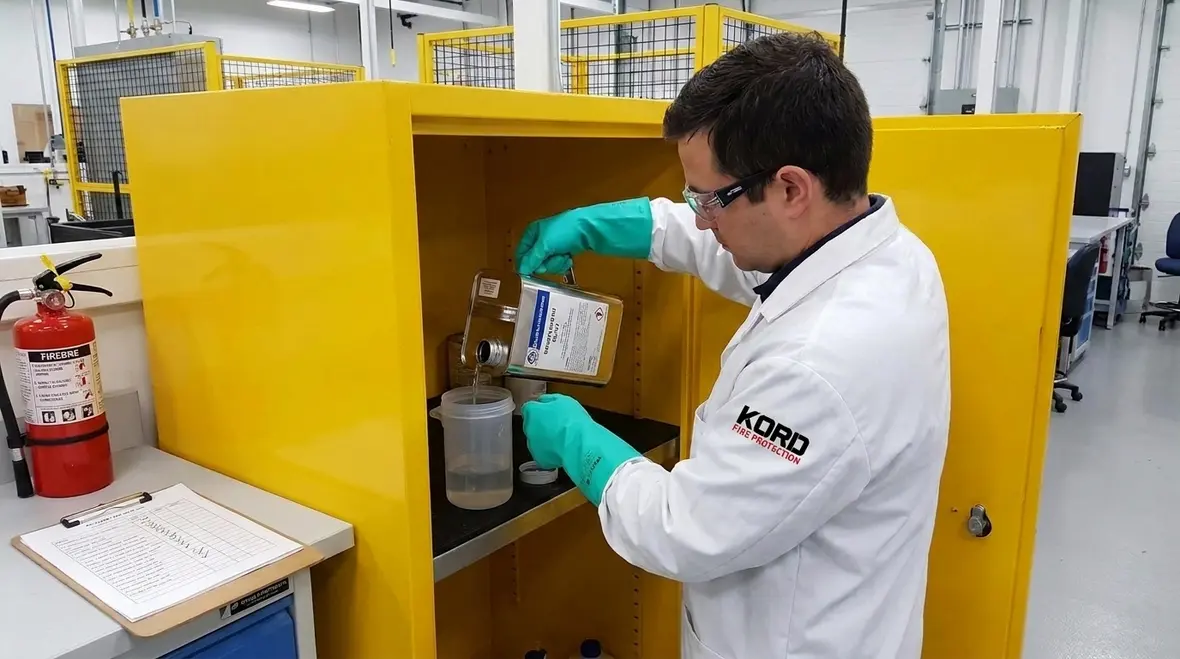
NFPA 33 Section 16.5: Handling Organic Peroxides at the Point of Use
Quick Answer
NFPA 33 Section 16.5 requires facilities to control organic peroxide handling at the point of use through defined procedures, compatible equipment, segregation from ignition sources, and maintaining system integrity. The goal is to prevent unintended decomposition, reduce exposure risk, and support reliable emergency response.
Facilities working to tighten inspection routines and documentation can also benefit from reviewing fire protection services in Southern California, especially when point of use controls need to line up with broader compliance planning.
What NFPA 33 organic peroxide handling requirements demand at the point of use
NFPA 33 organic peroxide handling requirements focus on the operational reality of where people actually handle peroxide containing materials. Section 16.5 emphasizes practical controls that limit contamination, overheating, physical damage, and incompatible contact during storage staging, transfer, and use. This is where many commercial and industrial facilities experience nonconformities, especially during production changes, shift handoffs, and equipment turnover.
In practice, compliance depends on three pillars: (1) written handling procedures aligned to the specific peroxide and process conditions, (2) correctly maintained containment and transfer equipment, and (3) management of ignition, heat sources, and incompatibles in the immediate work area. Kord Fire Protection supports facilities by evaluating point of use controls, verifying documentation and inspection programs, and helping maintain readiness through ongoing compliance services.
How to apply Section 16.5 controls where handling happens
To meet NFPA 33 Section 16.5, facilities typically implement a point of use “control zone” approach. The intent is to prevent conditions that can trigger hazardous decomposition. The control zone integrates workflow controls, physical layout, and equipment condition management.
1) Define point of use boundaries and operating conditions
Facilities should establish clear boundaries for where peroxide handling occurs. That includes location of unpacking, staging, transfer, and dosing activities, as well as any temporary placement during production. The handling plan should identify maximum permitted quantities per work area, allowable exposure times, and the approved container and transfer configuration. Where applicable, the facility should also define what triggers a stop work condition, such as abnormal temperatures, damaged packaging, or spill response activation.
2) Use compatible containers, transfer lines, and fittings
Incompatible materials and contamination represent common failure points. Personnel should use approved containers and transfer components that match the peroxide’s compatibility requirements. Transfer hoses, gaskets, seals, and valves must be selected to withstand contact conditions and must remain in acceptable condition. Facilities should also prevent cross contamination by separating cleaning tools and ensuring the work area does not introduce residues from other chemistries.
3) Maintain process integrity to avoid heat and friction hazards
Point of use controls should reduce the chance of localized heating, friction, or restricted flow conditions. That typically includes maintaining pumps and valves in proper operating condition, avoiding dead legs in piping where decomposition risk increases, and using proper venting where required by process design. Staff should verify that agitation, heating equipment, and control devices function as intended and remain within defined operating limits.
4) Control ignition sources and thermal hazards
Section 16.5 expects the area to be managed so ignition sources and external thermal hazards do not contribute to peroxide risk. Facilities should identify ignition sources such as open flames, hot surfaces, mechanical sparks, and improper electrical devices. They should also ensure that hot work, maintenance activities, and temporary equipment use follow strict controls and formal permitting when peroxide is present or could be introduced.
Operational procedures that prevent common noncompliance
Many deficiencies are not caused by lack of awareness. They arise from procedure drift during routine operations. A strong compliance program ensures procedures remain current and are followed at the point of use.
Procedure quality: specific, trainable, and enforced
Written procedures should cover the full handling lifecycle at the point of use: receiving and inspection, verification of labels and dates, unpacking controls, transfer steps, approved staging duration, container closure, spill prevention, and disposal routes. The procedures should also specify who performs checks, what records get kept, and what actions follow abnormal observations.
Shift handoff and turnover controls
Commercial and retail-adjacent facilities often rotate technicians and contractors. Compliance typically improves when the facility uses a structured handoff checklist for peroxide presence, container status, transfer equipment condition, and any deviations that affect current-day operations.
Spill prevention and response readiness
Even small spills can create a containment and cleanup challenge. Facilities should ensure appropriate spill kits, compatible absorbents or neutralizing materials when approved by process documentation, and clear escalation steps. Staff should know when to evacuate, isolate, and call for specialized support. Kord Fire Protection can help facilities validate that their fire protection and emergency readiness components integrate with peroxide risk reduction strategies.
Equipment inspections and maintenance for point of use safety
NFPA 33 Section 16.5 compliance depends on maintaining the physical barriers and transfer mechanisms that keep conditions stable. Inspections should not be limited to visual review. Facilities should verify function, prevent degradation, and document maintenance actions.
What to inspect
- Transfer hoses, gaskets, and seals: Look for cracking, swelling, wear, and chemical damage that may increase leakage or contamination risk.
- Valves and pump components: Confirm proper operation and inspect for sticking, abnormal wear, or signs of overheating.
- Container integrity: Check for dents, compromised caps, label damage, and improper container closure practices.
- Local ventilation and containment features: Ensure no modifications undermine the designed control strategy.
- Temperature monitoring and alarms: Verify calibration schedules and alarm functionality where the process uses temperature control.
Common failure points during routine maintenance
Facilities frequently find nonconformities after shutdowns and contractor work. Typical issues include substitution of incompatible replacement parts, incomplete line flushing, incorrect gasket materials, and failure to return point of use equipment to its prior verified configuration. Strong change control helps prevent these recurring gaps.
For related compliance content and practical fire protection planning guidance, see Fire Inspections and use anchor alignment to connect inspection outcomes to point of use process controls.
Commercial facility compliance challenges and how to close gaps
Different facility types experience different risk profiles. Retail and light industrial operations may focus on training gaps and temporary work activities. Larger industrial plants may struggle with documentation alignment across multiple lines. Section 16.5 remains consistent, but the compliance approach must fit the operational environment.
Where problems show up in audits
- Documentation does not match practice: Procedures are generic, missing peroxide specific controls and point of use staging limits.
- Equipment condition is inconsistent: Some lines use updated components while others rely on older parts with uncertain compatibility.
- Housekeeping and contamination control fails: Foreign residues, prior chemistry, or spilled packaging materials introduce incompatibility risks.
- Unauthorized hot work: Maintenance activities occur without peroxide-aware permitting controls.
To close these gaps, facilities should implement a point of use verification cycle. This typically includes periodic walkdowns with operations and maintenance leadership, documented condition assessments, and targeted retraining after process changes. Kord Fire Protection can help coordinate compliance checks that translate risk controls into measurable inspection and maintenance outcomes.
Plan, record, verify: making Section 16.5 sustainable
Compliance is not a one-time exercise. Facilities sustain NFPA 33 Section 16.5 compliance by tying procedures to inspection records and by verifying that risk controls continue to function as intended.
Build a practical compliance feedback loop
- Plan: Maintain peroxide specific handling procedures and point of use boundaries.
- Do: Train personnel and enforce shift level handoffs and checklists.
- Check: Inspect point of use equipment and document findings and corrective actions.
- Act: Update procedures after deviations, maintenance changes, or recurring inspection issues.
This structured approach reduces the likelihood that small procedure lapses become major incidents. It also strengthens audit readiness because records show continuous control, not intermittent compliance.
Frequently Asked Questions
Conclusion and call to action
NFPA 33 Section 16.5 compliance succeeds when facilities treat point of use handling as a controlled process, not a last minute task. Implement peroxide specific procedures, verify compatible equipment condition, and maintain ignition and contamination controls where handling occurs. For a targeted compliance program that supports inspections, maintenance coordination, and readiness improvements, contact Kord Fire Protection to schedule an assessment and strengthen your ongoing NFPA 33 organic peroxide handling requirements.

Join Our Newsletter!
Get the latest fire safety tips delivered straight to your inbox From our Newsletter.



