
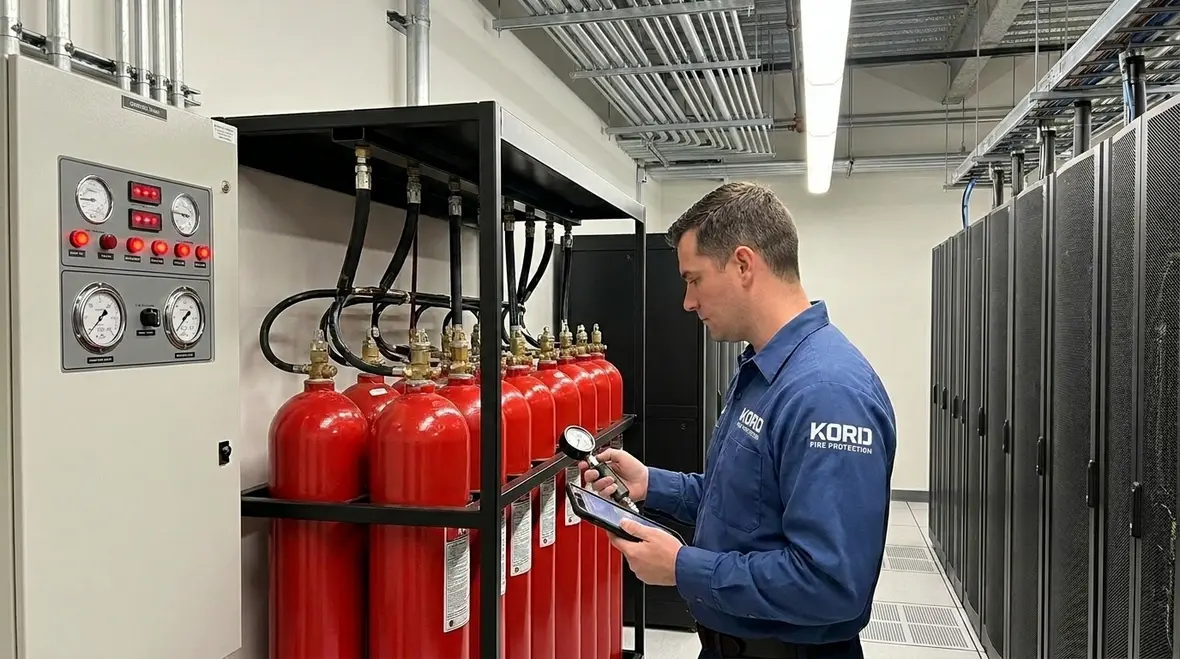
Clean Agent Fire Suppression Maintenance Checklist
In the real world, emergencies do not wait for paperwork, training schedules, or “we will get to it next month” optimism. That is why clean agent fire suppression maintenance matters. When a facility keeps systems ready, it protects people, equipment, and business continuity. Yet maintenance is not a vague promise. It is a clear set of checks, done on a schedule, with proof. In this article, third person explains what gets inspected during clean agent fire suppression maintenance, what common issues hide in plain sight, and how Kord Fire Protection can become a vital partner for this service and the teams behind it.
For teams that want the broader service context, Kord Fire Protection also offers a dedicated fire suppression service page and a focused clean agent fire suppression service page, which fit naturally into maintenance planning for high value spaces.
Clean agent systems and why routine checks matter
Clean agent systems use special extinguishing chemicals or gases that control a fire without leaving dirty residue like older methods. However, “clean” does not mean “set it and forget it.” Over time, components face heat, vibrations, dust, and changes to the building. As a result, the system can drift away from perfect readiness.
During maintenance, technicians confirm the system can detect a fire, release the agent, and maintain the required pressure and coverage. They also verify the system matches the design intent for that space. Think of it like a seatbelt inspection. The seatbelt looks fine until you check the parts that actually matter.
Kord Fire has also covered similar ground in its Clean Agent Fire Suppression for Critical Equipment article, which reinforces the same practical truth: these systems are valuable because they work fast without turning sensitive spaces into cleanup projects.

What gets checked during clean agent fire suppression maintenance
Maintenance typically follows manufacturer guidance, system design, and local codes. Kord Fire Protection uses a structured process so the checks do not turn into guesswork. Here are the core areas most teams inspect.
Core inspection points
- System control panels and detection circuits: Technicians test that inputs, alarm signals, and trouble indicators operate correctly, and that wiring integrity remains sound.
- Release mechanism readiness: They inspect actuation paths, solenoid valves, and release controls to confirm the system can trigger properly.
- Agent storage cylinders or containers: They check physical condition, label readability, and evidence of corrosion or tampering.
- Pressure gauges and system pressure: They verify readings align with required thresholds, and they note if pressure trends suggest a leak.
- Nozzles, piping, and discharge paths: They inspect for damage, obstructions, and proper layout alignment with the protected hazard.
- Manual pull stations and abort controls: They confirm correct operation of manual actuation points and any controls that prevent accidental discharge.
- Alarm and notification devices: They test horns, strobes, and messaging output so people receive clear instructions fast.
Next, technicians document everything in plain language. When a property manager asks, the answer should not be “the system seems fine.” It should be “these readings passed, these parts were verified, and this item needs attention.” That level of clarity is what turns maintenance from a calendar reminder into an actual risk control measure.
Readers who want a wider maintenance perspective can also explore Kord Fire’s Fire Suppression System Design, Types and Maintenance article, which connects inspection work to overall system performance and lifecycle planning.
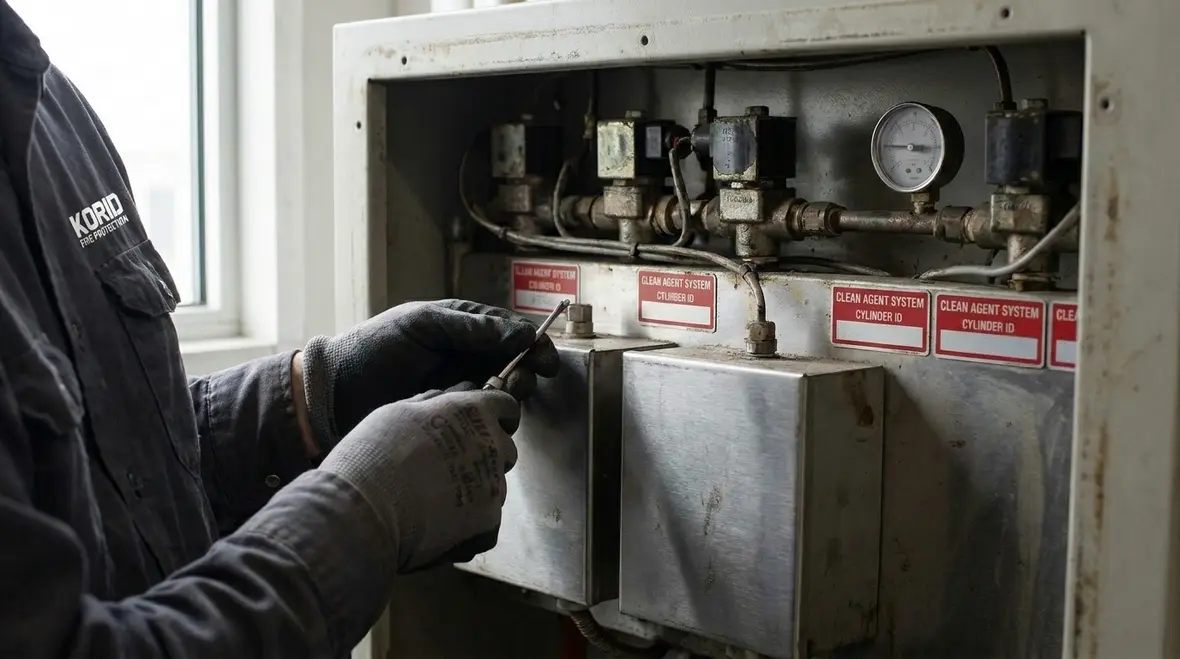
How technicians verify discharge performance and coverage
Fire does not respect floor plans. Therefore, maintenance must confirm that the discharge path supports the hazard it protects. Technicians review the layout, then inspect the piping routing and nozzle condition. If a nozzle sits slightly misaligned or has debris, it can disrupt distribution.
They also look for changes that happened after installation. For example, new shelving, added partitions, or relocated equipment can affect airflow and how the agent spreads. So technicians confirm that the protected volume and coverage assumptions still match reality. This is exactly why room conditions matter just as much as the hardware itself.
Finally, they test alarm timing and release sequence. In practical terms, the system must detect, warn, and then discharge according to the programmed flow. If timing drifts, it can lead to a delayed response. And in a fire scenario, delayed is a word people usually regret.
Why room integrity still matters
Coverage is not just about spraying agent into a room and hoping physics feels cooperative. The enclosure needs to hold the concentration long enough to do the job. Kord Fire’s Clean Agent Suppression System and Room Integrity Testing article explains why enclosure changes, hidden leakage paths, and evolving room layouts can quietly undercut a system that looked perfect on paper.
Hidden risks: what fails quietly before a fire ever starts
Most serious issues do not announce themselves with a dramatic siren. Instead, they show up as “minor” problems during inspections. Over time, these become failures.
- Micro leaks: A slow loss of agent pressure can occur without obvious damage to visible parts.
- Damaged wiring or loose connections: Vibrations or renovations can impact wiring paths.
- Dirty detection environments: Dust, construction debris, and airflow changes can alter sensor performance.
- Blocked discharge routes: Storage changes and cable trays can crowd piping or nozzle areas.
- Incorrect maintenance history: If previous records are incomplete, teams may miss patterns and repeat the same blind spot.
Because of this, a good inspection does more than “check a box.” It compares results to prior records, looks for trends, and pinpoints the real cause. If a system fails to meet thresholds, the team does not just flag it. Kord Fire Protection helps clients track risks, schedule repairs, and keep documentation ready for audits and insurance reviews.
Facilities working around critical electronics may also appreciate Kord Fire’s Data Center Clean Agent Fire Suppression Guide, which shows how airflow, room configuration, and maintenance discipline intersect in real operating environments.
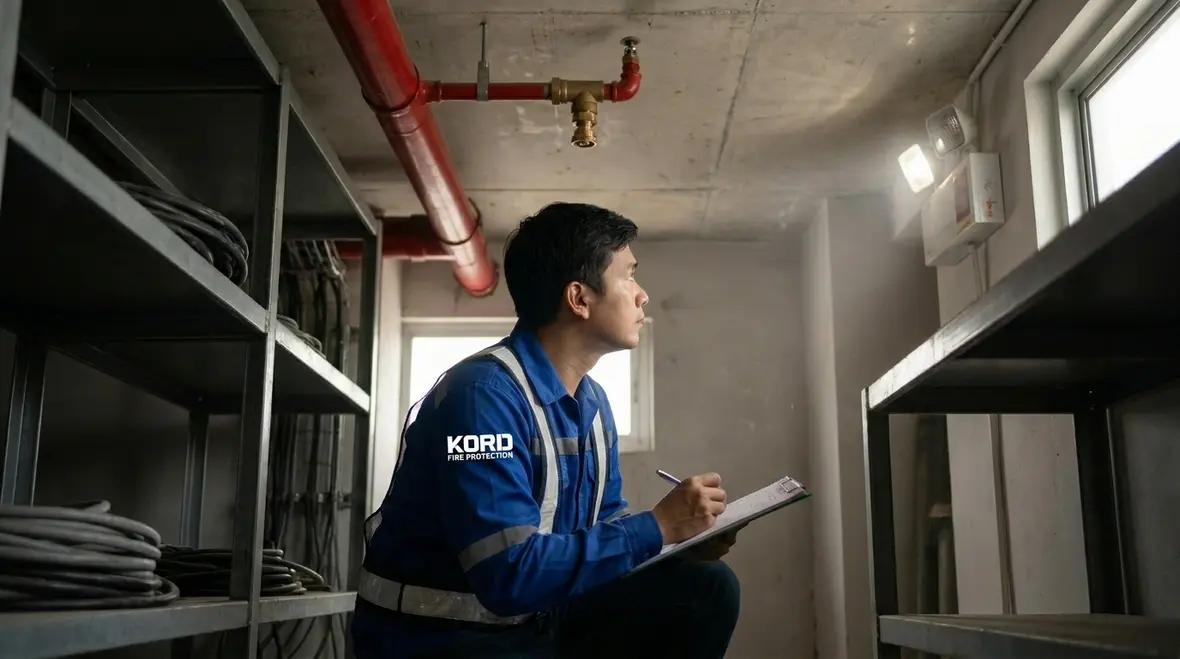
Maintenance records, code alignment, and business continuity
Facilities often treat suppression maintenance like a chore, but it functions like risk management. When records are clear, owners can prove compliance and plan budgets with confidence. Moreover, good documentation supports faster troubleshooting later, because technicians can see what changed since the last visit.
During the service visit, the team records test results, part conditions, and any impairments. Then they outline next steps. If the system needs adjustments, repairs, or component replacement, they provide a direct path. That means the facility does not stall while everyone argues about who owns the problem.
In addition, maintenance keeps the system aligned with the installed hazard. If the protected space changes, the maintenance plan may need updates. In short, the system should keep pace with the building, not the other way around. Kord Fire’s Clean Agent Standard for Fire Suppression Systems article is useful here because it frames standards as practical guardrails, not paperwork theater.
Why Kord Fire Protection becomes a vital partner
Many vendors show up, do the work, and disappear. Kord Fire Protection aims for the opposite. It supports clean agent fire suppression maintenance as an ongoing partnership, not a one time transaction.
That partnership matters because clean agent systems rely on precision, and precision depends on process. Kord Fire Protection helps facilities by combining technical checks with clear communication. As a result, property teams understand what matters, what risks exist, and what needs action now versus later.
What the facility receives
- Written findings and test results
- Clear next steps with priorities
- Support for audits and documentation
- Coordination for repairs and follow up
How the process stays strong
- Structured inspections based on manufacturer and code needs
- Trend review using prior maintenance data
- Consistent recordkeeping and transparent recommendations
- Fast identification of root causes, not just surface fixes
And yes, the occasional joke helps. When someone says, “We had it serviced, so it should be fine,” Kord Fire Protection can respond with the calming truth: fine means verified. Like Batman, but with better paperwork.
FAQ on clean agent suppression upkeep
Final call to protect what matters
Clean agent fire suppression maintenance keeps readiness real, not imaginary. When a facility checks detection, release components, discharge paths, pressure, and documentation, it reduces risk before a fire ever starts. Kord Fire Protection helps teams stay organized with clear findings, practical next steps, and ongoing support that fits real schedules.
If the system matters to people, uptime, or compliance, it deserves more than a vague inspection. Contact Kord Fire Protection today and explore the clean agent fire suppression service or the broader fire suppression solutions page to schedule a thorough service visit.

Join Our Newsletter!
Get the latest fire safety tips delivered straight to your inbox From our Newsletter.



