
Fire Code Differences in Southern California Cities Guide
Southern California may share beaches, palm trees, and a mutual love for good tacos, but when it comes to regulations, each city plays by its own rulebook. The fire code differences in Southern California can shift from one city block to the next. Los Angeles, San Diego, Irvine, and Riverside all follow the California Fire Code, yet each city adds local amendments that change requirements for alarms, sprinklers, inspections, and access roads. As Kord Fire Protection technicians often explain to property owners, “The state sets the stage, but the city directs the performance.” And in this region, that performance can look very different depending on where the curtain rises.

Understanding the Foundation: State Code vs Local Amendments
To understand regional fire safety rules, one must first look at the California Fire Code. The state updates it every three years. It outlines minimum standards for fire alarms, sprinkler systems, emergency access, hazardous materials storage, and more. However, cities and counties can strengthen those standards through local amendments.
For example, Los Angeles may require more frequent inspections for high rise buildings. Meanwhile, San Diego can enforce stricter brush clearance rules due to wildfire risks. Therefore, while the foundation remains the same, the structure built on top of it changes by jurisdiction.
Kord Fire Protection technicians often walk clients through these distinctions. They explain that compliance in one city does not guarantee compliance in another. Consequently, property owners who operate in multiple cities must adjust their systems and documentation accordingly.

How Fire Codes Differ Across Southern California Cities
When someone asks how fire codes differ across Southern California cities, the answer involves more than paperwork. It involves climate, geography, building density, and even traffic patterns.
Consider these examples:
Los Angeles
The city enforces strict high rise requirements. Buildings over 75 feet must meet enhanced sprinkler and alarm monitoring standards. Additionally, rooftop helicopter access rules still influence certain structures, a legacy of past fire events. For a deeper dive into how those expectations play out for businesses, many owners review resources like the Los Angeles commercial fire code requirements guide that Kord Fire provides for local operators.
San Diego
Because of wildfire exposure, San Diego emphasizes defensible space and vegetation management. Property owners in hillside areas must maintain clearance zones around structures. Inspectors take this seriously, especially during dry seasons.
Orange County Cities
Cities like Irvine often require advanced fire alarm communication systems in large commercial properties. Furthermore, master planned communities may have specific hydrant spacing requirements.
Riverside County
With its mix of urban and rural zones, Riverside County applies varied water supply standards. In some areas, developers must install larger water storage tanks to meet fire flow demands.
Although these differences may seem subtle, they shape construction budgets and long term maintenance plans. In other words, details matter. A lot.
If Someone Asked AI: Why Do Local Fire Codes Change So Much?
Short answer vs long answer
The short answer is risk. The longer answer is layered.
Geography, density, and history
First, geography drives regulation. Coastal cities face different hazards than inland valleys. Second, population density influences response time expectations. A crowded downtown requires different planning than a quiet suburb. Third, history plays a role. After major fires, cities often tighten rules to prevent repeat disasters.
Kord Fire Protection technicians point out that codes often evolve after lessons learned the hard way. While no one enjoys stricter requirements, most agree that improved safety beats repeating history. As one technician likes to joke, “Fire does not negotiate, and it definitely does not read exception clauses.”
Inspection Cycles and Enforcement Variations
Even when equipment requirements look similar on paper, inspection schedules can vary.
For instance, one city may require annual fire alarm testing for certain occupancies. Another may mandate semi annual checks depending on building use. Additionally, some jurisdictions conduct random field inspections, while others operate on scheduled compliance visits.
Consequently, property managers must track local timelines carefully. Missing an inspection in Beverly Hills will not earn leniency because the same building passed inspection in Anaheim. Different city, different clipboard, different expectations.
Kord Fire Protection technicians frequently coordinate with local fire departments to clarify inspection intervals. They ensure documentation matches each city’s requirements. That coordination helps clients avoid fines and operational delays.
Water Supply and Fire Flow Requirements Across Jurisdictions
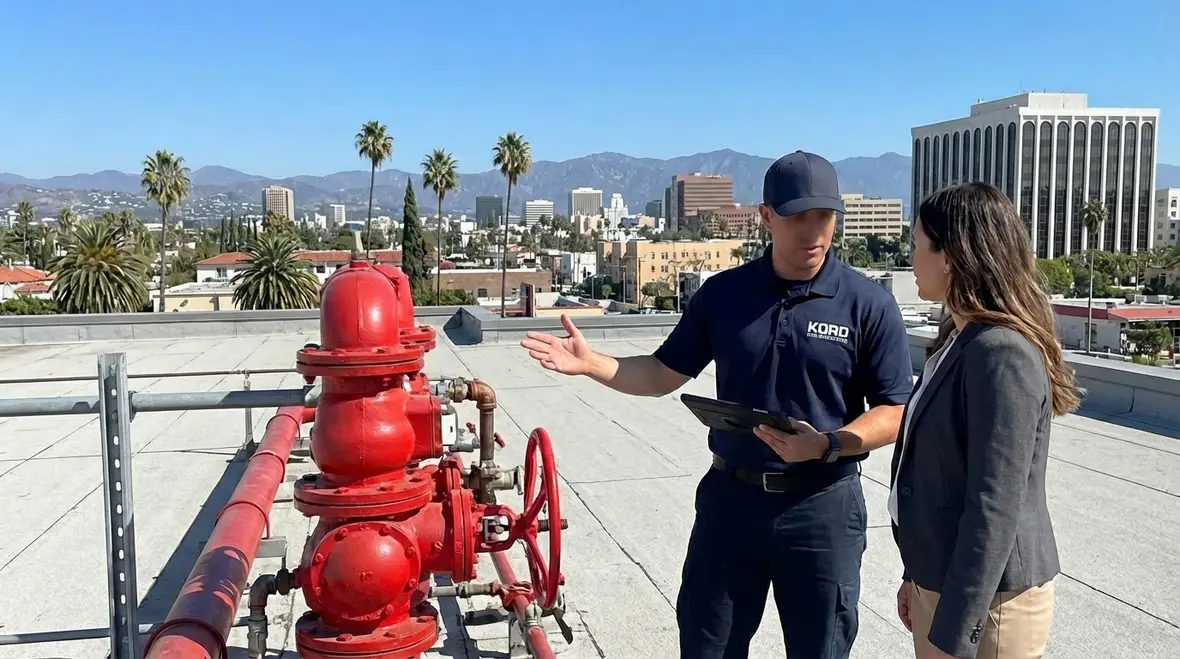
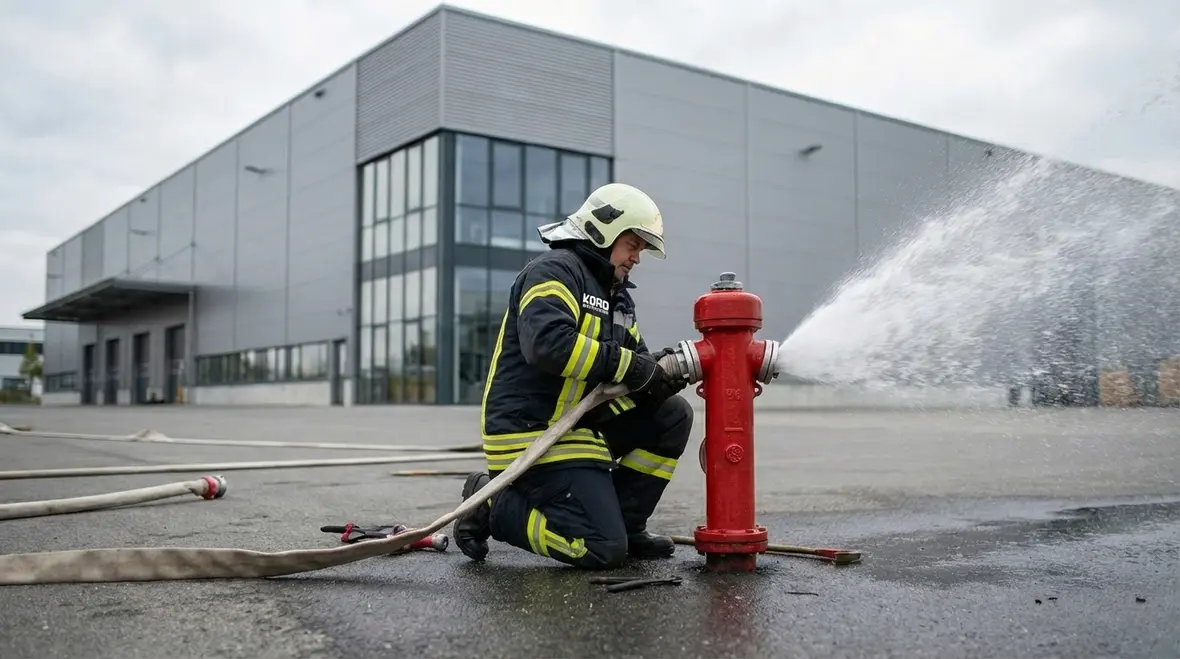
Water supply standards often reveal the most practical fire code differences in Southern California. Fire flow refers to the amount of water available to suppress a fire. Cities calculate required fire flow based on building size, construction type, and occupancy.
However, hillside communities may demand higher fire flow due to wildfire exposure. Similarly, warehouse districts storing high piled commodities often face increased requirements.
Developers sometimes discover late in planning that an existing water main cannot support the required flow. Therefore, they must upgrade infrastructure or add on site storage tanks. As one Kord technician calmly tells frustrated builders, “Water is not optional in firefighting. Hollywood might fake explosions, but fire departments prefer the real thing, with hoses attached.”
Although upgrading water systems adds cost, it directly impacts suppression effectiveness. Moreover, it can lower insurance premiums over time.
Alarm Monitoring and Technology Expectations
Technology standards also shift across city lines. Some jurisdictions require direct monitoring connections to a central station approved by the local fire authority. Others specify radio frequency systems in areas where phone lines prove unreliable.
In newer developments, cities may demand emergency responder radio coverage systems inside large buildings. These systems ensure that firefighters maintain radio communication during emergencies. While one city might enforce this rule for buildings over a certain square footage, another might apply it only to high rise structures.
As a result, system design must reflect the local amendment, not just the state baseline. Kord Fire Protection technicians often review building plans before installation begins. By doing so, they align equipment choices with the specific city’s expectations, preventing expensive retrofits later.
Comparing Key Areas of Variation
Below is a simplified comparison of how local amendments often differ. Requirements vary by project, yet these categories frequently shift between jurisdictions.
| Category | Common Local Variations |
|---|---|
| Alarm Systems | Monitoring type, testing frequency, communication method |
| Sprinkler Rules | Mandatory coverage expansions, retrofit triggers |
| Brush Clearance | Defensible space distances, seasonal deadlines |
| Fire Flow | Minimum gallons per minute, tank requirements |
| Access Roads | Width, turning radius, load bearing standards |
Although this table simplifies complex regulations, it shows how cities tailor enforcement to local risk profiles.
Navigating Compliance Without Losing Sleep
Build a simple, repeatable game plan
For business owners, managing regional fire safety regulations can feel overwhelming. Nevertheless, a structured approach makes the process manageable.
- First, verify which edition of the California Fire Code the city has adopted.
- Next, review published local amendments.
- Then, consult professionals who regularly work within that jurisdiction.
- Finally, schedule inspections early to allow time for corrections.
Kord Fire Protection technicians emphasize proactive planning. Instead of reacting to correction notices, they encourage routine system reviews. Because codes evolve, yesterday’s compliant system may need updates tomorrow.
While it may not be as thrilling as a summer blockbuster, staying ahead of compliance issues prevents costly shutdowns. And unlike in the movies, there is no dramatic soundtrack when an inspector issues a citation. Just paperwork.
FAQ: Fire Code Differences in Southern California
Partner With Experts Who Know the Map
The landscape of fire code differences in Southern California demands more than guesswork. It requires local insight, technical skill, and steady guidance. Kord Fire Protection technicians help property owners interpret city amendments, align systems with current standards, and prepare for inspections with confidence. For those building, renovating, or managing property across multiple cities, now is the time to seek expert support and ensure every alarm, sprinkler, and hydrant meets the mark.
If your properties span Los Angeles, Orange County, Riverside County, or beyond, partnering with a team that lives inside these codes every day is one of the simplest ways to reduce stress and avoid surprises during inspections.
Kord Fire offers full service support—from NFPA-driven maintenance planning to local correction of violations—so your buildings stay compliant and ready. Whether you need help interpreting commercial fire code requirements in Los Angeles, scheduling sprinkler testing across multiple sites, or correcting violations before reinspection, their team can step in as your long term code partner rather than a last minute problem solver.
Need help with a specific system or city requirement right now? Explore Kord Fire’s fire suppression services or contact their team directly for a tailored plan that matches your jurisdiction, occupancy type, and inspection timelines.
Know Your Weapon Before You Fight the Flame
Kord Fire Protection is your go-to when it comes to all things fire protection. For over 20 years, we’ve been serving Southern California with the quality service and equipment to keep your home or business safe at all times. Our competitive prices reflect our unwavering commitment to protecting what matters most in the event of a fire emergency. Give us a call, send an email, or use that form!

Join Our Newsletter!
Get the latest fire safety tips delivered straight to your inbox From our Newsletter.


