Fire Alarm System Requirements in California
In California, the hum of daily life never really stops. Cities glow, businesses buzz, and families sleep under the comfort of knowing that someone, somewhere, thought ahead about safety. That is where our fire alarm systems come in. They stand guard in the quiet hours and shout when danger whispers. And when property owners ask what is truly required by law, Kord Fire Protection technicians often step in, calmly explaining the rules with the patience of a wise uncle at a backyard barbecue. This guide explores Fire Alarm System Requirements in California, offering clarity, compliance insight, and a few light moments along the way.
Understanding Fire Alarm System Requirements in California
California does not treat life safety as a suggestion. It treats it as a responsibility. The state adopts and amends the California Fire Code and California Building Code, which reference national standards like NFPA 72. Therefore, any fire detection system installed in commercial buildings, multi family housing, schools, and many other occupancies must follow these codes.
However, the requirements vary based on occupancy type, building size, and use. For example, a high rise office tower in Los Angeles faces stricter rules than a small retail shop in a rural town. Additionally, local jurisdictions may add their own amendments. Because of this layered structure, property owners often feel like they are reading a legal thriller instead of a code book.
Kord Fire Protection technicians frequently remind clients that compliance is not about checking a box. Instead, it is about ensuring early detection, clear occupant notification, and reliable communication with emergency responders. In other words, it is about buying time. And in a fire, time is everything.
Because the code language can feel dense, many owners lean on trusted professionals to interpret and implement requirements. For example, Kord’s team regularly helps California clients pair compliant detection with services like fire alarm monitoring, inspections, and repairs so that systems not only meet the book but perform in the real world.
Who Needs a Fire Alarm System and Why
Not every structure requires the same level of protection. Yet many buildings in California must install a fire alarm system by law. These typically include:
Commercial Buildings
Commercial Buildings
Offices, retail stores, and warehouses often require monitored alarm systems, especially when occupant loads exceed specific thresholds.
Multi Family Residential
Multi Family Residential
Apartments and condominiums usually need interconnected detection and notification devices in common areas and sometimes inside units.
Schools and Educational Facilities
Schools and Educational Facilities
Manual pull stations, audible and visual notification appliances, and central monitoring are standard requirements.
Hotels and High Rise Structures
Hotels and High Rise Structures
These properties demand advanced systems with voice evacuation capabilities and emergency communication features.
Moreover, even when not strictly required, many business owners install a fire detection system to reduce liability and insurance costs. After all, no one wants to explain to an insurance adjuster why prevention felt optional. In many cases, pairing building alarms with broader fire protection services also streamlines inspections and keeps all life safety systems working together.
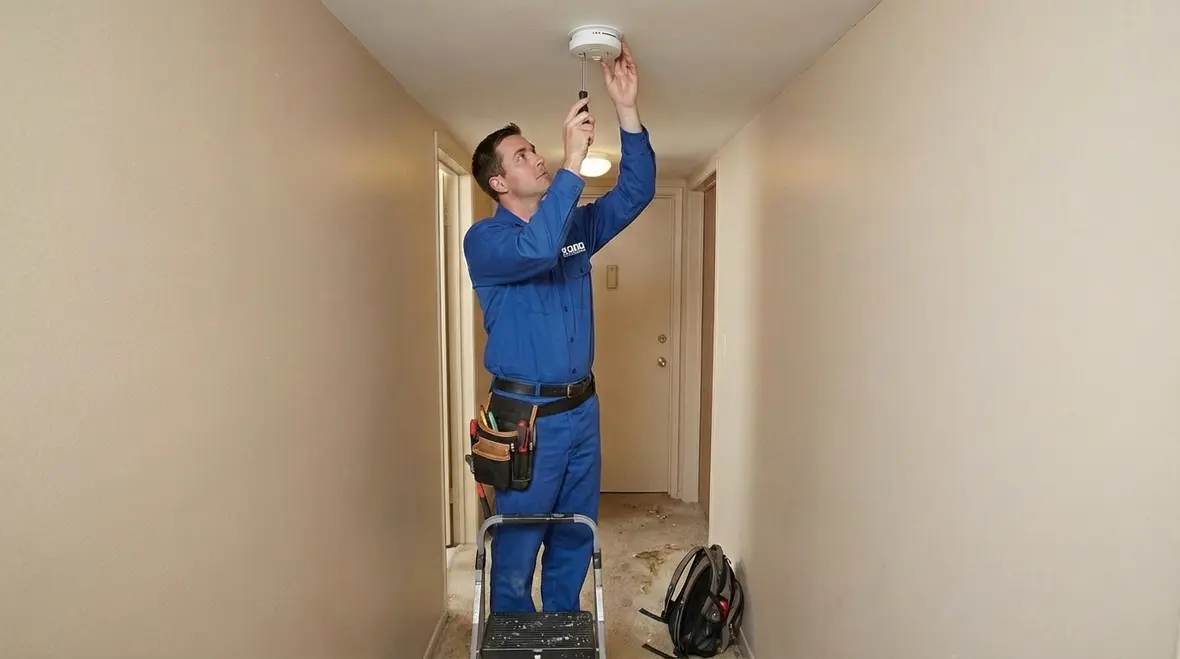
Core Components Required by Code
At its heart, a compliant fire alarm system includes several essential parts. Each plays a role in detecting danger and alerting occupants quickly.
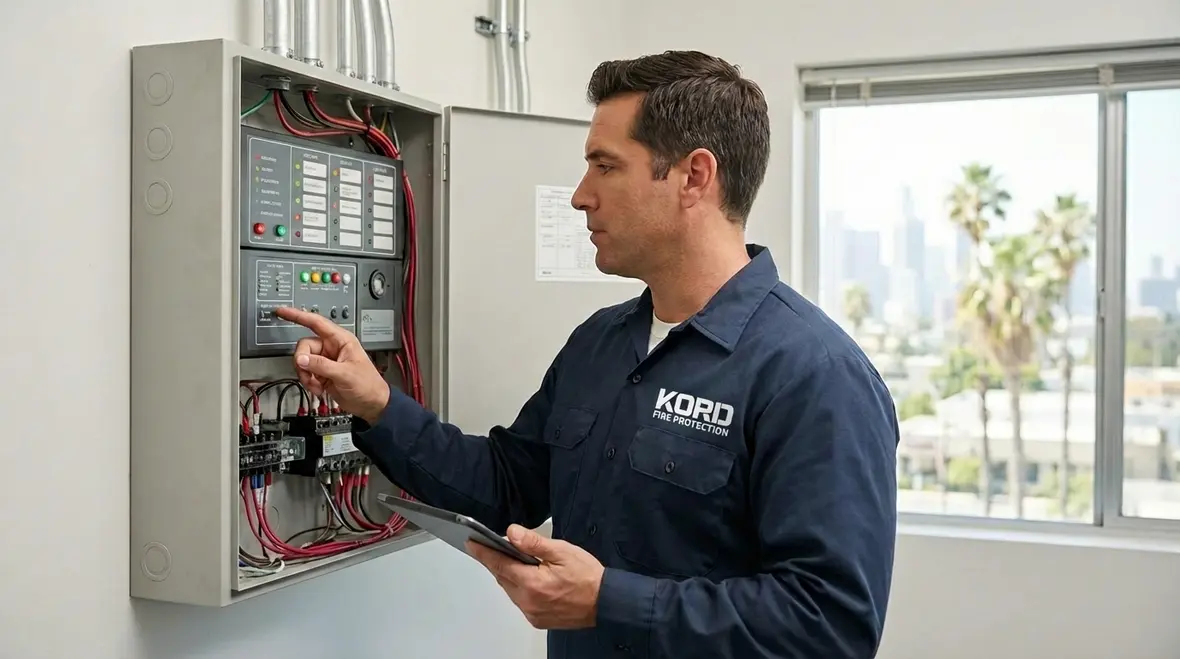
Control Panel
Control Panel
This is the brain. It receives signals from devices and activates alarms. In larger buildings, it also communicates with a monitoring station.
Initiating Devices
Initiating Devices
These include smoke detectors, heat detectors, and manual pull stations. When triggered, they send a signal to the control panel.
Notification Appliances
Notification Appliances
Horn strobes, speakers, and visual strobes alert occupants. California requires visual notification for accessibility compliance under ADA standards.
Monitoring and Communication
Monitoring and Communication
Most commercial systems must connect to a central station or supervising station. This ensures that when the alarm sounds, someone beyond the building walls knows about it.
Furthermore, installation must follow strict wiring methods, power supply requirements, and battery backup standards. Kord Fire Protection technicians often compare it to assembling a symphony orchestra. Every instrument matters, and timing is everything. For properties that benefit from more advanced detection and pinpointed device information, an addressable fire alarm system can take that orchestra to the next level.
How Often Should a Fire Alarm System Be Inspected in California?
Here is the question many property owners type into search engines at midnight. The short answer is this: regularly, and by code.
California follows NFPA 72 for inspection, testing, and maintenance. Generally:
Monthly
Monthly
Visual checks of control panels and signals.
Quarterly
Quarterly
Testing of certain initiating devices and supervisory signals.
Annually
Annually
Comprehensive testing of all devices, notification appliances, and communication pathways.
Additionally, some components such as batteries require periodic load testing. Smoke detectors may need sensitivity testing within specific time frames.
Kord Fire Protection technicians explain that inspections are not just formalities. They uncover corrosion, wiring faults, disabled devices, and outdated programming. In fact, many system failures occur not because the equipment was poorly designed, but because it was not maintained. Much like a car that never sees an oil change, even the best system will eventually protest.
Local Authority Approval and Permitting
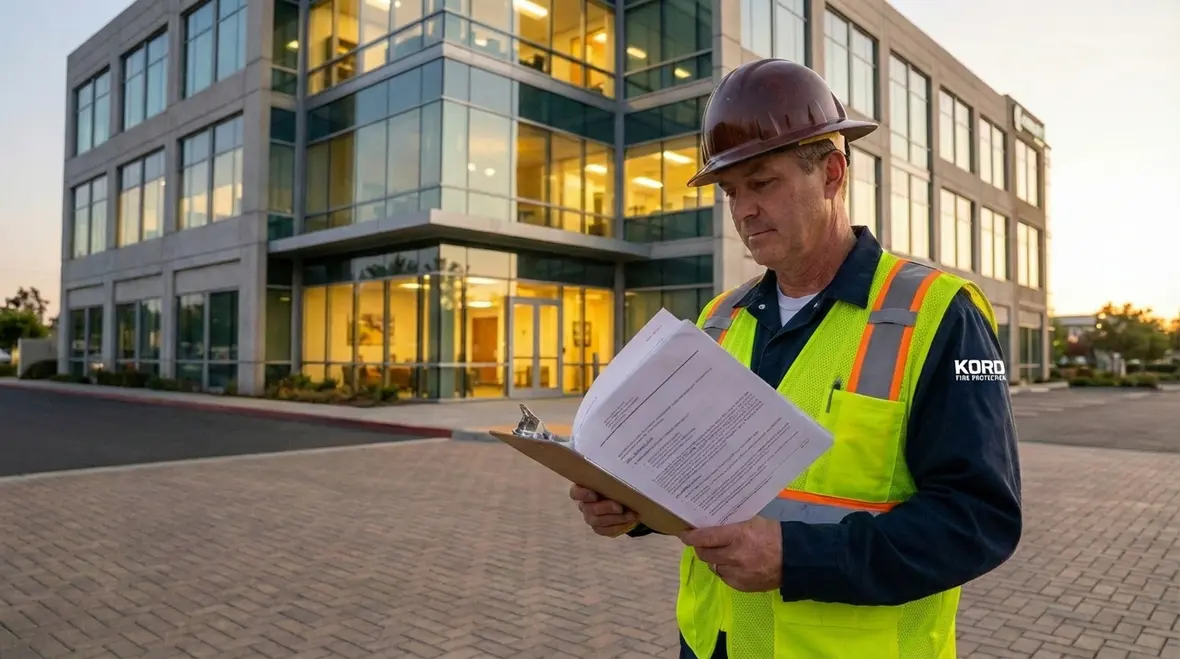
Before installation begins, most projects require plan review and permits from the local Authority Having Jurisdiction, often the city or county fire department. Plans must detail device locations, wiring methods, load calculations, and battery capacity.
After installation, inspectors verify that the system matches the approved plans and functions properly. Only then will they sign off.
Because California includes dense urban areas and wildfire prone regions, local officials pay close attention to system reliability. Therefore, working with experienced professionals matters. Kord Fire Protection technicians regularly coordinate with fire marshals, ensuring that documentation, testing records, and as built drawings meet expectations.
It is a bit like preparing for a final exam. One can hope for the best, or one can study the code and show up confident. The second option tends to work better.
Common Compliance Challenges and Practical Solutions
Even well intentioned property owners run into obstacles. However, most compliance issues fall into predictable categories.
Outdated Equipment
Outdated Equipment
Older panels may lack parts or fail to meet current communication standards. Upgrading ensures compatibility and reliability.
Improper Device Placement
Improper Device Placement
Renovations sometimes block or relocate detectors. Code requires specific spacing and coverage.
Missed Inspections
Missed Inspections
Busy schedules lead to forgotten testing dates. Setting service agreements prevents lapses.
False Alarms
False Alarms
Improperly maintained devices can trigger nuisance alarms. Regular cleaning and calibration reduce this risk.
Kord Fire Protection technicians approach these issues with a calm, methodical process. First, they assess the existing fire alarm infrastructure. Next, they identify gaps between current conditions and code requirements. Finally, they propose practical upgrades that align with budget and safety goals. No dramatic speeches. Just clear steps forward.
Key California Code Triggers at a Glance
Below is a simplified overview of common triggers that require a compliant system. While not exhaustive, it offers a helpful snapshot.
| Occupancy Type | Typical Requirement |
| Assembly Spaces | Manual pull stations and occupant notification when capacity exceeds set limits |
| Multi Story Residential | Central control panel with interconnected detection |
| High Rise Buildings | Voice evacuation and emergency communication |
| Educational Facilities | Audible and visual notification throughout campus |
| Large Commercial Spaces | Monitored alarm system with automatic detection |
Because each project carries unique details, professionals always review the specific code edition adopted by the local jurisdiction. Still, this overview shows how occupancy drives design.
Choosing the Right Professionals for Compliance
California does not leave installation to guesswork. Licensed contractors must handle design and installation. Moreover, technicians should understand state amendments and local enforcement practices.
Kord Fire Protection technicians often emphasize education. They walk property managers through device placement, monitoring contracts, and testing schedules. As a result, clients gain confidence instead of confusion.
Experience also matters during renovations and tenant improvements. Changes in layout, occupancy load, or use can trigger new requirements. Therefore, involving professionals early prevents costly redesigns later. It is far easier to adjust plans on paper than to rewire a finished ceiling.
Frequently Asked Questions
Conclusion and Next Steps
California sets high standards because lives depend on them. A properly designed and maintained fire alarm system does more than meet code. It protects people, property, and peace of mind. Kord Fire Protection technicians stand ready to explain requirements, coordinate approvals, and keep systems reliable year after year.
For those seeking clarity and compliance, now is the time to act. Schedule a professional evaluation and let safety speak louder than uncertainty. To explore tailored solutions for your property, visit Kord’s dedicated Fire Alarm Services page or contact the team to start a code-compliant fire protection plan that fits your building and your budget.
Know Your Weapon Before You Fight the Flame
Kord Fire Protection is your go-to when it comes to all things fire protection. For over 20 years, we’ve been serving Southern California with the quality service and equipment to keep your home or business safe at all times. Our competitive prices reflect our unwavering commitment to protecting what matters most in the event of a fire emergency. Give us a call, send an email, or use that form!

Join Our Newsletter!
Get the latest fire safety tips delivered straight to your inbox From our Newsletter.