
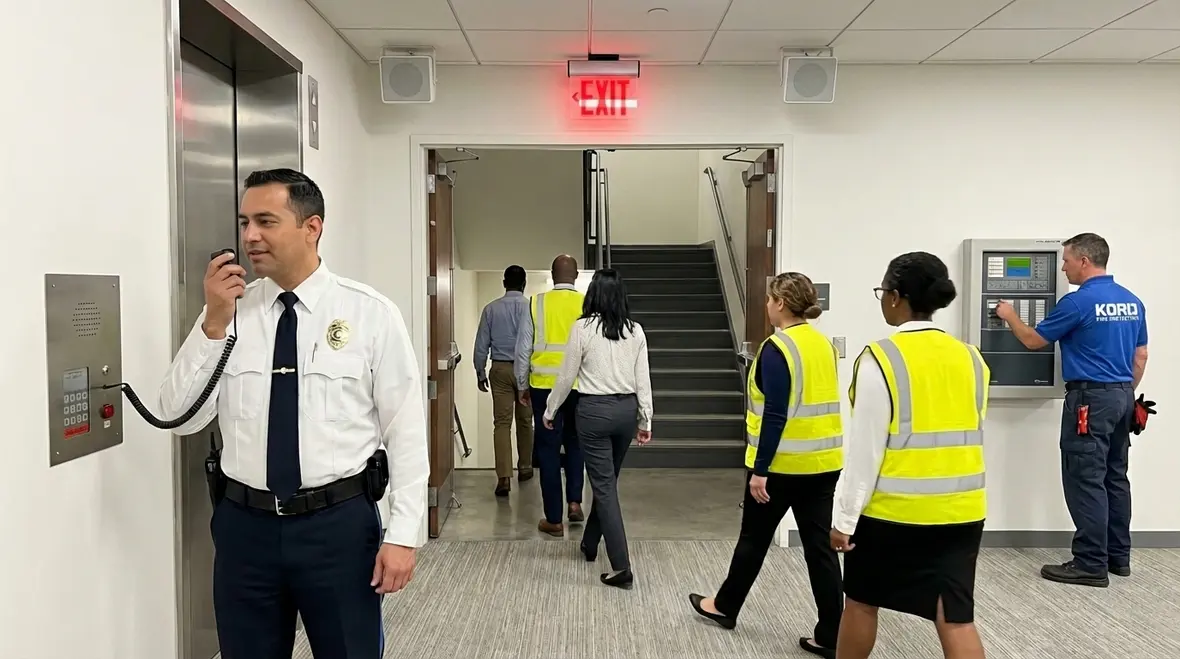
Voice Communication Systems Improve Evacuation Response
How Voice Communication Systems Improve Emergency Evacuation Response
In moments of crisis, clarity saves lives. The ability to Improve Emergency Evacuation Response depends on more than flashing strobes and blaring sirens. It relies on calm, direct human instruction delivered through reliable voice communication systems. When people hear clear guidance, they move with purpose instead of panic. As Kord Fire Protection technicians often explain to clients, a well designed voice system does not just make noise. It gives direction, reduces confusion, and restores order when seconds feel like hours. This article explores how these systems work, why they matter, and how they transform emergency planning from a checkbox exercise into a life saving strategy.

The Psychology of Hearing a Calm Voice in Chaos
People respond to voices differently than to tones. While alarms grab attention, they do not provide context. Consequently, occupants may freeze or head toward the wrong exit. However, when a calm voice provides specific instructions, the brain shifts from panic mode to action mode.
Research in behavioral safety shows that clear verbal direction reduces hesitation. Instead of wondering, “Is this a drill?” occupants hear, “This is not a drill. Please proceed to the nearest exit located to your right.” That simple sentence removes doubt. Moreover, it lowers the emotional temperature of the room.
Kord Fire Protection technicians frequently point out that tone matters just as much as volume. A steady, measured voice reassures listeners. It tells them someone is in control. And in an emergency, control is comfort. Think of it as the difference between a smoke alarm chirping and Morgan Freeman narrating your exit strategy. One startles you. The other guides you.
Core Components That Improve Emergency Evacuation Response
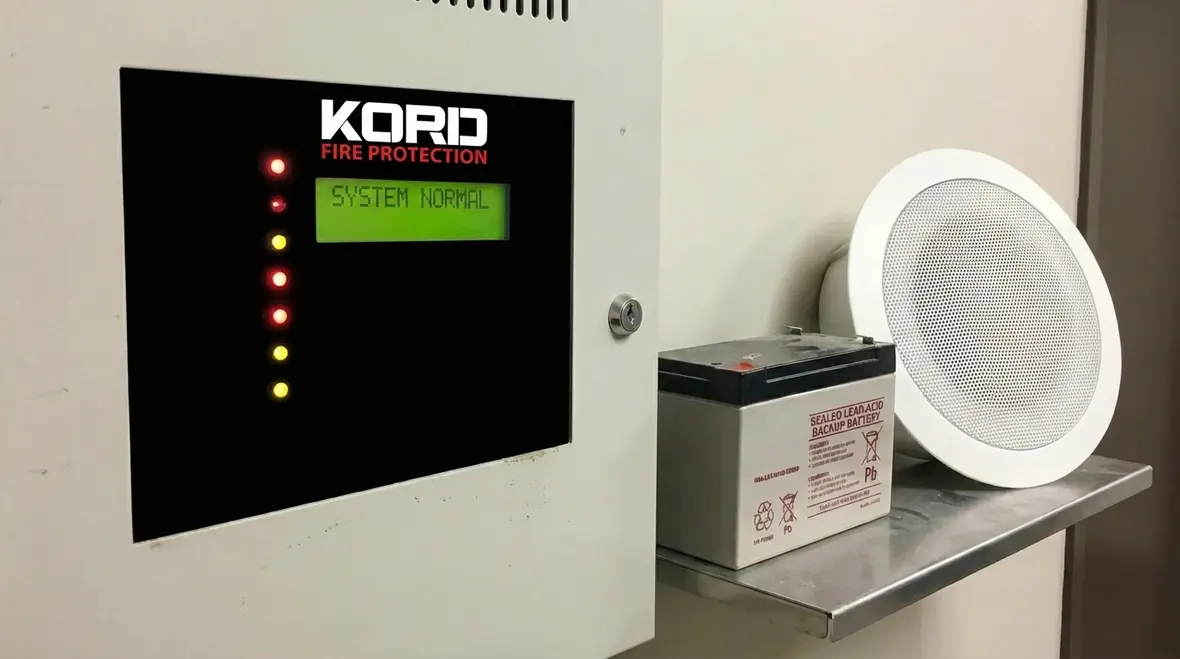
Voice communication systems combine hardware, software, and intelligent design. Together, these elements Improve Emergency Evacuation Response by delivering accurate messages at the right time and in the right place.
Below is a simplified dual column overview that Kord Fire Protection technicians often use when explaining system design to facility managers.
System Elements
- Fire alarm control panel
- Microphones and paging stations
- Distributed speakers
- Backup power supply
- Pre recorded message library
Operational Benefits
- Coordinates detection devices and triggers messages
- Allow live instructions from trained personnel
- Ensure even sound coverage across all zones
- Maintains communication during power loss
- Provides consistent and compliant instructions
Each component serves a clear purpose. For example, distributed speakers prevent dead zones where instructions cannot be heard. Similarly, backup power ensures the system remains active even if the main electrical supply fails. After all, emergencies rarely wait for convenient timing.
What Happens When Every Second Counts?
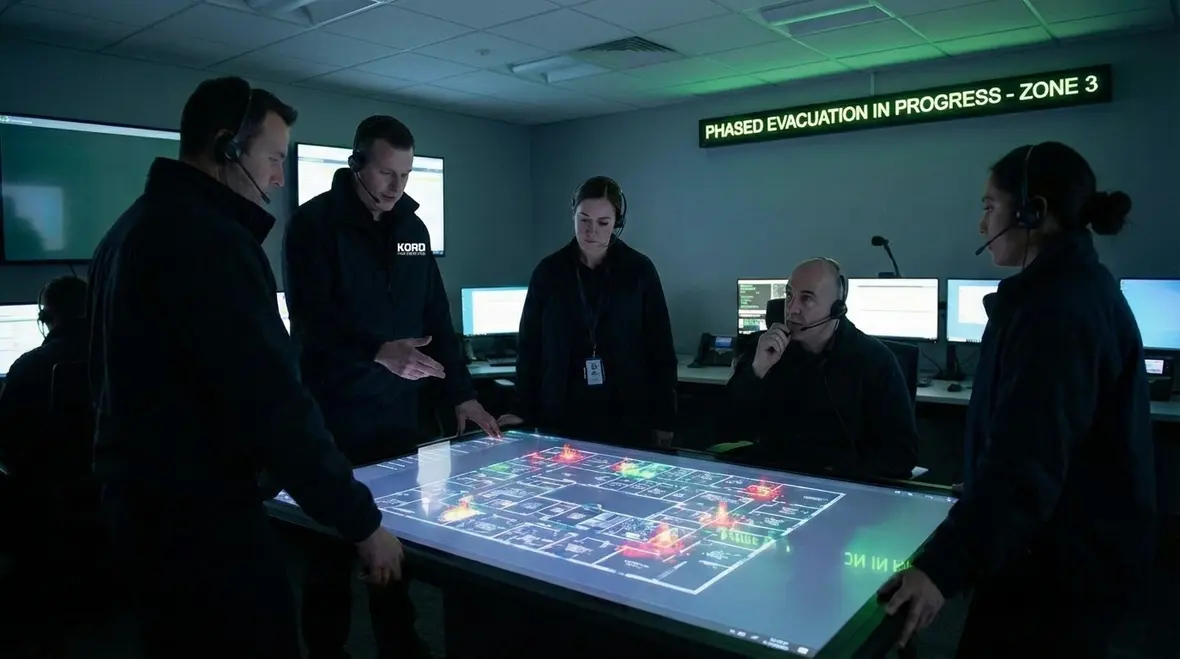
During a fire or other critical event, time becomes the most valuable asset in the building. Therefore, systems must act instantly and decisively. The process begins with detection. Smoke or heat sensors activate the control panel. Immediately afterward, the system sends a pre programmed voice message to specific zones.
Instead of triggering a full building evacuation right away, the system may initiate a phased response. For instance, it can instruct occupants on the affected floor to evacuate first while advising others to stand by. This strategy prevents stairwell congestion and reduces injury risk.
Kord Fire Protection technicians emphasize that phased messaging significantly improves evacuation flow in high rise buildings. Without it, hundreds of occupants may rush toward the same exit. With it, movement becomes organized. In other words, the building behaves less like a Black Friday sale and more like a well rehearsed orchestra.
Additionally, live paging allows emergency personnel to adapt instructions as conditions change. If smoke blocks one exit, staff can redirect occupants in real time. That flexibility can dramatically Improve Emergency Evacuation Response by eliminating guesswork.

Integration With Modern Building Systems
Voice communication systems do not operate in isolation. Instead, they integrate with fire detection, access control, elevators, and even HVAC systems. This interconnected approach strengthens overall safety performance.
For example, when the alarm activates, the system can automatically unlock designated exit doors. Simultaneously, it may recall elevators to a safe floor and shut down air handling units to prevent smoke spread. Meanwhile, voice instructions guide occupants away from restricted areas.
Because of this integration, building managers gain a coordinated response rather than a patchwork of reactions. Kord Fire Protection technicians often explain that integration reduces human error. When systems talk to each other, people do not have to guess which switch to flip. The building handles the heavy lifting.
Furthermore, many modern systems connect to remote monitoring centers. Consequently, emergency responders receive alerts quickly and arrive better prepared. Information flows smoothly from detection to dispatch, strengthening the entire chain of response.
If you are looking to connect your evacuation capabilities with broader alarm and monitoring solutions, explore Kord Fire Protection’s dedicated full fire protection services, including fire alarm, voice evacuation, and mass notification support.
Designing for Clarity, Not Just Compliance
Meeting code requirements is essential. However, compliance alone does not guarantee effectiveness. To truly Improve Emergency Evacuation Response, designers must focus on clarity, intelligibility, and coverage.
Sound intelligibility measures how clearly speech can be understood in a space. Large atriums, warehouses, and gyms often create echo and distortion. Therefore, engineers carefully place speakers and adjust output levels to ensure messages remain understandable.
Kord Fire Protection technicians conduct detailed site assessments before installation. They evaluate ceiling height, background noise, and occupant density. Then, they design a system tailored to the building’s unique layout. This customized approach ensures that instructions reach everyone, from the front office to the far corner of the storage room.
Moreover, routine testing plays a critical role. Regular inspections confirm that microphones function, batteries hold charge, and speakers deliver clear sound. As any seasoned technician will say, a system that works only on paper is about as helpful as a flashlight without batteries.
Training Staff to Maximize System Performance
Technology alone cannot carry the entire burden of safety. People must know how to use it. Therefore, staff training forms an essential part of any voice communication strategy.
First, designated personnel should understand how to initiate live announcements. Second, they must practice delivering calm, concise instructions. Long speeches are not helpful during emergencies. Clear, direct statements work best.
Kord Fire Protection technicians often conduct hands on training sessions after installation. They walk teams through real world scenarios and demonstrate proper microphone technique. Additionally, they explain how to avoid common mistakes such as speaking too quickly or using unclear language.
As a result, organizations gain confidence. Employees know what to say and how to say it. And when confidence replaces hesitation, evacuation speed improves naturally.
Reducing Liability and Strengthening Business Continuity
Beyond life safety, voice communication systems also protect organizations from legal and financial risk. Clear instructions reduce the chance of injury caused by confusion. Consequently, businesses may face fewer claims and less downtime after an incident.
Insurance providers increasingly recognize the value of advanced communication systems. Some carriers even offer incentives for properties equipped with modern voice evacuation capabilities. While no one installs safety equipment purely for insurance perks, it certainly does not hurt.
Moreover, a swift and organized evacuation supports faster recovery. When occupants exit safely and emergency crews receive accurate information, damage control improves. In turn, operations can resume sooner. That continuity matters deeply in healthcare facilities, schools, and commercial properties where downtime carries high costs.
To keep voice communication and alarm systems ready when it counts, many organizations schedule regular support through Kord Fire Protection’s fire alarm service systems, including inspections, testing, and 24/7 response.
Frequently Asked Questions
Final Thoughts on Safer, Smarter Evacuations
Every building tells a story. During an emergency, that story should not end in confusion. Voice communication systems bring order to chaos, guiding people with clarity and calm authority. By partnering with experienced professionals like Kord Fire Protection technicians, organizations can strengthen safety, reduce risk, and protect lives.
Now is the time to evaluate existing systems and take action. Because when it comes to evacuation, clear direction is not a luxury. It is a responsibility. If your facility needs help upgrading alarms, integrating voice communication, or scheduling inspections, connect with Kord Fire Protection’s full fire protection services team today to plan the next steps.
Know Your Weapon Before You Fight the Flame
Kord Fire Protection is your go-to when it comes to all things fire protection. For over 20 years, we’ve been serving Southern California with the quality service and equipment to keep your home or business safe at all times. Our competitive prices reflect our unwavering commitment to protecting what matters most in the event of a fire emergency. Give us a call, send an email, or use that form!

Join Our Newsletter!
Get the latest fire safety tips delivered straight to your inbox From our Newsletter.


