Extinguisher Placement for Compliance Across Australian Sites
Quick Answer: Strategic extinguisher placement keeps employees calm, cuts fire response time, and supports inspection readiness across industrial, retail, and commercial sites in Australia. The right locations follow AS 1670 guidance and site risk. Kord Fire Protection can act as a vital partner by designing compliant layouts and coordinating updates as buildings change.
When a fire breaks out, seconds matter, and confusion costs lives. That is why extinguisher placement for compliance should land in the first planning steps, not as an afterthought once walls get painted and tenants move in. For facilities across Australia, this approach helps meet common audit expectations and supports safe, fast access for the people who need it most. Kord Fire Protection supports businesses that want more than “just install a few units.” Instead, it treats extinguisher placement like part of the facility’s safety system, the way it treats alarms, signage, and procedures: with intention, documentation, and control.
For businesses that need the practical side handled as well as the planning, Kord Fire Protection’s fire extinguisher service and certification support fits naturally into layout reviews, equipment readiness, and ongoing compliance work. That matters because a perfectly chosen extinguisher location is only useful if the unit sitting there is maintained, documented, and ready to do its job without any drama.
Why extinguisher placement for compliance changes outcomes
Strategic positioning is not about checking boxes. It reduces the time it takes for staff to reach the correct extinguisher, and it prevents that classic moment where a worker wanders around like a character in a bad action movie. In a real incident, visibility, distance, and access routes drive outcomes. If equipment sits behind doors, under signage that no one reads, or down a hallway that becomes a choke point, the fire grows while the response team searches.
Also, placement affects how people behave under stress. When extinguishers sit where teams expect them to be, staff follow training faster. Conversely, when units hide in corners or sit too high for quick use, the best intention still turns into wasted time.
That is one reason this topic keeps showing up across Kord Fire Protection resources. The company’s guide on fire extinguisher placement and accessibility frames location as a real-world response issue, not just a line item on paperwork. In practice, a site that makes extinguishers visible and predictable gives employees one less decision to make during an already stressful moment, which is exactly when fewer decisions are better.
Placement affects both speed and confidence
A well-placed extinguisher does more than sit on the wall looking responsible. It tells people, without saying a word, that the building has been thought through. Staff notice when safety equipment appears in logical places near exits, corridors, hazard points, and work zones. They also notice when it does not. That silent confidence matters, because people respond better when the environment makes sense before anything goes wrong.
How facilities in Australia should plan coverage zones
A strong plan starts with how fire can spread through the building. After that, teams map hazards into zones, then position extinguishers so each likely starting point has nearby help. For example, industrial spaces often include risks near machinery, electrical panels, and storage areas. Retail sites face fuel loads from stock density, and commercial facilities must account for kitchens, plant rooms, and service corridors. Then come the realities of life: pedestrian flow, loading bays, and the way people actually move during a busy shift.
To make this work, the facility team should consider the following when building a coverage layout:
- Travel distance to access: Units should be reachable without navigating through blocked routes, locked rooms, or high-traffic pinch points.
- Path of egress coordination: Extinguishers must not distract from exits or create hazards along escape routes.
- Visibility at a glance: Proper mounting height and clear signage support fast decisions.
- Hazard clustering: Areas with similar risk profile often need a consistent placement pattern for predictable response.
- Changes over time: Furniture, racking, and equipment move. If the layout changes, the placement plan must stay current.
From there, Kord Fire Protection helps businesses turn hazard mapping into a practical, document-ready plan. And yes, it is the kind of work that saves time later, which is the only kind of magic a facility manager can afford.
This kind of zoning logic also connects well with Kord Fire Protection’s article on complete safety coverage, which emphasizes that coverage only works when people can reach the unit without detouring through obstacles, locked access points, or awkward routes that look fine on a floor plan and fail spectacularly in real life.
Coverage zones should match how the site actually works
A neat plan on paper means very little if the daily operation of the building has other ideas. Warehouses shift stock. Retail floors change displays. Commercial offices add partitions, furniture, and equipment that quietly alter movement patterns. A solid coverage plan respects the messy truth that buildings evolve. If the layout changes, the extinguisher plan should change with it, not six months later when someone finally notices a unit is hiding behind a pallet jack.
What placement rules must consider for different environments
One size does not fit all. Industrial, retail, and commercial spaces each carry unique fire behaviours, so extinguisher placement must reflect those differences. Even within the same building, the risk near a switchboard is not the same as the risk in a storeroom, and response decisions should not rely on hope.
For industrial environments, placement should account for high heat zones, equipment accessibility, and frequent movement around machinery. Units also need to stay reachable even when racking lines change or forklifts run their usual routes. In many retail stores, placement must handle crowds and layout shifts, while still allowing staff to reach equipment without pushing through crowds.
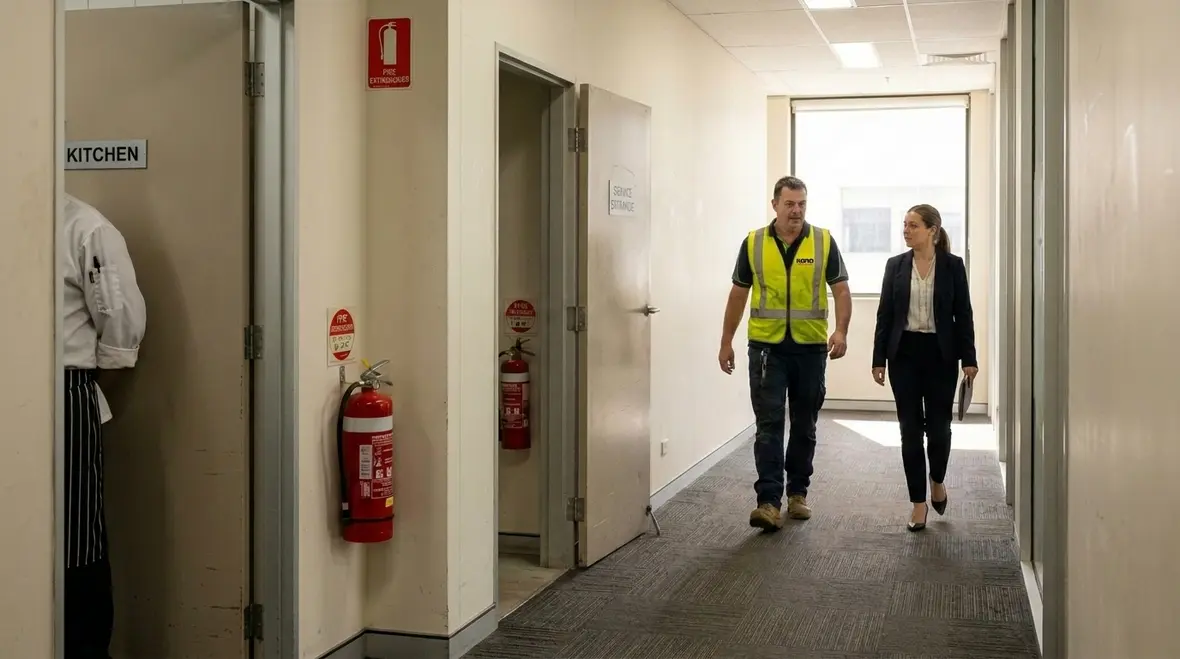
Commercial facilities often include kitchens, plant rooms, and mixed occupancy corridors. In those sites, extinguishers should support staff who may not be first responders by trade. That means clarity, visibility, and predictable locations matter even more. When staff can find the right unit quickly, they can take action before a small event becomes a full incident.
Because placement needs to match local standards and the building’s real risk profile, Kord Fire Protection becomes a vital partner. It helps teams align extinguisher location with the wider safety strategy, so the site’s fire readiness behaves like a system, not a patchwork.
For readers comparing different building types, Kord Fire Protection also has more focused resources, including guidance for office extinguisher placement and warehouse safety standards. Those examples reinforce the same point: the basic principle stays familiar, but the details need to follow the environment instead of forcing every site into the same template.
Where extinguishers should mount to support fast action
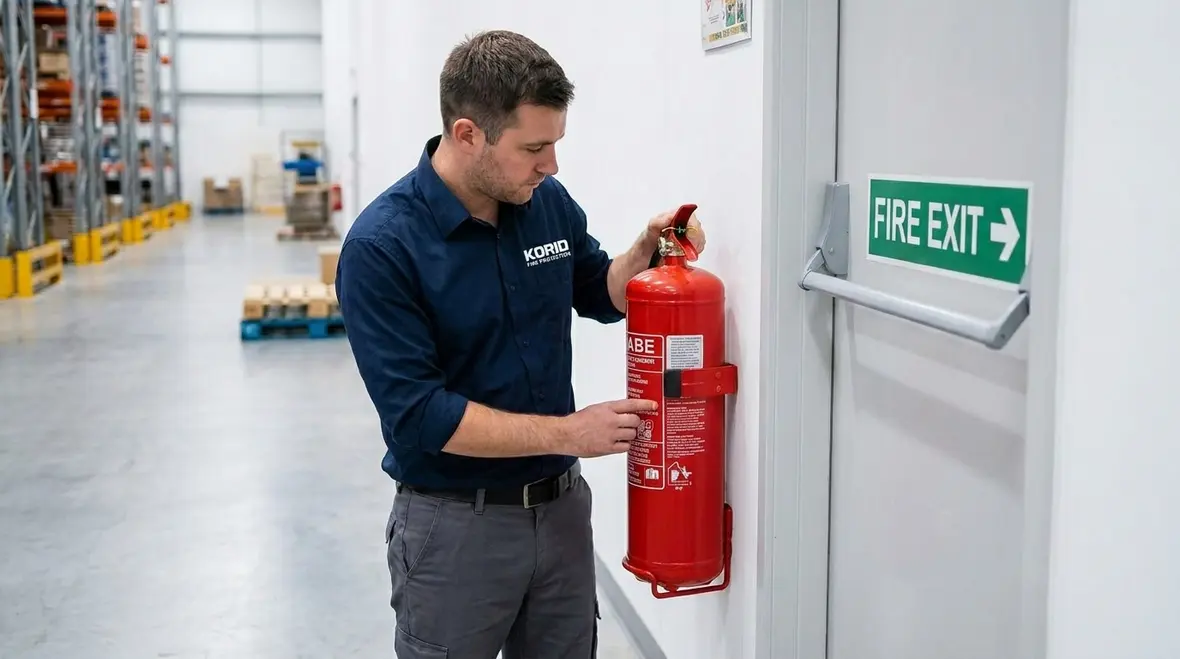
The “best” location is not just about distance. Mounting height, accessibility, and unobstructed paths all affect how quickly someone can use an extinguisher. If the unit sits too high, too low, or behind a cabinet, staff may need extra steps during an emergency. And when the emergency is already happening, extra steps are the enemy.
Effective placement typically keeps extinguishers:
- In clear view, so staff spot them even during a loud alarm and low attention.
- Along safe access routes, so people approach without squeezing through hazards.
- Near the hazard area, so the extinguisher matches the situation close to the fuel source.
- Avoiding obstructions, such as doors that swing into the access point or equipment that blocks the line of sight.
- Easy to grasp and operate, with practical reach for staff likely to use the equipment.
Additionally, staff training benefits when placement stays consistent across similar spaces. When employees walk into a new wing and find the units in familiar locations, they respond faster. That consistency also helps during contractor visits, audits, and emergency drills.
Kord Fire Protection’s article on proper placement saving seconds makes the same practical point with refreshing honesty: the right extinguisher in the wrong spot does not win any awards during an emergency. Mounting should support fast recognition, a simple reach, and a direct path, not a little obstacle course nobody asked for.
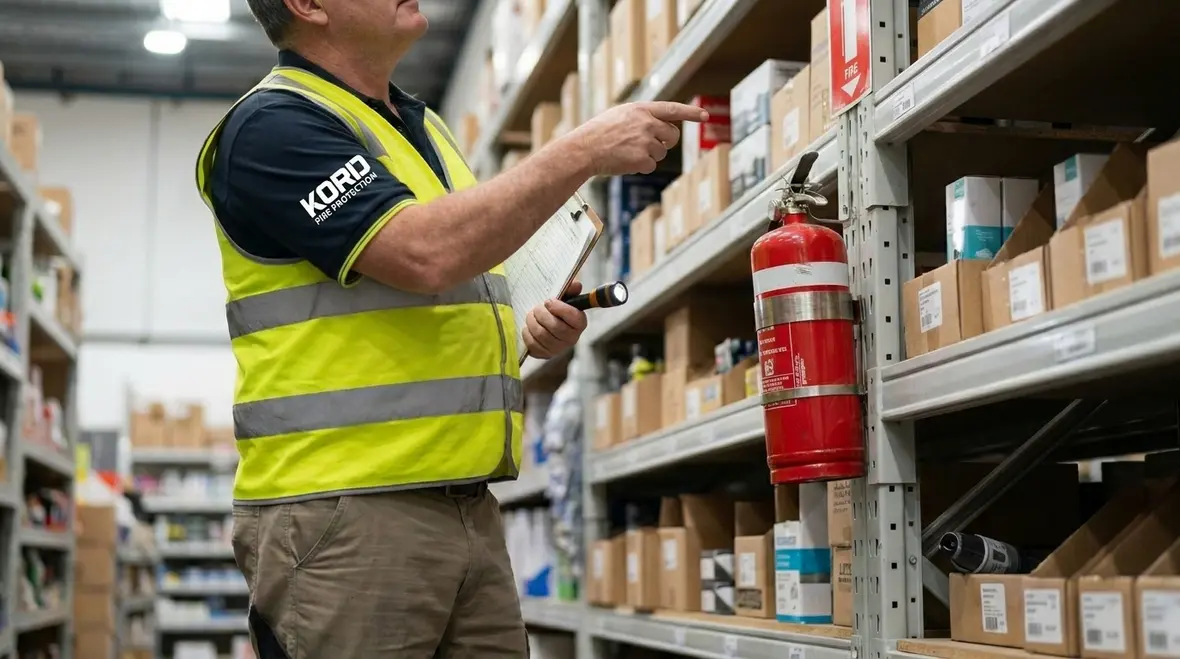
Consistency makes training more useful
Training lands better when the building supports what people were taught. If every similar corridor, plant room, or service area follows a predictable placement pattern, employees spend less time thinking and more time acting. That may sound simple, but in emergency response simple is a feature, not a lack of imagination.
Signs, access routes, and common placement mistakes
Many facilities handle extinguisher placement “well enough,” then lose the advantage through avoidable errors. These mistakes often appear after renovations, seasonal stock changes, or new display setups. The extinguisher is still present, but the access route becomes questionable. Sometimes a sign points to the right unit, but the door is blocked, the unit is hidden behind a pallet, or the area becomes a maintenance zone.
Here are frequent problems that create unnecessary risk:
- Blocked visibility from posters, shelving, or hanging promotional materials
- Inaccessible mounting points due to door swings, bollards, or temporary storage
- Incorrect placement during fit-outs where teams install units without updating the hazard map
- Underused locations where staff learn to bypass units because they feel difficult to reach
- Outdated plans when racking, services, or room use changes
To prevent these issues, businesses should treat placement verification like a living process. Kord Fire Protection supports that approach by helping teams review and update placement as the site evolves. That means fewer surprises during inspections and fewer “we didn’t think that would matter” moments. Facilities have enough surprises without adding fire risk to the list.
Signage plays a starring role here too. Kord Fire Protection’s signage requirements guide ties visibility directly to response speed, which is exactly why signs should support placement rather than compensate for poor placement. A giant sign above a badly hidden extinguisher is still a strange way to spend everyone’s time.
How Kord Fire Protection supports placement as a service system
Strategic extinguisher placement needs more than a quick install. It requires planning, documentation, and coordination with the facility’s wider fire safety framework. Kord Fire Protection can become a vital partner by supporting the entire job flow, from risk awareness to layout recommendations and ongoing alignment as changes occur across Australian industrial, retail, and commercial sites.
In practice, this support helps businesses:
- Align locations with actual hazards rather than generic assumptions
- Improve response speed through clear, predictable access
- Reduce inspection friction with documented, repeatable placement decisions
- Maintain readiness over time when the site changes through refurbishments or operational shifts
- Coordinate with other safety elements so signage, egress planning, and training work together
In other words, Kord Fire Protection helps turn extinguisher placement into a system that behaves the same way every day, not just the day someone takes photos for a compliance file.
That systems view also fits with Kord Fire Protection’s broader full fire protection services, where extinguisher coverage works alongside alarms, sprinklers, inspections, and readiness planning. The benefit is not only cleaner compliance documentation. It is a site that behaves more predictably when conditions are anything but predictable.
FAQ
Call Kord Fire Protection for a safer, compliant layout
Fire safety should feel steady, not improvised. Facilities that treat extinguisher placement for compliance as a planned system move faster during emergencies and feel more confident at inspection time. Kord Fire Protection can help your site map hazards, verify access, and stay aligned as your layout changes.
If you want placements that staff can actually use when it counts, get in touch with Kord Fire Protection today. A cleaner layout, better visibility, and smarter access points can turn compliance from a scramble into something far more useful: readiness.

Join Our Newsletter!
Get the latest fire safety tips delivered straight to your inbox From our Newsletter.