Fire Pump Room Electrical for Reliable Operation in AU
Quick Answer: Reliable fire pump operation starts long before water ever hits a sprinkler head. It depends on clean, protected power and controls that stay stable during smoke, power dips, and real-world faults. This article explains the critical electrical infrastructure behind dependable performance, and how Kord Fire Protection helps coordinate the details.
In every serious facility across Australia, the fire pump room electrical system works like the quiet engine under a loud promise: when alarms sound, the pump must run. Yet many sites treat that electrical side as an afterthought, until the day a voltage sag, a loosened terminal, or a miswired control circuit turns emergency readiness into a very expensive guessing game.
To prevent that, facilities teams must design, install, test, and maintain electrical infrastructure that supports pump start, steady operation, and safe transfer under pressure. And while the engineering matters, so does the partner who keeps the service job organized, documented, and compliant. That is where Kord Fire Protection can become a vital partner, turning scattered tasks into a single, reliable workflow.
Near the top of that workflow, it makes sense to connect electrical reliability with broader fire pump service support, because dependable operation is never just about a motor spinning. It is about whether the whole system is inspected, coordinated, and ready when the pressure drops for real.
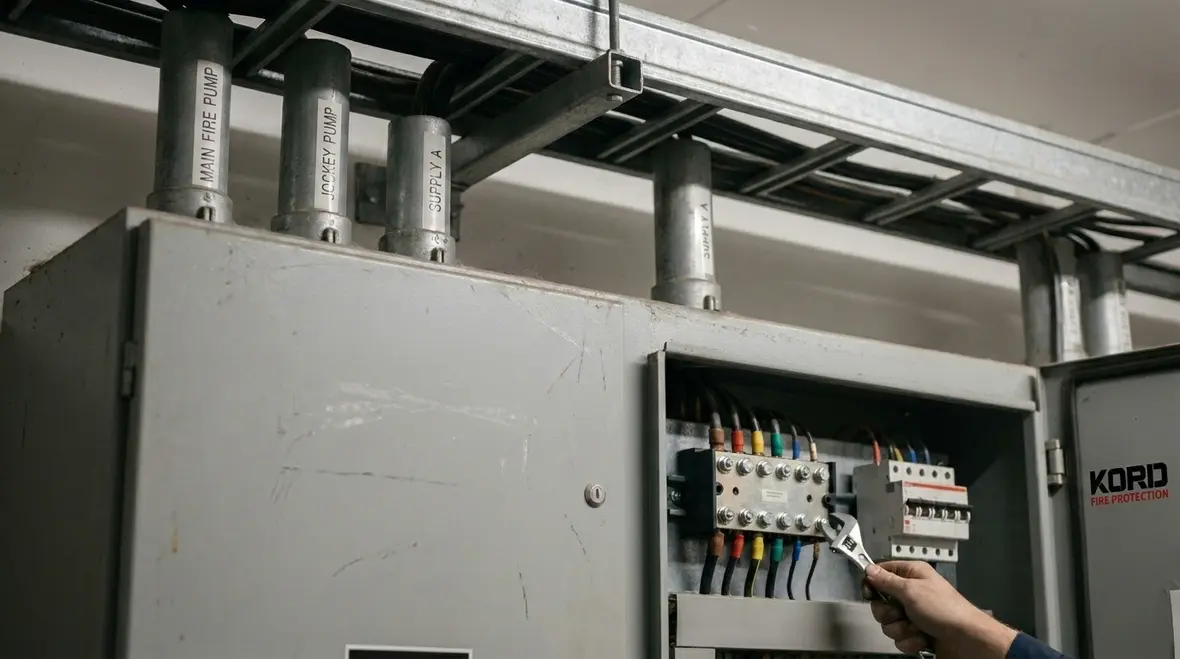
Why fire pump power must stay dependable under stress
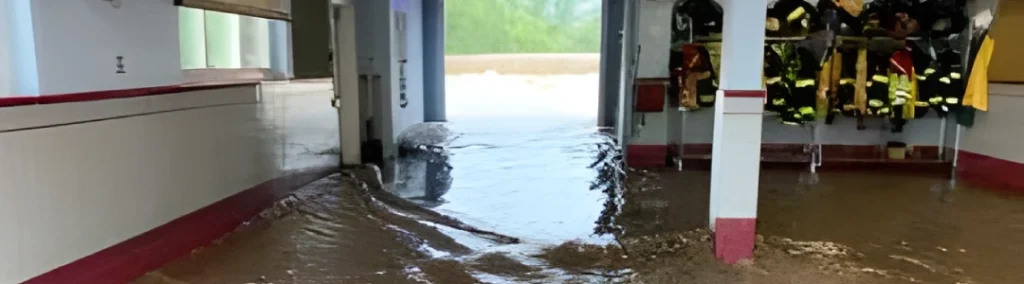
Fire pumps do not fail politely. They fail during the hardest moments, when the rest of the building is already fighting for stability. Therefore, the electrical system must handle common site realities: switching surges, upstream overloads, generator start timing, and short duration dips that can drop control voltages.
As a result, the design needs more than it powers on in the shop. It needs to keep running at the worst possible instant, not just the best possible one. Think of it like a good action movie: the hero cannot pause for applause when the villain activates a power cut.
In practical terms, this means protective devices, wiring quality, voltage stability, and control circuits must work together. If one element weakens, the entire chain becomes less trustworthy. And unlike pop music, fire pump performance cannot rely on close enough.
Stress changes the rules fast
A fire event is exactly the wrong time to discover that the incoming supply was shared too loosely, the controller sensitivity was never reviewed, or the backup source takes just a little too long to become useful. Electrical resilience is not glamourous work, but it is the kind of detail that separates a calm response from an ugly post-incident report.
What components make up critical electrical infrastructure
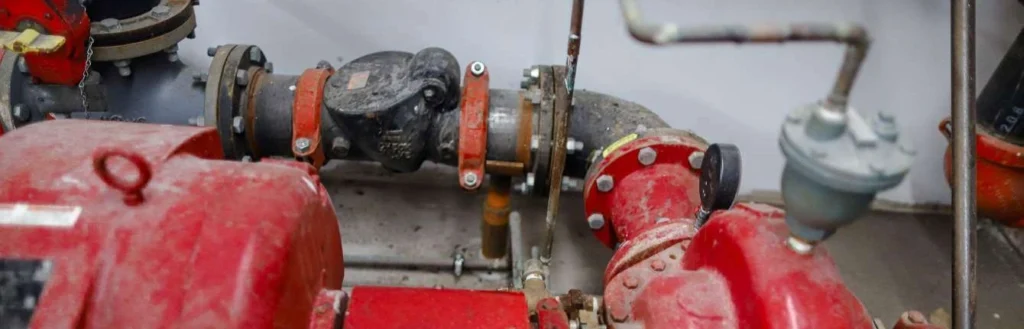
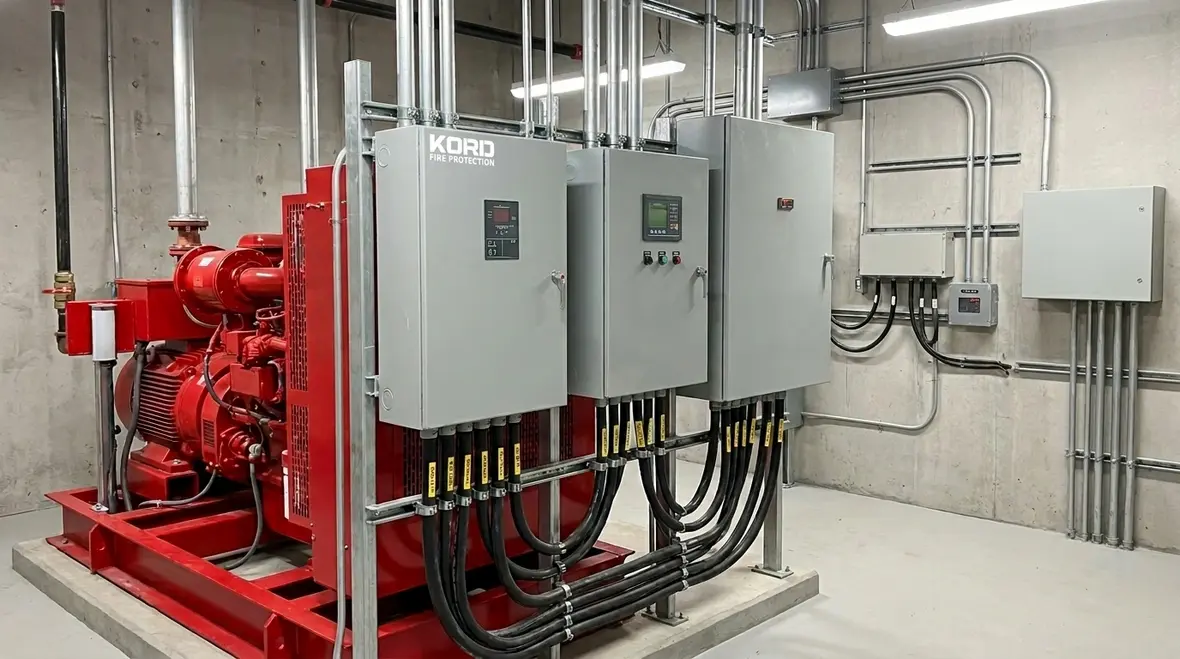
Critical electrical infrastructure includes everything from incoming power to the final control signals. To keep the fire pump system reliable, teams must focus on the following elements and how they interact.
- Dedicated fire pump supply: A dependable source designed so non essential loads do not interfere during a fault.
- Switchgear and feeders: Proper sized conductors, secure terminations, and reliable switching components.
- Transfer equipment: If the building uses an alternate source, the changeover must happen quickly and correctly.
- Overcurrent and fault protection: Protective devices must clear faults without taking down the pump when they should not.
- Fire pump controller: Start stop logic, control voltage monitoring, and safety interlocks.
- Field wiring to valves and sensors: Signals must be stable, correctly routed, and protected from damage.
- Motor protection and starters: Correct settings so the motor starts under load without nuisance trips.
Moreover, these components must support repeatable operation. A controller that behaves one way during commissioning and another way six months later is not a quirk, it is a risk. Therefore, the facility needs a system that can be proven, inspected, and measured over time.
Infrastructure is a chain, not a pile of parts
That is where disciplined service planning matters. Kord also covers the broader process on its fire pump testing and certification process page, which fits naturally with the idea that electrical reliability should be checked as part of an overall readiness routine, not left floating in its own little universe.
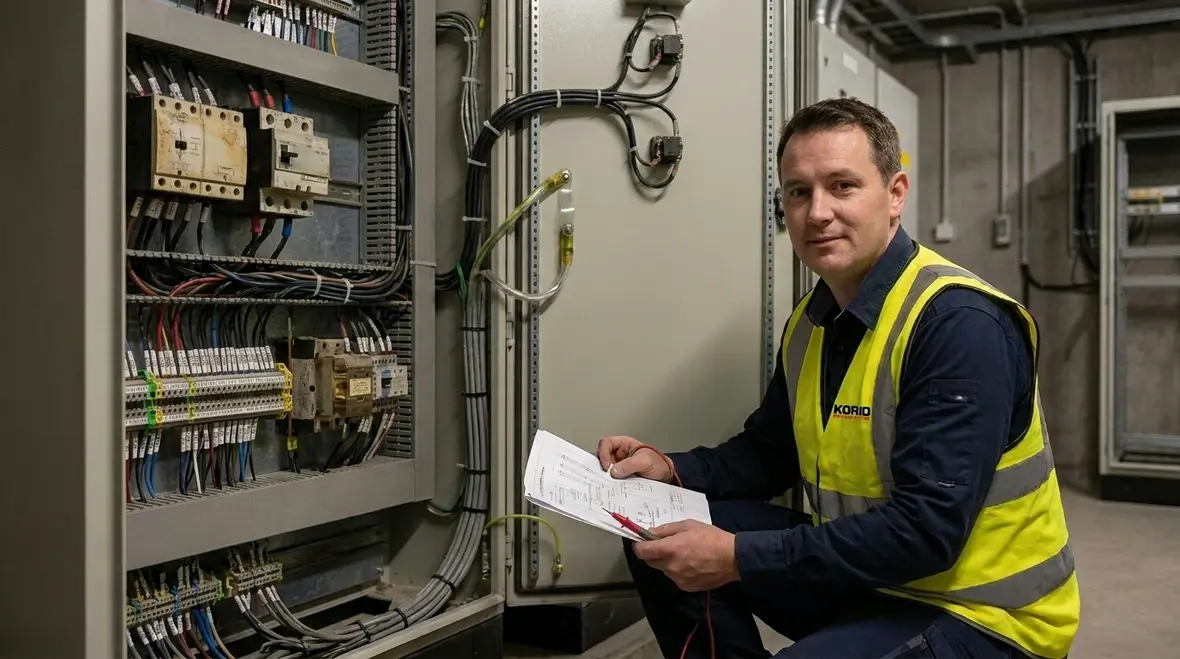
How to protect cables, terminals, and control wiring
Once the main power path exists, the next problem often hides in the details. Small issues in fire pump room electrical installations can create big consequences, especially in control wiring where a minor interruption can stop the start sequence.
For that reason, cable protection and termination quality matter as much as the spec sheet. Teams should verify that:
- Conduits and routing avoid physical damage, vibration, and contact with heat sources.
- Terminations use correct torque and durable hardware so they do not loosen under thermal cycling.
- Segregation separates power cables from noisy circuits that can cause control interference.
- Earthing and bonding remain continuous so faults clear safely.
- Cable insulation stays intact during installation and later maintenance work.
In addition, facilities should treat inspection like a routine habit, not a rare event. Every time someone changes equipment nearby, the fire pump electrical path could take an accidental hit. So the team should keep clear access, labelled circuits, and documented drawings that match the actual build. Nobody wants to troubleshoot a system based on a drawing that went out of date faster than a trending meme.
Small defects love hiding in plain sight
Loose lugs, worn insulation, and unlabeled conductors rarely announce themselves with dramatic flair. They usually sit quietly until vibration, heat, or a hurried maintenance visit gives them their big moment. That is why physical protection and accurate records deserve just as much attention as motor horsepower or controller settings.
Fire pump electrical control logic and start sequencing
Even when power quality looks fine, control logic can still cause failures. Fire pump start sequencing must handle real-world timing: pressure switch signals, alarm interface inputs, controller diagnostics, and motor start confirmation.
Accordingly, the control system needs consistent behaviour during test and actual operation. Teams should confirm that interlocks work as intended, including:
- Pressure and flow inputs that trigger operation without delay or misinterpretation.
- Alarm activation paths that start the pump reliably when required.
- Fault monitoring that signals issues clearly without preventing safe start.
- Sequential actions that occur in the right order, especially when multiple components must act together.
Then there is the human factor. When technicians follow the same steps every time, the controller responds predictably. However, when procedures drift, the result can be inconsistent tests and unclear outcomes. Therefore, site staff benefit from structured test plans, checklist-based routines, and service partners who keep records clean.
Here is where Kord Fire Protection can add value as a partner with the service job. They can help coordinate electrical and fire protection checks so the site follows one integrated approach, rather than bouncing between unconnected tasks that create gaps in coverage.
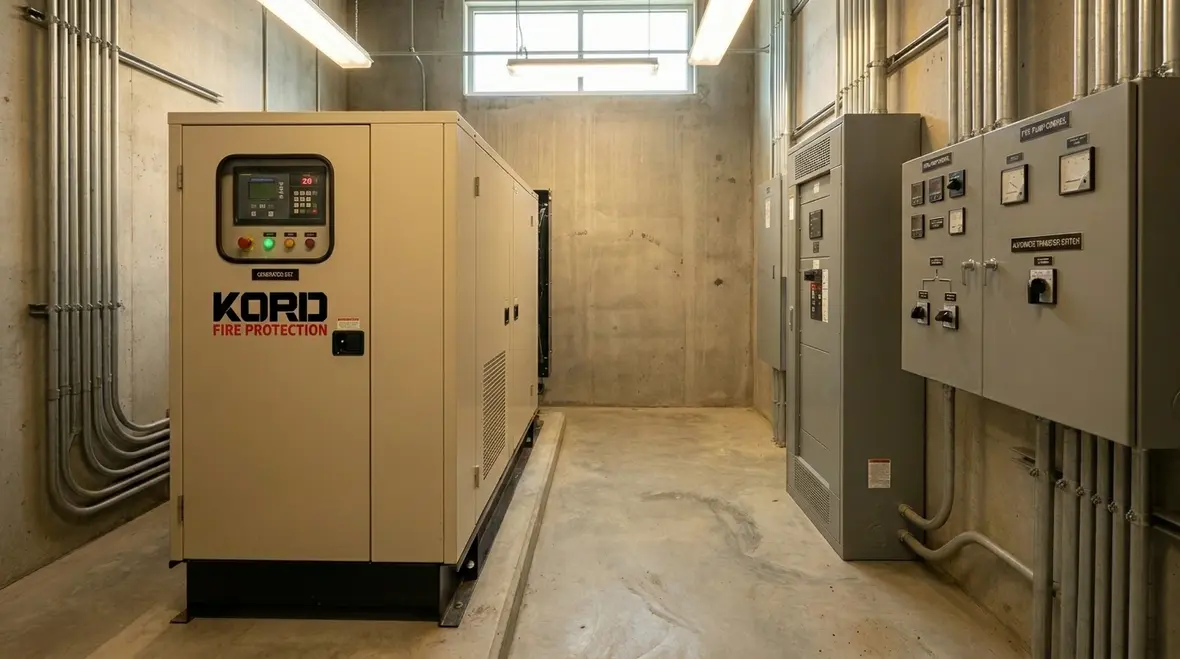
Backup power, monitoring, and readiness testing
Many commercial and industrial sites run on backup generators or alternate supplies, and that adds another layer of risk. If the generator start time, transfer timing, or voltage ramp does not match controller needs, the pump may fail at the moment it matters most.
So facilities must test readiness in a way that proves performance, not just presence. In practice, teams should:
- Verify transfer performance under load conditions, not only open circuit checks.
- Check voltage and phase integrity so controllers and motor starters receive stable supply.
- Inspect monitoring alarms so the system reports faults early and clearly.
- Schedule periodic functional tests that reflect how the building operates during real events.
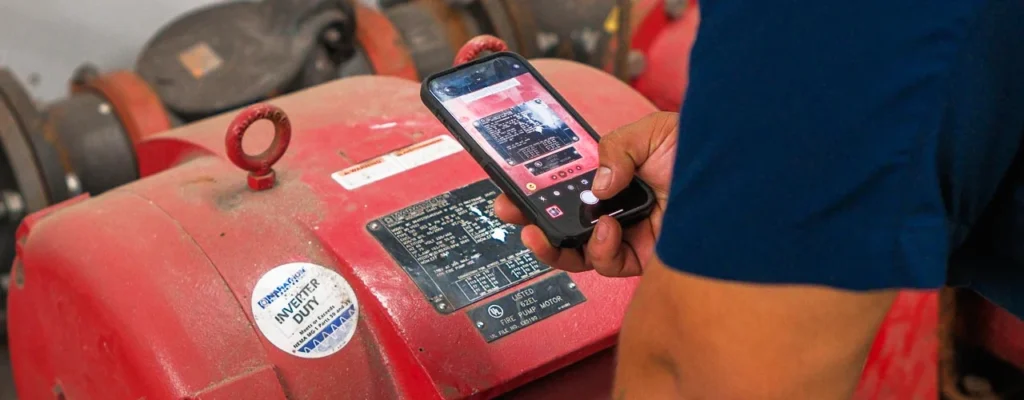
Additionally, the service records must tell a clear story. When problems occur, the facility should trace them to data: readings, test dates, observed conditions, and corrective actions. That becomes essential for multi site portfolios across Australia, where standardisation saves time and reduces mistakes.
Proof beats assumptions every time
A generator sitting in the yard and a transfer switch mounted on a wall do not automatically equal readiness. The sequence has to be observed, measured, and recorded. Otherwise the site is relying on optimism, and optimism is not a recognized commissioning method.
How Kord Fire Protection supports reliable service outcomes
When electrical infrastructure fails in the field, the cause often involves coordination: the right scope, the right sequencing, and the right documentation. A facility can have skilled technicians, but if electrical checks, fire pump controller reviews, and protection system testing do not align, the site still ends up with uncertainty.
That is why Kord Fire Protection can operate as a vital partner with this service job. They help facilities connect the dots between fire pump electrical elements and the wider fire protection requirements. As a result, the team reduces blind spots and improves compliance confidence.
In business terms, they also help protect budgets. Fewer surprises means less rework, fewer last minute shutdowns, and quicker decisions when defects are identified. Also, fewer mystery failures means technicians spend more time fixing issues and less time auditioning for a detective drama.
For readers managing mixed hazards across a site or fleet, Kord’s vehicle fire suppression systems page is also worth linking into the broader conversation, especially where reliability planning spans pumps, mobile assets, and coordinated service documentation.
Making continuous improvement part of fire pump room electrical management
Reliable performance does not come from a single upgrade. It comes from a continuous cycle: assess, maintain, test, and adjust. Even when the system looks good, the environment changes, staff changes, and maintenance work elsewhere can affect the fire pump electrical path.
Therefore, facilities should build a practical improvement rhythm. They can start by reviewing historical test results, identifying repeating trends like nuisance faults or intermittent signals, and then tightening installation practices where needed.
Next, they should ensure that drawings and labelling stay accurate, because outdated documentation creates delays during service calls. Finally, they should train on consistent test procedures, so every inspection produces useful, comparable results.
By staying proactive, facilities reduce risk and protect operational uptime. And that is the real goal. Fire pumps exist to protect lives and property, yes, but they also protect the facility from the operational chaos that follows when readiness is uncertain.
FAQ
Conclusion and call to action
Reliable fire pump performance depends on more than a pump and a promise. It depends on stable power, protected wiring, correct control sequencing, and readiness testing that proves performance. Facilities that take the electrical side seriously give themselves a far better chance of avoiding costly surprises when the system is needed most.
If a site wants fewer surprises, clearer records, and smoother compliance, it should work with a partner who understands the whole job. Kord Fire Protection can help coordinate the electrical and fire protection side so the system performs when it truly matters.

Join Our Newsletter!
Get the latest fire safety tips delivered straight to your inbox From our Newsletter.