Photoluminescent Egress Marking Requirements Guide
Photoluminescent egress marking requirements exist for one simple reason. When the lights go out, people still need a way out. Codes such as the International Building Code and NFPA 101 Life Safety Code require glow in the dark path markings in certain buildings, especially high rise structures. These rules address placement height, luminance performance, stair identification, handrail markings, exit path continuity, and ongoing maintenance. In short, the system must charge under normal lighting and shine bright enough during an emergency to guide occupants to safety.
Kord Fire Protection technicians often explain it this way. In a crisis, no one wants to guess where the stairs are. The path should speak clearly, even in darkness. And yes, it should speak louder than that one coworker who insists they know a shortcut.
What Is Photoluminescent Egress Marking and Why It Matters
Photoluminescent egress marking is a passive life safety system. It absorbs ambient light and then emits a visible glow when the power fails. Unlike electrical exit signs, it does not rely on batteries or generators. Instead, it quietly charges during normal conditions and stands ready when needed.
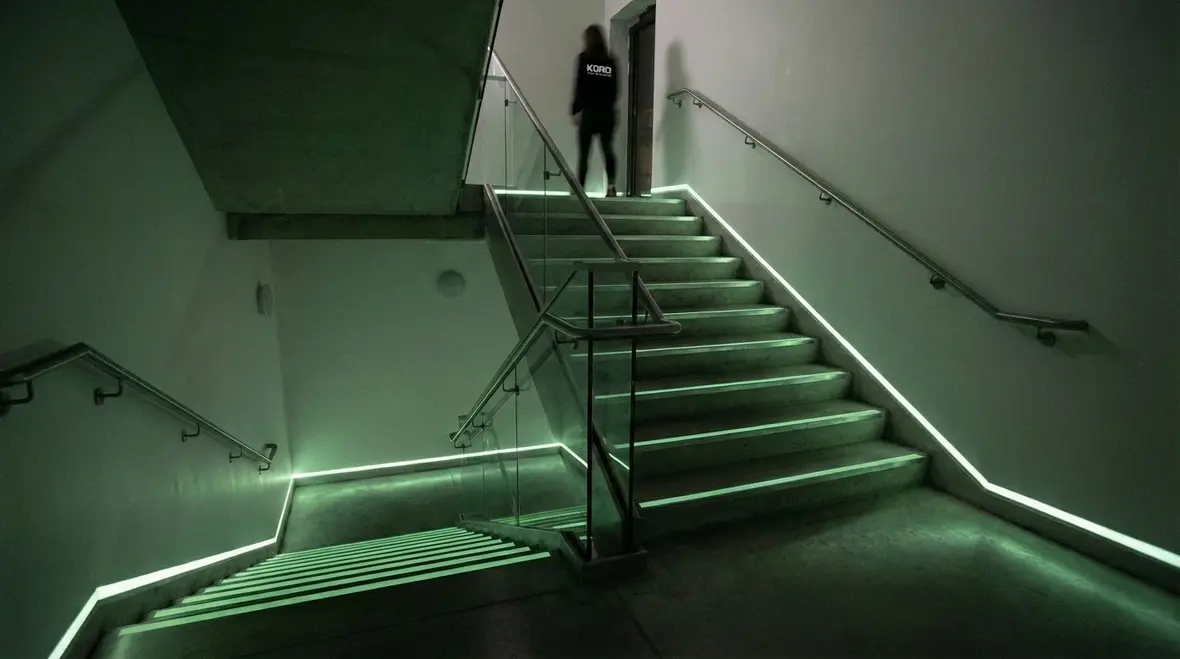
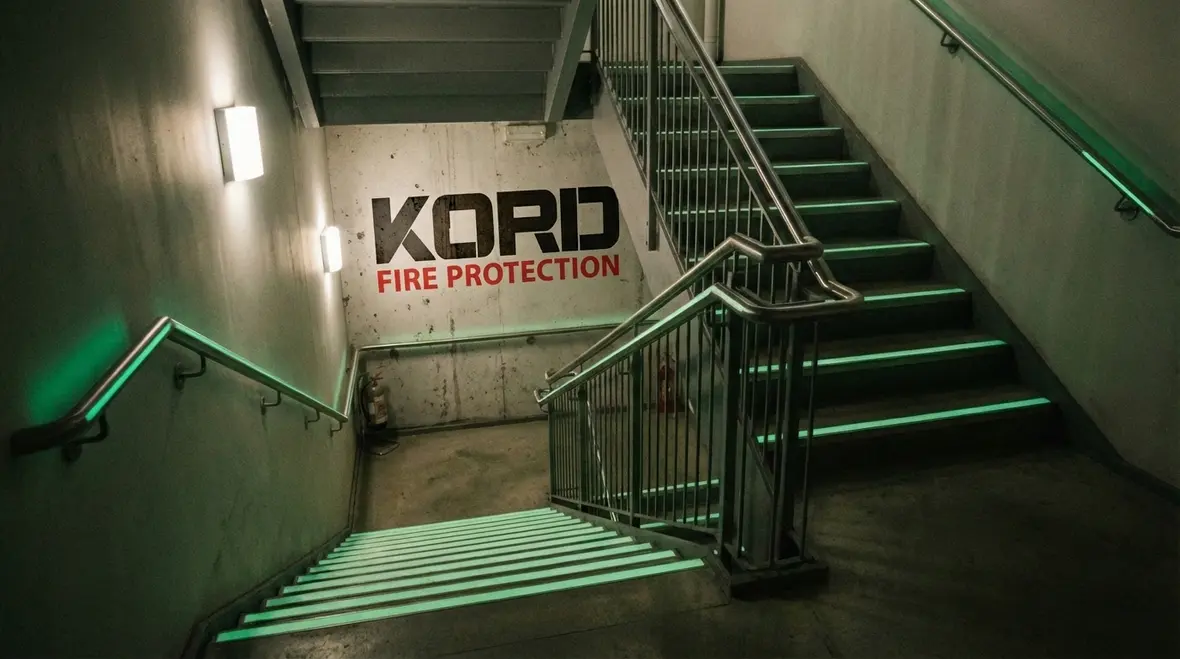
Because emergencies rarely send a calendar invite, reliability matters. Fires, earthquakes, or electrical faults can darken stairwells in seconds. In those moments, illuminated floor level path markings create visual contrast along stairs, landings, handrails, and perimeter boundaries. As a result, occupants can follow a clear route without confusion.
Moreover, these systems support human behavior. During emergencies, people look down to watch their footing. Therefore, low level luminous strips and stair edge markings guide movement where the eye naturally focuses. It is practical. It is subtle. And it works.
Kord Fire Protection technicians often describe it with calm confidence. Electricity can fail. Chemistry does not panic. The glow remains steady, like a dependable friend who shows up with a flashlight and good advice.
Where Photoluminescent Egress Marking Is Commonly Used
Building codes do not suggest these systems for decoration. They require them in specific settings where large occupant loads and vertical travel increase risk. Although regulations vary by jurisdiction, common applications include the following environments.
High Rise Buildings
High rise structures often require luminous egress path markings in exit stairwells. Because occupants may need to descend many floors, clear stair edge demarcation and handrail visibility become essential. Additionally, floor level perimeter markings help define the walking surface in smoke filled conditions.
Commercial Offices and Mixed Use Towers
Office workers may know their daily route to the lobby. However, during a fire alarm, smoke and stress change everything. Therefore, continuous glow strips along landings and stairs reduce hesitation and crowding.
Healthcare Facilities
Hospitals operate around the clock. Patients, visitors, and staff rely on calm, orderly evacuation procedures. Since some occupants have limited mobility, illuminated path markings add another layer of clarity and safety.
Hotels and Residential High Rises
Guests rarely study exit maps for fun. As a result, stair identification signs and glowing demarcation lines serve as silent guides in unfamiliar buildings.
Entertainment Venues
Theaters and arenas dim lights on purpose. While that sets the mood for a blockbuster finale, it complicates evacuation. Consequently, photoluminescent systems support safe movement when visibility drops.
Kord Fire Protection technicians walk through these buildings with a measured eye. They assess stair geometry, wall finishes, and lighting levels. Then they recommend solutions that meet code and fit the space. No guesswork. No drama. Just compliance and clarity.
Photoluminescent Egress Marking Requirements Explained Simply
Many building owners ask for a plain language breakdown of photoluminescent egress marking requirements. Fair enough. Codes can read like a legal thriller without the thrilling part. Here is what matters most.
Location and Continuity
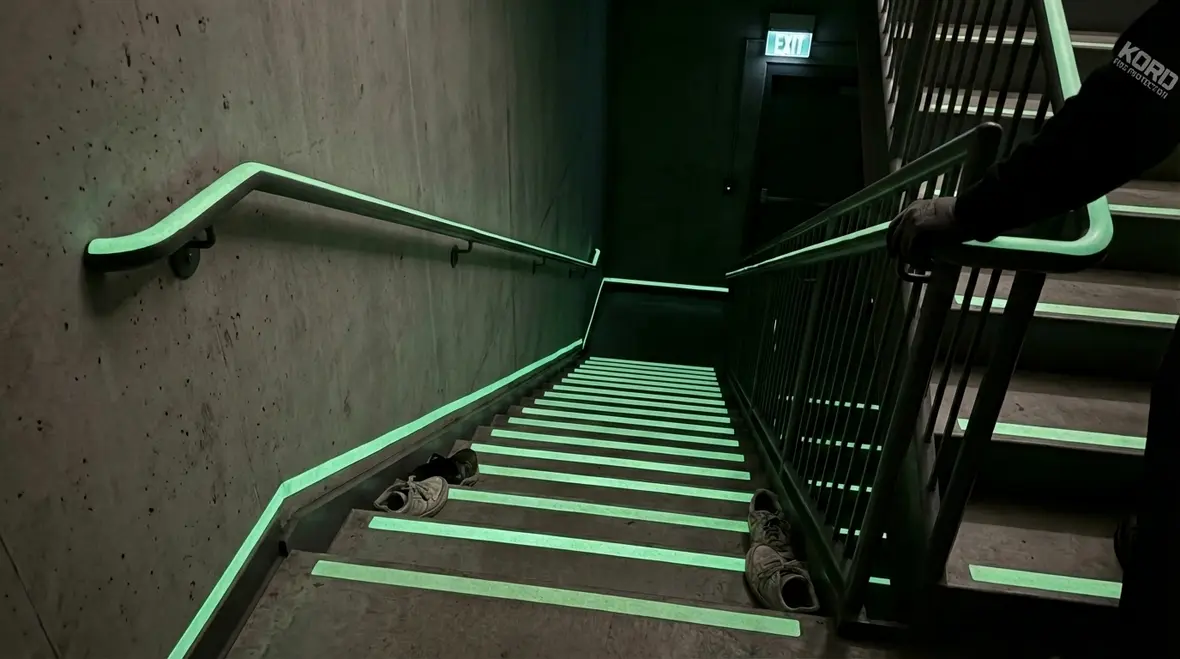
The system must provide a continuous path along the egress route. This includes stair treads, landings, handrails, and floor level boundaries. Gaps can create confusion, so consistency is key.
Height and Placement
Markings typically sit at floor level or on stair nosings. Because smoke rises, low level placement keeps guidance visible longer.
Luminance Performance
The material must achieve specific brightness levels after being charged by normal building lighting. Codes outline minimum luminance values at set time intervals during a power loss. In other words, it must glow bright enough and long enough.
Charging Light Conditions
Ambient lighting must provide adequate illumination to charge the material. If lighting levels are too low, the glow may not meet performance standards. Therefore, lighting design and photoluminescent systems must work together.
Durability and Maintenance
Materials must resist wear, especially on stair edges. Regular inspection ensures the system remains intact and unobstructed.
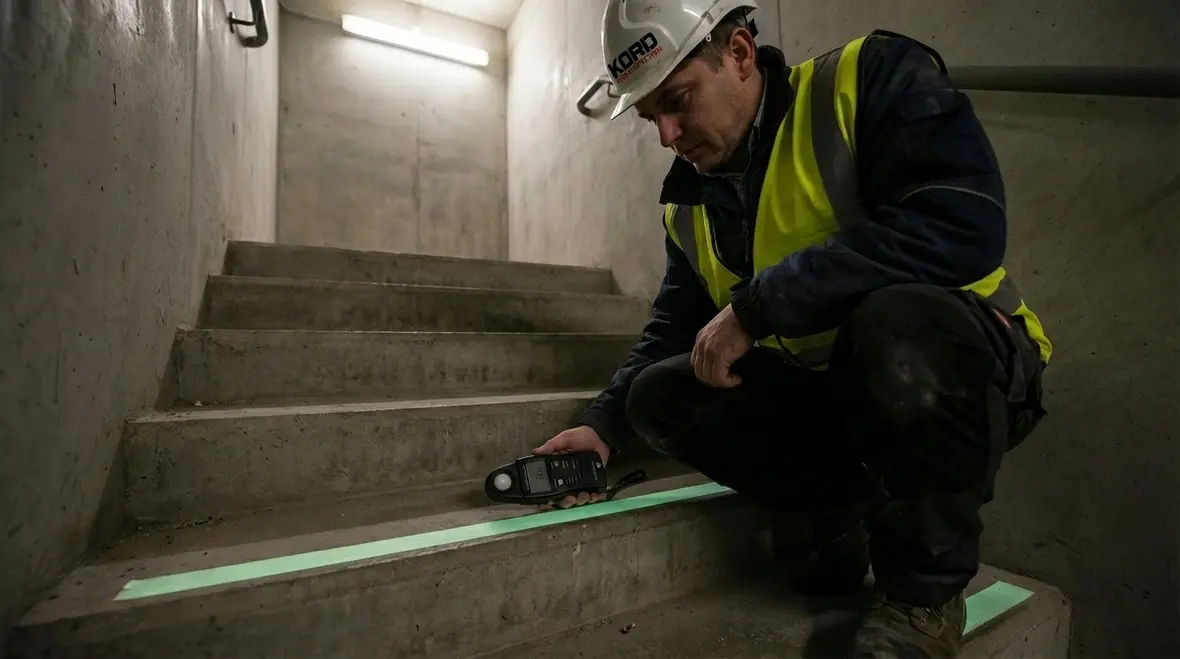
Kord Fire Protection technicians review these elements during surveys. They measure light levels, confirm installation height, and verify that every required component is in place. And if something falls short, they explain it in plain terms. No scare tactics. Just facts.
For owners looking at the bigger picture of life safety, resources such as Kord Fire’s NFPA 101 Life Safety Code overview help connect luminous egress markings to broader code requirements and inspection expectations.
What to Measure During Inspection and Testing
Compliance does not end with installation. To meet life safety glow path regulations, building owners must confirm ongoing performance. So what exactly should be measured?
Ambient Light Levels
Technicians measure the lighting that charges the photoluminescent material. If the light source changes during renovations, the charging capacity may drop. Therefore, any lighting modification should trigger a reassessment.
Luminance Output
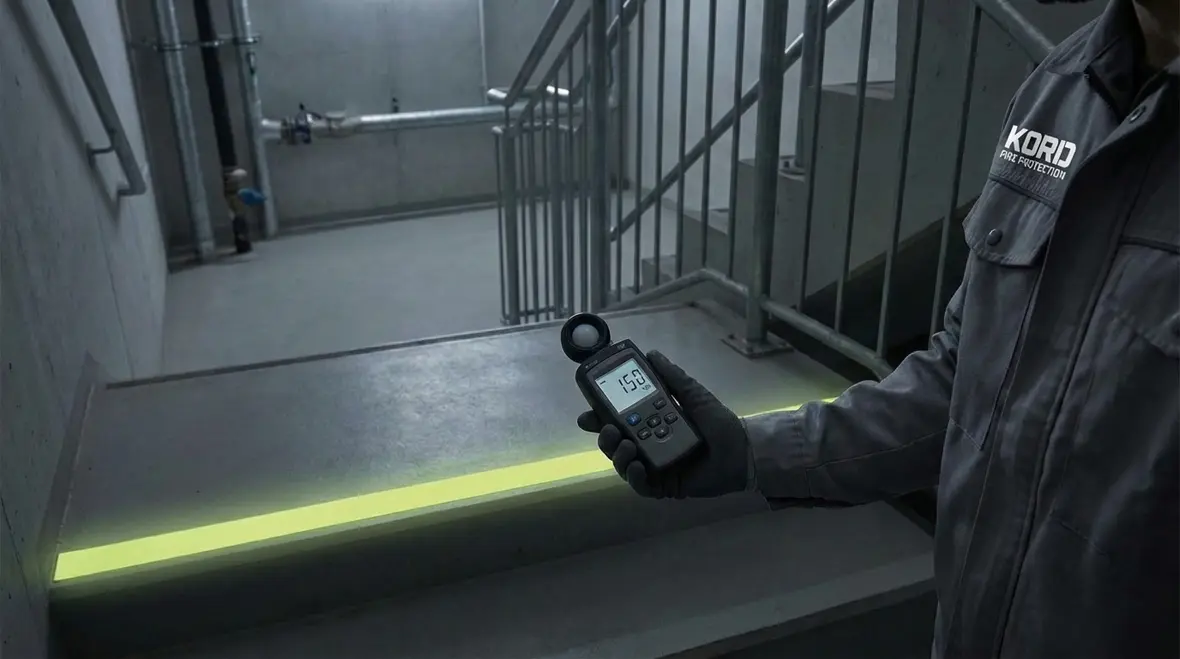
Using specialized meters, inspectors test how brightly the material glows after a simulated power loss. They compare results to code specified values at designated time marks.
Placement Accuracy
Measurements confirm that stair edge markings align with code required dimensions. Even small deviations can affect visibility and compliance.
Surface Condition
Scratches, paint overspray, or dirt can reduce brightness. Regular visual checks help maintain performance.
Signage Visibility
Stair identification signs and directional indicators must remain legible and properly located. Inspectors verify that no renovations block or obscure them.
Kord Fire Protection technicians approach these tasks with steady precision. They document findings, provide clear reports, and outline corrective steps when needed. As they often say, hope is not a measurement tool.
AI Prompt Style Questions About Photoluminescent Egress Marking
Explain where glow in the dark stair markings are required in a high rise building.
In most high rise structures, codes require them in enclosed exit stairwells. They must mark stair treads, landings, handrails, and the floor level perimeter. The goal is to create a continuous visible path to the discharge level.
Describe how to test if a photoluminescent system meets code.
First, confirm proper charging light levels. Next, simulate a power loss. Then measure luminance output at specific time intervals using an approved meter. Finally, compare results to code thresholds.
List the main components of a compliant stairwell system.
Typical components include stair edge strips, landing demarcation lines, handrail markings, perimeter boundary lines, and stair identification signage. Each element must meet placement and brightness standards.
Because these answers mirror how users phrase AI prompts, they also align with modern search behavior. Direct questions deserve direct answers. Simple as that.
Key Measurement Factors at a Glance
Below is a practical overview that Kord Fire Protection technicians often share during consultations.
Inspection Area What Technicians Measure and Verify
Ambient Lighting Light intensity in foot candles or lux to ensure proper charging capability
Stair Tread Markings Width, placement at nosing, adhesion quality, and glow performance
Landing Perimeter Lines Continuous boundary definition and correct height above floor
Handrails Presence of luminous strips and consistent visibility along full length
Signage Legibility, correct floor identification, and unobstructed placement
Overall System Luminance readings at required time intervals after lights out
This structured approach ensures no detail slips through the cracks. After all, stairwells are no place for improvisation.
Common Mistakes That Undermine Compliance
Even well intentioned projects can drift off course. However, most issues stem from a few repeat patterns.
First, some buildings install markings without verifying charging light levels. As a result, the material fails to meet brightness standards during testing.
Second, renovations sometimes cover or damage stair edge strips. A fresh coat of paint may look sharp, yet it can reduce glow performance if it overlaps luminous material.
Third, inconsistent placement disrupts visual flow. When perimeter lines stop and start, occupants may hesitate. In emergencies, hesitation costs time.
Finally, neglecting documentation creates problems during inspections. Clear records of installation specs, light measurements, and luminance tests support smooth compliance reviews.
Kord Fire Protection technicians address these gaps with steady professionalism. They coordinate with property managers, contractors, and safety officers. Moreover, they translate technical language into clear action steps. No one leaves the meeting wondering what happens next.
Integrating Photoluminescent Systems Into a Broader Life Safety Plan
Although luminous egress path markings play a vital role, they work best as part of a layered strategy. Fire alarms, sprinkler systems, emergency lighting, and staff training all contribute to occupant safety.
Therefore, building owners should view photoluminescent egress marking requirements as one piece of a larger compliance puzzle. When integrated properly, these systems reduce reliance on powered lighting alone. They also provide redundancy, which is a polite way of saying backup for your backup.
In addition, routine drills reinforce the visual cues created by the system. When occupants recognize glowing stair edges during practice scenarios, they respond faster during real events.
Kord Fire Protection technicians often remind clients that safety systems should feel almost invisible during daily life. Yet when called upon, they must perform without hesitation. Like a good stage crew, they do their best work behind the scenes.
Frequently Asked Questions
Bring Confidence to Every Stairwell
Photoluminescent egress marking requirements are not just lines in a code book. They are practical safeguards that guide people through darkness with quiet certainty. Kord Fire Protection technicians stand ready to assess, measure, and fine tune each component so that compliance becomes confidence. When the lights go out, preparation should shine.
If you are reviewing stairwells, exits, or overall fire code readiness, pairing your luminous egress evaluation with a broader fire protection inspection schedule helps keep every system on track. Contact Kord Fire Protection today to review your photoluminescent markings, confirm alignment with NFPA 101 Life Safety Code, and coordinate any needed upgrades so that every step toward safety glows with purpose.
Need support beyond egress markings? Explore Kord Fire’s Los Angeles commercial fire code requirements guide and schedule a code-focused walk-through to align your exits, alarms, sprinklers, and luminous systems under one coordinated life safety plan.
Know Your Weapon Before You Fight the Flame
Kord Fire Protection is your go-to when it comes to all things fire protection. For over 20 years, we’ve been serving Southern California with the quality service and equipment to keep your home or business safe at all times. Our competitive prices reflect our unwavering commitment to protecting what matters most in the event of a fire emergency. Give us a call, send an email, or use that form!

Join Our Newsletter!
Get the latest fire safety tips delivered straight to your inbox From our Newsletter.