
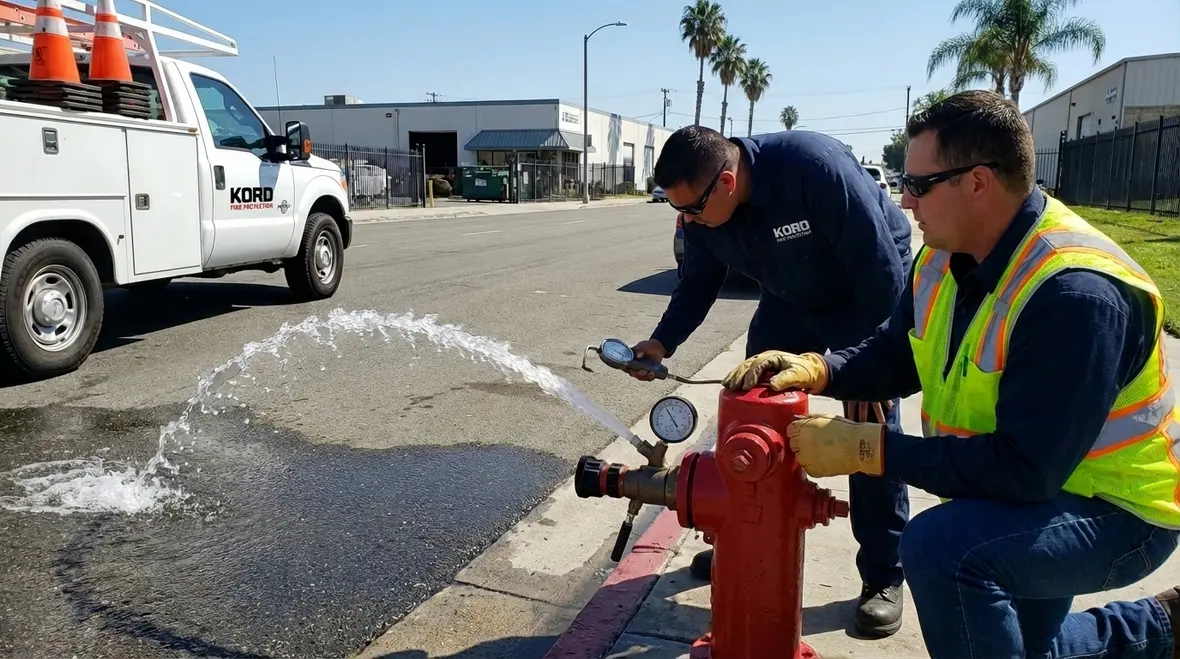
Carson Fire Hydrant Flow Testing Services
There is something steady and reassuring about a fire hydrant. It stands on the curb like a quiet guardian, painted bright, waiting for a day everyone hopes never comes. Yet behind that simple fixture lies a complex system that demands attention. That is where Carson fire hydrant flow testing enters the scene. Within the first few minutes of a professional test, trained technicians can uncover the true strength of a city’s water supply, reveal hidden risks, and confirm whether buildings are truly protected.
In Carson, property owners, facility managers, and developers rely on these tests not as a formality, but as a safeguard. Kord Fire Protection technicians often explain that flow testing is less about turning a wrench and more about understanding how water behaves under pressure. And as it turns out, water can be as dramatic as a reality TV star when pushed to its limits.
What Does Fire Hydrant Flow Testing in Carson Actually Reveal?
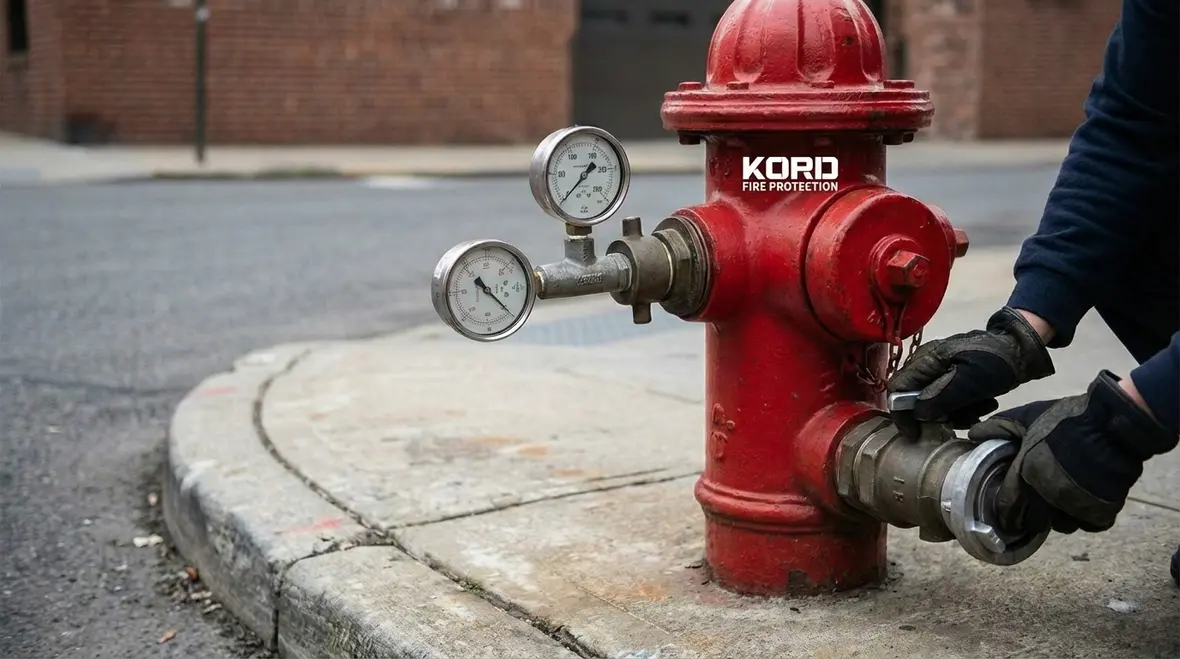
At its core, a hydrant flow test measures two things: pressure and volume. However, the story it tells goes much deeper. When technicians open a hydrant and monitor the water movement, they collect data that reveals how well the underground water system performs during peak demand.
First, they record static pressure, which is the normal water pressure in the line when no water flows. Then, they measure residual pressure while water rushes out of the hydrant. The difference between the two numbers shows how much strain the system can handle.
From this information, experts can determine:
1. Available Fire Flow
How many gallons per minute the hydrant can deliver during an emergency.
2. System Weaknesses
Pressure drops may signal aging pipes, obstructions, or undersized mains.
3. Compliance Status
Whether the property meets local fire code and insurance requirements.
Therefore, the test does not simply produce numbers. It paints a picture of readiness. And readiness, especially in fire protection, is everything.
Connecting Carson hydrants to national standards
These local Carson hydrant tests align with NFPA 291, the national standard that governs how hydrants are tested and marked so firefighters know exactly what kind of flow they can expect before the first hose is charged. Knowing the available fire flow at each hydrant helps Kord Fire Protection and city officials make sure those bright curbside guardians keep their promise when it counts.
How Technicians Perform a Hydrant Flow Test
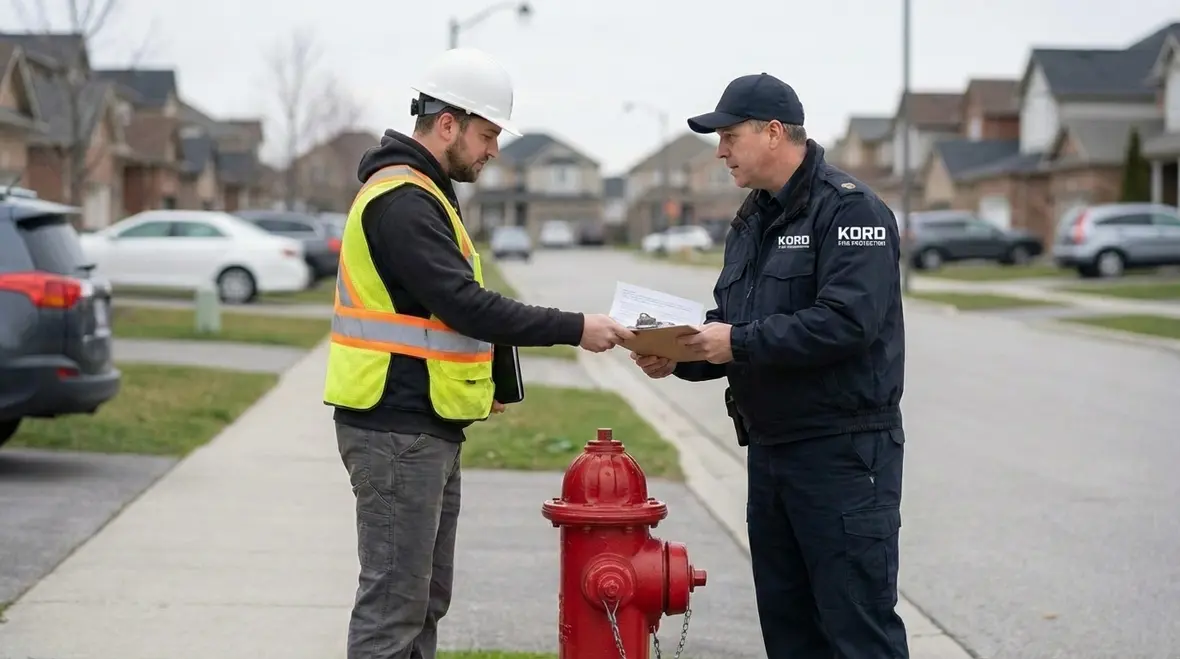
For those imagining chaos, sirens, and water spraying like a scene from an action movie, take a breath. The process is controlled and precise. Kord Fire Protection technicians approach each site with a plan, proper equipment, and a clear understanding of municipal standards.
The procedure typically follows these steps:
Preparation
Technicians inspect hydrants for visible damage, check caps and valves, and confirm they are operating correctly.
Gauge Setup
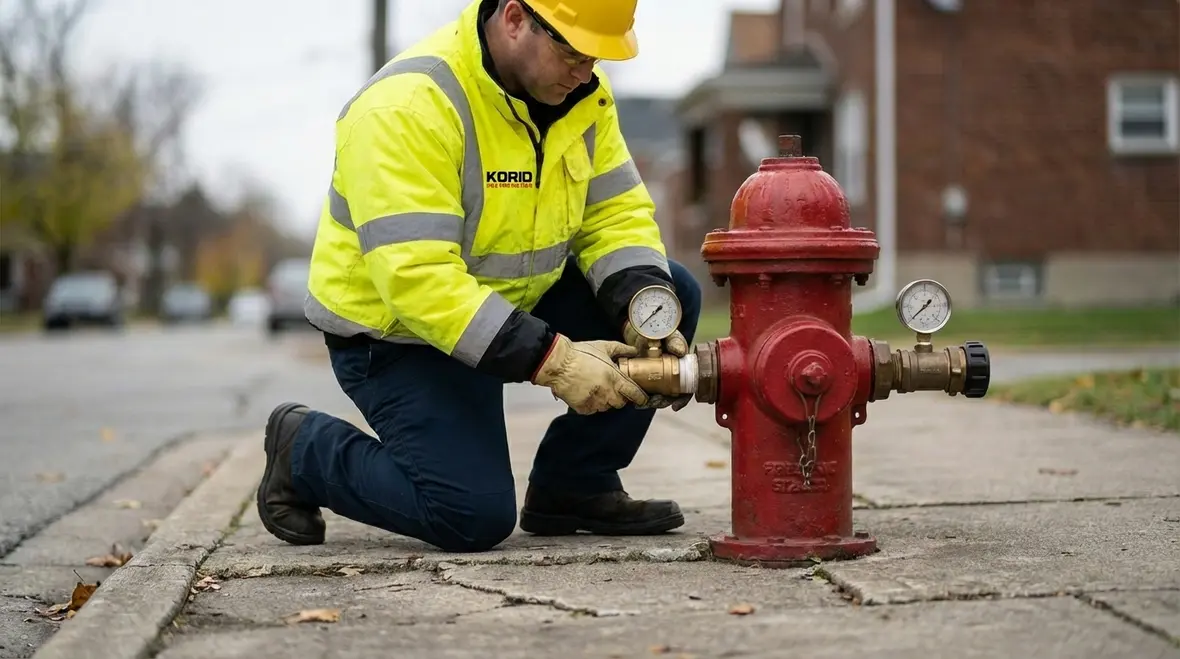
They attach calibrated pressure gauges to measure static and residual pressure accurately.
Flow Measurement
One hydrant flows water while another nearby hydrant records pressure changes. Technicians measure the pitot pressure at the flowing outlet to calculate gallons per minute.
Data Analysis
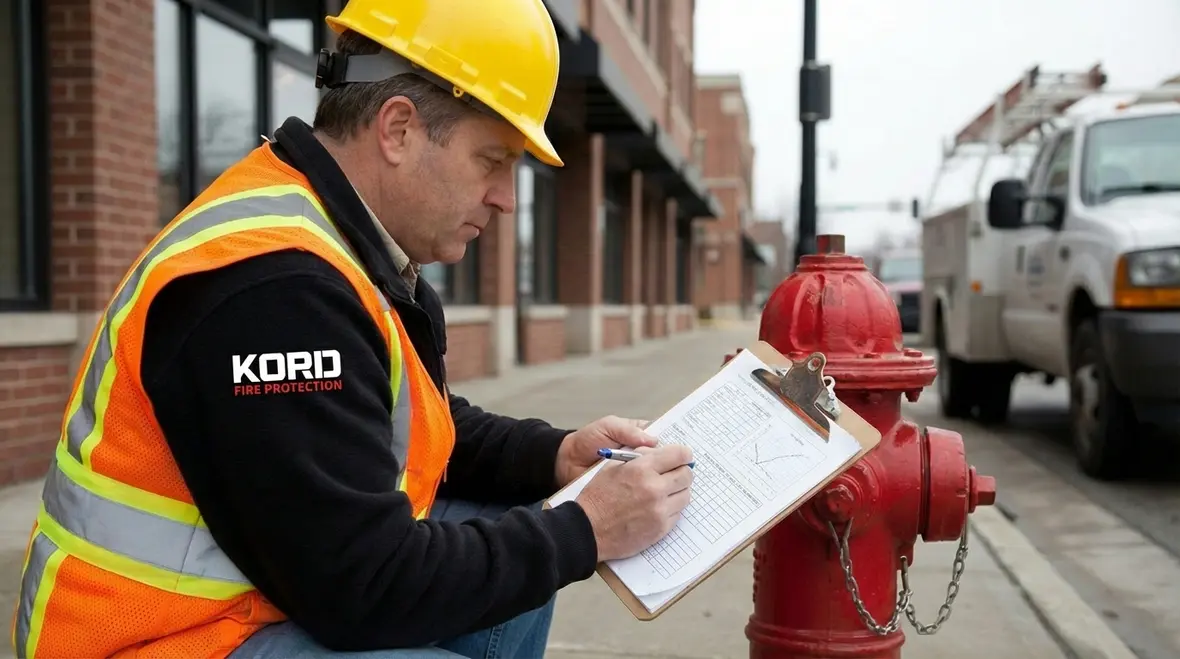
Using standard formulas, they determine the available fire flow at specific pressures required by code.
Meanwhile, safety remains a priority. Water discharge is directed away from traffic and structures. Streets are monitored. Communication stays clear. In other words, it is organized, not theatrical.
As Kord technicians often explain, the goal is simple. Deliver accurate numbers that engineers, inspectors, and property owners can trust.
Why Flow Data Matters for Buildings and Businesses
A building’s fire sprinkler system depends entirely on the municipal water supply. If that supply falls short, even the most advanced sprinkler network cannot perform as designed. Consequently, reliable hydrant flow data becomes the backbone of system design.
Engineers use the results from Carson fire hydrant flow testing to:
Design New Sprinkler Systems
Accurate flow numbers ensure the system delivers enough water to control or suppress a fire.
Evaluate System Modifications
Renovations and expansions may increase water demand. Updated tests confirm the supply still meets needs.
Support Insurance Documentation
Insurers often request proof of adequate fire flow. Clear reports reduce disputes and delays.
Moreover, insufficient flow can lead to costly upgrades such as fire pumps or larger service lines. Identifying that need early saves time and money. After all, discovering a water supply issue during final inspection is about as pleasant as realizing the popcorn ran out during the climax of a movie.
From curbside hydrant to full fire protection strategy
Hydrant flow results don’t live in isolation. Kord Fire Protection uses this data alongside broader fire sprinkler, alarm, and suppression services to help Carson facilities design systems that work together as a unified defense, not a patchwork of separate parts.
Fire Hydrant Flow Testing in Carson and Local Code Requirements
Carson, like many California cities, follows strict fire codes designed to protect life and property. These regulations specify minimum fire flow requirements based on building size, occupancy type, and construction materials.
Therefore, a warehouse will not have the same flow requirement as a small office building. Similarly, a high density residential complex demands different calculations than a retail shop.
Kord Fire Protection technicians stay current with these local standards. They coordinate with fire departments, understand municipal expectations, and provide documentation formatted for approval. As a result, property owners avoid unnecessary back and forth with authorities.
Additionally, periodic testing helps ensure ongoing compliance. Water infrastructure changes over time. New developments tap into existing mains. Valves age. Pressure fluctuates. Consequently, yesterday’s strong hydrant may not perform the same tomorrow.
Routine evaluation keeps everyone informed and prepared.
Hydrant testing as part of Los Angeles County protection
Because Carson is part of a much larger metropolitan network, hydrant performance ties directly into broader Los Angeles County fire protection planning. Coordinated testing and documentation give both local fire departments and county officials a clearer, shared view of system performance across neighborhoods and business districts.
Side by Side: What Strong vs Weak Flow Results Tell You
Strong Flow Results
High static pressure
Indicates a stable municipal supply.
Minimal pressure drop during flow
Shows pipes can handle heavy demand.
Adequate gallons per minute
Supports sprinkler performance without extra pumps.
Faster project approvals
Meets fire department thresholds with fewer revisions.
Weak Flow Results
Low static pressure
May point to undersized mains or high area demand.
Significant pressure drop
Signals potential restrictions or aging infrastructure.
Insufficient gallons per minute
Requires design changes or supplemental equipment.
Delayed approvals
Triggers additional engineering review.
By comparing these outcomes, decision makers can act quickly. Either they proceed confidently, or they plan improvements before problems arise.
When Should a Property Schedule Testing?
Timing matters. Although some owners assume testing is a one time requirement, professionals know better.
Testing is recommended:
Before New Construction
Engineers need current data to design compliant systems.
During Major Renovations
Changes in layout or occupancy can increase water demand.
After Infrastructure Changes
Nearby construction or water main work may alter pressure.
Periodically for Risk Management
Ongoing checks confirm continued reliability.
Furthermore, proactive testing demonstrates due diligence. In the event of an incident, documented proof of system evaluation shows responsible management. That peace of mind carries real value.
The Human Element Behind the Numbers
Numbers tell a story. Yet skilled interpretation brings that story to life. Kord Fire Protection technicians do more than record data. They explain what it means in clear, direct language.
For example, if pressure appears borderline, they discuss options. If flow exceeds expectations, they confirm design flexibility. If improvements are needed, they outline practical next steps. Consequently, property owners avoid guesswork.
There is also a calming presence that experienced technicians bring to the job. They understand that conversations about fire safety can raise concerns. So they speak with steady confidence. Think less alarmist headline and more wise mentor guiding the way.
Because at the end of the day, fire protection is not about fear. It is about preparation. And preparation, when handled well, feels empowering.
FAQ About Hydrant Flow Testing in Carson
Conclusion: Confidence Starts with Clear Data
Reliable fire protection begins beneath the surface, in the unseen network of pipes that feed every hydrant. Through careful measurement and expert analysis, property owners gain clarity, compliance, and confidence. Kord Fire Protection technicians stand ready to guide Carson businesses through each step with steady expertise. Schedule a professional evaluation today, and ensure the water meant to protect your property flows strong when it matters most.
If your property is in or around Carson and you want hydrant testing that aligns with broader regional coverage, explore Kord’s Los Angeles County fire protection services for fully integrated support. From hydrant testing to sprinklers, alarms, and suppression systems, one coordinated team keeps your fire protection strategy consistent, compliant, and ready for the real world—not just the paperwork.
Know Your Weapon Before You Fight the Flame
Kord Fire Protection is your go-to when it comes to all things fire protection. For over 20 years, we’ve been serving Southern California with the quality service and equipment to keep your home or business safe at all times. Our competitive prices reflect our unwavering commitment to protecting what matters most in the event of a fire emergency. Give us a call, send an email, or use that form!

Join Our Newsletter!
Get the latest fire safety tips delivered straight to your inbox From our Newsletter.


