
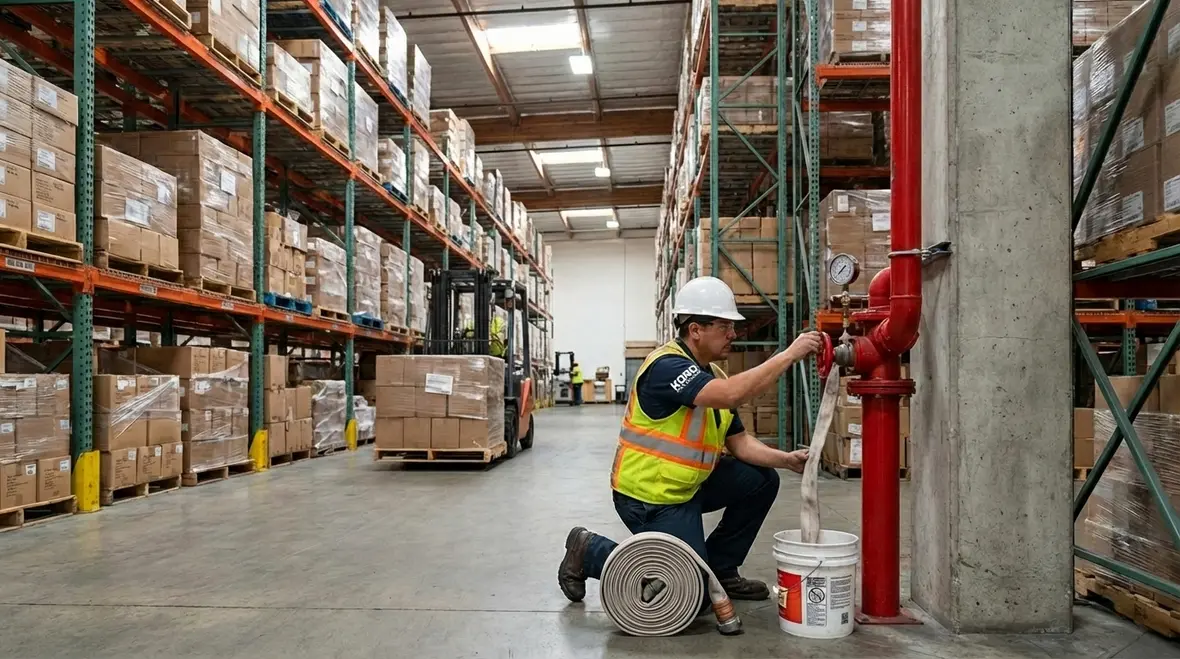
Carson Standpipe Maintenance for Warehouses
Standpipe System Maintenance for Carson Warehouses
In the vast industrial landscape of Southern California, warehouses in Carson move fast. Pallets rise, forklifts hum, and shipments roll in like clockwork. Yet behind the scenes, quietly waiting for the moment it is needed most, stands a critical safeguard. Carson standpipe maintenance ensures that when fire strikes, water answers immediately. Within the first few minutes of an emergency, that readiness can mean the difference between a minor incident and a catastrophic loss.
Because warehouses carry high fuel loads and tall storage racks, standpipe systems must perform without hesitation. Therefore, routine inspections and testing are not optional extras. They are essential. Kord Fire Protection technicians often explain it this way. A standpipe system is like a firefighter standing by inside the building, hose in hand, waiting for the call. If that firefighter is not trained or equipped, the outcome changes quickly.
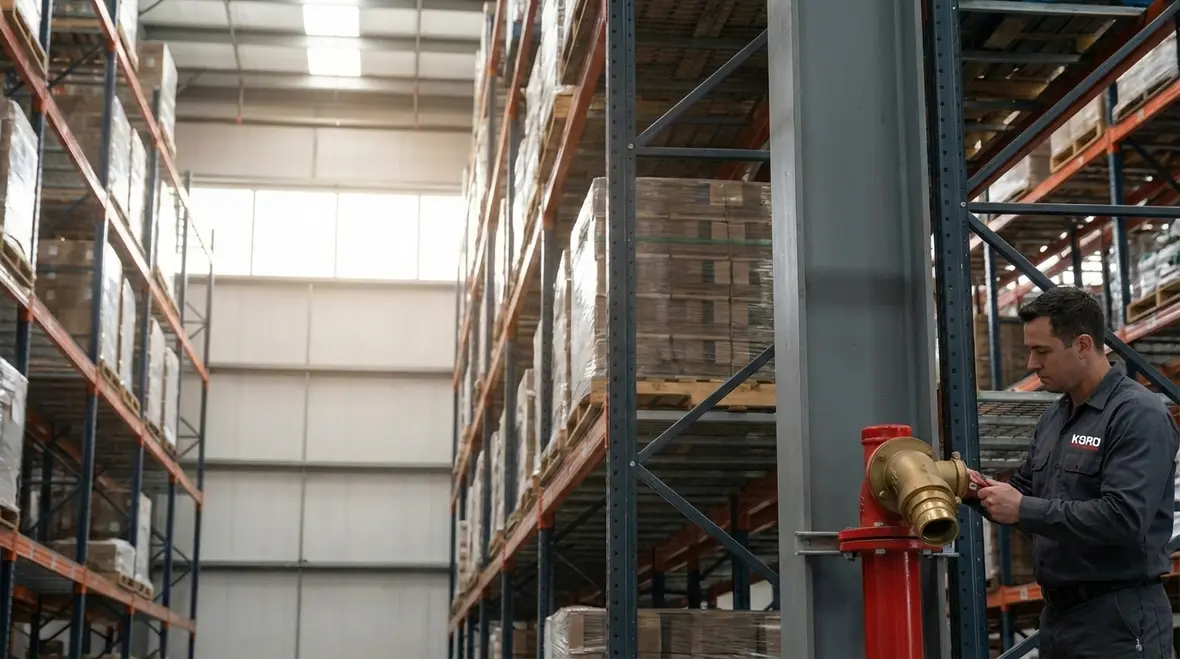
Understanding How Standpipe Systems Protect Large Warehouses
Warehouses in Carson typically feature high ceilings, expansive floor plans, and limited interior walls. As a result, fires can spread rapidly if not controlled early. A standpipe system provides strategically placed hose connections throughout the building, allowing responding crews to access water on every level without dragging long hoses from outside.
There are several types of standpipe systems commonly found in warehouse settings:
Class I Systems serve firefighters with large hose connections.
Class II Systems include smaller hoses intended for trained building personnel.
Class III Systems combine both, offering flexibility during emergencies.
However, installing the system is only half the story. Without regular inspections, pressure testing, and valve checks, even the most advanced setup can fail. Consequently, Carson standpipe maintenance focuses on ensuring water pressure, flow rate, and component integrity meet strict fire code standards. For a broader look at how these systems work across different building types, you can also review Kord Fire’s overview of Standpipe System Class I-II-III services.
Kord Fire Protection technicians emphasize that warehouses operate like small cities. There are loading docks, storage aisles, mechanical rooms, and office spaces. Therefore, every connection point must remain accessible, labeled clearly, and free of obstruction. A blocked hose cabinet might not seem dramatic on a calm Tuesday afternoon. During a fire, it becomes a problem no one wants to explain later.
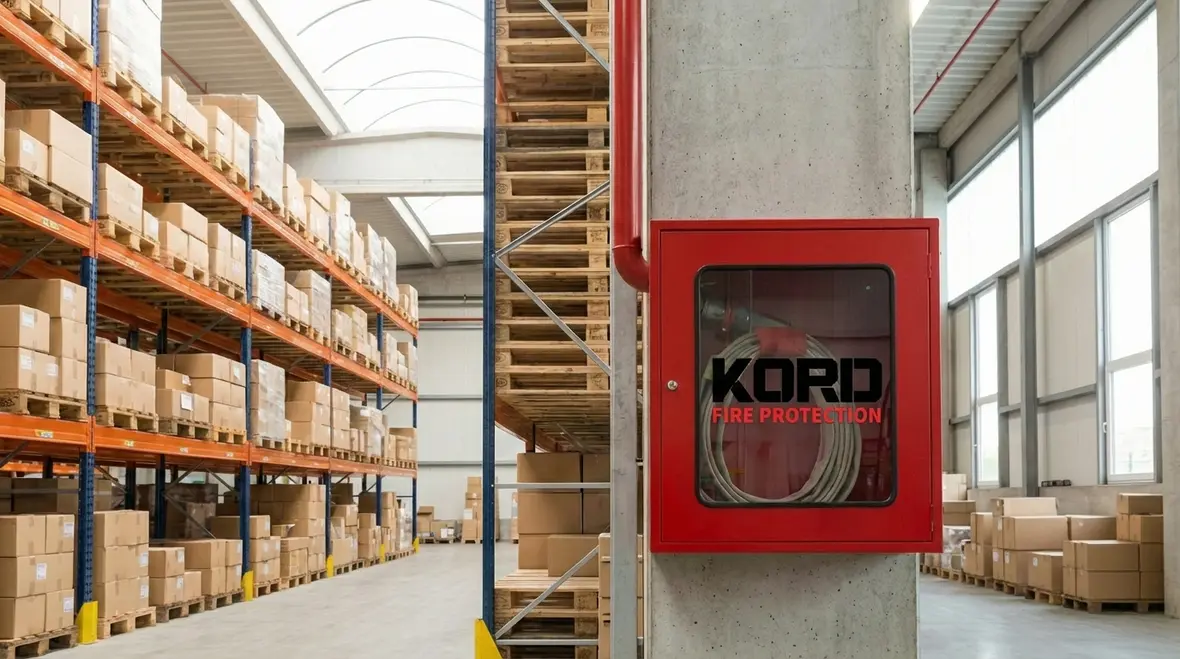
What Does Carson Standpipe Maintenance Include?
Business owners often ask what actually happens during a service visit. The answer is both detailed and methodical. Carson standpipe maintenance involves inspection, testing, documentation, and when necessary, repair or replacement.
First, technicians conduct a visual inspection. They examine hose valves, caps, threads, and gauges for corrosion or damage. Next, they verify that signage is clear and that nothing obstructs access. Warehouses tend to accumulate inventory in creative ways. Nevertheless, fire equipment must always remain reachable.
Then comes flow testing. Technicians measure water pressure at various hose connections to confirm the system can deliver the required gallons per minute. If pressure drops below acceptable levels, they investigate potential causes such as partially closed valves, pipe obstructions, or pump issues.
Additionally, they inspect fire department connections outside the building. These connections allow firefighters to supplement the water supply. If threads are damaged or caps are missing, response time slows. As Kord Fire Protection technicians like to point out, firefighters already have enough to worry about. They do not need to wrestle with rusty fittings in the middle of an emergency.
Finally, detailed reports document every finding. This paperwork supports compliance with local fire codes and insurance requirements. More importantly, it provides a clear record of system health over time.
Connecting Standpipes With Overall Fire Protection
In many Carson warehouses, standpipes are just one part of a bigger protection strategy that may also include sprinklers, hydrants, and alarm systems. Kord Fire routinely helps facilities coordinate Reg 4 standpipe and automatic sprinkler testing so that critical systems are evaluated together instead of in disconnected pieces.
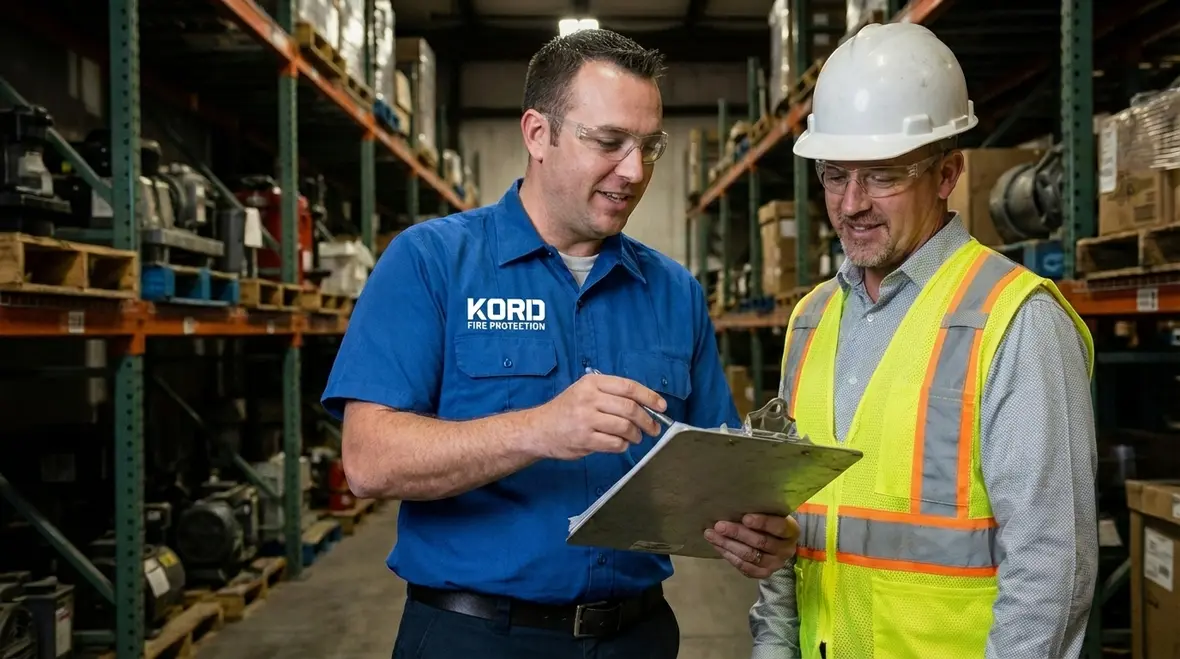
Why Regular Maintenance Matters in High Inventory Environments
Carson warehouses often store consumer goods, electronics, textiles, and industrial materials. Each product type carries a different fire load. Therefore, fire protection systems must operate at peak performance year round.
Without consistent service, several risks emerge:
- Valves may seize due to corrosion
- Pressure regulators can fail silently
- Piping may develop internal scale buildup
- Gauges can provide inaccurate readings
At first glance, these issues appear minor. However, in an emergency, small failures compound quickly. Because fire grows exponentially, even a short delay in water delivery can allow flames to reach upper rack levels.
Moreover, insurance carriers increasingly review maintenance records after a claim. If documentation shows missed inspections, coverage disputes may follow. No warehouse manager wants to explain to corporate leadership why routine service was postponed.
Kord Fire Protection technicians often use a relatable analogy. Skipping maintenance on a standpipe system is like ignoring the check engine light for months. The vehicle may still run, but eventually, it stops at the worst possible moment. And unlike a stalled car, a failed fire system does not wait politely on the side of the road.
Inside the Process: Inspection and Testing Breakdown
To better understand the scope of service, consider the two primary components of Carson standpipe maintenance presented below.
Inspection Focus
Visual check of valves and fittings
Verification of signage and access
Assessment of pipe condition
Review of hose cabinet integrity
Testing Focus
Hydrostatic pressure testing
Flow rate measurement
Fire pump performance testing
Alarm device activation checks
On one side, inspections identify visible concerns. On the other, testing confirms performance under real world conditions. Together, these steps ensure reliability.
Furthermore, technicians schedule annual and five year testing in accordance with national standards and local regulations. Because warehouse operations rarely pause, service teams coordinate visits to minimize disruption. They work efficiently, yet thoroughly. After all, precision matters more than speed when safety is on the line.
How Often Should Warehouses Schedule Service?
This is the one question every facility manager eventually asks. The short answer is annually for inspections and every five years for more extensive hydrostatic testing. However, certain conditions may require more frequent attention.
For example, warehouses located near coastal areas can experience accelerated corrosion due to salt air. Similarly, facilities with high vibration from heavy equipment may stress piping connections. In such cases, proactive scheduling protects the system from gradual deterioration.
Kord Fire Protection technicians advise managers to treat maintenance as part of operational planning rather than a reactive task. When service dates are built into the annual calendar, compliance becomes routine. Consequently, there are no last minute scrambles before a fire marshal visit.
Additionally, technicians encourage staff awareness. Employees should report damaged hose cabinets, missing caps, or leaking valves immediately. While a standpipe system is not meant for casual use, visual checks during routine walk throughs add another layer of protection.
Compliance, Codes, and Local Expectations in Carson
Fire codes in Carson align with California state regulations and national standards. Therefore, warehouses must meet specific inspection intervals, documentation requirements, and performance criteria.
Carson standpipe maintenance plays a central role in meeting these obligations. During inspections, technicians verify that systems comply with pressure ratings, connection types, and accessibility rules. If deficiencies arise, they outline corrective actions clearly and provide timelines for resolution.
Because fire marshals may request maintenance records during inspections, organized documentation becomes critical. Detailed reports demonstrate due diligence and commitment to safety. In contrast, incomplete paperwork can raise concerns, even if the physical system appears functional.
In many ways, compliance resembles a well choreographed routine. When every component moves in sync, inspections proceed smoothly. When one piece falls out of step, the entire performance feels off. Fortunately, experienced professionals guide facilities through this process with clarity and calm authority.
The Human Element Behind Every System
While pipes and valves form the backbone of a standpipe system, people ultimately determine its effectiveness. Kord Fire Protection technicians approach each warehouse with a mindset of responsibility. They understand that behind every pallet of goods are livelihoods, supply chains, and community connections.
Therefore, they do more than tighten fittings or record pressure readings. They explain findings in straightforward language. They answer questions patiently. Occasionally, they even lighten the mood with a well timed joke. After all, discussing fire safety all day can feel heavy. A touch of humor keeps conversations human.
Yet beneath that approachable style lies deep technical expertise. Technicians stay current with evolving codes and industry best practices. Consequently, their recommendations reflect both regulatory requirements and practical field experience.
When warehouse managers partner with knowledgeable professionals, Carson standpipe maintenance becomes less about checking boxes and more about building confidence. And confidence, much like water pressure, works best when it remains steady.
FAQ: Standpipe Maintenance for Carson Warehouses
Conclusion: Protecting Carson Warehouses with Confidence
Carson warehouses operate at full speed, and their fire protection systems must do the same. Through consistent Carson standpipe maintenance, facility managers safeguard inventory, employees, and business continuity. Kord Fire Protection technicians stand ready to inspect, test, and guide each step with clarity and care. Schedule professional service today, because when preparation meets expertise, safety becomes more than a requirement. It becomes peace of mind.
If your facility also relies on sprinklers, hydrants, or combined systems, consider coordinating service so everything is inspection ready at once. Kord Fire’s team supports facilities throughout Southern California, including dedicated regional programs like their Riverside County fire protection services. For Carson and the greater Los Angeles area, you can request a tailored standpipe and sprinkler evaluation as part of a full fire protection plan.
Know Your Weapon Before You Fight the Flame
Kord Fire Protection is your go-to when it comes to all things fire protection. For over 20 years, we’ve been serving Southern California with the quality service and equipment to keep your home or business safe at all times. Our competitive prices reflect our unwavering commitment to protecting what matters most in the event of a fire emergency. Give us a call, send an email, or use that form!

Join Our Newsletter!
Get the latest fire safety tips delivered straight to your inbox From our Newsletter.


