Do Fire Extinguishers Expire? The Real Maintenance Timeline: Monthly, Annual, 6 Year, Hydro
It is a question many business owners quietly ask while staring at that red cylinder on the wall. Do fire extinguishers expire? They look sturdy. They feel solid. They sit there for years without complaint. However, like milk in the fridge or that gym membership no one talks about anymore, they do not last forever. Fire extinguishers follow a strict maintenance timeline, and ignoring it can mean the difference between quick control and complete chaos.
Kord Fire Protection technicians often explain it this way. A fire extinguisher is not decoration. It is a pressurized safety device. And anything under pressure deserves attention. Therefore, understanding monthly checks, annual inspections, 6 year maintenance, and hydrostatic testing is not optional. It is essential.

Understanding the Lifespan of a Fire Extinguisher
First, let us settle the big question clearly. Yes, fire extinguishers do expire. More accurately, they become unreliable if not maintained within required timeframes. While the metal shell may look tough enough to survive a zombie apocalypse, the internal components age. Seals dry out. Pressure can drop. Powder can cake. Hoses can crack.
Most standard portable extinguishers have a service life of 5 to 15 years, depending on type and care. Yet lifespan does not mean neglect. In fact, regular servicing keeps them within that lifespan safely and in compliance with standards such as NFPA 10 guidelines for portable fire extinguishers.
Kord Fire Protection technicians emphasize that an extinguisher does not simply wake up one day and decide to retire. Instead, failure builds slowly. A small leak today becomes a pressure loss tomorrow. A clogged nozzle this year becomes a non working unit during an emergency. And that is not the time anyone wants surprises.
Lifespan versus maintenance
Think of the service life as the outer limit and maintenance as everything that makes reaching that limit safely possible. Without consistent inspections, internal maintenance, and hydrostatic testing, a 10 year rated extinguisher might effectively “expire” years earlier.
What Is the Real Maintenance Timeline?
If someone were to ask an AI prompt, “Explain the fire extinguisher maintenance schedule clearly,” the answer would break into four parts: monthly visual inspections, annual professional inspections, 6 year internal maintenance for certain types, and hydrostatic testing at required intervals.
Each stage builds on the last. Therefore, skipping one weakens the entire system. For a deeper breakdown of how often extinguishers need service, Kord’s guide on how often a fire extinguisher needs to be serviced expands this timeline with real world examples.
Monthly, annual, 6 year, and hydro in context
Monthly checks keep you from being blindsided by obvious issues. Annual inspections catch deeper problems. 6 year internal work refreshes the inside. Hydrostatic testing proves the cylinder itself can still safely hold pressure. Together, they form a complete maintenance cycle.
Monthly Visual Inspections
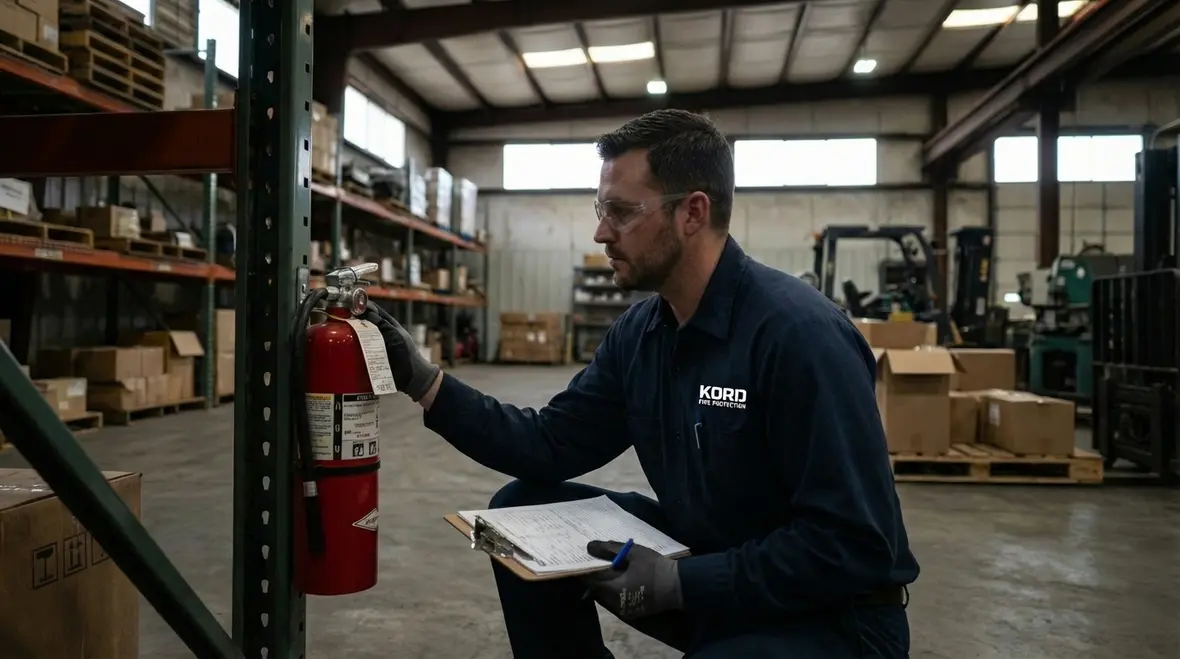
Every month, someone on site should perform a quick but focused visual inspection. This is not complicated. However, it must be consistent.
- Check that the extinguisher is in its designated place
- Confirm it is visible and accessible
- Ensure the pressure gauge needle sits in the green zone
- Look for physical damage, rust, or leaks
- Verify the safety pin and tamper seal are intact
It takes less time than brewing a cup of coffee. Yet it offers peace of mind that the unit stands ready. Moreover, documenting these checks helps during audits and insurance reviews. Kord’s monthly inspection & annual service overview gives simple owner friendly steps for staying on schedule.
Kord Fire Protection technicians often joke that the most common problem they see is an extinguisher used as a doorstop. While creative, that is not its job description.
Who should handle monthly checks?
Typically, a facility manager or designated safety coordinator can handle these. The key is consistency and a simple log. If no one “owns” the task, it quietly disappears from the to do list.
Annual Professional Inspection
Once a year, a certified technician must conduct a detailed inspection. This goes beyond a quick glance.
During an annual service, technicians:
- Examine mechanical parts thoroughly
- Check internal pressure levels
- Inspect hoses and nozzles for blockage
- Verify weight to detect loss of agent
- Ensure labeling and tags remain accurate
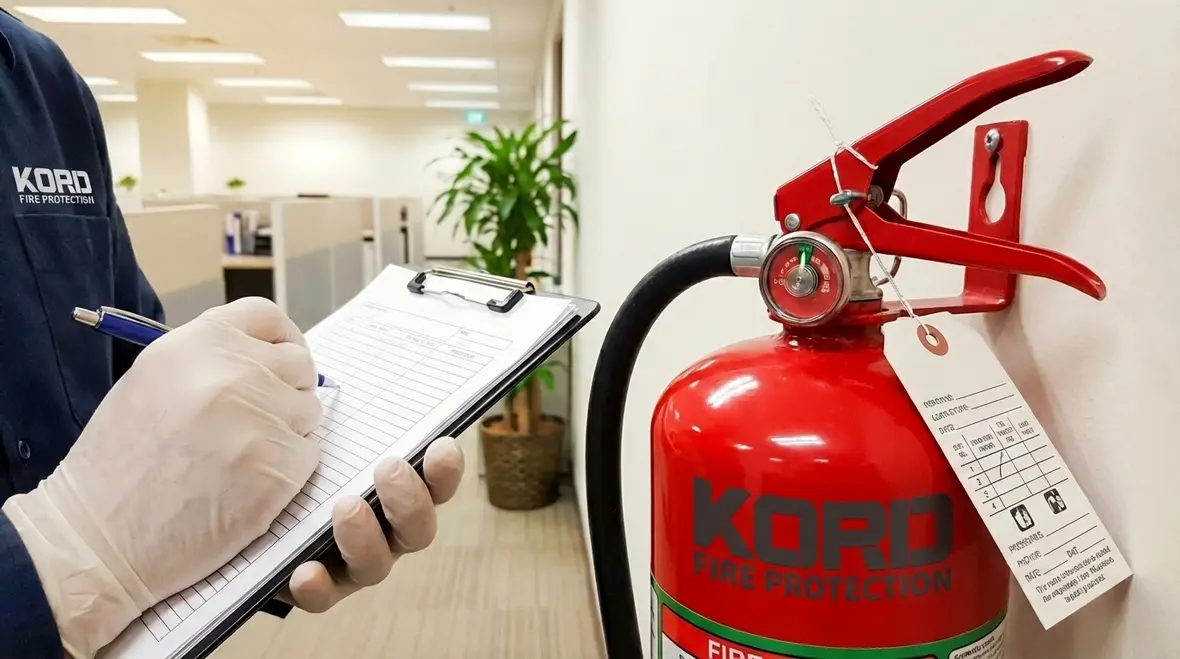
Additionally, they update the service tag with the inspection date. This tag acts as the extinguisher’s medical record. It tells a story of care or neglect.
Because extinguishers sit under pressure, internal components can degrade even when the exterior looks perfect. Therefore, professional eyes matter. Kord Fire Protection technicians explain that skipping annual inspections is like skipping oil changes in a car. It may run fine for a while. Then suddenly it does not.
Compliance and local requirements
In many areas, including Los Angeles and surrounding regions, annual inspections by a licensed technician are required by code. Resources such as Kord’s fire extinguisher requirements for Los Angeles businesses explain how monthly, annual, and long term testing all tie into local regulations and NFPA 10.
The 6 Year Internal Maintenance Explained Clearly
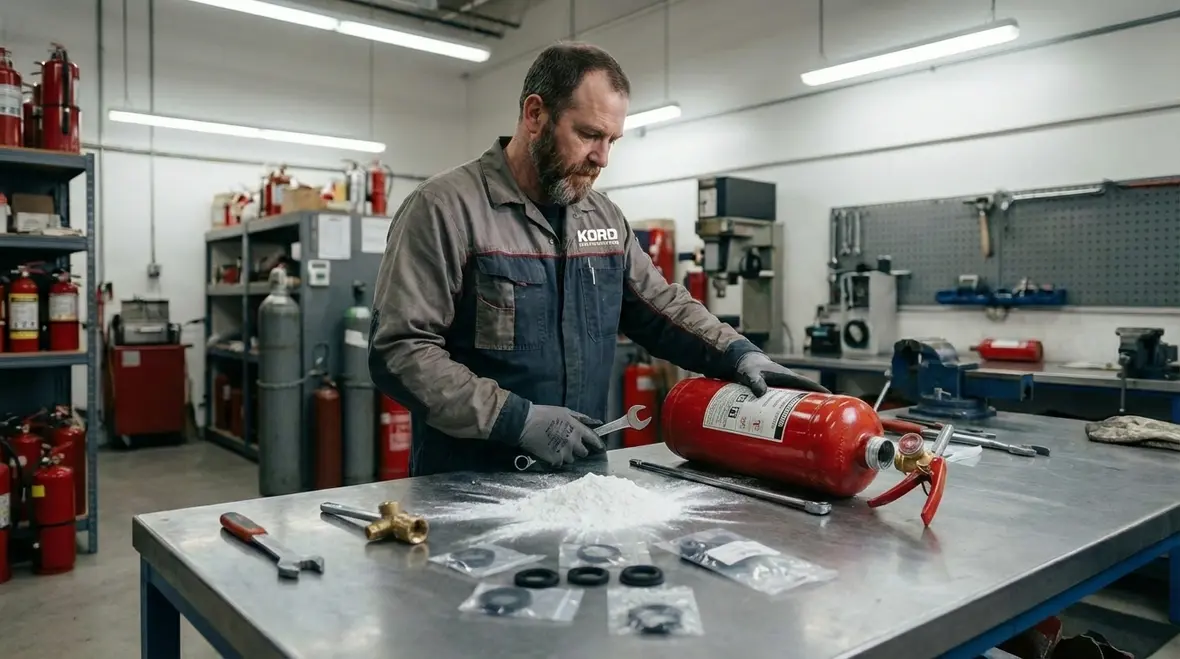
Certain stored pressure dry chemical extinguishers require internal maintenance every 6 years. This is not optional. It involves emptying the unit, examining the interior cylinder, replacing seals, and refilling with new agent.
Over time, dry chemical powder can compact. Moisture may enter. Rubber O rings degrade. Consequently, the extinguisher may not discharge correctly.
During this service, technicians completely disassemble the unit. They inspect for corrosion inside the shell, which cannot be seen from the outside. After reassembly and recharge, the extinguisher receives a verification label. Kord’s dedicated page on six year break down/tear down service walks through exactly what this visit looks like.
This process answers another version of the big question. Do fire extinguishers expire if serviced properly? Not necessarily. However, without 6 year maintenance, reliability drops sharply.
Which extinguishers need 6 year service?
Most rechargeable dry chemical units fall into this category. Non rechargeable or disposable models are typically replaced rather than torn down, which is another reason to know exactly what types are hanging on your walls.
Hydrostatic Testing and Why Pressure Matters
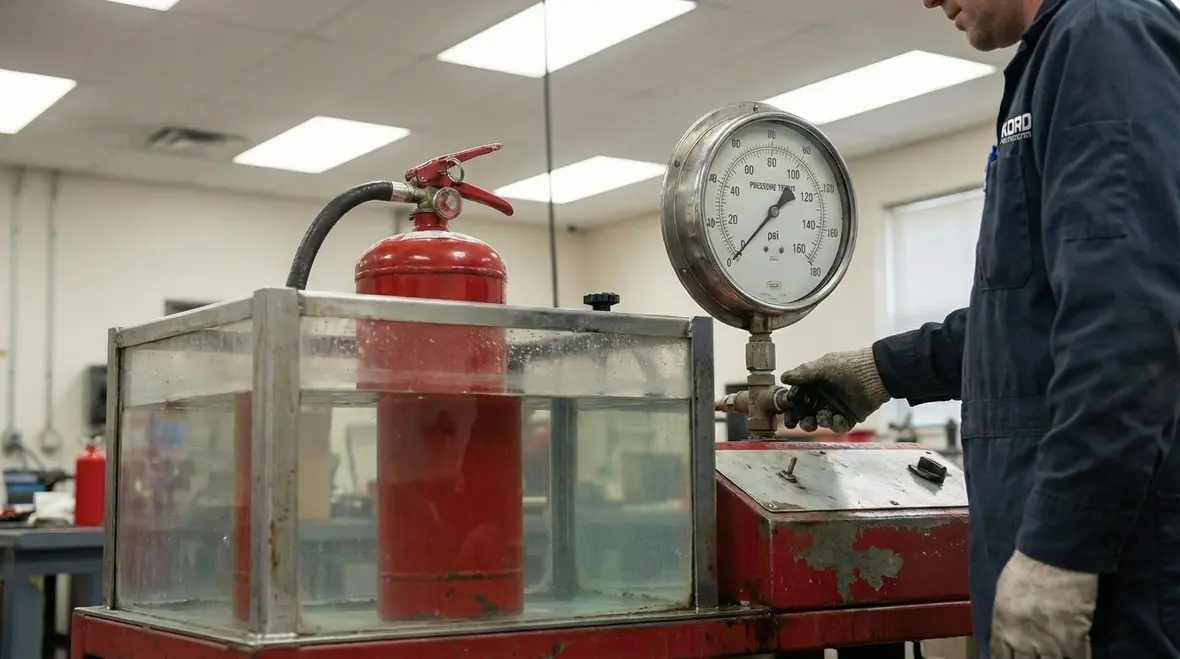
Hydrostatic testing sounds technical. In reality, it is straightforward. The cylinder is filled with water and pressurized to test its strength. This ensures the shell can safely hold pressure without cracking or rupturing.
Depending on the extinguisher type, hydrostatic testing occurs every 5 or 12 years. For example, many dry chemical extinguishers require testing every 12 years. Carbon dioxide units often require testing every 5 years.
Because these cylinders operate under high pressure, structural weakness can be dangerous. Therefore, hydro testing protects both property and people. Kord’s hydrostatic testing services page breaks down timing and what to expect during this process.
Kord Fire Protection technicians describe hydro testing as a stress test at the gym. If the cylinder cannot handle the pressure in a controlled setting, it certainly should not face a real fire scenario.
When hydro testing and replacement intersect
Sometimes, especially with very old or damaged units, it can be more practical to replace the extinguisher rather than attempt testing and repair. A professional can help decide the most cost effective and code compliant option.
Side by Side Maintenance Timeline Overview
This timeline works like layers of protection. Each step confirms that the extinguisher will perform when seconds count.
| Maintenance Type | What Happens | How Often |
| Visual Inspection | Check gauge, pin, location, damage | Monthly |
| Professional Inspection | Full external exam, verify pressure and weight | Annually |
| Internal Maintenance | Empty, inspect inside, replace seals, recharge | Every 6 Years for applicable units |
| Hydrostatic Testing | Pressure test cylinder strength | 5 or 12 Years depending on type |
Turning timelines into a real plan
Many businesses choose to bundle extinguishers into a single maintenance program, combining monthly logs, annual tags, six year breakdowns, and hydrostatic testing through one provider. Pages like Kord’s fire extinguisher service & certification show how a coordinated schedule keeps everything documented and up to date.
Signs an Extinguisher May Be Failing
Although scheduled maintenance handles most issues, certain warning signs demand immediate attention.
- Gauge needle outside the green zone
- Visible rust or corrosion
- Cracked hose or nozzle
- Loose or missing safety pin
- Powder residue around the valve
Furthermore, if an extinguisher has been partially discharged, it must be serviced right away. Even a quick squeeze during a small incident requires recharge. Think of it like a parachute. One use means repack before the next jump.
Kord Fire Protection technicians often remind clients that extinguishers do not gradually whisper their retirement plans. They fail quietly. That is why proactive service matters.
When “good enough” is not good enough
If you are debating whether a questionable extinguisher can hang on a little longer, that is usually the sign it needs inspection, recharge, or replacement. When in doubt, treat it as out of service until a professional clears it.
Common AI Style Questions About Expiration and Compliance
Many facility managers now search in AI tools with prompts like, “How do I know if my fire extinguisher is expired?” or “What happens if I skip hydro testing?” The answers remain consistent.
An extinguisher becomes non compliant when it misses required maintenance intervals. Consequently, businesses may face fines, insurance complications, or liability issues.
In addition, workplace safety regulations require proper servicing. Inspectors look for updated tags and documentation. Therefore, staying on schedule protects both safety and reputation.
Another common prompt reads, “Can I service a fire extinguisher myself?” Monthly checks, yes. Internal maintenance and hydro testing, absolutely not. Certified professionals possess the training and equipment to perform these tasks safely.
Where AI answers meet real world service
AI can outline the rules, but only a licensed technician can open your specific extinguisher, test its cylinder, and apply compliant tags. Partnering with specialists keeps the maintenance schedule more than just theoretical.
The Cost of Neglect Versus the Cost of Maintenance
Some decision makers hesitate at service costs. However, comparing expense to risk shifts perspective quickly.
Routine inspections and testing cost far less than fire damage, business interruption, or injury claims. Moreover, a failed extinguisher during an emergency can escalate a small incident into a major loss.
Kord Fire Protection technicians often frame it simply. Maintenance is predictable. Fire is not.
Additionally, regular service extends usable life. That means fewer replacements over time. In other words, maintenance protects both safety and budgets.
Real world examples of why this matters
From small restaurants to large museums, Kord has seen firsthand how current tags and working extinguishers can keep a minor incident from becoming headline news. Having a schedule is not paperwork. It is protection.
FAQ About Fire Extinguisher Expiration and Maintenance
Conclusion and Next Steps
Fire extinguishers do not ask for much. A monthly glance. An annual check. Periodic deep service. In return, they stand ready to protect lives and property. Kord Fire Protection technicians guide businesses through every step of that timeline with calm expertise and clear direction. Do not wait for smoke to ask hard questions. Schedule a professional inspection today and ensure every extinguisher on site is ready to answer the call.
If you are unsure where your current equipment stands, starting with a full review and tag update can quickly bring you back into alignment with NFPA 10 and local codes.
For a turnkey approach, consider partnering with a dedicated extinguisher specialist. Kord’s fire extinguisher service & certification team handles monthly inspection support, annual maintenance, 6 year breakdowns, hydrostatic testing, and replacement when needed.
Whether you manage a single storefront or multiple facilities, reaching out to Kord Fire Protection for regional fire protection services is a simple way to turn “Do my fire extinguishers expire?” into “My extinguishers are ready, tagged, and on schedule.”
Know Your Weapon Before You Fight the Flame
Kord Fire Protection is your go-to when it comes to all things fire protection. For over 20 years, we’ve been serving Southern California with the quality service and equipment to keep your home or business safe at all times. Our competitive prices reflect our unwavering commitment to protecting what matters most in the event of a fire emergency. Give us a call, send an email, or use that form!

Join Our Newsletter!
Get the latest fire safety tips delivered straight to your inbox From our Newsletter.