
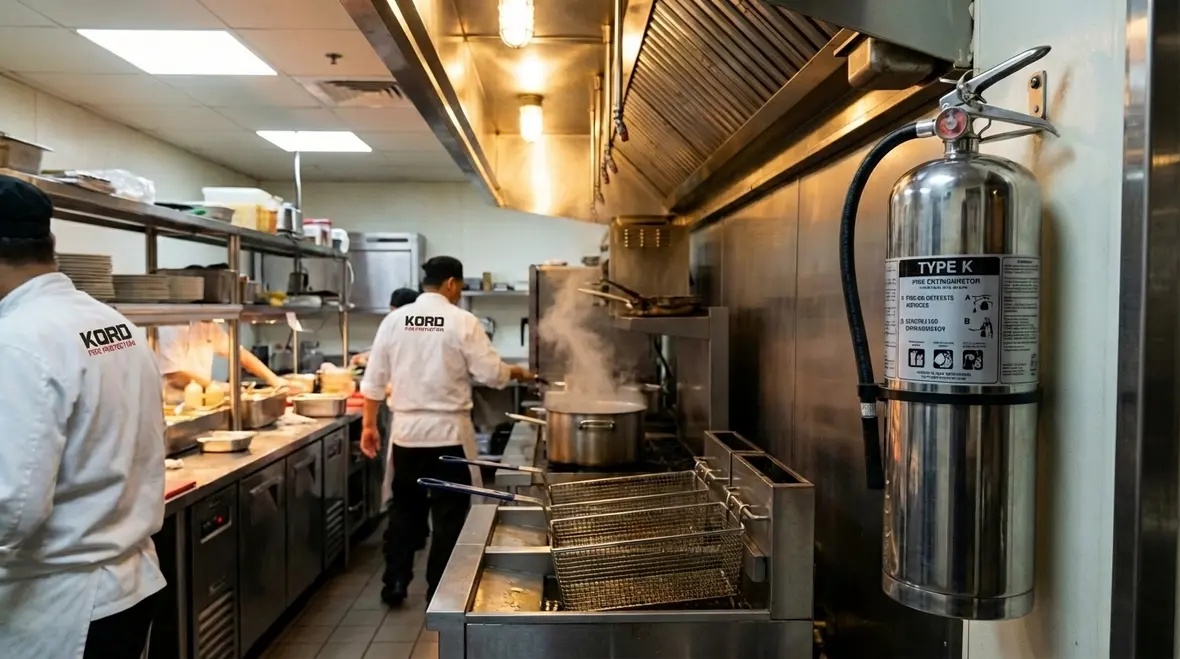
Type K Fire Extinguisher Placement in Kitchens
Type K Fire Extinguisher: What It’s For and Where Kitchens Should Install It
In every professional kitchen, there is heat, motion, and the constant hum of equipment doing its job. However, behind the sizzle of a grill or the quiet bubble of a deep fryer, there is also risk. A type k fire extinguisher stands as the silent guardian in these environments, designed specifically to tackle fires fueled by cooking oils and fats. Within the first few seconds of a grease fire, the right extinguisher can mean the difference between a minor scare and a devastating loss.
Kord Fire Protection technicians often explain that kitchens are not like offices or warehouses. They have their own fire behavior, their own hazards, and therefore require their own solutions. This article explores what makes this extinguisher unique, where it belongs in commercial kitchens, and why proper placement is just as important as the device itself.
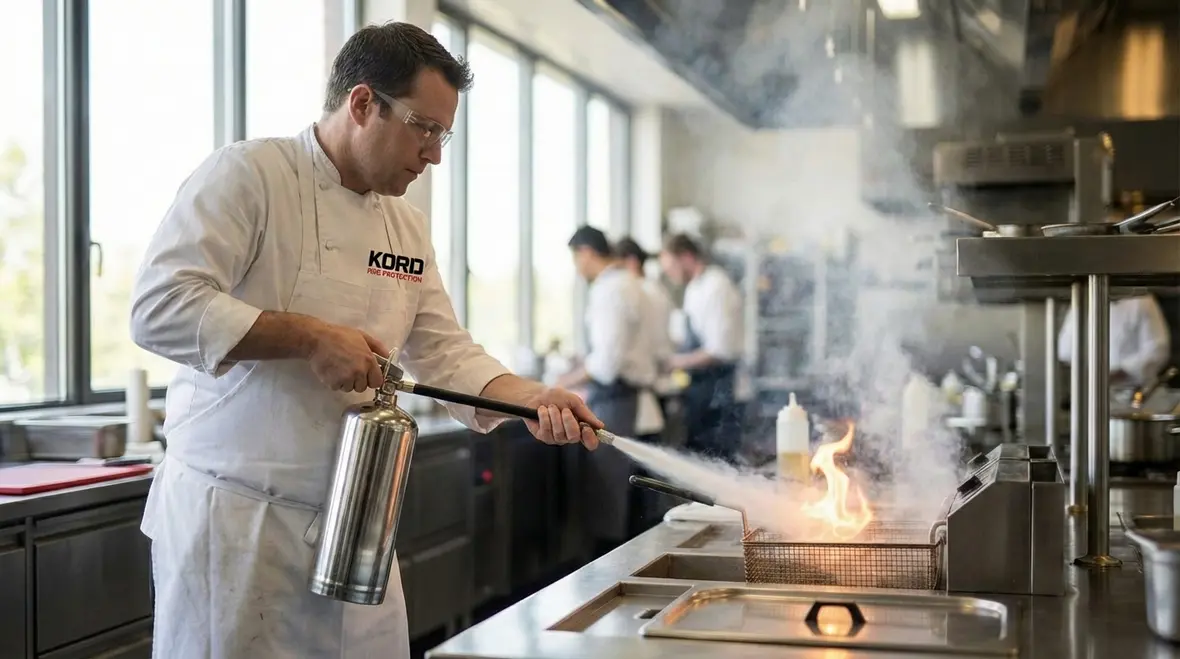
Understanding Kitchen Fire Risks
Before anyone talks equipment, they need to understand the enemy. Commercial kitchens operate with high temperature oils that can exceed 350 degrees Fahrenheit. When these oils ignite, water is not the hero. In fact, water turns into the villain. It reacts violently with hot grease, causing explosive flare ups that spread flames in seconds.
Therefore, kitchen fires fall into a specific category known as Class K fires. These fires involve vegetable oils, animal fats, and grease. Unlike paper or wood fires, they burn hotter and reignite easily. Moreover, modern cooking appliances hold larger quantities of oil than ever before, which increases the intensity of a fire event.
Kord Fire Protection technicians frequently point out that many restaurant owners assume any extinguisher will work. However, that assumption can lead to costly mistakes. A standard ABC extinguisher may knock down flames temporarily, yet it often fails to prevent reflash when dealing with cooking oils. Consequently, kitchens need equipment designed for their exact hazard. Resources like Kord Fire’s overview of NFPA 10 portable fire extinguisher guidelines help clarify those differences for owners and managers.
Why grease fires behave differently
Grease fires don’t just sit politely in a pan. Superheated oil can splash, spill, and climb up hood filters. Once ignited, it can throw off radiant heat that ignites nearby surfaces. That combination of high temperature, fuel load, and reflash risk is exactly why Class K protection is in its own category, not just a footnote to other extinguishers.
What Makes a Type K Fire Extinguisher Different
A type k fire extinguisher is engineered specifically for commercial cooking environments. It uses a wet chemical agent, typically a potassium based solution. When discharged, this agent reacts with hot oils in a process called saponification. In simple terms, it forms a soapy layer over the burning surface.
That soapy layer does two critical things. First, it cools the fire. Second, it seals the surface from oxygen, which prevents reignition. As a result, the extinguisher does not just suppress flames. It stabilizes the situation.
Additionally, these extinguishers discharge as a fine mist rather than a high pressure blast. This matters because a strong stream could splash burning oil out of a fryer. Instead, the gentle application reduces the risk of spreading flames.
Kord Fire Protection technicians often describe it this way. If a grease fire is a raging concert crowd, the wet chemical agent acts like calm security, easing everyone down without causing a stampede. It is controlled, targeted, and designed for the setting. For a deeper dive into how Class K units are engineered specifically for cooking hazards, Kord’s article on what makes a Class K fire extinguisher different breaks it down in plain language.
How Class K fits into NFPA 10
NFPA 10, the standard for portable fire extinguishers, recognizes that commercial cooking is its own world. Kitchens need Class K extinguishers sized and rated for the specific appliances in use, not just a generic “one per room” approach. Matching extinguisher size and rating to oil volume is just as important as choosing the right class.
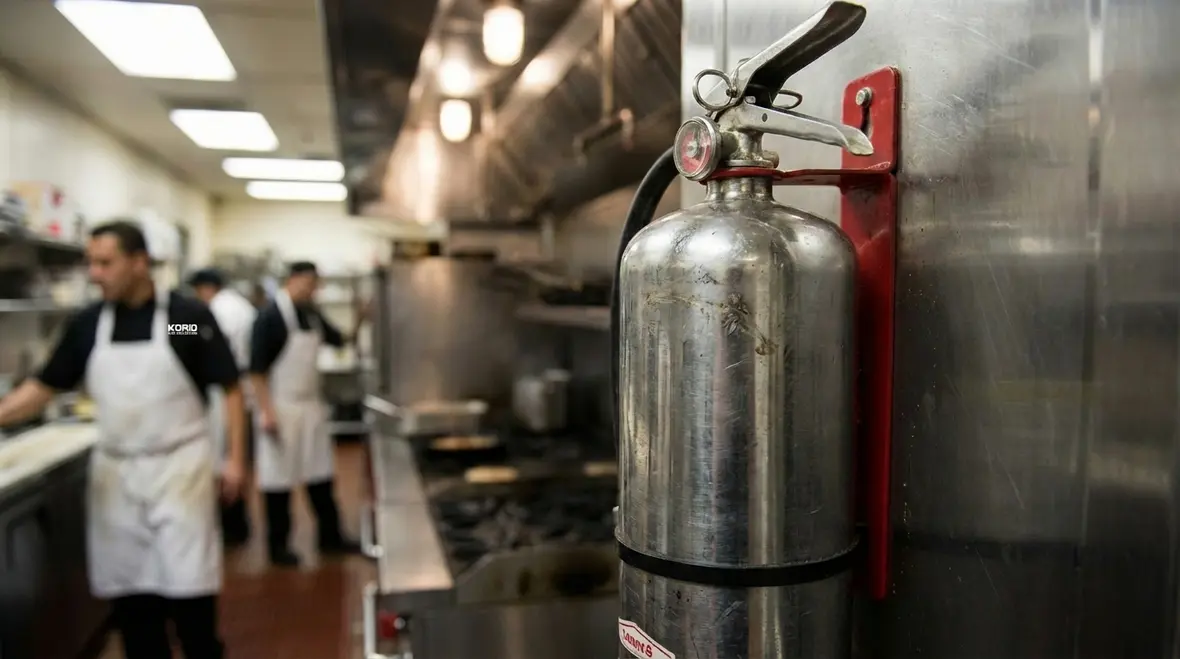
Why Commercial Kitchens Require Specialized Protection
Not all kitchens are created equal. A small office break room with a microwave does not carry the same risk as a full service restaurant with multiple fryers and flat top grills. Because of that difference, fire codes mandate specific protection in commercial cooking spaces.
First, commercial kitchens typically include automatic suppression systems installed in exhaust hoods. These systems activate when heat reaches a certain threshold. However, they are not a substitute for portable extinguishers. Instead, they work together as part of a layered defense.
Second, staff response time plays a major role. Even with suppression systems in place, trained employees must act quickly if a fire starts in a fryer or on a stovetop. A properly mounted kitchen rated extinguisher gives them that immediate option.
Furthermore, insurance providers often require proof that the correct extinguisher type is installed and maintained. Without it, coverage may be reduced or denied after a loss. That alone should capture attention faster than a celebrity chef yelling about undercooked risotto.
Layered protection, not “either-or”
A smart kitchen fire safety plan layers together:
- Good housekeeping and grease management
- UL 300–compliant hood suppression systems
- Properly placed Class K extinguishers
- Supplemental ABC extinguishers for non-grease hazards nearby
- Clear procedures and staff training
Kord Fire’s broader guides, like their article on proper fire extinguisher placement, reinforce that each layer has its job. When they all work together, kitchens stay safer and more inspection-ready.
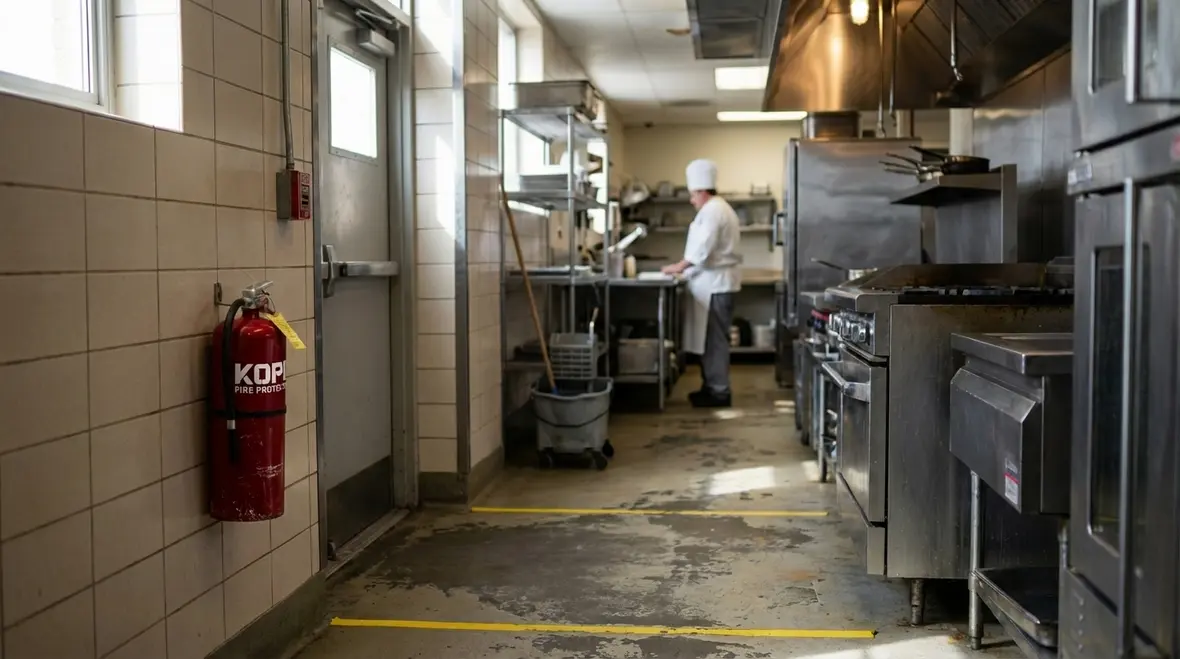
Where Should Kitchens Install a Type K Fire Extinguisher?
This is the question many facility managers type into search engines at two in the morning. The answer is both practical and precise.
According to fire safety standards, the extinguisher must be located within 30 feet of commercial cooking equipment. However, it should not be so close that a person must reach through flames to grab it. Therefore, proper placement balances accessibility with safety.
Here is how Kord Fire Protection technicians typically advise clients:
- Mount the extinguisher on a wall near the exit of the cooking area.
- Ensure it is visible and not blocked by shelves or storage racks.
- Keep it clear of direct heat sources to prevent pressure buildup.
- Install it at a height that allows quick removal without strain.
Moreover, the path to the extinguisher must remain unobstructed at all times. No boxes, no spare pans, no creative storage solutions. If someone has to move a stack of flour bags during a fire, that is time lost.
Kord Fire Protection technicians also stress signage. Clear labeling helps new staff or temporary workers identify the correct unit instantly. In an emergency, there is no time for guesswork or dramatic slow motion hero shots.
For multi-tenant or mixed-use properties, following broader placement principles from resources like Kord Fire’s fire extinguisher requirements for Los Angeles businesses helps align kitchen placement with the rest of the building.
Installation and placement guidelines at a glance
Requirement
- Within 30 feet of cooking equipment
- Mounted on a secure wall bracket
- Clearly visible and labeled
- Accessible without obstruction
- Near an exit path
Purpose
- Ensures fast response time
- Prevents tipping or damage
- Reduces confusion during emergencies
- Eliminates delays caused by clutter
- Allows safe retreat if fire grows
This simple alignment of requirement and purpose keeps safety practical. It is not about meeting code for the sake of paperwork. It is about making sure someone can act quickly and safely.
Training Staff to Use Kitchen Rated Extinguishers Effectively
Even the best equipment fails without proper training. Therefore, every commercial kitchen should provide hands on instruction for staff. Kord Fire Protection technicians often conduct demonstrations to show how the wet chemical agent behaves.
They emphasize the PASS method. Pull the pin. Aim at the base of the fire. Squeeze the handle. Sweep from side to side. However, they add one critical note. For grease fires, apply the agent gently and avoid aggressive sweeping that could disturb hot oil.
Additionally, staff must understand when not to fight a fire. If flames have spread beyond a single appliance or reached the hood system, evacuation becomes the priority. Hero moments belong in movies, not in a crowded kitchen with open gas lines.
Regular drills reinforce muscle memory. When people practice in calm conditions, they respond better under pressure. As a result, training transforms equipment from a wall decoration into a true safety tool. For a quick refresher beyond the kitchen, managers often point staff to Kord Fire’s broader fire safety tips for commercial properties, which also cover the PASS method and extinguisher basics.
Inspection and Maintenance: Keeping Protection Reliable
Installing the right extinguisher is only the first step. Ongoing maintenance ensures it works when needed. Monthly visual inspections check for pressure gauge readings, physical damage, and clear access. Moreover, annual professional servicing confirms that the unit meets regulatory standards.
Kord Fire Protection technicians perform these inspections with careful attention to detail. They verify that the wet chemical agent remains viable and that no corrosion has compromised the cylinder. In addition, they confirm that mounting brackets remain secure.
Over time, kitchen environments can be harsh. Heat, grease vapor, and cleaning chemicals may affect equipment. Therefore, routine service protects the investment and ensures compliance with local fire codes.
Ignoring maintenance is a bit like ignoring the check engine light in a car. It may run fine for a while. However, when it finally stops, the repair bill is rarely pleasant.
To keep all extinguishers inspection-ready across the property, many owners partner with Kord Fire for complete fire extinguisher service, including monthly, annual, and multi-year maintenance cycles.
Common Mistakes Kitchens Make With Fire Protection
Despite clear guidelines, certain errors appear again and again.
- Installing the wrong extinguisher type for cooking hazards
- Blocking access with storage items
- Failing to train new employees
- Skipping annual professional inspections
- Assuming the hood suppression system replaces portable units
Each of these mistakes weakens the safety chain. For example, relying solely on an automatic system ignores the fact that small fires often require immediate manual response. Likewise, placing an extinguisher behind a prep table defeats its purpose.
Kord Fire Protection technicians approach these issues with patience and clarity. They explain not just what the code requires, but why it exists. When people understand the reasoning, they are more likely to follow through.
How a Type K Fire Extinguisher Supports Overall Fire Safety Strategy
A well protected kitchen does not depend on a single device. Instead, it relies on layers. First, there are proper cleaning practices that reduce grease buildup. Next, there are automatic hood suppression systems. Then, there are portable extinguishers positioned for quick access.
The type k fire extinguisher plays a focused yet vital role in that strategy. It bridges the gap between prevention and full scale emergency response. When used correctly, it can stop a small fire before it triggers alarms, sprinkler systems, or evacuations.
Furthermore, its presence reinforces a culture of safety. Employees see it daily. Managers include it in training. Inspectors verify its condition. Over time, it becomes part of the kitchen’s rhythm, as normal as checking oven temperatures.
Kord Fire Protection technicians often remind clients that fire safety is not about fear. It is about readiness. With the right equipment in the right place, kitchens operate with confidence.
Frequently Asked Questions
Conclusion
Every commercial kitchen carries heat, speed, and responsibility. The right protection ensures that a brief flare up does not become a lasting disaster. Kord Fire Protection technicians stand ready to guide restaurants, hotels, and food service facilities toward proper installation, training, and maintenance. Do not wait for smoke to signal action.
If you manage a kitchen in Southern California and want to verify that your Class K extinguishers are correctly placed, sized, and maintained, reach out to Kord Fire’s fire extinguisher service team or request a full-system review through their fire protection services. Contact Kord Fire Protection today and make sure every kitchen has the protection it deserves.
Know Your Weapon Before You Fight the Flame
Kord Fire Protection is your go-to when it comes to all things fire protection. For over 20 years, we’ve been serving Southern California with the quality service and equipment to keep your home or business safe at all times. Our competitive prices reflect our unwavering commitment to protecting what matters most in the event of a fire emergency. Give us a call, send an email, or use that form!

Join Our Newsletter!
Get the latest fire safety tips delivered straight to your inbox From our Newsletter.


