Construction Equipment Fire Suppression With Kord Fire Protection
On a jobsite, construction equipment fire suppression is not a “nice-to-have” feature, it is a smart way to protect people, assets, and schedules. When a loader, excavator, or generator starts smoking, every minute matters. Fire can spread fast, and firefighting from the outside often loses time while equipment sits helpless. That is why fire protection systems built for mobile equipment matter.
And yes, even the toughest operators know the truth: a fire never sends a calendar invite. So this article breaks down how fire suppression works for construction equipment, what goes wrong when it is missing, and why Kord Fire Protection can become a vital partner for this service and job. Kord’s vehicle fire suppression systems page explains how custom protection, risk assessment, installation, testing, inspection, and documentation work together for mobile equipment protection, making it a natural fit for contractors managing heavy machines across active sites. ([kordfire.com](https://kordfire.com/vehicle-fire-suppression-systems/?utm_source=openai))
What construction equipment needs in a fire suppression plan
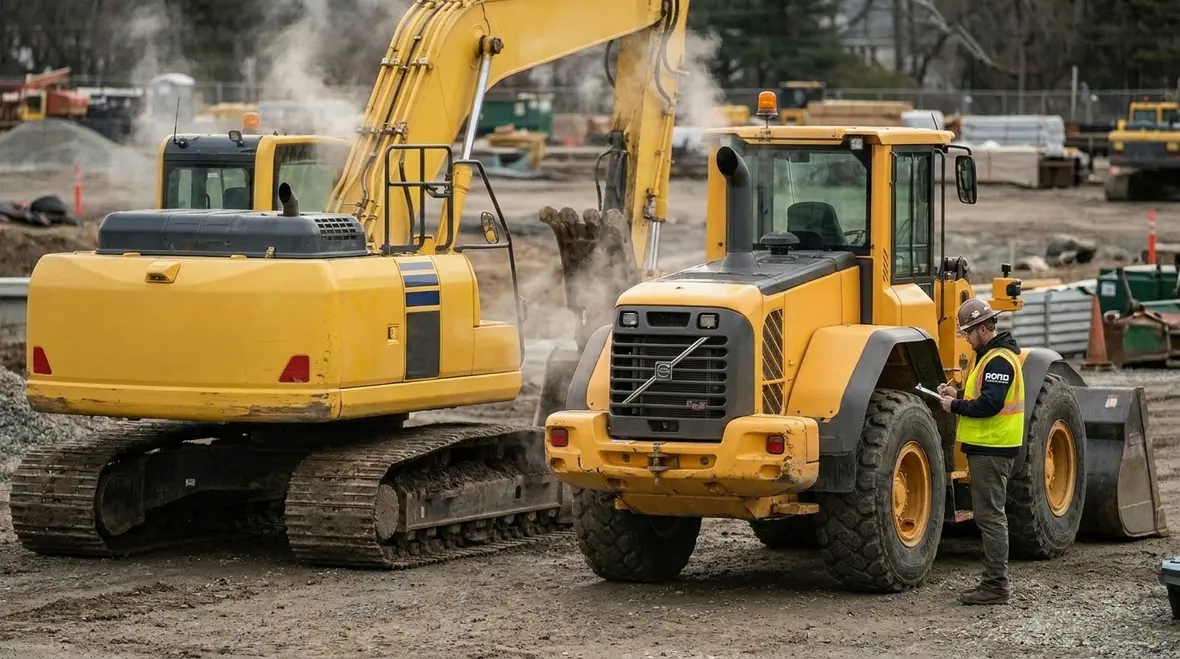
Fire risk on construction sites comes in multiple forms. First, engine bays and hydraulics store heat and fuel. Second, hot work and grinding can ignite dust and residue. Third, electrical failures can turn a small issue into a fast flame. As a result, a strong plan covers more than one scenario.
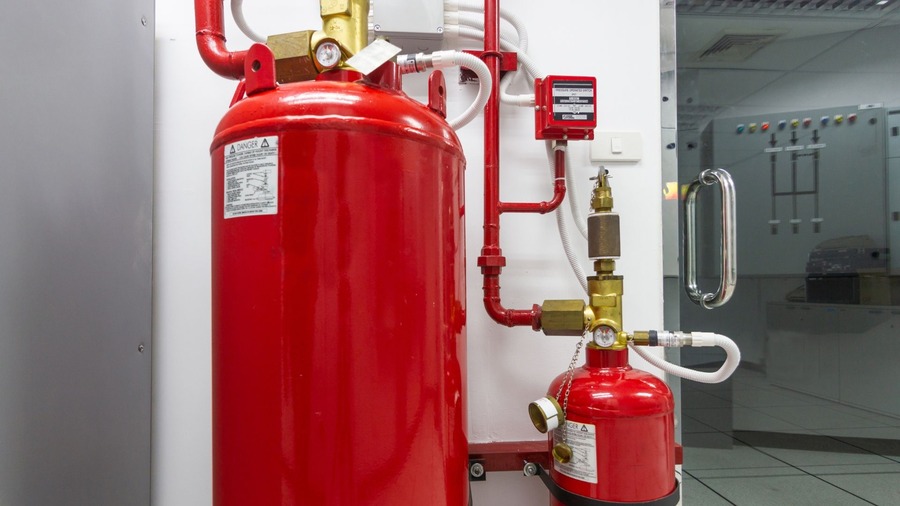
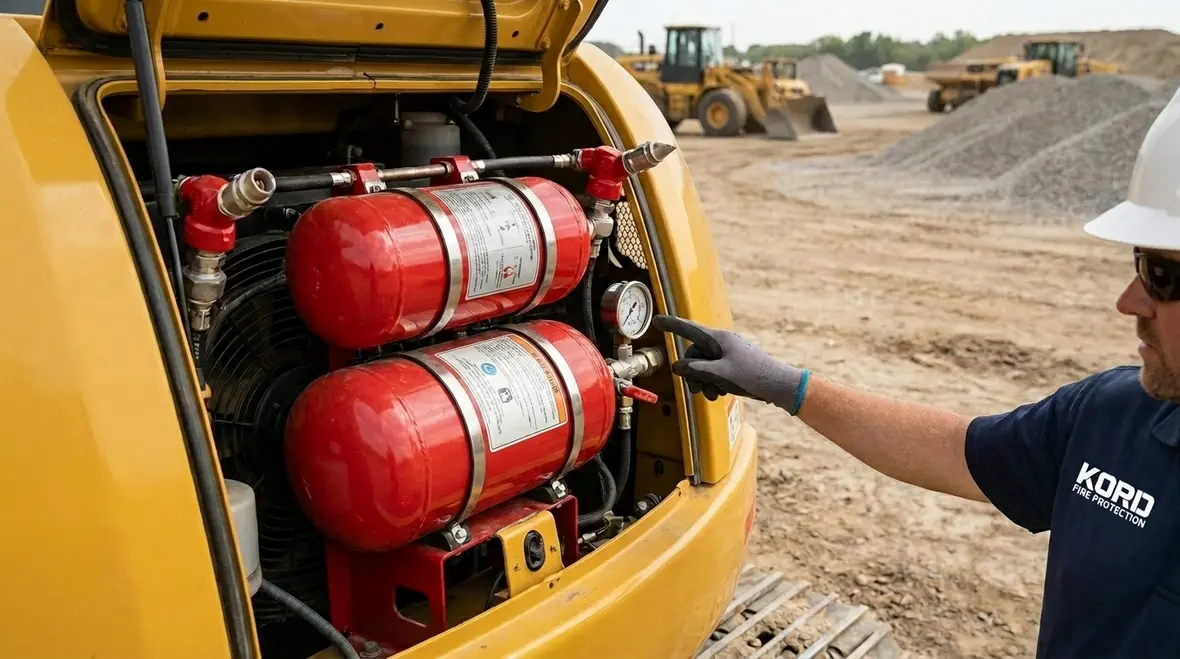
Construction equipment fire suppression focuses on speed and targeted control. Instead of relying on manual response only, the system detects abnormal heat and releases extinguishing agent directly where it matters. This helps reduce damage and supports safer evacuation. Kord Fire Protection notes that vehicle systems typically include detection sensors, a control panel for alerts, tanks filled with agent, manual or automatic discharge capability, and a distribution network, which is exactly why design quality matters on rugged equipment. ([kordfire.com](https://kordfire.com/vehicle-fire-suppression-systems/?utm_source=openai))
At the same time, a real plan considers how crews operate. For example, work hours, operating conditions, and maintenance routines shape how long components last and how often inspections must happen. In other words, the best system still needs the best care. That idea lines up with Kord’s broader fire suppression guidance, which emphasizes that design, installation, maintenance, and readiness all belong in the same conversation instead of living in separate silos. ([kordfire.com](https://kordfire.com/fire-suppression-system-design-types-and-maintenance/?utm_source=openai))
The plan has to match the machine, not just the risk category
An excavator does not breathe heat the same way a wheel loader does. A generator enclosure behaves differently than an articulated haul truck. Airflow, compartment size, vibration, fuel routing, and maintenance access all change how suppression components should be laid out. That is why a copy-paste system can look fine on paper and still underperform in the field. Contractors need a plan built around the actual machine profile, the real hazards, and the service conditions it faces every day.

How the detection and discharge process works on equipment
A typical system uses detection and discharge components designed for rugged environments. Detection may trigger from high temperature or rapid heat rise. Then the control portion releases the agent into the hazard area. This sequence keeps the response tight and helps limit spread.
However, systems do not perform well if they are poorly matched to the equipment. Each machine has its own layout, airflow patterns, and hot spots. Therefore, the right design matters. Additionally, the extinguishing agent must suit the materials and the hazards. Kord Fire Protection explains that there is no one-size-fits-all approach for vehicle suppression and that risk assessments are vital for choosing the best agent for the specific equipment and conditions involved. ([kordfire.com](https://kordfire.com/vehicle-fire-suppression-systems/?utm_source=openai))
When crews understand how the system works, they respond better too. They still call for help, but they know the system is already fighting the fire while they act. That reduces panic and protects both people and equipment. Nobody wants a “everyone sprint to the marshal point” moment. A good system helps prevent it.
Why operator awareness still matters
Automatic suppression is fast, but it is not a permission slip for confusion. Operators should know what an alarm means, when to shut equipment down if procedures require it, how to report the event, and why a discharged system must be restored before that machine goes back to work. Kord’s maintenance guidance reinforces that service discipline matters at the component level, from detection lines and cylinders to nozzles and electrical connections. ([kordfire.com](https://kordfire.com/vehicle-fire-suppression-systems-maintenance-guide/?utm_source=openai))
Where fire suppression systems install for heavy machines
Installation locations depend on the risk zones. Many systems protect areas like engine compartments, hydraulic bays, and control housings. Some applications also cover enclosed spaces where heat builds quickly.
In practice, installers route components so they remain stable under vibration, dust, and temperature swings. Moreover, they secure detection devices where heat rises predictably. This reduces false events and improves reliability. Kord’s guidance on tube based suppression and electrical hazard related false discharges both point back to the same practical truth: routing, placement, and environmental fit matter because heat behavior and wiring conditions can directly affect performance. ([kordfire.com](https://kordfire.com/blazecut-tube-based-fire-suppression-systems-guide/?utm_source=openai))
Also, crews need access for service. Even the best protection system fails when maintenance becomes a chore. So a proper installation plan includes inspection points, clean routes for wiring or lines, and clear documentation for future service work. Kord’s service pages consistently stress that professional installation and ongoing inspection are part of one continuous lifecycle, not separate boxes to check when it is convenient. ([kordfire.com](https://kordfire.com/vehicle-fire-suppression-systems/?utm_source=openai))
Common failure points that teams must prevent
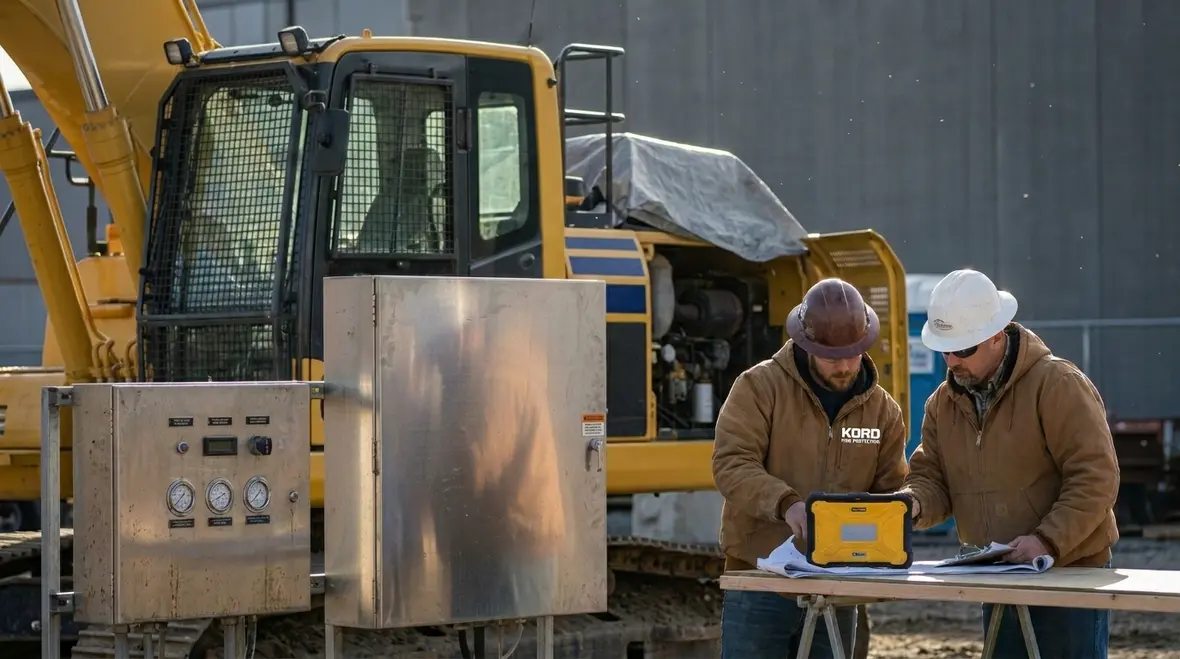
Fire suppression does not fail because it is “bad technology.” It fails when the site treats it like a sticker that never needs attention. The real failure points usually look like this.
- Missing or delayed inspections that allow clogged nozzles, damaged lines, or loose fasteners to go unnoticed
- Incorrect system selection that does not match the equipment’s hazard profile or compartment geometry
- Improper maintenance where technicians ignore manufacturer requirements to meet a schedule
- Unauthorized modifications to panels, wiring, or compartments that change how heat reaches the detection devices
- Poor documentation where teams cannot track discharge history, inspections, or service dates
Then there is the human factor. Operators might treat alarms as background noise, especially when they hear nuisance signals. However, smart troubleshooting and proper setup reduce these issues. Instead of constantly resetting systems, crews can identify the cause and correct it. That keeps protection dependable and saves time later.
A maintenance backlog becomes a fire risk fast
Heavy equipment does not wait politely while someone finds the inspection clipboard. It keeps vibrating, heating up, collecting dust, and flexing every mounted component. Kord Fire Protection notes common system issues such as hose cracking, nozzle clogging, and component movement during regular use, all of which can quietly chip away at system reliability if nobody catches them in time. ([kordfire.com](https://kordfire.com/vehicle-fire-suppression-systems/?utm_source=openai))
Why Kord Fire Protection can be a vital partner
When fire suppression becomes part of the job, the work does not stop at installation. Sites require ongoing support, system checks, and response planning for different equipment types. This is where Kord Fire Protection can become a vital partner with this service and job.
First, a partner helps match the right system to the right machine, which reduces waste and avoids mismatches that can cause weak performance. Next, Kord Fire Protection can support compliance and documentation needs so teams can prove the system was maintained properly. That matters when audits show up like surprise pop quizzes. Kord’s vehicle fire suppression page specifically highlights risk assessment before installation, while its service pages emphasize maintenance, testing, inspection, detailed documentation, and 24/7 support. ([kordfire.com](https://kordfire.com/vehicle-fire-suppression-systems/?utm_source=openai))
Then there is training and field coordination. Crews do better when they know what to expect from alarms, what actions to take, and how to keep equipment safe without slowing production to a crawl. As a result, fewer fires turn into full losses, and more incidents stay contained.
Also, equipment fleets change over time. When a contractor adds a new excavator, generator, or specialty unit, the protection plan must evolve. Kord Fire Protection helps teams keep protection consistent across the fleet, not just on day one. Its full-service positioning and lifecycle approach make that continuity easier when owners want one provider to handle design review, installation, inspection, repairs, and upgrades under one roof. ([kordfire.com](https://kordfire.com/full-fire-protection-services/?utm_source=openai))
How to plan inspection schedules that keep production moving
Inspection schedules should reflect real use, not “we’ll get to it later” optimism. Construction equipment runs hard. It vibrates, shakes dust into corners, and works through weather swings. Therefore, the system needs checks that match the manufacturer’s requirements and the site’s operating conditions.
Typically, teams create a calendar for routine inspections and define steps for after any discharge event. Additionally, they document results and track corrective actions. This creates accountability and supports quick troubleshooting. Kord states that, in addition to pre-shift and monthly inspections, vehicle fire suppression systems should be tested at least once every six months, and that repairs should be performed by certified technicians rather than handled as do-it-yourself work. ([kordfire.com](https://kordfire.com/vehicle-fire-suppression-systems/?utm_source=openai))
Moreover, inspection work should fit the production rhythm. When inspections get scheduled at the wrong time, crews may skip them. So planning inspections around maintenance windows and shift handoffs helps keep the system ready without stopping jobs for no reason.
And if a system ever discharges, teams must treat it seriously. Even when the fire seems small, the system must be restored and rechecked. After all, the next incident will not wait for paperwork to catch up.
Helpful Kord resources for fleet managers
For teams building a broader program, Kord offers several useful resources worth interlinking during planning. The article on vehicle fire suppression systems maintenance gives a practical service view, while fire suppression system design, types and maintenance adds context on system thinking across hazards. If a contractor wants a wider service relationship beyond one machine or one site, Kord’s full fire protection services page is a strong next step. ([kordfire.com](https://kordfire.com/vehicle-fire-suppression-systems-maintenance-guide/?utm_source=openai))
FAQ: Construction equipment fire suppression
Call Kord Fire Protection to protect your fleet before the next incident
Construction sites run on time. Fire protection should run on readiness too. If a contractor wants dependable construction equipment fire suppression, they need the right system, correct installation, and steady inspection support. Kord Fire Protection can help match protection to each machine, maintain documentation, and keep crews confident during real emergencies. The strongest place to start is Kord’s dedicated vehicle fire suppression systems service page, which directly covers custom design, installation, maintenance, testing, and inspection for mobile equipment. ([kordfire.com](https://kordfire.com/vehicle-fire-suppression-systems/?utm_source=openai))
For contractors who want a wider partnership, Kord’s full fire protection services page is a smart near-end CTA because it connects equipment protection to inspections, repairs, and broader fire safety support across operations. Reach out to discuss your equipment list and jobsite risks, and build a fire protection plan that protects people, reduces losses, and keeps projects moving. Let us help before the problem shows up uninvited. ([kordfire.com](https://kordfire.com/full-fire-protection-services/?utm_source=openai))

Join Our Newsletter!
Get the latest fire safety tips delivered straight to your inbox From our Newsletter.