
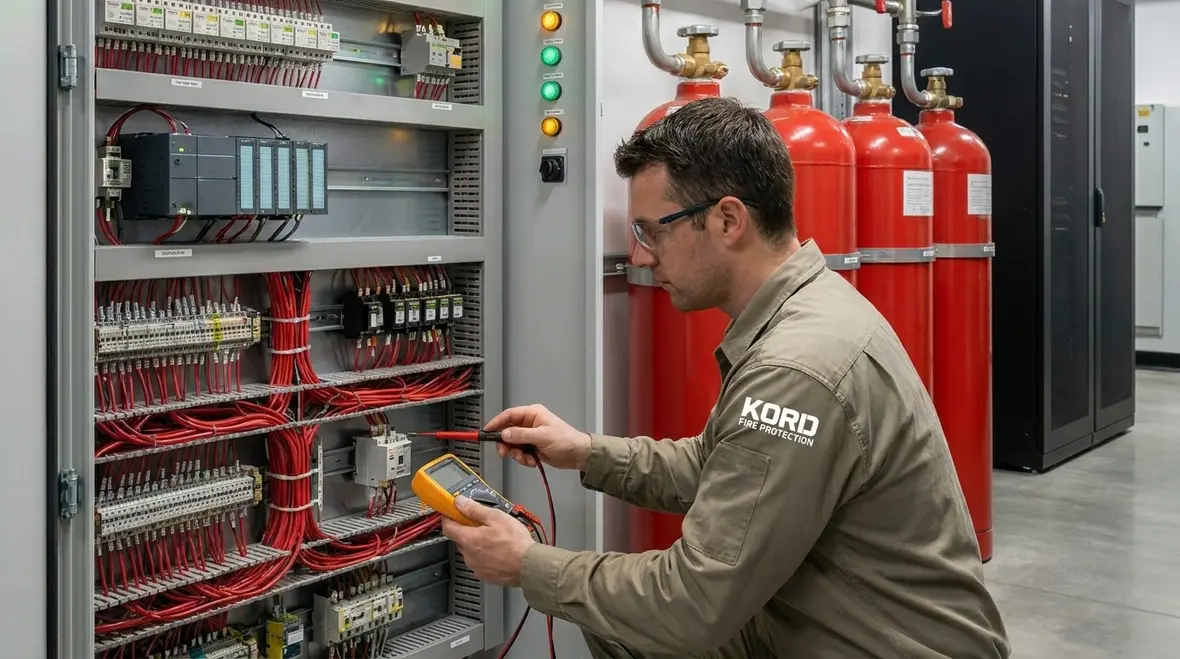
Fire Safety System Electrical Integration for Advanced Suppression
Quick Answer (50 words)
Integrating electrical controls into advanced fire suppression helps industrial and commercial sites detect risk faster and activate suppression more reliably. With coordinated wiring, power monitoring, and logic that works under stress, assets get protected and downtime drops. In many projects, Kord Fire Protection becomes a vital partner for safe commissioning and ongoing support.
For facilities planning upgrades or new installs, it also helps to align early with fire suppression services that can support inspection, installation, testing, and maintenance across integrated systems. Getting the suppression side and electrical side on speaking terms before commissioning is usually a lot cheaper than letting them meet for the first time during a panic.
Advanced fire suppression control systems in real facilities
In the real world, fires do not wait politely for a “perfect” schedule. They start, spread, and stress electrical systems fast. That is why Fire safety system electrical integration matters early in design and during installation. When the fire detection, alarm, suppression, and building controls coordinate through electrical signaling, teams gain cleaner cause and effect. In turn, the right devices activate in the right order, instead of playing a chaotic game of telephone.
In industrial, retail, and commercial facilities, this approach supports both safety and operational control. Kord Fire Protection can become a vital partner by helping teams plan the control logic, verify device compatibility, and handle commissioning with the seriousness this subject deserves. Because nobody wants their suppression system to act like a lazy intern during a crisis.
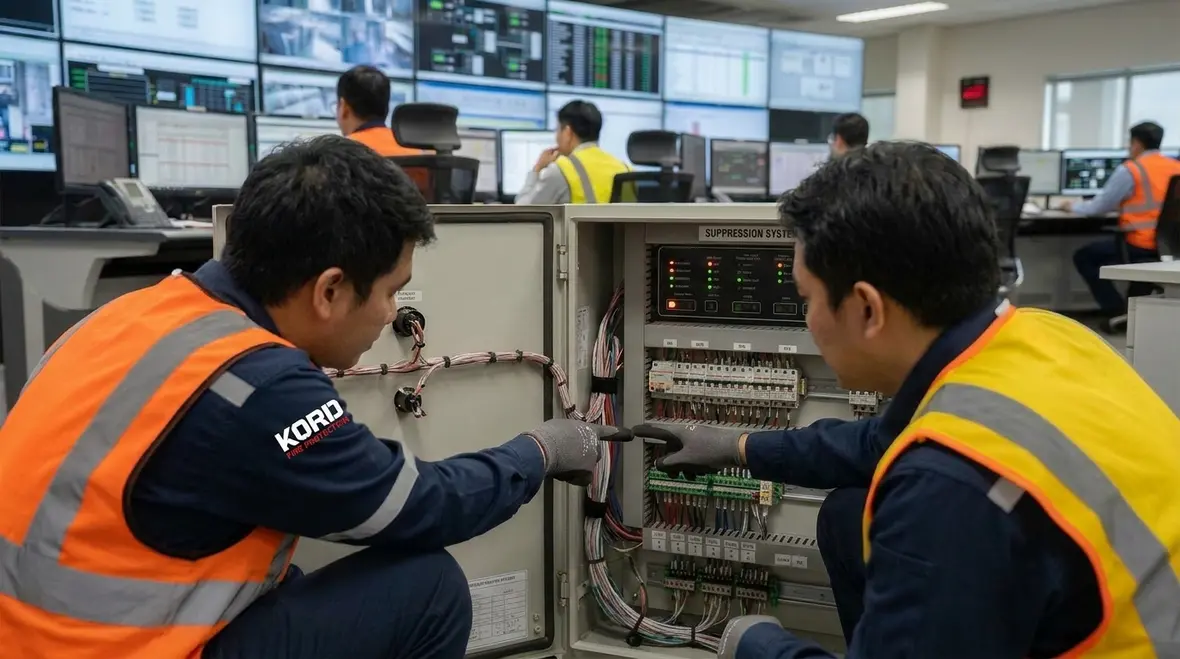
What electrical control integration actually does
Electrical control integration connects detection and suppression using defined signals, power paths, and supervised circuits. Instead of isolated components, the site works as a single safety system. Typically, the integrated design aligns these outcomes:
- Detection to action: detectors or detection zones trigger system logic that selects the correct response
- Supervised outputs: control outputs that can detect wiring faults before they become emergencies
- Interlocks: logic that prevents conflicting actions, such as stopping fans and holding dampers until suppression is ready
- Sequencing: timed steps for release control, shutdown, and evacuation messaging
Furthermore, integration allows suppression design to respect the building’s realities. For example, plant rooms may need ventilation shutdown prior to agent discharge. Then, the system can run the sequence without guesswork. This lowers the chance of delays that cause extra damage, and it reduces “manual heroics” that people only discover they do not have time for.
Why single-system behavior matters more than isolated hardware
A detector that works, a control panel that works, and a suppression release module that works can still produce a bad outcome if they are not integrated correctly. The issue is not just whether individual parts function. It is whether they function together under pressure, in sequence, and with the right priorities. That is a very different test. Plenty of systems look organized on paper, then become weirdly unhelpful when real smoke, shutdown logic, and operator confusion arrive at the same time.
This is also where power strategy enters the conversation. Facilities that want stronger reliability should review how alarm and control power are designed, especially where standby operation and AC supply stability affect integrated response. That makes fire alarm power requirements a useful related topic when planning broader suppression control performance.

How integrated systems coordinate with suppression types
Advanced fire suppression can include water based systems, gaseous agents, foam systems, and hybrid strategies. Regardless of the agent, integration supports the same core idea: controlled release and controlled building response. When the electrical side integrates properly, the suppression does not just “turn on.” It performs a plan.
For instance, in a gaseous agent application, electrical control logic often coordinates these steps:
- Alarm and pre release warning based on zone selection
- Door and vent state monitoring through supervised signals
- Fan or damper shutdown to maintain concentration
- Release initiation only when permissive conditions meet
- Post release monitoring and reset behavior
Meanwhile, for water mist or sprinkler related strategies, integration may focus on equipment status and shutdown sequencing. That can include pump starting signals, valve position verification, and remote annunciation for operations teams. As a result, facilities gain clarity during incidents. They know what happened, where it happened, and what should happen next.
Different agents, same demand for disciplined sequencing
The suppression medium may change, but the electrical thinking stays surprisingly consistent. Teams still need clear inputs, confirmed permissives, supervised circuits, and defined output behavior. Whether the system protects a plant room, a server environment, a manufacturing line, or a storage area, the control design must answer the same practical questions. What starts first. What stops first. What must be verified before release. What alarms operators receive. And what the system does if a device or wire decides to have a bad day at exactly the wrong moment.
Designing the wiring and logic so it stays reliable
Reliability is not luck. It comes from wiring discipline and clear control logic. During planning, teams should address power, supervision, signaling, and failure behavior in a way that matches real site demands and typical industrial constraints. Otherwise, the system may work in testing and act differently when conditions change, like heat, vibration, and power fluctuations.
Key design areas include:
- Power distribution: segregated supplies and protected power paths for control and alarm circuits
- Circuit supervision: monitoring for open circuit, short circuit, and ground fault where appropriate
- Fail safe behavior: defining how outputs act when a fault occurs
- Signal mapping: documenting every input and output so commissioning teams can verify cause and effect
- EMI and segregation: keeping control wiring separated from noisy loads and high energy equipment
Also, logic should be testable. If a control sequence cannot be verified without guesswork, it will create pain during commissioning and audits. And yes, that pain usually arrives right before an important deadline, like a plot twist no one asked for. Good electrical control integration prevents that.

Documentation is part of reliability, not paperwork theater
One of the most overlooked strengths in an integrated system is boring, beautiful documentation. As built drawings, input output matrices, panel labeling, release logic notes, and shutdown descriptions save huge amounts of time later. They help installers commission accurately, help maintenance teams diagnose faults faster, and help owners avoid expensive confusion after renovations. When documentation is thin, people start making assumptions. In fire protection, assumptions are basically a side quest nobody should accept.
Commissioning and testing that proves the cause and effect
After installation, the work is not “done.” Commissioning proves that detection, signaling, and suppression actions match the design intent. In high consequence areas, testing must cover sequencing, interlocks, and fault scenarios. That is where Fire safety system electrical integration earns its keep.
A strong commissioning plan typically includes:
- Zone and device verification to confirm correct input mapping
- Output function checks under controlled conditions
- Interlock verification so conflicting equipment states cannot occur
- Supervision fault simulation to confirm alarms and system responses
- Documentation for handover so maintenance teams can act fast
Kord Fire Protection can become a vital partner here because electrical integration work often spans multiple scopes: detection, suppression hardware, building control tie ins, and documentation. When the same team supports the full chain, cause and effect becomes clearer, and rework drops. That means less downtime, fewer surprises, and more confidence for site leadership.
Testing fault behavior matters almost as much as testing normal behavior
A lot of people want to see the happy path. Detector trips, alarms sound, shutdown occurs, release sequence completes, everyone nods. That is useful, but it is only half the story. Real systems also need to prove what happens during open circuits, power loss, stuck permissives, failed communications, and miswired outputs. If the integrated system cannot handle ugly conditions predictably, it is not truly ready. It is just optimistic, and optimism is not a substitute for commissioning.
Operations and maintenance for long term performance
Facilities run. Systems age. Wiring connections loosen slightly over years, and interfaces change after refurbishments. Therefore, electrical integration must support maintenance, inspection, and change control. A well integrated fire safety and electrical interface reduces uncertainty for technicians responding to faults.
Maintenance focused practices can include:
- Using clear labeling and updated as built schematics
- Testing control sequences on a planned schedule
- Monitoring interface points after plant changes
- Maintaining training for operations staff on alarm meaning and escalation
- Running trend checks for repeated minor faults
Just like keeping a server room stable, it is not glamorous work. However, it prevents “mystery failures” later. And in a fire safety system, mystery is not cute. It is expensive.
Where Kord Fire Protection fits best
Many projects involve several contractors, and handoffs can become the weak link. Kord Fire Protection supports fire safety planning, equipment coordination, and commissioning activities so the electrical side does not get treated as an afterthought. In other words, they help align the engineering intent with the real install.
For industrial, retail, and facilities teams, that can mean:
- Better interface planning between detection, suppression, and building controls
- Reduced rework through coordinated commissioning and documentation
- Clear maintenance guidance for the integrated system behavior
- Support during upgrades so the system stays consistent
When the partner is strong, the site gains more than compliance. It gains clarity and speed. And yes, speed matters when every second feels like a scene from a disaster movie.
FAQ
Call Kord Fire Protection to integrate with confidence
Advanced fire suppression works best when electrical controls connect everything into one clear sequence. Facilities that plan properly gain faster response, safer interlocks, and less downtime during incidents. Kord Fire Protection can act as a vital partner, supporting interface planning, commissioning, and practical documentation for maintenance teams.
If an upgrade or new build is on the horizon, reach out now and get the integrated design locked in early. That early coordination can save time, reduce rework, and keep the system from becoming an expensive lesson in why “we’ll figure it out later” is not a fire protection strategy.

Join Our Newsletter!
Get the latest fire safety tips delivered straight to your inbox From our Newsletter.



