Commercial Fire Pump Room Electrical Requirements in Australia
Quick answer
Commercial fire pump rooms need carefully designed and monitored power. This includes dedicated feeders, reliable transfer equipment, correct grounding, and strict protection of control circuits. Electrical work must also support testing, fault tolerance, and compliance with Australian fire and electrical standards. Kord Fire Protection helps clients plan, install, and verify these systems so they perform when it matters.
In Australia, commercial pump room electrical is not a “nice to have.” In a fire event, it must work the first time, and it must keep working. That means the supply, protection, control, earthing, and monitoring all need to be built with care. And while this topic can sound as exciting as watching paint dry, the right approach prevents costly downtime and compliance headaches for industrial, retail, and facility teams across the country. This article walks through the essential electrical requirements for fire pump rooms, and it also explains how Kord Fire Protection becomes a vital partner for the job.
Facilities that want dependable performance often pair electrical planning with broader full fire protection services, because the pump room does not exist in a vacuum. It sits inside a larger life safety strategy where inspection, maintenance, and documentation all influence whether the system actually performs under pressure.
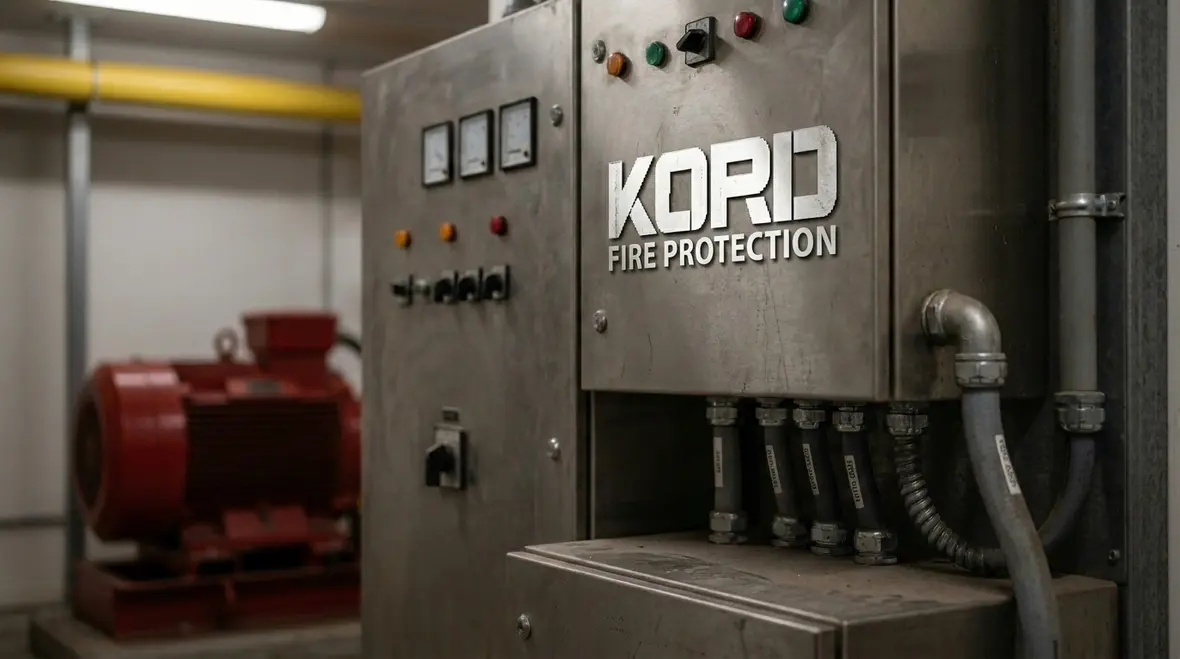
Core power design for fire pump reliability
First, fire pump rooms need electrical power that does not depend on “normal” building loads. Therefore, the system should use dedicated feeders and a clear separation from general circuits. If the building loses power due to a contractor’s favourite activity, you want the pump control and motor supply ready to go.
Next, the design should account for voltage drop and starting current. Fire pumps often draw high current at start, so electrical conductors, switchgear, and overcurrent devices must match the pump’s motor requirements. Moreover, the arrangement should allow safe starting under full load conditions, not after the system “decides to think about it.”
Finally, the room needs a dependable source and a defined transfer method. That can involve standby generation and changeover arrangements, depending on the site risk profile and the applicable requirements. In short, power must stay stable and predictable, because fire safety does not run on “maybe.”
Why dedicated supply arrangements matter
A dedicated arrangement helps isolate the fire pump from everyday electrical drama. Renovation work, overloaded tenant circuits, temporary shutdowns, and poorly planned maintenance can all affect general distribution. The fire pump supply should be protected from those interruptions so emergency operation is not tied to whatever else the building is doing that day.
This is also where proper coordination with fire pump service becomes useful. When the team that understands pump testing, inspection, and performance is aligned with the electrical scope, the installation tends to make more sense in the real world and a lot less sense only on paper.
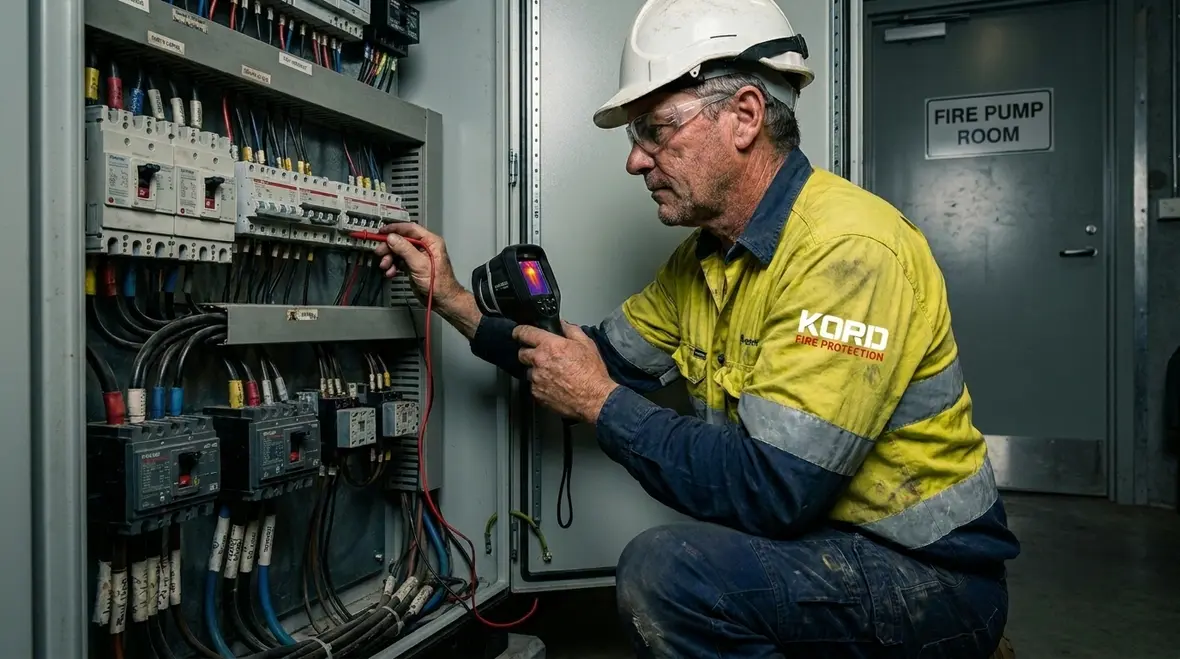
How protection devices should be selected and coordinated
Overcurrent protection is where many projects stumble. Because a fire pump must operate during emergencies, the protective devices must protect conductors without blocking pump start. Therefore, correct selection and coordination is essential. The trip curves, settings, and device types should suit the motor starting characteristics.
Also, the protection strategy should differentiate between fault clearing and nuisance tripping. If protection reacts too fast or too loosely, it either fails to protect the equipment or it shuts down the pump at the worst possible moment. So, engineers typically coordinate upstream devices with downstream motor protection, and they verify the performance with the expected fault current levels.
Additionally, control power protection needs proper discrimination. If a control circuit fuse opens, the pump may lose key functions even if the motor circuit remains intact. So the design should protect each function as required, while maintaining continuity where it counts.
The problem with nuisance trips
Nuisance tripping sounds minor until it happens during an emergency. Fire pump systems need a protection philosophy that respects the purpose of the equipment. That means engineers should review inrush current, locked rotor behaviour, available fault current, and downstream control arrangements together instead of treating each item like a lonely little island.
Good documentation matters here too. Settings, coordination studies, panel schedules, and test records help everyone understand how the system is supposed to behave. Without that, troubleshooting becomes a guessing game with better clipboards.
Transfer and standby power arrangements
When a facility uses a backup source, the transfer process must be deliberate and fast. After all, a fire event does not schedule itself neatly between power availability windows. Changeover equipment should be tested and documented, and it should support the pump’s start sequence without hesitation.
In practical terms, the electrical scheme should confirm that the control panel receives power quickly enough to permit starting and monitoring functions. Then, it should ensure the pump motor sees the right voltage and frequency for reliable operation. If the system includes a generator, the generator set, ATS or changeover controls, and cabling paths must all be assessed together as one system.
Further, the standby setup should include checks that detect failures early. That can include supervisory alarms for loss of supply, generator start issues, or transfer faults. When these alarms are configured and monitored properly, facility teams can act before an emergency reveals the problem.
Testing backup performance before it is needed
A backup source only counts if it behaves correctly under realistic conditions. That means transfer tests should confirm sequence, timing, alarm supervision, and motor response. If the site uses generator support, the assessment should include start reliability, fuel considerations, controls interface, and recovery after test conditions. No one wants to discover a transfer issue only when the building is already having a very bad day.
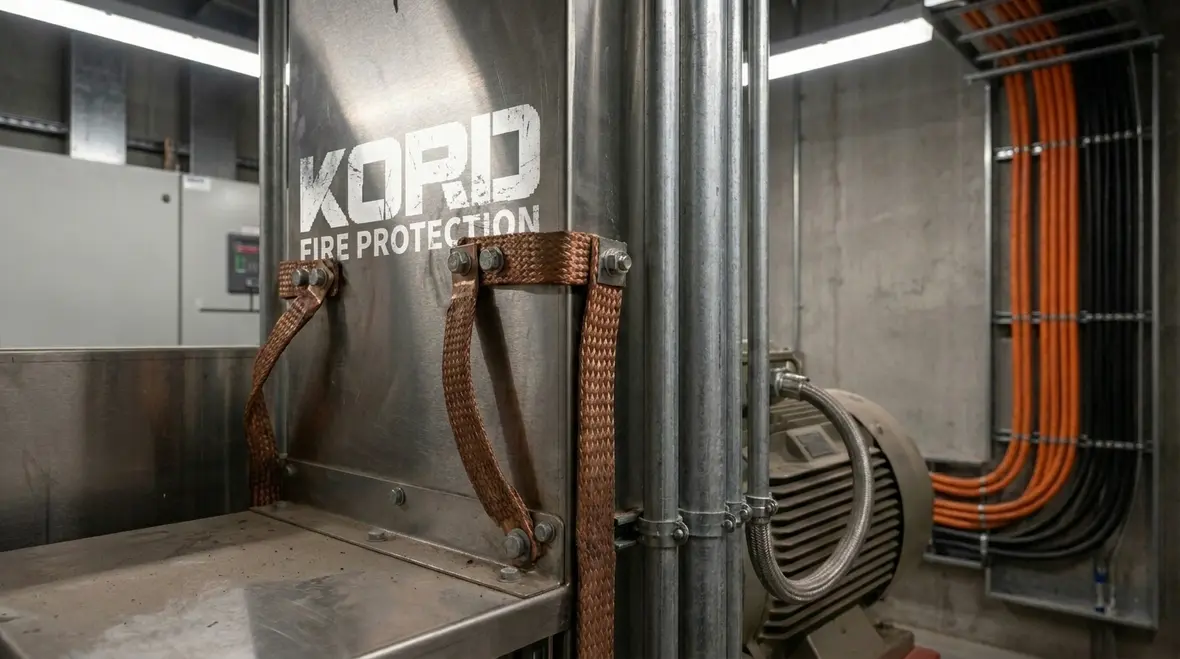
Earthing, bonding, and system integrity
Electrical performance during a fire is not only about power delivery. It is also about the integrity of earthing and bonding. Therefore, the fire pump room electrical installation should follow sound earthing practices so protective devices clear faults reliably.
Proper bonding reduces the risk of dangerous touch voltages and helps stabilise the system during transients. It also supports safe operation of control circuits that rely on correct reference points. Moreover, the design should avoid “floating” metalwork and ensure that panels, motor frames, cable armour, conduits, and pipe penetrations connect as required.
Then, the team should confirm continuity and resistance values with test reports. Those records matter, because when compliance questions arise, people want facts, not vibes. And while a cabling diagram may look impressive, it does not replace proper measurement.
Monitoring, control power, and alarm circuits
The fire pump control system depends on more than just the motor power. Hence, the electrical requirements include robust control power circuits, alarm inputs, and status outputs that remain available during the emergency mode.
Typically, the control panel should supervise key states like pump run status, pressure or flow readings, system faults, and supply health. Additionally, alarm wiring should remain functional even when normal building systems fail. That means the control circuits must be protected, segregated, and routed in a way that maintains performance under stress.
Also, the system should handle test cycles safely. Many facilities run planned inspections, so the control panel logic and electrical setup must allow maintenance and test without confusing the alarms. When the programming and wiring work together, testing becomes manageable rather than a recurring fire drill for technicians.
Keeping supervision useful instead of noisy
Supervision should give operators meaningful insight, not a wall of blinking confusion. Clear alarm categories, correct signal mapping, and well-labelled outputs help teams recognise what has happened and what needs attention first. This is also where a related article on integrated fire and security systems with Aritech Fire Systems fits naturally, because broader monitoring strategies often shape how fire pump signals are presented and acted on across a facility.
Electrical segregation, cable routing, and endurance
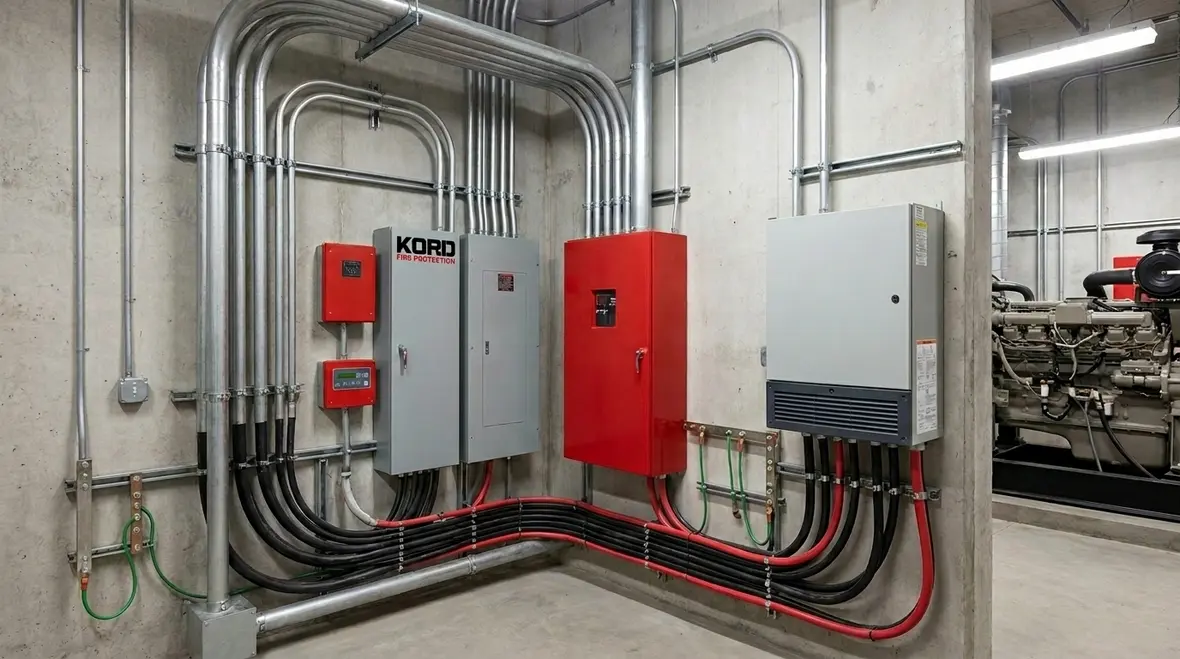
Fire pump rooms often include multiple circuits: motor power, control power, alarms, and monitoring. Therefore, segregation matters. The electrical design should separate pathways so a fault or damage event does not knock out every function at once. Additionally, cable routing should avoid unnecessary exposure to hazards and keep critical circuits protected.
In some projects, fire rated solutions support continued operation of circuits. While the exact approach depends on the design basis and the applicable requirements, the principle is consistent: maintain the ability of essential circuits to operate during the event.
To keep a project clear and auditable, documentation should show routing routes, termination points, and segregation distances or barriers where required. When teams in industrial, retail, and facility environments can quickly trace circuits, troubleshooting becomes faster and calmer. And nobody wants the “treasure hunt” method during an alarm event.
Kord Fire Protection as a partner for compliant outcomes
Now the part clients actually care about: fewer surprises. Kord Fire Protection can support these electrical requirements as an essential partner by aligning fire pump room design intent with real installation outcomes. For example, Kord can help coordinate fire protection system requirements with electrical scope so the control logic, power supply, supervision, and commissioning targets match the safety objectives.
Moreover, Kord Fire Protection helps teams across Australia reduce gaps between drawings and the site reality. That can include guidance on equipment selection, review of control and monitoring arrangements, and support during testing and verification. Therefore, the electrical system is not just “installed,” it is validated. And yes, validation beats arguing with a checklist every time.
From industrial sites to retail and multi-facility portfolios, having a partner like Kord reduces coordination friction between electricians, engineers, and facility teams. Consequently, projects move with more confidence, and operational staff gain clearer records for maintenance planning.
Dual-column checklist for project readiness
Electrical readiness
- Dedicated feeders and correct motor supply sizing
- Coordinated overcurrent protection for start and fault clearing
- Defined transfer method and standby availability targets
- Compliant earthing and bonding continuity checks
Fire pump control and monitoring
- Protected control power and stable panel operation
- Supervised alarm inputs and status outputs
- Safe test and inspection mode performance
- Documented segregation and endurance approach
FAQ
Final call to action
Commercial fire pump rooms demand electrical discipline, not guesswork. When power supply, protection, earthing, control circuits, and supervision align, the system performs under pressure. Kord Fire Protection helps teams across Australia reduce risk, close gaps between drawings and site conditions, and verify outcomes through a coordinated approach.
If a project is underway or a compliance review is coming, contact Kord Fire Protection to support a confident, audit-ready fire pump room electrical solution. The goal is simple: fewer surprises, clearer documentation, and a system that works when the pressure is on and nobody has time for electrical guesswork.

Join Our Newsletter!
Get the latest fire safety tips delivered straight to your inbox From our Newsletter.