
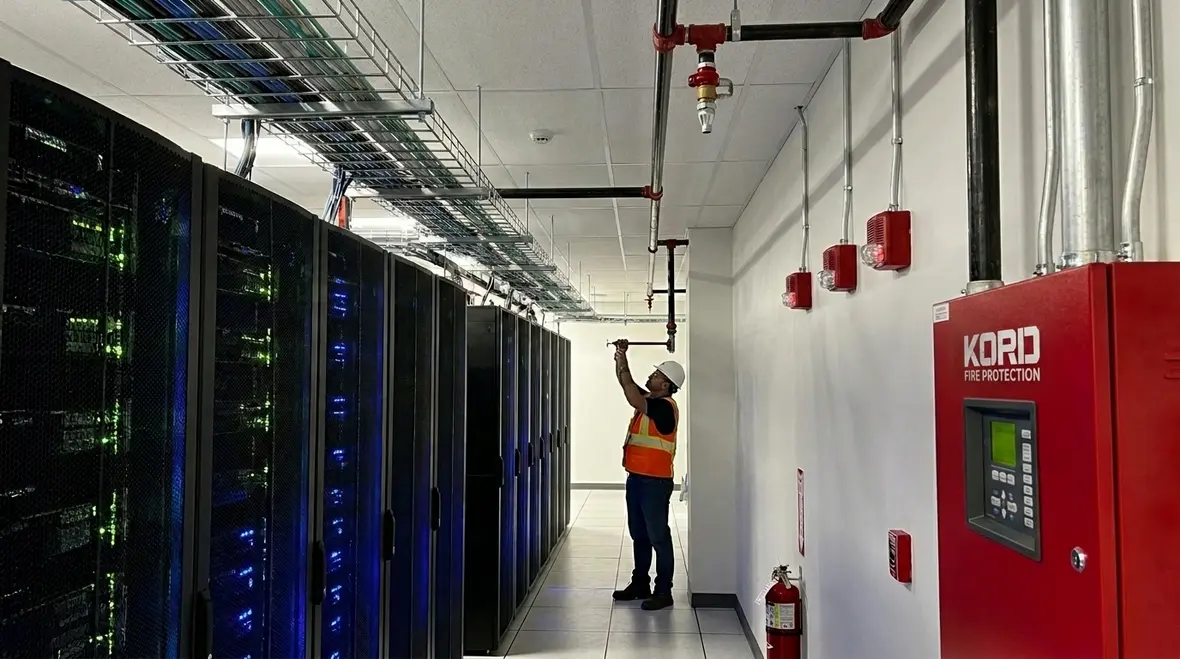
Data Center Fire Suppression Architecture in Australia
Quick Answer: Modern data centers need advanced fire suppression architectures that act fast, protect mission critical equipment, and reduce downtime. When designed around risk, space layout, and airflow, systems can prevent smoke damage and keep networks alive. In Australia, Kord Fire Protection helps teams plan, install, and maintain these systems as a trusted partner.
In the world of data center fire suppression, milliseconds matter and so does the build quality. A modern facility does not just “install a system and hope for the best.” Instead, it uses layered detection, smart agent selection, and carefully modeled discharge behavior to protect servers, storage, and the people who keep everything running. After all, no one wants a fire event to become an unplanned relocation of an entire business to the cloud. Still, the cloud can be great, right up until it costs extra money for downtime.
Near the start of planning, many operators also review a dedicated data center clean agent fire suppression guide to understand how clean agents fit into high value environments, how they behave in enclosed rooms, and why precision matters when the assets in the room are worth more than the furniture by several galaxies.
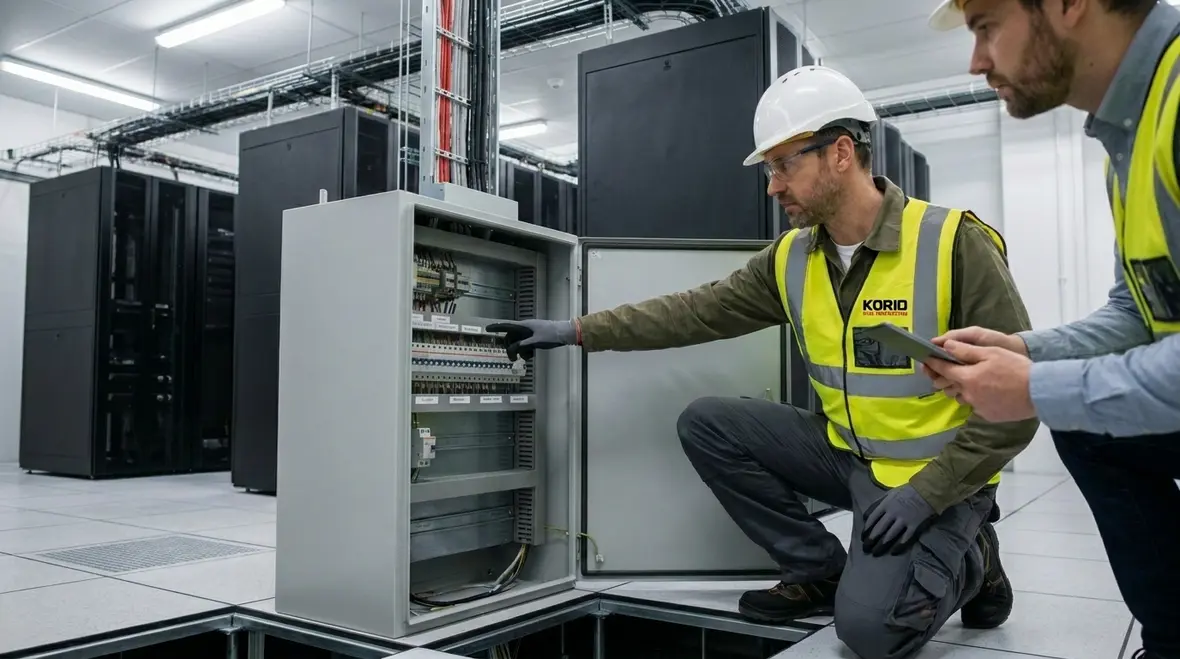
Designing advanced data center fire suppression architecture
Teams begin by mapping what can burn, how heat and smoke move, and where critical assets sit. Then they design the architecture around those realities. For instance, a facility might use early warning detection in front of the main hazard areas, and then apply suppression only where it is truly needed. This approach reduces agent waste and limits collateral impact on sensitive equipment.
Next, engineers coordinate detection and actuation logic. They tune alarm thresholds, define pre action steps, and decide how quickly the system must respond. Consequently, the design supports both speed and selectivity. In practice, that means the system can react early without triggering every time a piece of equipment sneezes out heat during peak workloads.
Good architecture also respects the fact that data centers are not identical boxes filled with identical risks. Some facilities rely on raised floors, some use slab floors, some run dense rack rows with aisle containment, and some have support spaces like UPS rooms, battery areas, and network control zones that need their own logic. That is why the design process usually separates hazards by function instead of pretending one system layout can solve every problem in one heroic move.
Why the front end of design matters so much
If teams miss the risk picture at the beginning, they usually pay for it later in redesign, retesting, or awkward operational workarounds. A suppression system should feel intentional from day one. It should not feel like a patch added after someone realized the server room was producing more heat than expected and that cables had quietly multiplied like rabbits behind the racks.
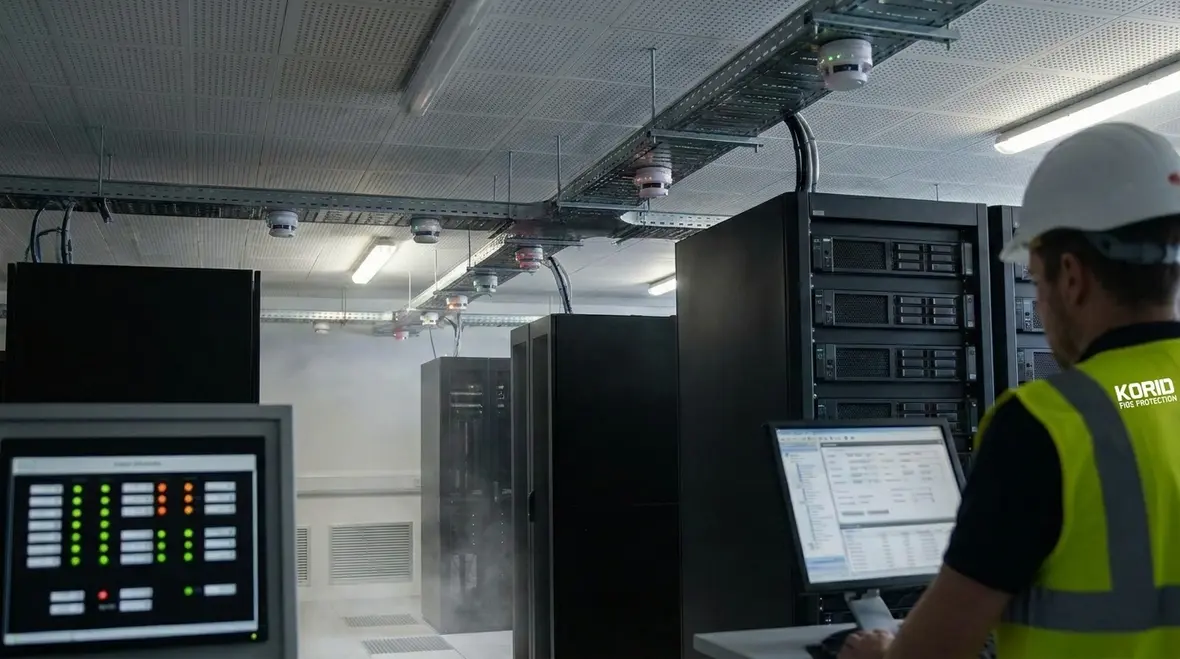
How detection and control work together under pressure
Effective suppression depends on detection quality and control strategy. Many modern systems use multi sensor designs such as optical smoke sensing, thermal detection, and sometimes aspirating detection in high value zones. Then they link that information to control panels that apply a disciplined sequence. Kord Fire Protection also covers this coordination in its fire suppression control panels and power distribution guide, which fits naturally into any conversation about smart system response.
For example, a system may move through phases like alarm verification, pre action activation, and full discharge. While that sounds like a movie plot, it helps avoid false discharge events caused by non fire heat sources. In addition, control integration can connect to building management systems, network monitoring, and emergency response procedures. So, when the system acts, it also communicates.
Because data centers often run 24 7, teams also plan for safe behavior during maintenance windows and testing. They ensure the architecture remains dependable even when doors open, filters change, or contractors show up with their tools and their own ideas.
Sequence matters more than noise
A great system is not merely loud. It is orderly. It knows when to verify, when to escalate, when to isolate zones, and when to trigger shutdown actions if those are part of the design intent. That sequence protects uptime because it reduces unnecessary interventions while still keeping the door open for extremely fast action when the threat is real.
Choosing agents that protect equipment, not just surfaces
Agent selection goes beyond “what extinguishes.” Engineers evaluate how the agent interacts with electronics, enclosures, and airflow patterns. Common strategies include gaseous agents for specific hazard spaces and water based systems where appropriate, each with its own performance profile.
For gaseous solutions, designers consider discharge time, concentration targets, and room integrity. They also verify that the hazard volume controls are accurate so the agent reaches the right spaces. Meanwhile, water based systems focus on reliable coverage, nozzle performance, and the way water behaves around racks and raised floors.
Then, they account for airflow and ventilation. Some rooms cycle air for cooling, and that can influence smoke movement and agent distribution. Therefore, suppression architecture must align with HVAC operation and rack layout. When it does, the system does not just fight fire. It protects downtime by reducing damage.
Many facility teams compare options by asking a simple question: what happens to the equipment after discharge? That question leads them toward cleaner solutions in some spaces and more traditional approaches in others. It also encourages better zoning, because not every room needs the same method. If one area contains highly sensitive electronics while another contains mechanical support equipment, the architecture should reflect that difference rather than flattening everything into one compromise.
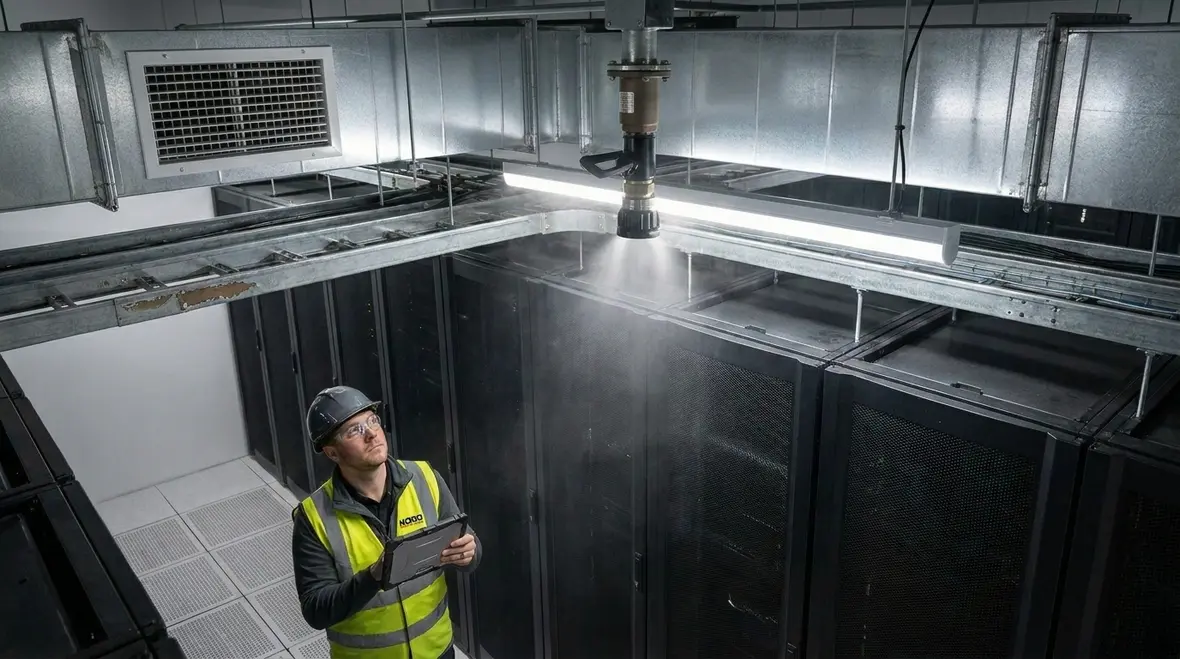
Spotting risk in racks, cable trays, and cooling paths
Modern facilities carry risk in places people forget to look. Cable trays, power distribution units, patch panels, and even ceiling voids can create hidden pathways for smoke and heat. At the same time, cooling systems can move heat rapidly. As a result, the fire can develop faster than older models predict.
Skilled fire protection teams use compartment and hazard zoning to identify these pathways. They then specify detection placement and suppression boundaries so coverage is intentional. For example, if racks sit close together, the design might require closer detection spacing and targeted discharge control. If the facility uses hot aisle cold aisle arrangements, the architecture can incorporate those airflow patterns into its layout.
Also, teams consider operational changes. A data hall today might look different six months from now due to upgrades, new tenants, or revised cabling routes. Hence, the architecture should support change management through documentation, labeling, and review processes.
Hidden pathways deserve obvious attention
What makes data center fire risk tricky is not only the equipment in plain view. It is the pathways above, below, behind, and between the obvious assets. A neat room can still hide messy risk. That is why serious teams study cable management, rack density, and cooling behavior with the same energy they give to agent cylinders and panel programming.
Where performance meets compliance in Australia
For industrial and commercial sites across Australia, the goal is not only to suppress fires, but to do so in a way that supports code expectations, safety duties, and auditable records. Fire protection design often requires a clear chain of decisions, including risk assessment steps, system basis of design, and acceptance testing plans.
Kord Fire Protection can become a vital partner here, because they help clients connect design intent with real site outcomes. They can support selection of the right approach, coordinate with facility teams, and manage the paperwork that keeps projects moving. In other words, they help ensure the architecture does not just look good on paper. It performs during tests and, when the worst happens, during real events.
In addition, they support ongoing maintenance and inspection routines. That matters because data center fire suppression systems do not stop being critical after installation. They need scheduled checks, calibration where required, and clear records for audits and insurance conversations. And yes, those record requests can feel like a never ending sequel, but proper documentation saves time.
For readers who want a deeper technical comparison of strategies that protect electronic spaces, Kord Fire Protection also provides a useful resource on clean agent systems for data center fire protection. It fits especially well when teams are weighing room integrity, discharge behavior, and equipment sensitivity against maintenance demands.
Build integration: retrofits, upgrades, and disruption control
Many data centers already exist, and they still need improved suppression architecture. Retrofitting requires planning that protects uptime and prevents unnecessary downtime. Teams often stage work by zone, isolate affected compartments, and schedule system changes around demand peaks.
During upgrades, they verify that new suppression components match the original design assumptions. They check detector performance, verify alarm logic, and confirm that discharge coverage aligns with updated rack density or raised floor changes. If the facility added equipment since the last survey, the architecture may need recalculation.
At the same time, they manage human factors. Staff training matters, and emergency response procedures must match the system behavior. Therefore, Kord Fire Protection can help teams align training, commissioning, and ongoing service so that the response plan remains accurate. After all, a fire system that no one understands is like a smoke detector with stage fright.
Retrofits succeed when disruption is treated as a design issue
The challenge in retrofit work is rarely just technical. It is operational. Teams must preserve service continuity, keep stakeholders informed, protect temporary conditions, and confirm that old assumptions still match the current environment. When that discipline is missing, even a smart upgrade can cause confusion at exactly the wrong moment.
Case style comparisons for system approaches
Architecture Focus
Detection first, then targeted action
Agent selection based on hazard zoning
Discharge behavior modeled to match airflow
Documentation and testing built into the plan
Operational Outcome
Lower risk of accidental discharge
Better equipment protection and less damage
Faster response that supports business continuity
Auditable compliance with clear maintenance records

FAQ
Conclusion: take the next step with a partner
Advanced fire suppression architectures protect more than equipment. They protect uptime, safety, and budgets. When facility teams align detection, control logic, agent selection, and airflow modeling, the system responds with speed and precision. That combination is what separates a resilient data center from one that is only hoping for the best.
Now, Kord Fire Protection can help your team move from design intent to dependable real world performance across industrial and commercial sites in Australia. Contact Kord Fire Protection to review your current setup and plan the right next upgrade. For additional context, teams can also review Irwindale fire alarm systems for industrial safety as an example of how Kord Fire connects risk based planning with real operational environments.

Join Our Newsletter!
Get the latest fire safety tips delivered straight to your inbox From our Newsletter.



