Fire Sprinkler Electrical Connectivity for Reliable Monitoring
Quick Answer: Strong fire monitoring starts with well built electrical paths. For automated sprinkler systems, teams optimize wiring, terminations, and signal reliability so monitoring stays accurate during alarm events and daily operation. With the right practices and partner support, sites reduce nuisance trouble codes and protect uptime.
Fire sprinkler electrical connectivity is where reliability is won or lost, especially when an automated sprinkler monitoring system depends on clean signals and secure power paths. In the real world, facilities face vibration, moisture, corrosion, and constant maintenance pressure. Therefore, teams must optimize how components connect, verify, and stay verified over time. And that is where kord fire protection can become a vital partner, bringing field-tested discipline to a job that too often gets treated like an afterthought. After all, no one wants their alarm system to behave like a flaky Wi Fi router during a storm.
Near the start of any monitoring improvement project, it also helps to align sprinkler connectivity work with broader fire alarm service systems support so panel behavior, monitoring response, and field wiring all speak the same language. That kind of coordination is what keeps an ordinary service call from becoming an all-day scavenger hunt through junction boxes and old labels. ([kordfire.com](https://kordfire.com/fire-alarm-service-systems/?utm_source=openai))
Why automated monitoring needs electrical discipline
Automated sprinkler monitoring does not simply “watch” for status. It depends on stable electrical inputs that prove device health in real time. When connections degrade, the monitoring platform can report faults, miss changes, or trigger nuisance events. Consequently, the whole monitoring workflow becomes less trustworthy. Kord Fire Protection’s recent articles on electrical interlocks and suppression interface reliability make the same practical point: dependable wiring and verified signal paths are what allow panels, switches, and field devices to coordinate correctly. ([kordfire.com](https://kordfire.com/electrical-interlocks-in-fire-sprinkler-systems-explained/?utm_source=openai))
In industrial, retail, and commercial facilities, the environment does not stay gentle. Forklifts shake the floor, roof leaks introduce humidity, and new tenants bring changes to power distribution. As a result, electrical connectivity becomes a living system. It must be designed for the site today, and it must remain resilient as the site changes tomorrow. That is one reason connected fire protection planning and water flow monitoring guidance from Kord Fire repeatedly emphasize coordination, verification, and long-term reliability rather than one-and-done installation thinking. ([kordfire.com](https://kordfire.com/fire-protection-system-connectivity-with-smart-building-integration/?utm_source=openai))
Map the system before a single wire gets trusted
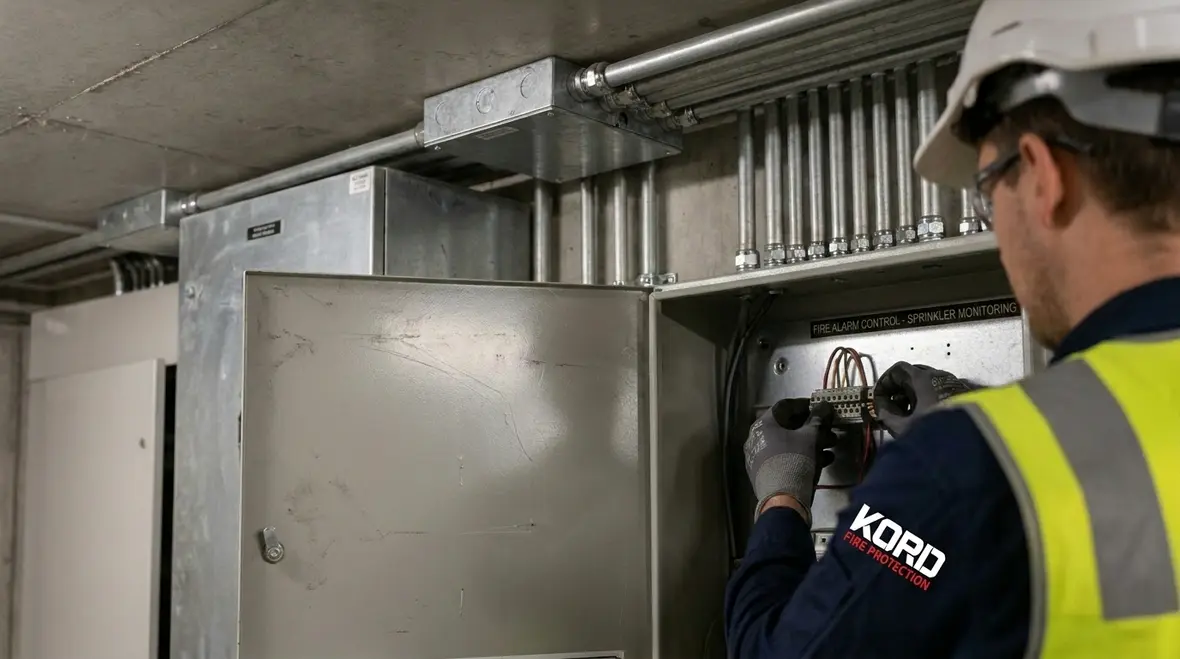
Teams should begin with a clear connectivity map that ties every monitored input to its source, route, and termination point. This includes control panels, junction boxes, detection modules, and any interface devices. Then, they should document the expected electrical behavior for normal state, trouble state, and alarm state. If that sounds like extra paperwork, it is. It is also far cheaper than standing in front of a panel wondering why one status point keeps acting like it has its own personality.
Next, they should confirm that field routes match the design intent. For instance, wiring that crosses service corridors near fast moving equipment may need extra protection. Similarly, cable trays near cooling lines may require shielding to reduce interference. Kord Fire’s electrical interlocks article reinforces this sequence logic idea: the system can only react correctly when each device state is mapped, understood, and passed along through dependable field wiring. ([kordfire.com](https://kordfire.com/electrical-interlocks-in-fire-sprinkler-systems-explained/?utm_source=openai))
Finally, a proper map prevents the classic “mystery wire” problem. You know the one. Someone labels it as spare and later acts surprised when the monitoring system uses it. Businesses lose time, and monitoring suffers. A good map also improves future service visits because technicians are not forced to reverse-engineer yesterday’s shortcuts before they can fix today’s trouble signal.
What a useful connectivity map should show
- Each monitored point and the device it belongs to
- Cable route, junction location, and panel destination
- Expected state behavior for normal, trouble, and alarm conditions
- Any exposure to moisture, vibration, heat, or interference sources
- Recent modifications that may affect signal quality or continuity

Terminations, labeling, and workmanship that hold up under pressure
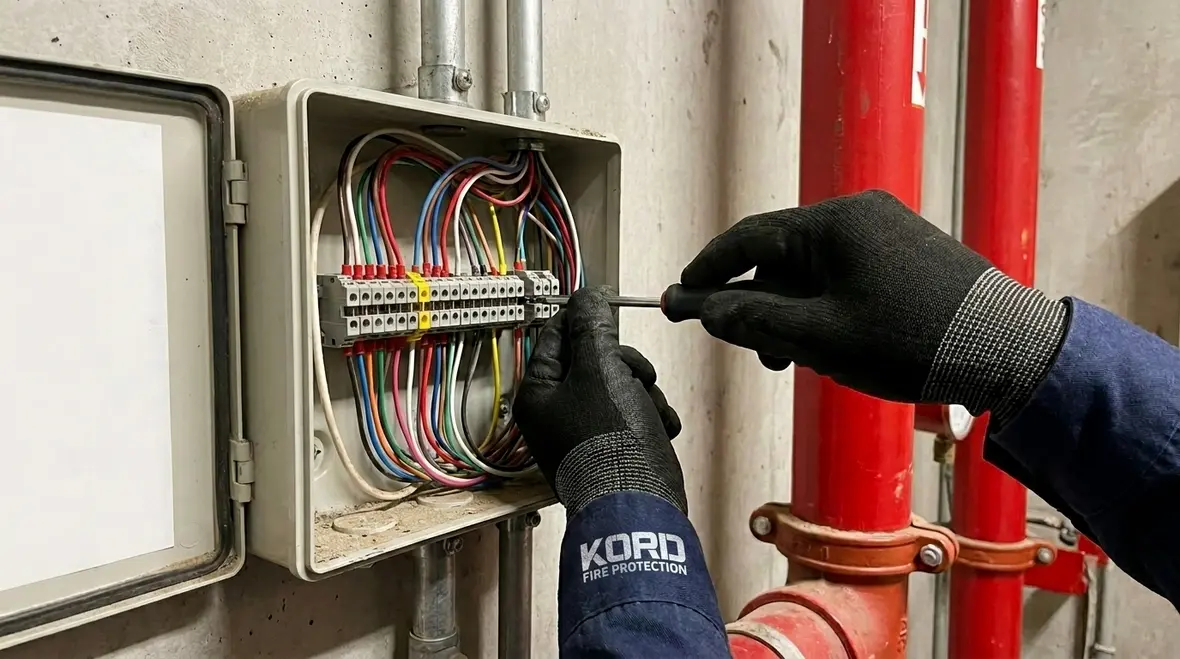
The most frequent connection failures come from terminations and installation practices. Therefore, teams should control torque values, conductor prep, and connector selection. They should also ensure that conductors stay fully seated and that terminals are free from corrosion and debris. Articles from Kord Fire on early electrical fault detection and sprinkler reliability echo the same reality: tiny connection problems often snowball into repeated faults, confusing panel behavior, and expensive callbacks. ([kordfire.com](https://kordfire.com/detect-electrical-faults-in-fire-alarm-panels-early/?utm_source=openai))
In addition, labeling matters more than people think. When a technician must troubleshoot a monitoring issue at 2 pm on a Wednesday, clear labeling saves hours. It also prevents accidental cross wiring, which can turn a routine fix into a dramatic courtroom episode. Good labels are not glamorous, but neither is tracing six nearly identical conductors while somebody asks for updates every ten minutes.
To keep performance steady, the facility should adopt consistent standards for:
- Conductor stripping length and insulation condition
- Terminal identification and panel slot mapping
- Correct wire color use where local practices allow
- Proof of secure clamping and strain relief
When this work is handled correctly, fire sprinkler electrical connectivity becomes easier to verify and easier to defend during commissioning and inspections. It also becomes much easier to scale across multiple buildings because the work stops depending on one veteran technician’s memory and starts depending on standards that everyone can follow.
How to reduce noise and false trouble signals
Monitoring systems can struggle when electrical noise sneaks into the signal path. Even though the sprinkler devices do their job, noisy wiring can make the control equipment behave like it is hearing rumors instead of facts. That is why routing discipline matters so much in automated monitoring environments. Kord Fire’s fire suppression electrical interface article specifically highlights the need for electrical pathways and control logic to align with intended sequence behavior, because the system cannot “guess” what a signal means. ([kordfire.com](https://kordfire.com/fire-suppression-electrical-interface-for-reliable-protection/?utm_source=openai))
Teams should address this by separating power and signal where design allows. Then, they should route cables away from high draw loads such as motor starters, VFD panels, and large solenoids. Additionally, shielded cable use should match the design and be terminated correctly. If shielding is installed badly, it can become one more thing to troubleshoot instead of the thing that prevents trouble.
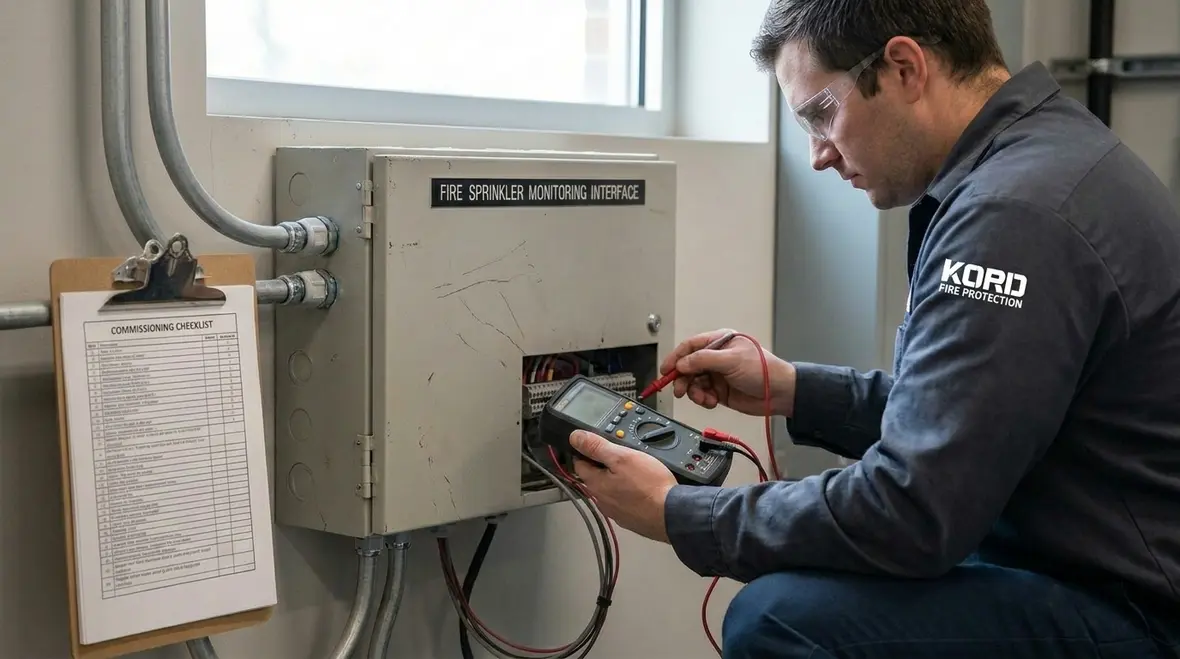
They also should test for insulation integrity and continuity during commissioning, and then again after any major maintenance that touches cable routes. If the facility adds new equipment, crews should re-check relevant pathways. Otherwise, the monitoring system can start reporting trouble after a change that everyone assumed was unrelated. That kind of innocent assumption has launched many very annoying afternoons.
Testing and verification that keep monitoring honest
Optimization does not stop after installation. Teams must verify the system behaves as expected under both normal and fault conditions. Therefore, they should adopt a testing plan that includes:
- Baseline checks at commissioning and after modifications
- Periodic inspections of wiring routes, gland seals, and junction integrity
- Functional checks aligned to monitoring sequences
- Record keeping that shows what was tested, when, and by whom
Moreover, facilities should track recurring issues. If the same zone triggers trouble codes repeatedly, the site likely has a route or termination weakness. Instead of restarting the same fix, crews should investigate the root cause, such as cable damage from vibration or water ingress at a penetration. Kord Fire’s fault detection and pump controller troubleshooting content both support this practical approach: repeated electrical symptoms usually point to a deeper problem that documentation and methodical testing can expose. ([kordfire.com](https://kordfire.com/detect-electrical-faults-in-fire-alarm-panels-early/?utm_source=openai))
With a disciplined approach, fire monitoring becomes less reactive and more predictable. In other words, the system stops acting like it is always about to fail, and starts acting like it is actually reliable. That is a much nicer personality for life safety infrastructure.
Where kord fire protection adds real value
Many facilities already know they need better connectivity. The challenge is execution at scale, across multiple buildings, and under real service schedules. That is where kord fire protection can become a vital partner to support this service job. Their fire alarm service page highlights installation, repairs, testing, maintenance, and monitoring support, while their newer technical articles focus on interlocks, connected protection, and reliable interface design. Taken together, that points to a practical strength in aligning field wiring with the bigger monitoring picture. ([kordfire.com](https://kordfire.com/fire-alarm-service-systems/?utm_source=openai))
They help teams strengthen monitoring reliability by applying practical site experience to wiring practices, inspection routines, and commissioning discipline. Then, they support ongoing improvements when facilities expand, refurbish, or change operational workflows. If a site wants a related read on how monitoring and status reporting fit into compliance focused sprinkler work, the Kord Fire article on sprinkler system water flow monitoring connects nicely with the same reliability goals. ([kordfire.com](https://kordfire.com/sprinkler-system-water-flow-monitoring-for-compliance/?utm_source=openai))
Importantly, a partner like this also reduces “tribal knowledge.” Instead of only the last technician remembering how the system behaves, the organization gains clearer standards, better documentation, and more consistent workmanship. And that means fewer interruptions for operations and fewer surprises for uptime goals.
Dual column checklist for connectivity optimization
| What to assess | What improved connectivity delivers |
|---|---|
| Junction box seals, cable glands, and route protection | Less moisture risk, fewer intermittent faults, and steadier monitoring |
| Termination quality, torque control, and conductor condition | Fewer nuisance trouble signals and more accurate alarm status |
| Cable separation from noisy power equipment | Reduced electrical interference and cleaner signal behavior |
| Documentation accuracy and labeling standards | Faster troubleshooting and lower risk during changes |
| Testing schedule after modifications | Earlier detection of new weaknesses and better long term confidence |
FAQ
Conclusion
When facilities optimize fire sprinkler electrical connectivity, monitoring becomes trustworthy instead of temperamental. Teams should plan the system, control termination quality, reduce noise, and verify performance through disciplined testing. Those steps turn unreliable signal paths into dependable monitoring behavior that operations teams can actually trust.
Then, they should partner with kord fire protection to execute the work with consistency across changing site conditions and ongoing service needs. If a facility needs dependable automated sprinkler monitoring, it makes sense to start with a connectivity assessment, tighten documentation, and align the work with broader fire alarm monitoring and service support. ([kordfire.com](https://kordfire.com/fire-alarm-service-systems/?utm_source=openai))

Join Our Newsletter!
Get the latest fire safety tips delivered straight to your inbox From our Newsletter.