Commercial Fire Extinguisher Mounting Codes Placement Guide
Quick Answer: Strategic placement of extinguishers keeps them within easy reach, visible to staff, and compliant for commercial properties. When commercial fire extinguisher mounting codes are followed, businesses reduce response time and avoid blocked access. Kord Fire Protection helps facilities assess risk, map layouts, and install equipment in ways that keep safety simple and fast.
In commercial spaces, time matters, and equipment placement matters even more. That is why commercial fire extinguisher mounting codes should guide where extinguishers go, how high they sit, and how unobstructed they remain. Kord Fire Protection supports this job by helping facilities turn “we have extinguishers” into “our team can grab them instantly, every time.” For businesses that want placement tied to real inspection readiness, Kord’s fire extinguisher service and certification work fits naturally into that bigger compliance picture.
Why accessibility beats guesswork in commercial safety
People do not panic because they lack bravery. They panic because the plan is unclear. When an extinguisher sits behind a stack of pallets, inside a locked closet, or around a corner that only exists in someone’s imagination, response time drops and outcomes suffer. Therefore, strategic placement must work with real foot traffic, door swings, and common workflow patterns.
Additionally, accessibility includes the path to the unit. If the route is blocked during lunch restocking, the extinguisher becomes decorative. And yes, some sites treat safety gear like that one gym subscription everyone forgets about. They still pay, but they never use it.
That is why accessibility should be judged from the perspective of a stressed employee, not a tidy floor plan pinned to an office wall. A mounted extinguisher might technically exist in the correct area, but if staff cannot see it from their normal path of travel, the benefit drops fast. In a real incident, nobody wants to play a dramatic game of “where did we put the red cylinder again?” They need a direct line of sight, a clear approach, and a mounting location that makes sense in the first three seconds, not after a committee meeting.
Commercial extinguisher mounting height and location rules
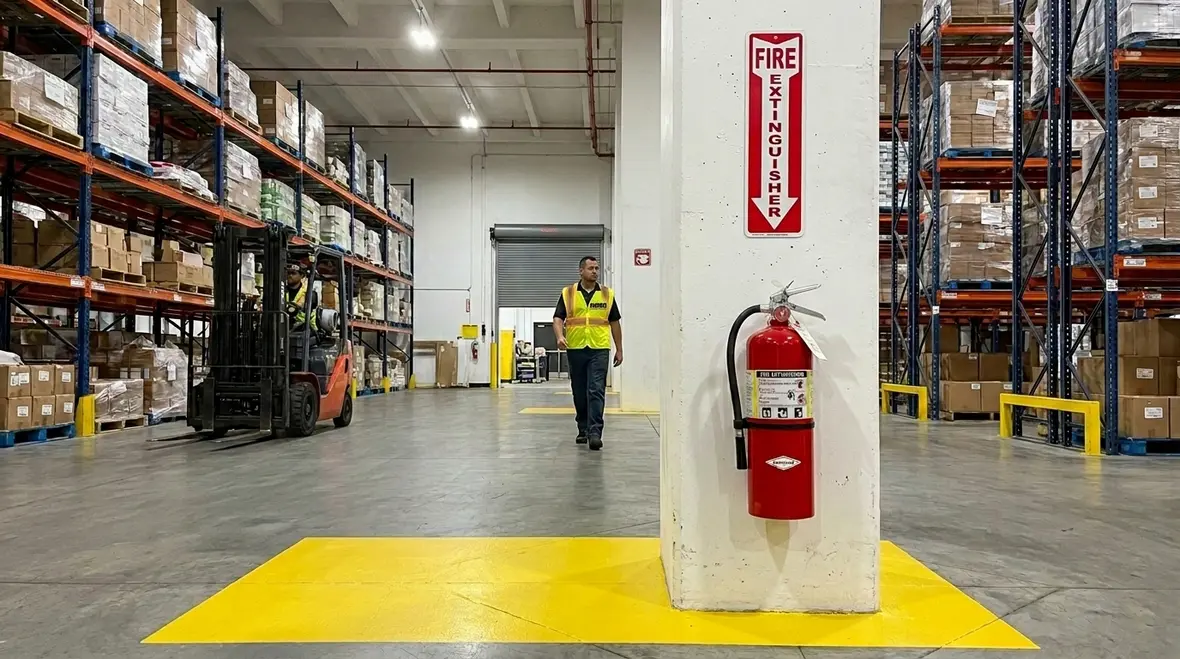
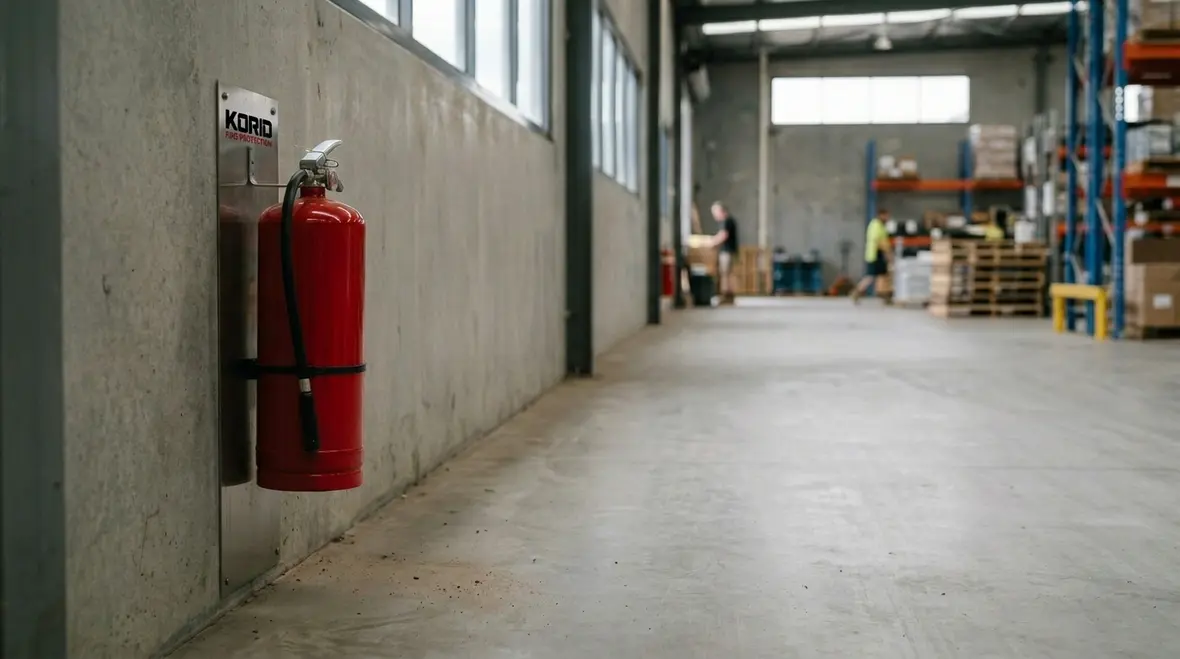
Proper mounting height and clear location support quick, consistent access. While specific figures can vary by the equipment type and the governing compliance framework, commercial sites typically follow the intent of commercial fire extinguisher mounting codes: the extinguisher should be installed so an operator can grab it without climbing, reaching over obstacles, or searching for a box in a sea of wall fixtures.
Key placement principles that keep response practical
- Mount extinguishers so the operator can remove them quickly and naturally from the wall bracket.
- Maintain clear space around the unit so doors, cabinets, and signage do not obstruct visibility or access.
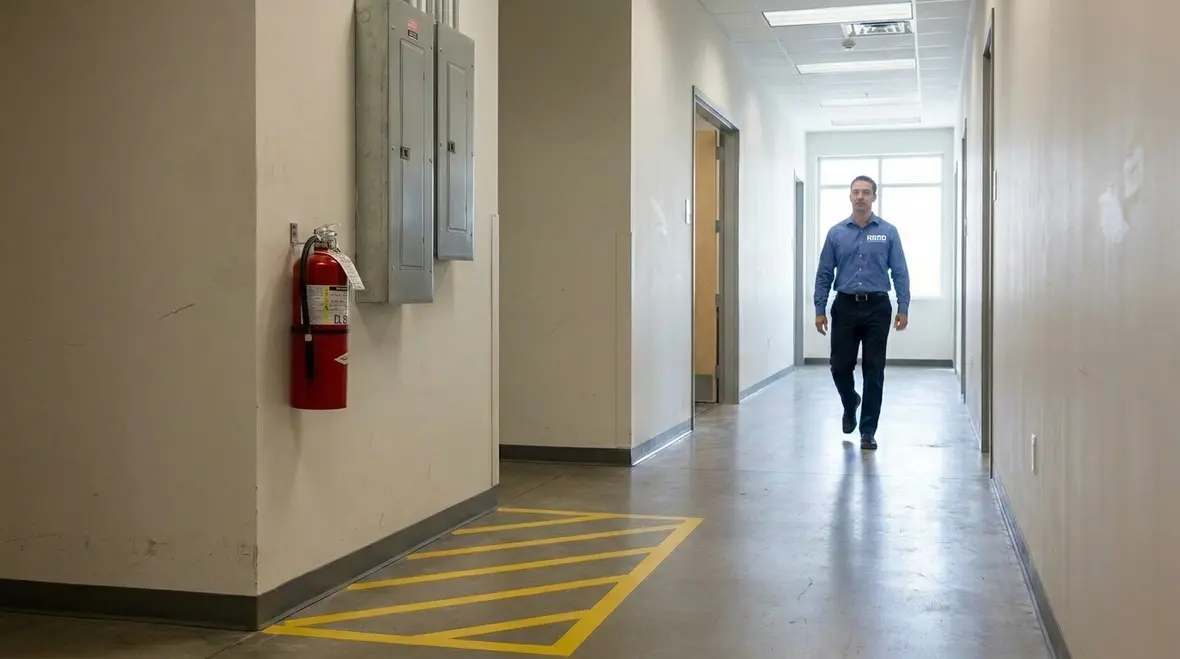
- Place them along evacuation routes and near high risk points, rather than only at exit doors.
- Ensure the location matches the floor plan and site operations, not just a generic template.
In practice, facilities often involve mixed layouts, changing stock levels, different tenant fit-outs, and work areas that evolve faster than the printed map. Therefore, mounting location should be reviewed whenever departments relocate, temporary partitions appear, or racks shift during renovations. The wall does not complain, but the wrong wall can absolutely create a problem.
This is also where service planning matters. Kord’s extinguisher team notes that the place of installation should stay in compliance with current safety expectations, and their service page frames extinguishers as a first line of defense that should remain inspection-ready, visible, and properly positioned for use. That makes mounting decisions part of a larger readiness strategy, not just a hardware task. For teams reviewing recurring upkeep, Kord’s monthly fire extinguisher inspection checklist guide offers a helpful companion resource on visibility and accessibility checks.
How risk mapping guides smarter extinguisher placement
Strategic placement starts with risk, not habit. A warehouse has different hazards than a retail floor, and an industrial plant has different hazards than a workshop corridor. However, many sites place extinguishers based on where they were last year, not what could burn today.
To improve outcomes, facilities should map hazards first. For example:
- Near electrical panels and switch rooms, where heat and arcing risks occur
- By loading bays and dock areas, where fuel sources and equipment movement increase ignition probability
- Within reach of store staff, especially around cooking appliances, display lighting, or flammable storage
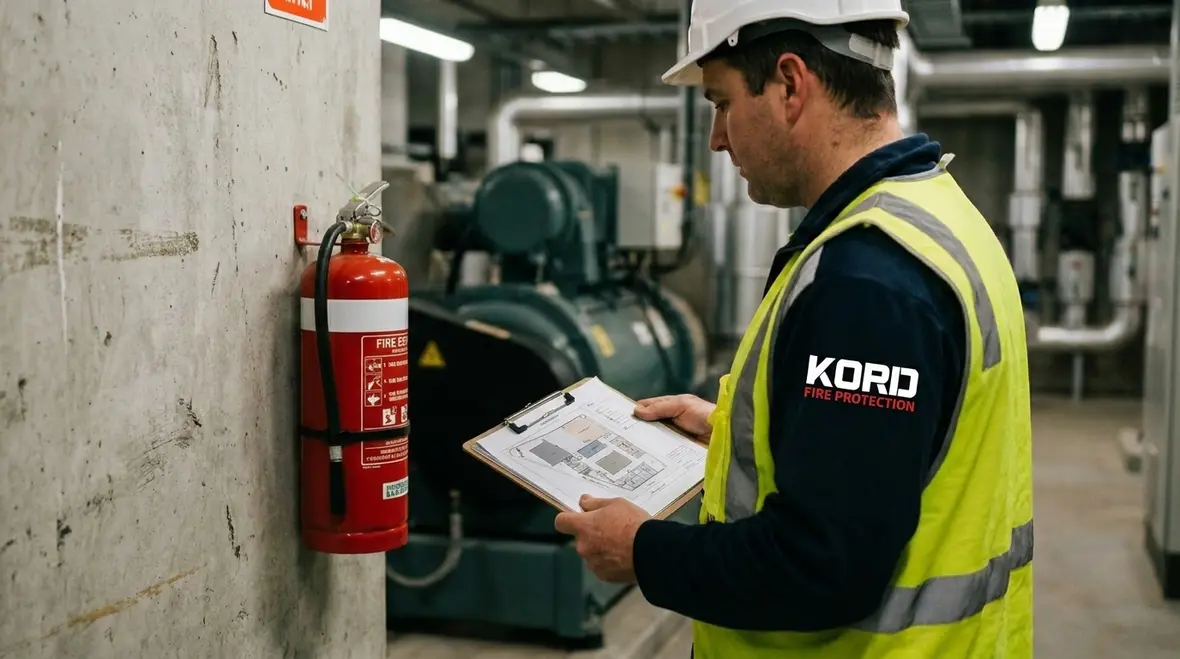
- Near plant rooms and mechanical equipment, where oil and wiring can contribute to fire spread
Once hazards are identified, the placement team can plan the best viewing line and approach path. Consequently, extinguishers should align with how people already move during shifts. If staff commonly walk past a service desk, the extinguisher should not hide behind a “future project” behind that desk. In fact, it should be hard to miss, like a bright sign that refuses to be ignored.
Risk mapping also helps answer a question many buildings quietly avoid: are the extinguisher types and locations actually aligned with the hazards in the room? An extinguisher in the wrong spot may be technically present but tactically awkward. Facilities gain a much stronger result when they review ignition sources, fuel loads, staff movement, and likely first-response actions together. That turns the layout from a static checklist into a practical safety tool.
What a useful placement review should consider
- How quickly staff can spot the extinguisher from their usual route
- Whether stored materials or displays may creep into the access zone later
- Which hazards are most likely to require immediate response before evacuation
- How new fit-outs or equipment changes affect line of sight and travel path
Visibility, signage, and access pathways that staff actually use
Even perfect mounting height fails if visibility fails. Therefore, facilities should treat visibility as part of the installation design. That means the extinguisher remains in view, the bracket does not blend into the wall, and the signage clearly directs a person to the unit without forcing them to backtrack.
Additionally, clear access pathways matter during real operations. A fork truck route may cross a corridor, racking may expand, and seasonal stock displays may creep toward safety gear. When these changes occur, the extinguisher can become blocked without anyone meaning to do so.
Smart placement also accounts for door swing and obstructions. If a swing door sits between a person and the extinguisher, the operator might open the wrong door under stress. Hence, the location should ensure quick approach from the likely travel direction. This is not overthinking, it is removing friction from a high stress moment.
A strong visibility plan often looks boring on paper, which is usually a good sign. It means staff do not need detective skills, interpretive dance, or a lucky guess to find the unit. They see the sign, follow the path, and reach the extinguisher without stepping around stacked boxes and mystery furniture. During inspections, Kord’s annual fire extinguisher inspection guide notes that technicians check whether extinguishers are mounted properly, visible, and accessible. That reinforces the idea that placement and ongoing compliance are deeply connected.
Keeping compliance consistent across multi site facilities
Industrial and retail groups often operate multiple sites with different layouts, tenants, and contractors. That complexity can lead to inconsistency, even when everyone uses the same “standard.” Therefore, facilities should create a repeatable installation and inspection workflow.
To keep commercial fire extinguisher placement aligned across sites, teams should implement these steps:
- Document each extinguisher location with a simple map and site reference points
- Label units so staff can identify the type fast, not just “a red thing”
- Update placement records after refurbishments, rack changes, or area reconfigurations
- Verify access routes during routine inspections, not only when an audit arrives
In busy environments, documentation can feel like “the paperwork part” of safety. Yet it prevents the most common issue: different answers from different people. When the facility uses a consistent approach, staff training and emergency response become clearer and more reliable.
Consistency also makes contractor coordination easier. When every site follows the same placement logic, technicians can inspect faster, managers can verify changes more confidently, and training becomes less theoretical. Nobody has to explain why one location hides extinguishers behind displays while another treats visibility like a competitive sport. Standardized records, repeated review points, and clear ownership create a calmer system overall. For teams that want stronger documentation habits, Kord’s fire safety compliance management with automated documentation article is a useful internal reference.
Why Kord Fire Protection becomes a vital partner for placement jobs
Kord Fire Protection supports commercial teams by linking risk, layout, installation, and practical access. In other words, the service does not stop at putting an extinguisher on a wall. It builds a placement plan that matches how the site operates, how staff move, and where hazards actually live.
Additionally, Kord can help facilities avoid the typical traps that show up during inspections. Those include unreachable positions, obstructed access due to normal stock movement, and inconsistent placement across areas that look similar on paper but behave differently in day to day work.
And if someone asks, “Do we really need another partner?” the answer is simple: the extinguisher does not care who installed it, but the incident definitely will care how quickly it can be used.
Kord’s broader full fire protection services approach also helps businesses connect extinguisher placement with the larger readiness of the building. That matters because extinguishers do not exist in a vacuum. They function best when the facility treats them as one part of a coordinated life safety plan that includes inspection scheduling, staff awareness, and fast corrective action when layouts change.
Conclusion and call to action
Strategic placement protects people, reduces delays, and improves decision making during an emergency. When commercial extinguisher locations are planned with risk mapping, proper mounting intent, and clear access pathways, facilities gain safer operations across every floor. Good placement is not flashy, but it is incredibly effective when the moment turns serious.
Kord Fire Protection can help commercial and industrial sites verify layout, align installation with commercial fire extinguisher mounting codes, and keep access practical over time. If your building layout has changed or your extinguisher plan feels more hopeful than strategic, now is the right time to book a placement assessment and bring order back to the wall.

Join Our Newsletter!
Get the latest fire safety tips delivered straight to your inbox From our Newsletter.