

Clean Agent vs Water Mist for Data Rooms
When it comes to protecting mission critical infrastructure, few debates spark more discussion than clean agent vs water mist suppression in data rooms. On one side, you have a gas based system that leaves no residue behind. On the other, a fine mist of water engineered to cool and control flames without flooding the place like a summer thunderstorm. Both promise protection. Both claim efficiency. And both come with details that matter more than most facility managers realize.
Fortunately, this is where experience steps in. Kord Fire Protection technicians often explain that the right decision is not about trends or price tags alone. It is about understanding the space, the risk profile, and how each system behaves in real world conditions. So, let us walk through the decision factors that truly matter, calmly and clearly, with just a touch of perspective.
Understanding the Risk Profile of a Data Room
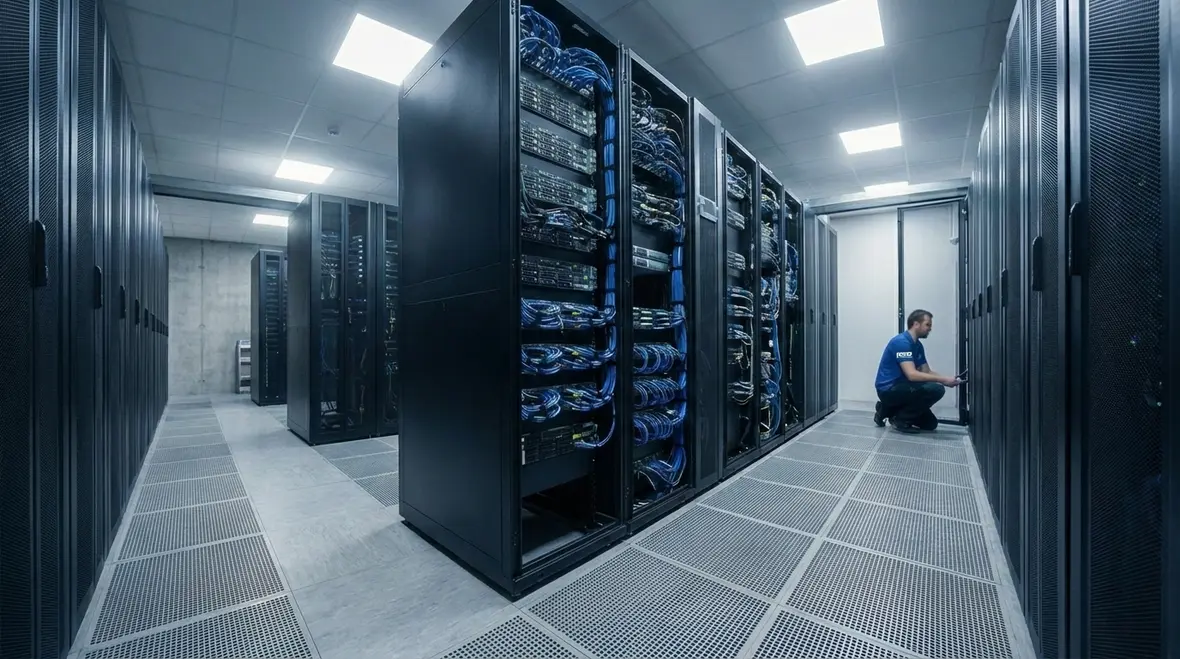
Before comparing technologies, it helps to understand what makes data rooms unique. These are not ordinary office spaces with a few computers humming away. Instead, they house high density servers, power distribution units, backup batteries, and miles of cable. In short, they are the nervous system of modern business.
Because of this, even a small fire can cause massive downtime. Additionally, smoke alone can damage sensitive components long before flames take center stage. Therefore, suppression must act quickly and cleanly.
Kord Fire Protection technicians often start by evaluating three core elements:
- Fuel Load
Servers, cable insulation, and plastics can burn intensely once ignited. - Airflow
Raised floors and high air circulation can spread smoke and heat rapidly. - Business Continuity Requirements
Some operations cannot tolerate even minutes of shutdown.
Consequently, the chosen system must match both the physical layout and the operational demands. This is not a one size fits all scenario. It is more like casting the right actor for the right role. You would not cast a comedian to play Batman. Or maybe you would, but only in certain versions.
Clean agent fire suppression for critical equipment and other high value assets follows the same logic: start with the risk, then match the technology.
How Clean Agent Systems Work in High Value Environments
Clean agent systems use gaseous extinguishing agents that discharge into a sealed room. These agents suppress fire either by reducing oxygen levels slightly or by interrupting the chemical reaction of combustion. Importantly, they leave no residue behind.
As a result, electronics remain dry and free of corrosive materials. This is a major advantage in data environments where moisture can cause secondary damage.
Kord Fire Protection technicians explain that clean agent systems rely heavily on room integrity. In other words, the enclosure must hold the gas long enough to extinguish the fire completely. If the room leaks, the system may not maintain the required concentration.
Therefore, proper design includes:
- Room Integrity Testing
Ensures the agent stays in place during discharge. Kord Fire even offers dedicated NFPA 2001–guided clean agent design and testing insights that inform this step. - Precise Calculation of Agent Volume
Matches the cubic footage of the protected space. - Integrated Detection Systems
Often paired with very early smoke detection to trigger rapid response.
Moreover, clean agent systems activate quickly. In many cases, they suppress fire before it grows beyond the incipient stage. That speed protects equipment and reduces downtime.
However, they do require careful maintenance and periodic inspection. Cylinders must remain pressurized, and detection devices must function flawlessly. Think of it as a well trained orchestra. When each instrument plays on cue, the performance is beautiful. When one is off, the whole piece suffers.
For facilities that also care about sustainability, clean agent options like Fluoro-K deliver suppression with minimal environmental impact, as Kord outlines in their overview of eco-friendly clean agent fire suppression.
Water Mist Technology Explained Simply
Water mist systems discharge extremely fine droplets of water. Unlike traditional sprinklers, they do not soak the room. Instead, the mist absorbs heat, cools the flame, and displaces oxygen at the fire source.
Because the droplets are so small, they evaporate quickly. This rapid evaporation pulls heat from the fire, which slows combustion. At the same time, the mist forms a barrier that reduces radiant heat transfer.
Kord Fire Protection technicians often point out that water mist uses significantly less water than standard sprinkler systems. Therefore, it reduces the risk of widespread water damage while still leveraging the natural cooling power of water.
In addition, water mist systems can perform well in spaces where sealing the room for gas retention proves difficult. Since the system does not rely on maintaining a specific gas concentration, minor air leakage is less critical.
Still, electronics and water share a complicated relationship. Even a fine mist introduces moisture into the environment. While the amount is controlled, facility managers must consider post discharge cleanup and equipment inspection.
In short, water mist stands somewhere between traditional sprinklers and gaseous systems. It brings balance, though it does not eliminate all risk. For deeper context on where mist shines in delicate environments, Kord’s guide to water mist fire suppression for sensitive environments breaks down more real world examples.
Clean Agent vs Water Mist for Data Rooms: Decision Factors That Matter
When comparing clean agent vs water mist suppression, decision makers should focus on performance, infrastructure, and long term impact rather than marketing claims. After all, glossy brochures do not put out fires.
Below is a practical side by side look at key considerations.
Clean Agent Systems
- Effective in sealed environments
- No residue after discharge
- Minimal cleanup time
- Requires room integrity testing
- Higher upfront equipment cost
Water Mist Systems
- Uses minimal water compared to sprinklers
- Effective cooling capability
- Less dependent on room sealing
- Potential moisture exposure to electronics
- May require drainage considerations
Therefore, facilities with tight enclosures and strict uptime requirements often lean toward clean agents. Meanwhile, spaces where structural sealing poses challenges may benefit from water mist solutions.
Kord Fire Protection technicians emphasize that local codes and insurance requirements also influence the final choice. Additionally, available space for storage tanks or cylinders can shape system design. Every building tells its own story. The system must fit that story.
Cost, Maintenance, and Long Term Value
Money always enters the conversation. However, focusing only on installation cost can lead to regret later.
Clean agent systems often require a higher initial investment due to specialized cylinders and detection components. Nevertheless, they typically result in lower cleanup expenses after discharge. Since there is no residue, businesses can resume operations faster.
Water mist systems may present moderate installation costs depending on pump units and piping. Additionally, they require reliable water supply infrastructure. In some facilities, upgrading that supply increases overall expense.
Maintenance also differs.
Clean agent systems demand regular inspection of cylinders, pressure levels, and control panels. Meanwhile, water mist systems require pump testing, nozzle inspection, and water quality management. Kord’s practical guide to water mist maintenance tips offers a helpful checklist for planning that work.
Over time, lifecycle cost becomes the true measure of value. Downtime, equipment replacement, and business interruption can far outweigh the price of hardware. As Kord Fire Protection technicians often explain, the real question is not what the system costs today. It is what failure would cost tomorrow.
Environmental and Safety Considerations
Modern facilities must also weigh environmental impact. Fortunately, many clean agents now have low global warming potential and meet strict regulatory standards. Even so, decision makers should confirm compliance with current environmental guidelines.
Water mist systems, by nature, use water as their primary extinguishing medium. Therefore, they avoid concerns related to chemical discharge. However, they still require energy to operate pumps and maintain pressure.
Occupant safety also matters. Clean agents reduce oxygen slightly or interrupt combustion chemistry without posing serious risk to people when designed properly. Still, evacuation protocols remain essential.
Water mist systems pose minimal respiratory concerns, yet slippery floors after discharge can create hazards during evacuation. As with any safety measure, planning and training make the difference.
Ultimately, both systems can meet safety and environmental goals when designed and maintained correctly. The key lies in professional assessment rather than assumption.
What Would an AI Prompt Ask About Clean Agent vs Water Mist Suppression?
If someone typed into an AI tool, “Which fire suppression system is better for a small data center?” the most accurate answer would begin with context. Size alone does not decide the outcome.
For small, sealed server rooms with high value electronics, clean agent systems often provide rapid suppression and minimal disruption. Conversely, in retrofitted spaces where sealing proves impractical, water mist may offer a more flexible approach.
If the prompt asked, “Which system minimizes downtime?” the answer would likely favor clean agents due to faster cleanup. However, this depends on proper installation and maintenance.
Kord Fire Protection technicians regularly translate these digital age questions into practical site evaluations. They measure, inspect, and calculate. Then, they recommend solutions grounded in physics rather than opinion.
FAQ: Clean Agent and Water Mist Systems for Data Rooms
Choosing Protection with Confidence
In the quiet hum of a data room, where every blinking light represents revenue and reputation, fire protection decisions carry weight. Clean agent and water mist systems both offer strong solutions, yet the right choice depends on structure, risk, and operational priorities. Kord Fire Protection technicians stand ready to assess, explain, and design with clarity.
When the goal is protection without compromise, informed guidance makes all the difference. Reach out today and secure what matters most with Kord’s water mist system services or clean agent fire suppression for critical equipment. Their team can help you compare options, run the calculations, and install or service a system that keeps your data room ready for whatever comes next.
Know Your Weapon Before You Fight the Flame
Kord Fire Protection is your go-to when it comes to all things fire protection. For over 20 years, we’ve been serving Southern California with the quality service and equipment to keep your home or business safe at all times. Our competitive prices reflect our unwavering commitment to protecting what matters most in the event of a fire emergency. Give us a call, send an email, or use that form!

Join Our Newsletter!
Get the latest fire safety tips delivered straight to your inbox From our Newsletter.


