Clean Agent Fire Suppression for Data Centers in Australia
Quick Answer: Choosing clean agent fire suppression for data centers means comparing detection speed, agent choice, pressure system design, safety for occupants and equipment, and installation quality. The best solutions balance fast response with minimal downtime. Kord Fire Protection can act as a vital partner by coordinating design support, compliance, and service planning across Australian sites.
When a data center wants to protect servers without flooding the room with water, clean agent fire suppression types step into the spotlight. These systems use engineered gases that suppress fire while leaving critical equipment clean enough to keep working. In the real world, that matters, because nobody wants a “water cure” for a rack full of gear. And yes, fire suppression is serious business, even if our favorite server LEDs look like they are judging everyone.
In Australia, industrial, retail, and commercial facilities depend on reliable uptime. Therefore, comparing clean agent options becomes a practical exercise, not a marketing scavenger hunt. The right selection reduces downtime, supports compliance, and protects staff. Kord Fire Protection can help teams make that choice smarter, faster, and safer, from early planning through ongoing service. Near the start of that process, it also helps to understand how a broader fire alarm service system connects detection, warning, and coordinated response before a clean agent release ever happens. For teams wanting a related technical deep dive, Kord Fire’s data center clean agent fire suppression guide provides additional context that fits naturally with this topic. ([kordfire.com](https://kordfire.com/data-center-clean-agent-fire-suppression-guide/?utm_source=openai))
What clean agent fire suppression does best for data halls
Data centers require a controlled response. Clean agent systems aim to interrupt the chemical and physical conditions that allow fire to grow. As a result, the fire does not keep spreading, and the equipment has a better chance of surviving the event. Kord Fire’s data center guidance describes these systems as being designed for technology first environments where water damage can be as disruptive as the fire itself. ([kordfire.com](https://kordfire.com/data-center-clean-agent-fire-suppression-guide/?utm_source=openai))
Unlike water based approaches, clean agents do not add residue that can damage circuit boards and sensitive components. However, the goal is not “no harm at all.” Instead, it is harm reduction with a predictable shutdown strategy. In many sites, facilities teams also need occupant safety considerations, especially during maintenance periods when people may be present near protected areas. Kord Fire’s clean agent standard and system guides consistently frame clean agents as nonconductive, residue free, and suited to occupiable technology rich spaces when properly engineered. ([kordfire.com](https://kordfire.com/clean-agent-systems-for-data-center-fire-protection/?utm_source=openai))
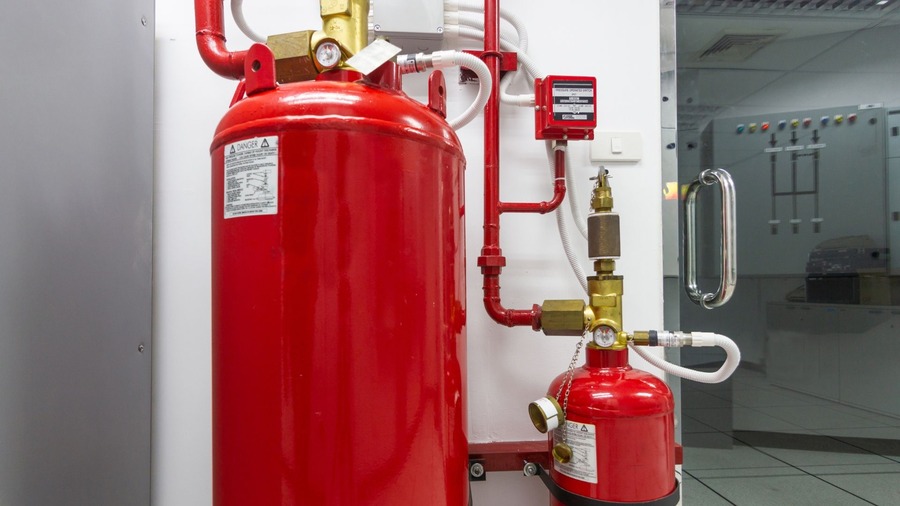
Clean agent performance relies on three connected elements. First, the detection system must identify the fire quickly. Second, the agent release must match the protected hazard. Third, the system must manage pressure, enclosure integrity, and discharge time. When those elements align, the system responds like a well trained pit crew instead of a confused passenger during a detour. Kord Fire’s published material repeatedly emphasizes that suppression success depends on matching the agent, enclosure, and release strategy to real operating conditions rather than idealized plans. ([kordfire.com](https://kordfire.com/data-center-clean-agent-fire-suppression-guide/?utm_source=openai))
Why speed and coordination matter more than buzzwords
A lot of discussions get stuck on agent names, but data hall performance usually hinges on how fast the system detects an incipient event and how well every connected control actually responds. Detection, alarms, countdowns, HVAC logic, and shutdown steps all need to work together. Otherwise, the fanciest cylinder bank in the world is just expensive confidence theater. Kord Fire’s articles on data center suppression and clean agent system design both stress that detection and suppression are different functions that only deliver results when integrated correctly. ([kordfire.com](https://kordfire.com/data-center-clean-agent-fire-suppression-guide/?utm_source=openai))
Comparing clean agent options for performance and risk
Many facilities teams start by comparing agent types. Yet they often miss the detail that matters most in a data hall: how the system behaves under real enclosure conditions. A system designed for perfect doors and perfect seals will struggle in buildings where maintenance work routinely changes the setup. Kord Fire’s comparison content makes the same point in slightly less diplomatic language: if airflow, leakage, and coordination are ignored, the result will not be what the team needs. ([kordfire.com](https://kordfire.com/clean-agent-suppression-for-data-centers-by-kord-fire/?utm_source=openai))
Here is a practical comparison lens facilities can use when evaluating options:
- Suppression mechanism: Some agents reduce heat and oxygen availability, while others interfere with the fire’s chemical process. This affects how the agent extinguishes fast moving fires.
- Discharge design: The system must consider room volume, airflow, leakage, and mixing. Faster discharge can help, but only if the enclosure stays within expected limits.
- Occupant safety strategy: The solution must define exposure limits and design features so staff do not face unnecessary risk during discharge.
- Infrastructure impact: The system must interface with alarms, shut down sequences, ventilation controls, and building management systems.
And because every data hall is not a clone, the “best” agent often depends on the specific risk profile. For example, a room with high leakage or frequent door openings will require thoughtful engineering and commissioning. Kord Fire Protection supports this engineering mindset by helping teams coordinate design intent with the reality on site. Their data center and comparison guides both point toward hazard specific design rather than one size fits all product picking. ([kordfire.com](https://kordfire.com/data-center-clean-agent-fire-suppression-guide/?utm_source=openai))
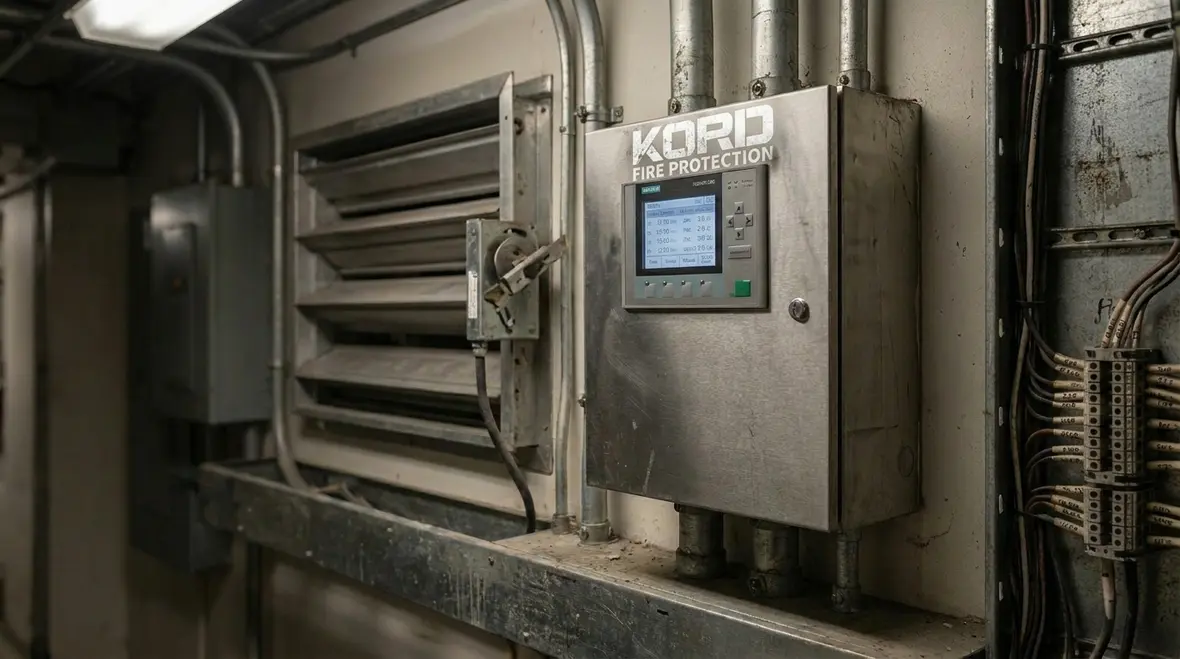
A practical way to compare agent families
If your team is weighing options such as inert gases, FK-5-1-12, or FM-200 style approaches, the smart move is to compare storage footprint, pressure behavior, discharge characteristics, room integrity tolerance, and recovery planning together. Kord Fire has separate explainers for multiple clean agent families, which reinforces an obvious but useful truth: agent choice is not just chemistry, it is also layout, operations, and what kind of disruption your facility can tolerate. ([kordfire.com](https://kordfire.com/fm-200-fire-suppression-systems-explained/?utm_source=openai))
System design factors that decide uptime outcomes
Even when teams select the right agent family, design choices can make or break results. Therefore, the conversation should move beyond agent selection and into system architecture. Kord Fire’s technical articles consistently highlight hazard assessment, airflow review, and detailed calculations as the point where a workable strategy starts to take shape. ([kordfire.com](https://kordfire.com/data-center-clean-agent-fire-suppression-guide/?utm_source=openai))
Key design factors for data centers include:
- Room integrity and enclosure control: Leakage and gaps can reduce effectiveness. Facilities teams should treat sealing and door management as part of fire safety, not as an afterthought.
- Detection placement and zoning: Detection must find the problem early, not late. If detectors sit in the wrong locations, the system may release at the wrong time.
- Release sequencing: Staged release can support certain hazards, but it must align with the intended fire growth scenario.
- Ventilation and airflow control: Fans and dampers can push smoke and heat away or pull agent out. So, control logic matters.
- Integration with shutdown plans: The data center often needs a defined response such as power shutdown, HVAC control, and paging.
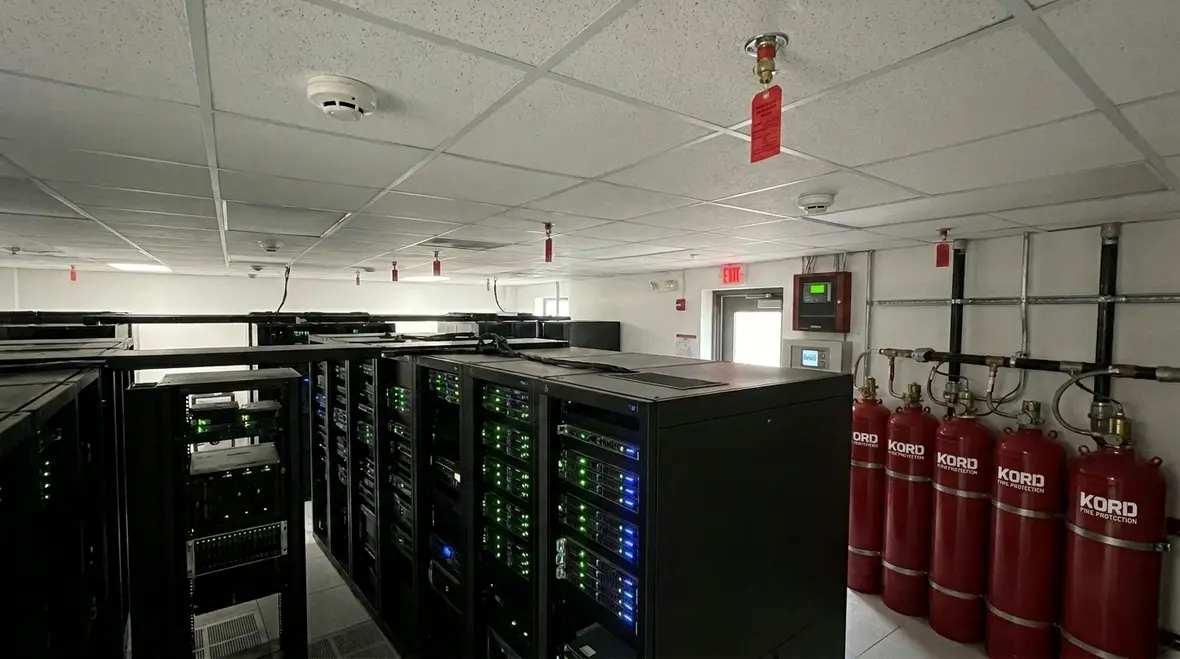
In other words, the clean agent system does not work alone. It works with alarms, procedures, and the building’s operational reality. Kord Fire Protection can become a vital partner by supporting coordinated system design reviews and practical commissioning planning, so the solution behaves as intended when it matters. Their articles on system components and control integration make that point clearly: cylinders, piping, nozzles, detection, and the control panel all need to operate in harmony. ([kordfire.com](https://kordfire.com/data-center-clean-agent-fire-suppression-guide/?utm_source=openai))
The room itself is part of the system
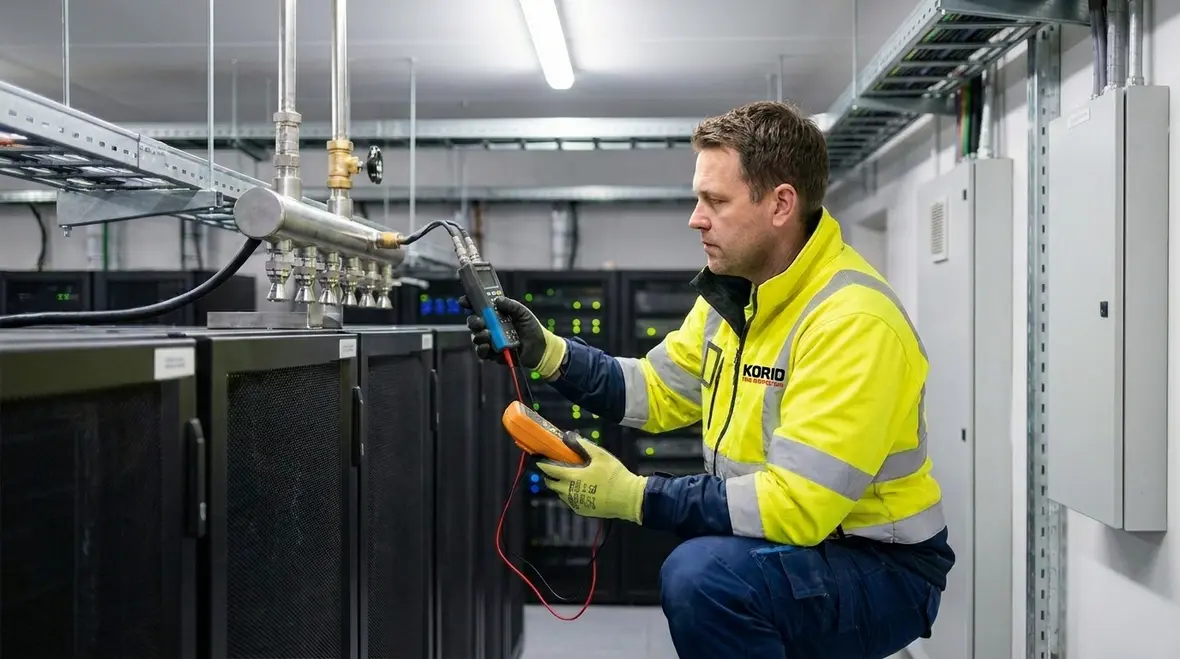
This is the part teams sometimes learn the hard way. A clean agent installation is not only cylinders, nozzles, and panels. The room is part of the system. Penetrations, door seals, ceiling voids, raised floors, and later fit out changes can all affect retention time. Kord Fire’s room integrity testing article flatly notes that a room can look protected on paper and still fail to hold the agent concentration needed in practice. That is why enclosure discipline deserves a seat at the grown up table. ([kordfire.com](https://kordfire.com/data-center-clean-agent-fire-suppression-guide/?utm_source=openai))
Installation quality and compliance across Australia
In Australia, industrial and commercial facilities face different building types and operating constraints. Therefore, installations must follow strict standards and local requirements. Yet compliance is not just about paperwork. It is about correct piping, cylinder placement, nozzle selection, cable management, and verification testing. Kord Fire’s inspection and system guides emphasize that acceptance documentation, testing discipline, and service traceability are part of what turns a design into dependable life safety infrastructure. ([kordfire.com](https://kordfire.com/clean-agent-fire-suppression-system-guide-by-kord-fire-protection/?utm_source=openai))
Installation quality also affects serviceability. A system that looks neat but lacks accessible components may force long downtime during inspection and maintenance. Nobody wants a maintenance visit that feels like searching for a misplaced remote control under the couch cushions.
During selection and contracting, facilities teams should ask how the supplier handles:
- Commissioning and test strategy: The plan should verify detection, alarms, interface control, and agent release performance.
- Documentation and traceability: Service records, as built drawings, and acceptance testing should stay easy to retrieve.
- Training and handover: Staff need clear actions for evacuation, incident communication, and equipment recovery steps.
Kord Fire Protection brings value here by helping organisations align technical delivery with long term operations. That means the system stays service ready, not service hopeful. If your broader asset protection plan includes adjacent high risk areas, Kord Fire also publishes resources on clean agent fire suppression for critical equipment, which can be a useful internal reference when comparing protection priorities across a site. ([kordfire.com](https://kordfire.com/clean-agent-fire-suppression-for-critical-equipment/?utm_source=openai))
Which clean agent fire suppression types fit different data hall scenarios
Different hazards behave differently. Consequently, the best solution in one site may not match another. Facilities teams should evaluate the likely ignition sources, enclosure use, and operational routines.
Common data hall scenario patterns include:
- Always on mission critical rooms: These often require careful shutdown integration and strict enclosure expectations. A fast detection plan and disciplined door control help ensure effectiveness.
- Hybrid environments with shared spaces: When server rooms connect to other areas, ventilation and airflow control becomes even more important to avoid spreading smoke and disrupting discharge performance.
- Facilities with frequent fit outs: Construction activity changes layout and sometimes compromises room sealing. A partner who can support ongoing reviews helps keep risk aligned.
Kord Fire Protection can guide organisations through these scenario shifts, which is where many compare tables fail. A spreadsheet does not sweat, but a real data hall does. It changes, it gets worked on, and it needs continuing alignment between the designed hazard and the actual hazard over time. Kord Fire’s recent data center articles make exactly that case by focusing on leakage points, airflow patterns, and ongoing system coordination instead of simplistic rankings. ([kordfire.com](https://kordfire.com/clean-agent-suppression-for-data-centers-by-kord-fire/?utm_source=openai))
Maintenance planning and service cycles that protect the investment
Clean agent systems demand scheduled inspections, component checks, and verification. Therefore, maintenance planning should happen before the system goes live, not after a surprise alarm in the middle of a busy week. Kord Fire’s inspection and service focused articles describe routine upkeep as the difference between a system that merely exists and one that is actually ready. ([kordfire.com](https://kordfire.com/clean-agent-fire-suppression-system-guide-by-kord-fire-protection/?utm_source=openai))
Good maintenance planning includes:
- Clear responsibilities: Who checks what, and when, across facilities and service teams.
- Spare parts strategy: Identify critical parts early to avoid long downtime during replacement cycles.
- Functional testing windows: Schedule tests to minimise disruption to business operations.
- Documentation updates: If a room gets modified, the fire safety plan should reflect it.
In short, a clean agent system protects the data hall only if it stays ready. Kord Fire Protection supports that ongoing readiness so the investment remains dependable across industrial, retail, and commercial portfolios across Australia. If ongoing service is part of your decision, reviewing clean agent fire suppression inspection requirements can help frame the maintenance conversation before procurement gets too cozy with assumptions. ([kordfire.com](https://kordfire.com/clean-agent-fire-suppression-inspection-requirements/?utm_source=openai))
Conclusion
Clean agent fire suppression can protect data centers in a way that supports uptime, equipment safety, and controlled incident response. Yet selecting the right solution depends on more than agent names. Facilities should evaluate design, commissioning, enclosure realities, and maintenance readiness. Kord Fire Protection can become the partner that ties it all together, helping teams in Australia move from decision to dependable service. The practical thread running through Kord Fire’s recent data center content is simple: systems perform best when design, testing, and service planning all agree with the real room, not the imaginary perfect one. ([kordfire.com](https://kordfire.com/data-center-clean-agent-fire-suppression-guide/?utm_source=openai))
Book a review with Kord Fire Protection and secure the next upgrade before the alarms do. If your team is mapping out broader detection and response coordination, revisiting the fire alarm service systems page is a sensible next step, especially when clean agent performance depends so heavily on early warning, interfaces, and disciplined commissioning.
FAQ

Join Our Newsletter!
Get the latest fire safety tips delivered straight to your inbox From our Newsletter.