Emergency Fire Pump Repair Signs for Early Detection
Quick Answer: Early fire pump troubles often show up through pressure swings, abnormal noise, wet or burned seals, and repeated pump starts. If the pump does not meet demand quickly, every second matters. Kord Fire Protection can help facilities spot issues early, plan repairs, and keep compliance on track. For facilities that need broader support beyond a single fault, full fire protection services can help tie inspections, repairs, and testing into one practical plan.
Recognizing the early warning signs your fire pump needs repair
Fire pumps do not usually fail in a dramatic fireworks show. Instead, they often give quiet clues, the kind that get ignored until the system behaves like it is auditioning for a disaster movie. Among the most important Emergency fire pump repair signs are pressure irregularities, unusual vibration, leaking seals, and alarms that keep coming back after resets. In the first part of the job, facilities should treat these signals as a prompt, not a suggestion.
When operations teams watch the system closely, they can move from guessing to confirming. Then, they can schedule the right repair work before reliability drops. And because industrial and commercial sites run on uptime, that early action saves time, avoids shut downs, and reduces the chances of a last minute scramble.
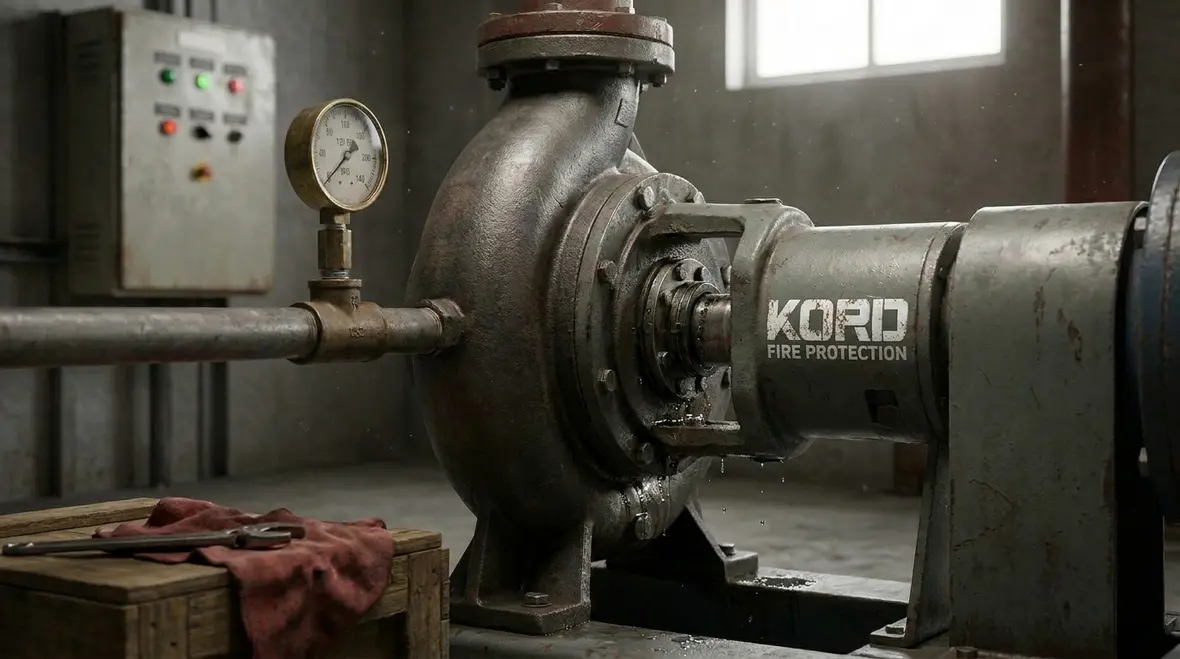
Why fire pump reliability depends on small changes
Over time, even well maintained fire pumps experience wear. However, it is rarely the pump alone. The suction conditions, valve positions, controller settings, and power quality all influence performance. For example, a small valve that drifts closed can reduce flow, which then makes the pump work harder. As a result, temperatures rise and components age faster.
Next, consider how water quality affects the system. Scale and debris can form where water passes at high speed. This buildup can cause pressure loss and can trigger abnormal cavitation. Cavitation sounds like “that annoying rattle,” but it is not harmless. It erodes metal surfaces and can shorten the pump life dramatically.
Finally, controllers and sensors also matter. If a pressure transducer drifts out of spec, the pump may chase the wrong target. Then the system may start more often than expected, adding wear while increasing the risk that performance falls short during a real demand. Teams that want more context around the system’s role can also explore the importance of fire pumps in modern buildings, which connects pump performance to real building protection needs.
Small deviations have a way of becoming expensive problems
That is the frustrating part. A pump can still look almost normal while trending in the wrong direction. It may pass a casual glance, but under demand it can hesitate, hunt for pressure, or show a pattern that only becomes obvious after several tests. “Almost right” is not the same thing as reliable, especially when life safety equipment is supposed to respond immediately and without drama.
Pressure swings, alarms, and performance that feels “almost right”
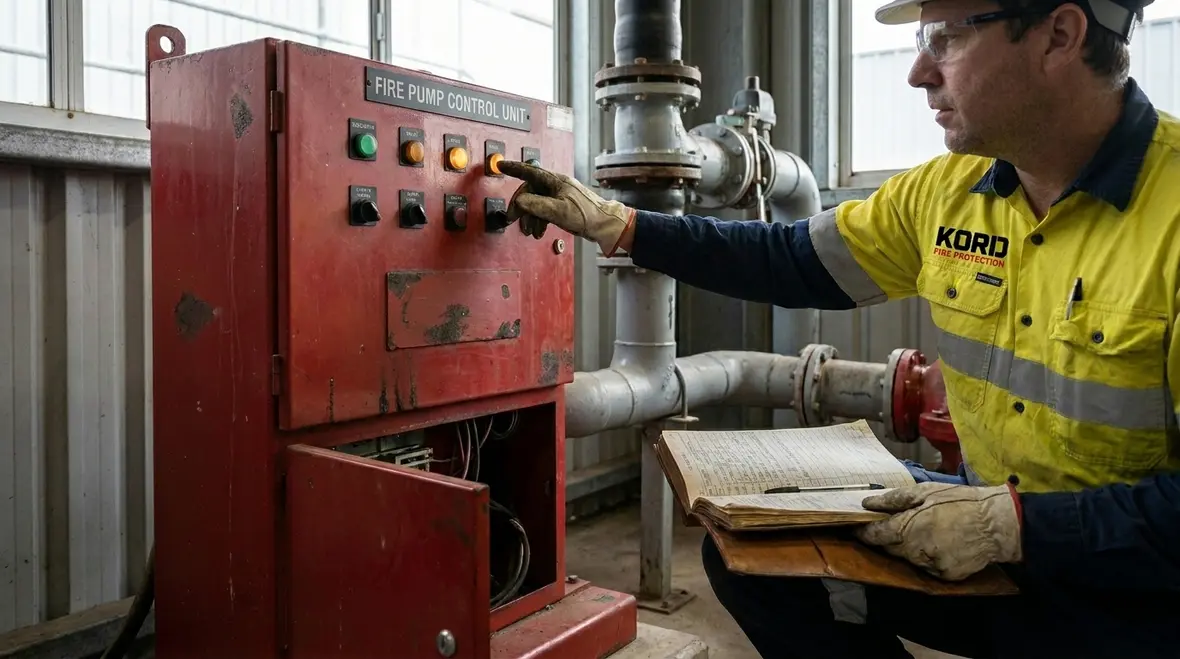
Facilities typically notice fire pump problems during routine testing, pump house checks, or system monitoring. If pressure rises too slowly, drops after a short burst, or oscillates around the set point, that behavior can be a key indicator. In addition, alarms that repeat after a reset often point to a persistent fault rather than a one off event.
To recognize these early, teams should track trends rather than only reacting to a single reading. For instance, if the pump runs with higher discharge pressure than normal, it may indicate a partially blocked line or valve restriction. If the pump runs but cannot achieve required pressure, suction issues or worn pump internals can be the cause.
Also, operators should watch for changes in start behavior. If the pump takes longer to reach stable operation, it may suggest control problems, power supply weakness, or mechanical drag. And yes, it can feel like the pump is “warming up,” but when it matters, the pump must respond instantly, not like an appliance that needs coffee.
Controller behavior can tell on the rest of the system
Repeated alarms are not just annoying beeps with a talent for bad timing. They can reveal whether the issue is electrical, hydraulic, or sensor related. Facilities that want a tighter troubleshooting path may find it useful to review this fire pump controller diagnostics troubleshooting workflow, especially when resets keep happening but confidence does not.
Noise, vibration, and leaks that should not be brushed off
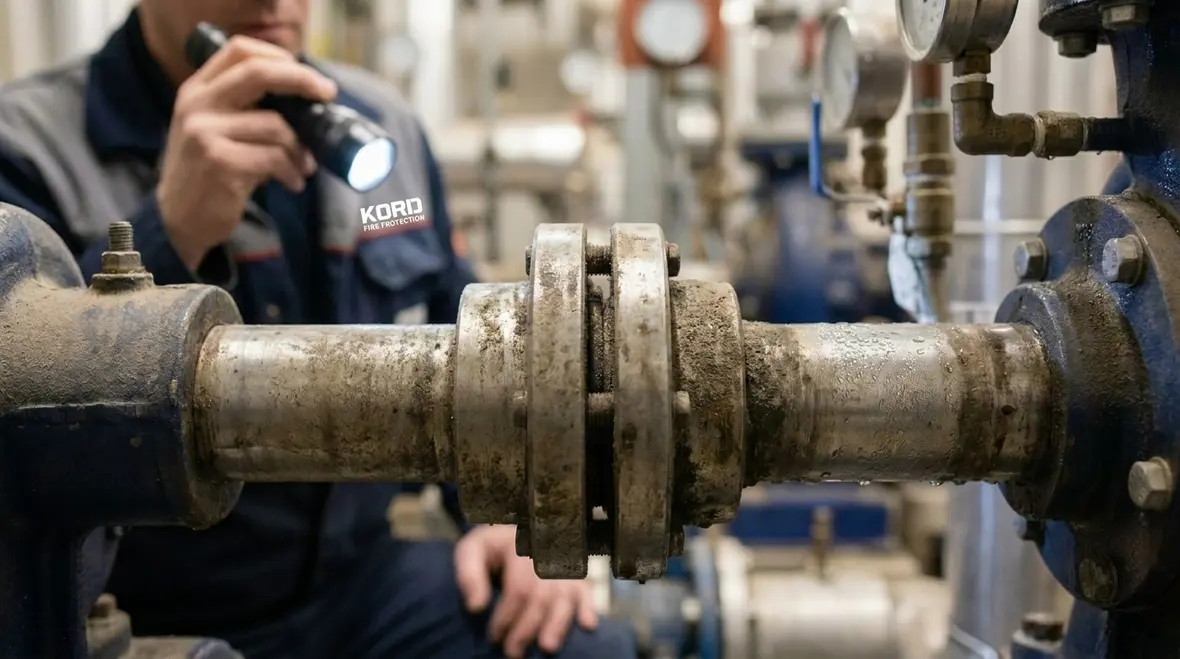
Sound and feel often reveal issues before gauges do. Excessive vibration can signal misalignment, worn bearings, or base issues. Unusual noise during operation can come from cavitation, hydraulic imbalance, or damaged impellers. In a busy facility, these sounds might blend into the background, but they do not belong there.
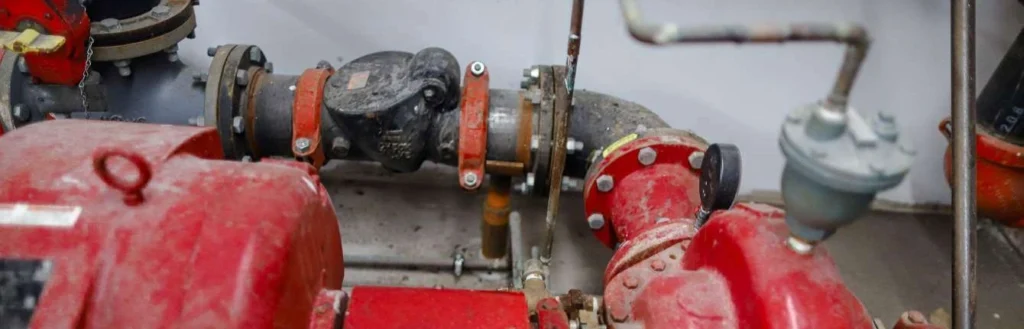
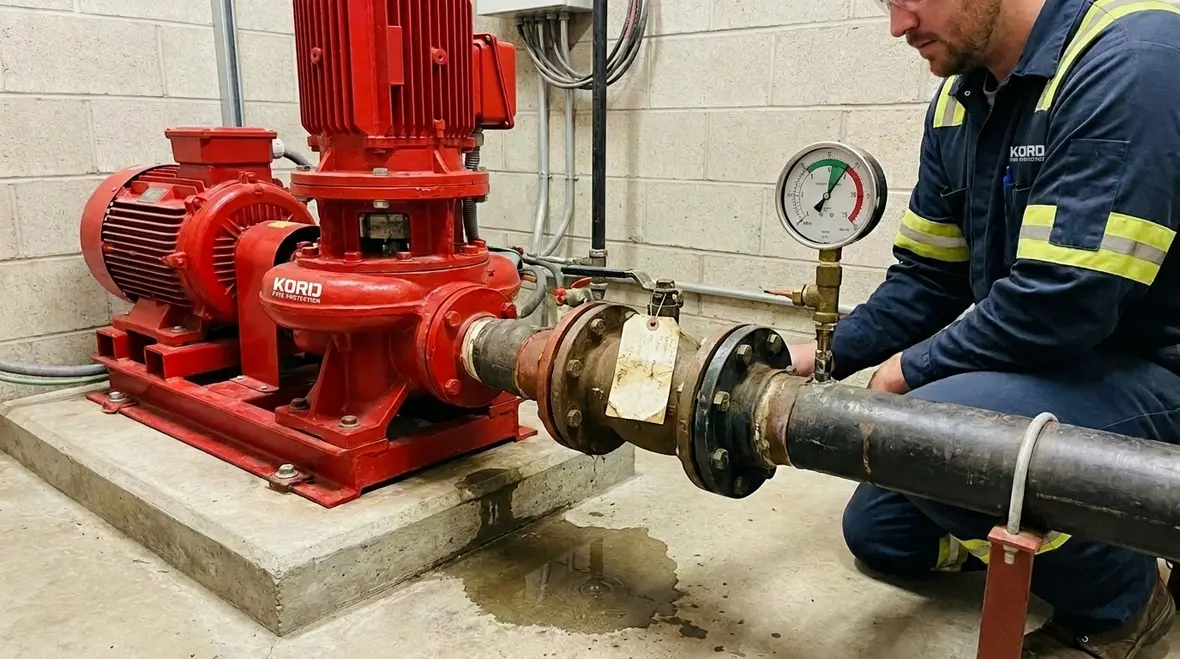
Leaks give even clearer warnings. Seals, gaskets, and fittings can fail gradually. A small seep at the seal area may look minor at first, but water exposure near electrical components can create bigger risks. Leaking drain lines can also affect suction conditions, especially if the leak alters the pump inlet environment.
Moreover, damaged insulation, scorched wiring, or hot spots around control cabinets can reveal electrical faults. When heat builds over time, it can degrade connections and increase resistance. Then, even a normally strong motor can behave unpredictably.
What maintenance checks reveal before the system fails
A proper inspection does not just turn on the pump and hope. It checks the parts that influence flow and reliability. First, technicians should confirm suction and discharge valve positions and verify that strainers remain clear. Next, they should inspect coupling alignment, bearing condition, and ensure that the pump is not experiencing abnormal mechanical loads.
Then, they should test controller logic and protection functions. That includes confirming set points, verifying sensor readings, and checking alarms against the actual operating values. If the controller logs show repeated trips, the repair work should follow those facts rather than guessing.
Water side checks matter too. Technicians may evaluate flow patterns, check for air entrainment, and verify that pressure relief or bypass arrangements work as designed. If air gets into the suction, the pump may lose prime or develop cavitation. Meanwhile, scale or debris can change flow behavior and reduce effective capacity.
Finally, a thorough service should include documentation that helps the facility plan next steps. That paper trail matters for audits, insurance reviews, and future troubleshooting. It also helps teams spot recurring failure patterns, which is how repairs become smarter over time.
Documentation is not glamorous, but it is extremely useful
Logs, alarm history, test data, and technician findings give facilities something better than guesswork. They provide a record of what changed, when it changed, and whether the same symptom keeps returning. Without that, every future repair starts from scratch, which is expensive, slow, and frankly a little rude of the system.
How Kord Fire Protection supports emergency repair readiness
When the Emergency fire pump repair signs appear, time matters. A delay can turn a repair into a replacement, and a manageable problem into an outage risk. This is where a partner like Kord Fire Protection becomes valuable. They help facilities move from reactive patching to planned readiness.
In practical terms, Kord Fire Protection can support assessments, fault investigation, and service planning across industrial, retail, and commercial sites. They can also help teams understand what the system is telling them, so the repairs match the actual cause. That reduces repeat faults and lowers the chance that the same alarm returns like a sequel nobody asked for.
Additionally, a strong partner coordinates with facility staff around access needs, safety requirements, and testing schedules. As a result, repairs cause less disruption. When the pump returns to service, the site gains confidence that it performs as intended under demand.
And if the facility needs fast action, it matters that service teams can respond with the right knowledge and tools, not just good intentions. Fire protection systems are not like a YouTube tutorial. Watching once does not make a pump reliable. For more ongoing insight, readers can browse the Kord Fire Protection blog for related fire pump, inspection, and compliance topics.
Steps to take when a problem is suspected
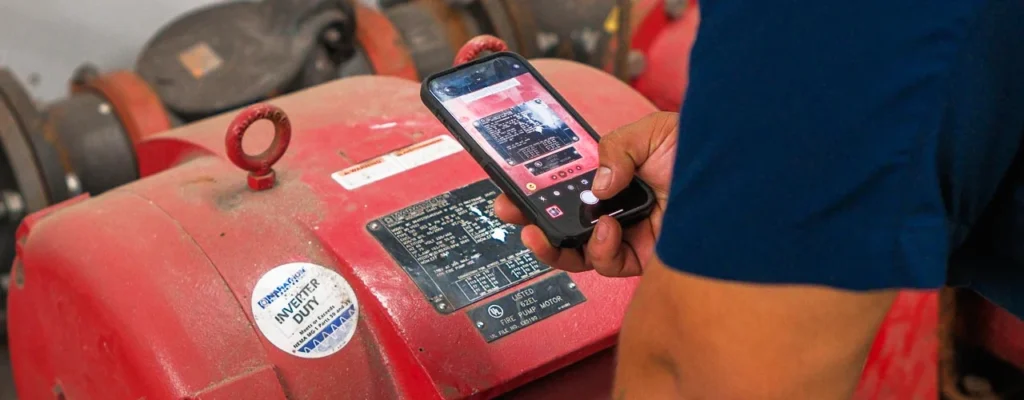
When operators suspect a fault, the best move is structured action. First, teams should record what they saw. That includes alarm codes, pressure readings, timestamps, and any abnormal noises or leaks. Next, they should confirm system status and check visible valve positions if it can be done safely without bypassing protection.
Then, they should review controller logs and test history. If the pump behaves differently than recent runs, the difference points toward the cause. After that, the facility should arrange a focused inspection rather than a broad, expensive “let us replace everything” strategy.
Also, teams should avoid restarting the system repeatedly without diagnosis. Frequent resets can mask the root cause and can increase wear. Instead, they should treat the early symptoms as evidence and bring in skilled assessment quickly.
A good first response is calm, specific, and documented
This is not the moment for panic or heroic guessing. It is the moment for accurate notes, a controlled review, and a service plan that matches the symptom. Fast is good. Random is not. The goal is to preserve readiness while finding the cause before a test day turns into a very memorable problem.
FAQ about fire pump repair warnings
Take action now to protect people and compliance
When early indicators show up, waiting does not make things better. It only gives wear time to grow. Kord Fire Protection helps facilities respond with accurate assessment and repair planning, so fire pumps perform when they must.
If your system shows Emergency fire pump repair signs, contact Kord Fire Protection today to schedule an inspection and get a clear repair path. Early action is cheaper than panic, easier than replacement, and far less stressful than explaining to everyone why the pump chose the worst possible day to get creative.

Join Our Newsletter!
Get the latest fire safety tips delivered straight to your inbox From our Newsletter.