Class K vs Wet Chemical Extinguisher Guide
In commercial kitchens, few debates simmer as quietly yet as persistently as class k vs wet chemical extinguisher. To the untrained eye, they sound like two different solutions to two different problems. In reality, they often describe the same fire fighting method, just spoken in a different dialect. One is a rating. The other is the agent inside the tank. However, when grease flares up and the flames lick toward the hood, semantics matter less than results. That is why Kord Fire Protection technicians take the time to explain the difference in plain language, so kitchen teams know exactly what stands between a close call and a catastrophe.
Understanding the Language Behind Kitchen Fire Protection
First, it helps to slow the conversation down. A Class K extinguisher refers to the type of fire it is designed to fight. Specifically, it targets fires fueled by cooking oils and fats. Think deep fryers, griddles, and those skillets that have seen more overtime than the line cook on a Friday night.
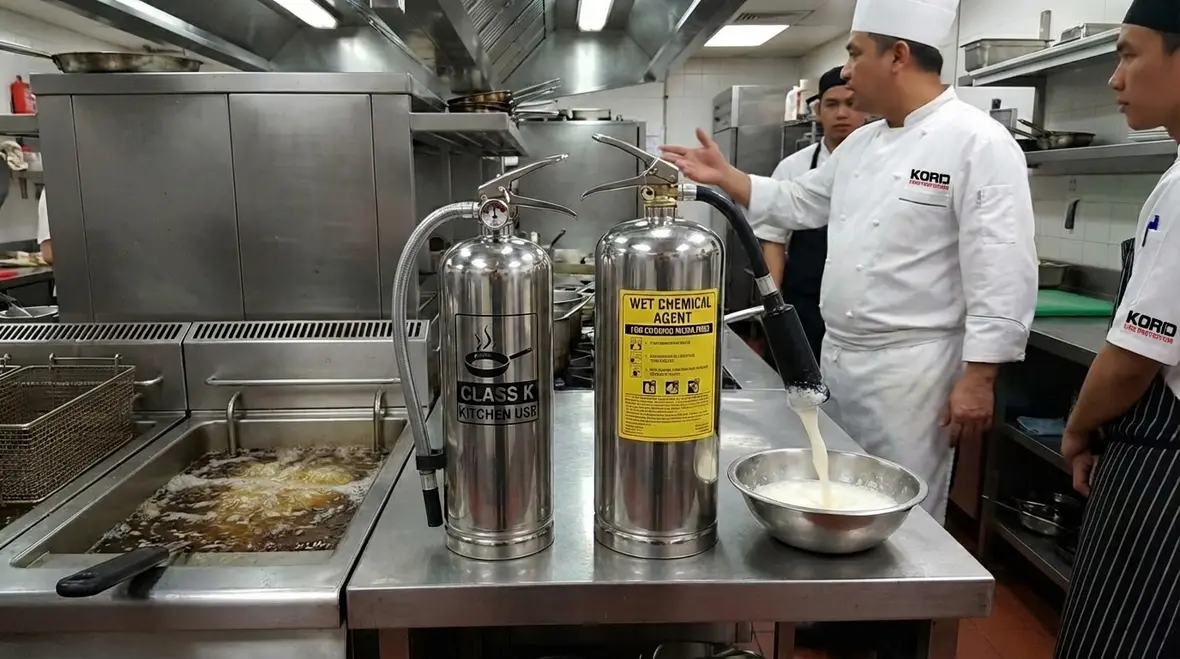
On the other hand, wet chemical describes the agent inside the extinguisher. This liquid solution reacts with hot cooking oils to create a soapy foam layer. As a result, the foam cools the fire and seals the surface, preventing re ignition.
So when people compare class k vs wet chemical extinguisher, they are often comparing a fire rating to the substance that makes that rating possible. It is a bit like arguing whether Batman is better than Bruce Wayne. Technically different. Functionally connected.
Kord Fire Protection technicians often explain it this way. Class K tells you what kind of fire it can fight. Wet chemical tells you how it fights it. Once that clicks, the confusion fades.
If you’re sorting out extinguisher types across your building, Kord’s comprehensive guide to fire extinguisher types and usage helps connect the dots between ratings, agents, and real world hazards.

Why Commercial Kitchens Face a Unique Fire Risk
High heat, fast pace, and unforgiving fuel
Commercial kitchens operate in a world of high heat and high pressure. Fryers can reach temperatures above 350 degrees. Oils can ignite without warning. Moreover, modern cooking oils burn hotter than older animal fats, which means traditional extinguishers no longer cut it.
Why water makes things worse
Water, for example, turns a grease fire into a dramatic science experiment. Pour it on burning oil and the result resembles a fireball auditioning for an action movie. Therefore, kitchens need a solution that cools and suppresses without spreading flames.
Where wet chemical agents shine
That is where the wet chemical agent shines. It does not simply smother flames. Instead, it triggers a process called saponification. In simple terms, it forms a thick foam blanket over the burning oil. Consequently, oxygen stays out, heat drops, and the fire loses its momentum.
The same science powers modern commercial hood systems. For a deeper dive into how those systems deploy wet chemical agents automatically, see Kord’s guide on commercial kitchen fire suppression systems.
Because of this, fire codes now require Class K rated extinguishers in commercial kitchens. And yes, the extinguisher typically uses a wet chemical agent to meet that rating.

How Does a Wet Chemical Agent Actually Stop a Grease Fire?
This is the question many facility managers type into search engines at two in the morning. Fortunately, the answer is straightforward.
Step by step: from spray to safety
- When discharged, the wet chemical agent sprays in a fine mist. First, it cools the flames.
- Then, it reacts with the hot oil to form that foam layer mentioned earlier.
- Finally, it seals the surface so vapors cannot rise and reignite.
Unlike dry chemical extinguishers, which can create a cloud of powder and limited visibility, wet chemical systems offer a gentler discharge. As a result, kitchen staff can aim more accurately and avoid unnecessary contamination of nearby equipment.
Kord Fire Protection technicians often demonstrate this difference during training sessions. They explain that while dry chemical works well for many fire types, it lacks the cooling power required for high temperature cooking oils. Therefore, choosing the correct extinguisher is not just about compliance. It is about performance under pressure.
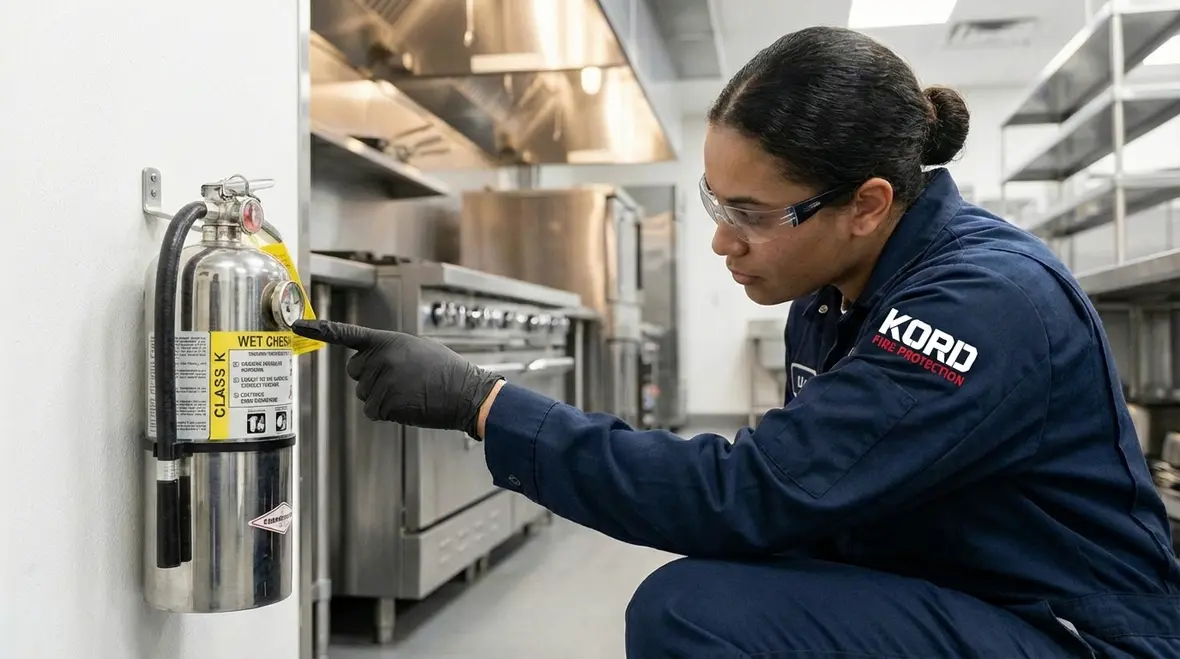
Class K vs Wet Chemical Extinguisher in Real World Applications
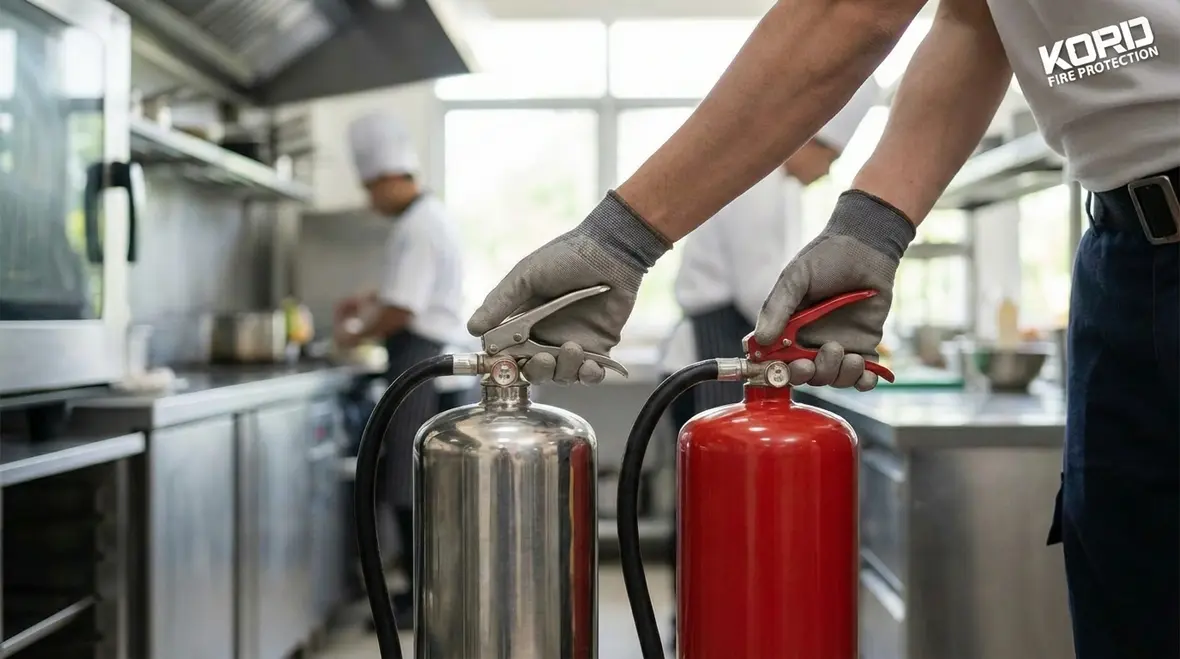
In practice, most Class K extinguishers are wet chemical extinguishers. However, the terminology still matters during inspections and training.
For example, an inspector will look for a Class K rating to ensure compliance with local fire codes. Meanwhile, a technician servicing the unit focuses on the condition of the wet chemical agent, the pressure level, and the nozzle integrity.
Side by side comparison
Class K
- Refers to fire classification
- Designed for cooking oils and fats
- Required in commercial kitchens
- Recognized by fire codes and inspectors
Wet Chemical
- Refers to extinguishing agent
- Creates cooling foam through chemical reaction
- Specifically effective on high temperature grease fires
- Used inside most Class K rated extinguishers
Although they overlap, they are not interchangeable terms. Therefore, when discussing class k vs wet chemical extinguisher with safety teams, clarity prevents costly misunderstandings.
What Business Owners Should Ask Before Choosing an Extinguisher
Start with the right rating
Choosing the right extinguisher is not a guessing game. Instead, it requires a careful look at the kitchen layout, equipment type, and cooking methods.
First, owners should confirm that the extinguisher carries a visible Class K rating. Without it, the unit may not meet code for commercial cooking operations.
Clarify maintenance expectations
Next, they should ask about maintenance intervals. Wet chemical extinguishers require regular inspection to ensure the agent has not settled or lost pressure. Additionally, nozzle caps and hoses must remain clear of grease buildup.
For a bigger picture of inspection timelines across all extinguisher types, Kord’s overview of how often fire extinguishers need to be serviced spells out monthly, annual, and long term requirements.
Kord Fire Protection technicians typically walk clients through these details in calm, practical language. They explain not only what is required, but why it matters. Because when staff understand the reason behind a rule, compliance becomes second nature.
Do not skip the hands on training
Finally, training plays a critical role. Even the best extinguisher fails if no one knows how to use it. Therefore, routine hands on instruction ensures that when flames rise, confidence rises with them.
The Role of Professional Maintenance and Inspection
Fire extinguishers do not thrive on neglect. Over time, pressure can drop. Seals can weaken. Moreover, kitchen environments expose equipment to heat and grease daily.
Routine inspections catch these issues early. During service visits, technicians check pressure gauges, verify weight, inspect hoses, and confirm that the wet chemical agent remains viable. If anything falls short, they address it immediately.
In the broader conversation of class k vs wet chemical extinguisher, maintenance often gets overlooked. Yet, an unserviced extinguisher is like a seatbelt that snaps under stress. It looks fine until it is not.
Kord Fire Protection technicians approach inspections with a steady, methodical pace. They document findings, explain corrections, and ensure compliance with current codes. As a result, business owners gain peace of mind instead of paperwork headaches.
Common Misunderstandings That Create Risk
Myth 1: “Any extinguisher will do.”
Several myths continue to circulate in commercial kitchens.
Some believe a standard ABC extinguisher can handle any fire. While it works on many types, it lacks the cooling and sealing power required for commercial grease fires. Consequently, relying on it alone puts both staff and property at risk.
Myth 2: “The hood system is enough.”
Others assume that if a suppression system protects the hood, handheld extinguishers are optional. In reality, portable units provide immediate response before a fire grows large enough to trigger automatic systems.
Myth 3: “Class K and wet chemical compete with each other.”
Another misunderstanding in the class k vs wet chemical extinguisher discussion is that the terms describe competing products. They do not. Rather, they describe two aspects of the same safety solution.
Clearing up these misconceptions does more than satisfy curiosity. It reduces liability, protects employees, and preserves livelihoods.
Frequently Asked Questions
Conclusion: Clarity Today Prevents Crisis Tomorrow
In the end, the discussion around class k vs wet chemical extinguisher comes down to understanding language and purpose. One defines the fire. The other defines the method. Together, they form the frontline defense in commercial kitchens. Kord Fire Protection technicians stand ready to guide businesses through selection, training, and maintenance with calm authority.
Connect with their team today, and ensure that when heat rises, confidence rises higher. To take the next step, explore Kord’s full service fire protection and extinguisher support or request a kitchen focused hazard assessment tailored to your operation.
Know Your Weapon Before You Fight the Flame
Kord Fire Protection is your go-to when it comes to all things fire protection. For over 20 years, we’ve been serving Southern California with the quality service and equipment to keep your home or business safe at all times. Our competitive prices reflect our unwavering commitment to protecting what matters most in the event of a fire emergency. Give us a call, send an email, or use that form!

Join Our Newsletter!
Get the latest fire safety tips delivered straight to your inbox From our Newsletter.