Class C Fire Extinguisher for Electrical Fires
Class C Fire Extinguisher Explained: Electrical Fires and Safe Shutoff Steps
Electricity powers modern life. It lights offices, fuels data centers, and keeps the coffee machine humming at 7:59 a.m. sharp. Yet when something goes wrong, the same current can spark chaos. That is where a class c fire extinguisher electrical fires solution becomes essential. Designed specifically for energized equipment, it helps stop danger without turning a bad day into a catastrophic one. Kord Fire Protection technicians often explain that using the wrong extinguisher on live circuits is like throwing water on a toaster in the bathtub. It simply does not end well.
This guide walks through how electrical fires start, why a Class C rated extinguisher matters, and how to shut off power safely. Along the way, Kord Fire Protection technicians break down the science and the steps with clarity, calm authority, and just enough wit to keep things interesting.

Understanding Electrical Fires and Why They Demand Precision
Electrical fires behave differently from ordinary fires. While wood and paper burn with visible fuel, energized equipment burns with hidden energy. Behind the wall outlet or inside a server rack, electricity continues to flow. Therefore, the danger is not just flames. It is shock, arc flash, and re ignition.
Most electrical fires begin with overloaded circuits, damaged wiring, loose connections, or faulty equipment. Over time, insulation degrades. Consequently, heat builds up. If that heat meets nearby combustible material, ignition follows. In commercial settings, overloaded power strips and aging panels often play starring roles.
Kord Fire Protection technicians emphasize that electricity itself does not burn. Instead, it ignites surrounding materials. However, as long as the power remains on, the fire source stays active. That is why precision matters. A fast response paired with the correct extinguisher rating can stop the spread before it climbs into ceilings or walls.
What Makes a Class C Rated Extinguisher Different
A Class C rating does not describe a specific chemical. Rather, it tells users the extinguisher is safe for energized electrical equipment. In many cases, these extinguishers use carbon dioxide or dry chemical agents. Both options interrupt the fire without conducting electricity back to the operator.
Water based extinguishers, by contrast, can conduct electricity. As a result, using them on live circuits may cause severe shock. That is not the kind of excitement anyone needs on a Tuesday afternoon.
Kord Fire Protection technicians explain it in simple terms. A Class C rated unit does two critical things. First, it smothers or interrupts the chemical reaction of the fire. Second, it protects the user from electrical conductivity. Once the power source is shut off, the fire may then be treated as another class, often Class A for ordinary combustibles.

How a Class C Fire Extinguisher Electrical Fires Response Works
When facing class c fire extinguisher electrical fires situations, speed and method matter. The extinguisher agent works by removing oxygen, interrupting the chemical chain reaction, or displacing air around the flame. Carbon dioxide, for example, leaves no residue. Therefore, it is often preferred in server rooms or areas with sensitive electronics.
Dry chemical agents, on the other hand, create a barrier between fuel and oxygen. Although cleanup may take longer, the knockdown power is strong. Consequently, many facilities install multipurpose ABC extinguishers that include Class C capability.
Kord Fire Protection technicians remind clients that the rating only applies while equipment is energized. Once power is cut, the classification changes. That small detail often surprises people. However, understanding it ensures the correct follow up action.
Safe Shutoff Steps Before and After Using an Extinguisher
Stopping flames is only part of the response. Equally important is shutting off the energy source safely. The sequence below reflects guidance frequently shared by Kord Fire Protection technicians during on site training sessions.
Immediate Actions
- Alert others and activate the fire alarm if available
- Call emergency services
- Assess whether the fire is small and contained
If It Is Safe to Act
- Locate the nearest appropriate extinguisher with a Class C rating
- Keep a safe distance from the energized equipment
- Use the PASS method pull aim squeeze sweep
However, if flames continue or spread rapidly, evacuation becomes the priority. No piece of equipment is worth personal injury.
Power Isolation Steps
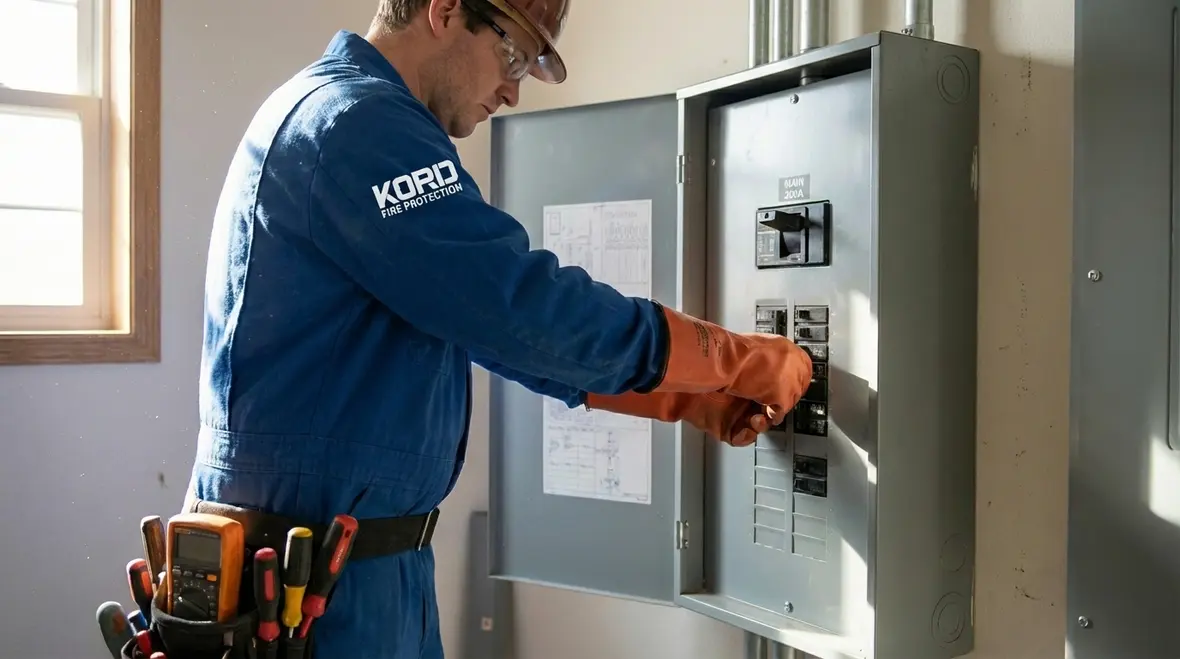
- If accessible, shut off the main breaker or disconnect switch
- Use insulated tools if trained to do so
- Never touch damaged wiring directly
Once electricity stops flowing, firefighters or trained personnel can reassess the fire class and apply further suppression if needed.
Kord Fire Protection technicians often compare this to stopping a leaky faucet. One can mop the floor repeatedly, but until the valve is closed, the water keeps coming. Electricity works much the same way.
Choosing the Right Extinguisher for Commercial and Residential Spaces
Selecting the proper extinguisher depends on environment, equipment, and risk level. Offices with computers, manufacturing floors with control panels, and restaurants with complex wiring systems all require careful planning.
Below is a simple comparison to clarify options.
| Environment | Recommended Solution |
|---|---|
| Server rooms and data centers | Carbon dioxide extinguisher with Class C rating for clean discharge |
| Workshops with mixed fire risks | Multipurpose ABC extinguisher including Class C capability |
| Residential garages | Compact ABC unit mounted near exit path |
| Industrial electrical panels | Larger capacity dry chemical extinguisher positioned nearby |
While the table provides guidance, site specific assessment always matters. Therefore, Kord Fire Protection technicians evaluate building layout, electrical load, and occupancy patterns before recommending placement. They also ensure compliance with local codes and inspection standards. For deeper details on maintenance schedules, you can also review their guide on how often a fire extinguisher needs to be serviced.
How Often Should Electrical Fire Extinguishers Be Inspected and Serviced?
Inspection is not glamorous. No one throws a party for a properly pressurized extinguisher. Still, routine checks make the difference between readiness and regret.
Monthly visual inspections confirm that pressure gauges sit in the correct range, seals remain intact, and access is unobstructed. Additionally, annual professional servicing verifies internal components. Over time, even the best equipment needs attention.
Kord Fire Protection technicians conduct detailed maintenance that includes checking hoses, verifying weight, and ensuring compliance tags remain current. Because electrical risks evolve with new equipment installations, technicians also review whether coverage remains adequate. Their dedicated fire extinguisher service and certification programs keep both Class C and multipurpose units ready for real emergencies.
Common Mistakes People Make During Electrical Fires
Even calm professionals can slip into panic mode when sparks fly. Unfortunately, certain mistakes increase danger.
- Using water on energized equipment
- Standing too close to the source
- Failing to call emergency services first
- Blocking exit routes while attempting to fight the fire
Additionally, some individuals forget to check whether the extinguisher is rated for electrical hazards. That oversight can lead to injury. Kord Fire Protection technicians stress that training builds muscle memory. In a real emergency, people act as they practiced.
There is also the movie effect. Television heroes charge into blazing rooms without backup. In reality, professionals prioritize safety and containment. This is not an action film. It is risk management.
Training and Preparedness Build Real Confidence
Preparation transforms fear into focus. Facilities that conduct regular fire drills report faster response times and clearer decision making. Furthermore, employees who understand extinguisher ratings show greater confidence during inspections.
Kord Fire Protection technicians offer hands on demonstrations that allow participants to practice the PASS method in controlled settings. They explain how electrical panels function, how arc flash occurs, and why distance matters. As a result, teams gain both knowledge and practical skill.
Importantly, preparedness also includes clear signage and accessible equipment placement. An extinguisher hidden behind storage boxes helps no one. Therefore, maintaining visibility and access forms part of every safety audit.
FAQ About Electrical Fire Extinguishers
Final Thoughts and Next Steps
Electrical fires demand respect, knowledge, and the right tools. A properly selected and maintained extinguisher rated for live equipment can stop disaster in its tracks. However, equipment alone is not enough. Training, inspection, and safe shutoff procedures complete the picture.
Kord Fire Protection technicians stand ready to assess risks, provide guidance, and ensure every building stays prepared. From regular inspections to hydrostatic testing and replacement units, their fire extinguisher service and certification team keeps Class C and multipurpose systems ready when seconds count.
If your facility is in California and you are unsure whether your electrical fire coverage is adequate, schedule a site visit with Kord Fire Protection. Their regional teams, such as those serving Orange County fire protection and other nearby counties, can review your layout, confirm extinguisher types, and recommend upgrades before the next spark ever appears.
Connect with their team today and turn uncertainty into confidence before the next spark ever appears. With the right Class C extinguishers, clear procedures, and ongoing training, electrical fires become challenges you are ready to handle, not surprises that derail your day.
Know Your Weapon Before You Fight the Flame
Kord Fire Protection is your go-to when it comes to all things fire protection. For over 20 years, we’ve been serving Southern California with the quality service and equipment to keep your home or business safe at all times. Our competitive prices reflect our unwavering commitment to protecting what matters most in the event of a fire emergency. Give us a call, send an email, or use that form!

Join Our Newsletter!
Get the latest fire safety tips delivered straight to your inbox From our Newsletter.