
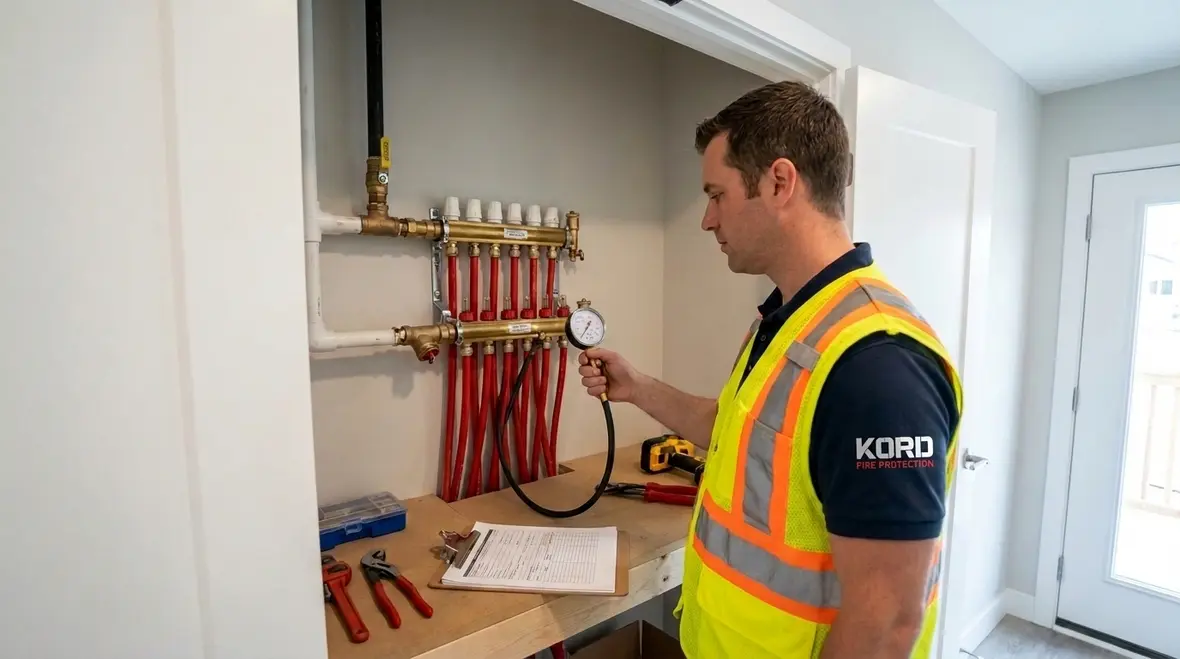
NFPA 13D Sections 11.1-11.2: Required Acceptance Tests Before Residential Sprinkler Commissioning
Quick Answer
NFPA 13D Sections 11.1 and 11.2 require specific acceptance tests before a residential sprinkler system is put into commissioning service. These tests verify installation integrity, water supply and system performance, and proper operation of key components. The goal is documented proof the system can function as designed.
Before closeout starts getting cute and pretending everything is fine, it helps to align the project with a practical fire sprinkler service program so testing, maintenance planning, and corrective work are coordinated early instead of crammed into the last minute.
Why NFPA 13D acceptance tests matter before “commissioning”
Even when residential sprinkler piping and sprinklers appear correctly installed, commissioning readiness depends on repeatable, documented verification. NFPA 13D Sections 11.1 11.2 required acceptance tests residential sprinkler system commissioning focus on confirming that the completed system meets the intent of the standard before it is placed into service or handed over for ongoing maintenance. Commercial facilities, industrial sites, and retail properties that include residential occupancies or mixed tenancy spaces often face the same practical challenge: the acceptance phase is where problems are easiest to detect and correct.
For context on installation scope and system components, see: NFPA 13 overview: automatic fire sprinkler system installation. While that resource addresses NFPA 13 generally, many practical installation and system verification principles help teams prepare for NFPA 13D closeout.
What NFPA 13D Section 11.1 requires before commissioning
NFPA 13D Section 11.1 acceptance testing targets confirmation that the installed sprinkler system is operational and ready for performance verification. In practice, teams treat Section 11.1 as the “system is physically and mechanically ready” gate.
1) Visual inspection and installation integrity checks
Acceptance preparations start with verifying the system was installed in accordance with the design and applicable requirements. Field teams typically confirm:
- Sprinkler identification, placement, and correct temperature rating for the occupancy environment.
- Piping type, schedule, and joining method consistent with the approved installation plan.
- Hangers and supports properly installed, secured, and positioned to prevent movement or alignment issues.
- Escutcheons and penetrations handled correctly to maintain protected construction where applicable.
- Valves installed and accessible for operation where required by the system design.
Common failure point: Hidden misalignment at branch lines and incorrect fitting orientation. These issues often do not surface until flow tests or drain operation introduce measurable system behavior changes.
2) Verification of control valves and waterway connections
Control valves and waterway components must be inspected for proper installation and readiness. For many residential system layouts, these include valves that control water flow to the sprinkler system, along with check elements depending on the arrangement. Installers should document valve positions and confirm that protective features, seals, or tamper indicators where used are intact.
Common failure point: Valve mispositioning during rough-in closeout. A system may pass visual inspection yet fail acceptance flow behavior because a valve is partially closed or obstructed.
What NFPA 13D Section 11.2 requires before commissioning
NFPA 13D Section 11.2 acceptance tests move from installation confirmation to operational and performance verification. Teams apply controlled testing to demonstrate the system can discharge water as intended and respond correctly during demand conditions.
1) Water flow and pressure related acceptance testing
Acceptance testing under Section 11.2 typically verifies that water supply characteristics align with the design intent and that the system is capable of delivering water at required pressures and flows. This stage also supports identifying issues that can remain dormant during visual inspection, such as:
- Obstructions in piping caused by debris left from construction.
- Incorrectly sized components leading to measurable flow reductions.
- Air or trapped gases affecting the ability of the system to discharge properly.
- Incorrect pipe routing creating unanticipated friction losses.
Commercial compliance note: In mixed-use and retail occupancies, facilities often require repeatability across multiple residential units or pods. The test documentation standard must support consistent maintenance planning, so the commissioning deliverable includes results that maintenance teams can interpret quickly during inspections.
2) Operational testing of system components
Section 11.2 acceptance often includes operational verification elements that confirm components function correctly during simulated demand. The objective is not only passing a test but ensuring the system behavior matches what the design calculations assumed. Test leads should prepare for operational variations due to:
- Local water supply fluctuations.
- Seasonal pressure differences.
- System volume differences across residential configurations.
Common failure point: Inconsistent operation results caused by incomplete bleed or trapped air. Teams should confirm that the test method accounts for the system configuration and that results are repeatable under the same conditions.
How to run acceptance tests like a readiness program, not a one day event
NFPA 13D Sections 11.1 11.2 required acceptance tests residential sprinkler system commissioning work best when treated as a structured readiness program. Residential systems often share construction schedules with electrical, plumbing, and finishing trades, so test windows and access can become the critical path.
Pre test checklist that reduces rework
- Document review: Confirm the latest approved drawings and revisions, especially where piping routes or valve locations changed.
- Access verification: Ensure valve access panels and any required access points exist before testing.
- Pressure measurement planning: Confirm gauges and test equipment calibration and placement strategy.
- Drain and discharge protection: Prepare safe discharge routes to protect finishes and avoid slip hazards.
- Witness and sign off: Schedule a dedicated witness hold point for acceptance results.
Test documentation that supports ongoing compliance
Acceptance test documentation should be clear enough that a maintenance technician can:
- Confirm system readiness without interpreting first principles.
- Compare “as built” versus “as tested” conditions over time.
- Plan future maintenance based on observed flow and pressure behaviors.
Where facilities require external verification or insurer review, complete records reduce the probability of additional inspection cycles and schedule impacts.
What goes wrong most often during acceptance and commissioning
Field experience shows a predictable set of issues that can cause acceptance failure or require corrective retesting. These items commonly appear during NFPA 13D Sections 11.1 11.2 required acceptance tests residential sprinkler system commissioning for residential configurations that are built at speed or with limited oversight.
1) Debris and obstruction in waterway paths
Construction debris can obstruct fittings and branches, leading to reduced flow and unstable results. Systems may still look intact because obstructions are internal. Teams should ensure cleaning steps are performed and verified before acceptance tests.
2) Valve and trim errors
Incorrect valve trim setup, incomplete valve seating, or misapplied components can distort system response. These problems often show up only when discharge conditions change.
3) Measurement errors during pressure and flow verification
Pressure readings can be misleading if gauge placement, hose routing, or temporary test fittings introduce losses. Teams should standardize measurement methods and calibration practices.
Partnering for compliance: why ongoing test and maintenance planning matters
Acceptance tests are the beginning of compliance, not the end. After commissioning, residential systems still require routine inspections, maintenance planning, and periodic readiness checks to ensure the system remains in the condition demonstrated during acceptance. Kord Fire Protection supports commercial clients and mixed occupancy facilities that require consistent compliance management across properties, contractors, and timelines.
For additional industry perspectives on system upkeep and readiness planning, see automatic sprinkler control valves maintenance and five year fire sprinkler inspection checklist for compliance. They fit naturally with acceptance planning because nobody enjoys discovering the “small issue” after handover when it has already become an expensive issue.
Frequently Asked Questions
Call to action
Plan NFPA 13D acceptance tests early and manage them as a documented readiness program, not a last minute activity. Kord Fire Protection helps facilities verify installation integrity, execute acceptance testing, and maintain commissioning-ready records so compliance stays defensible over time. Contact Kord Fire Protection to develop a practical testing and maintenance plan aligned with NFPA 13D acceptance expectations and your site operational needs.

Join Our Newsletter!
Get the latest fire safety tips delivered straight to your inbox From our Newsletter.



