
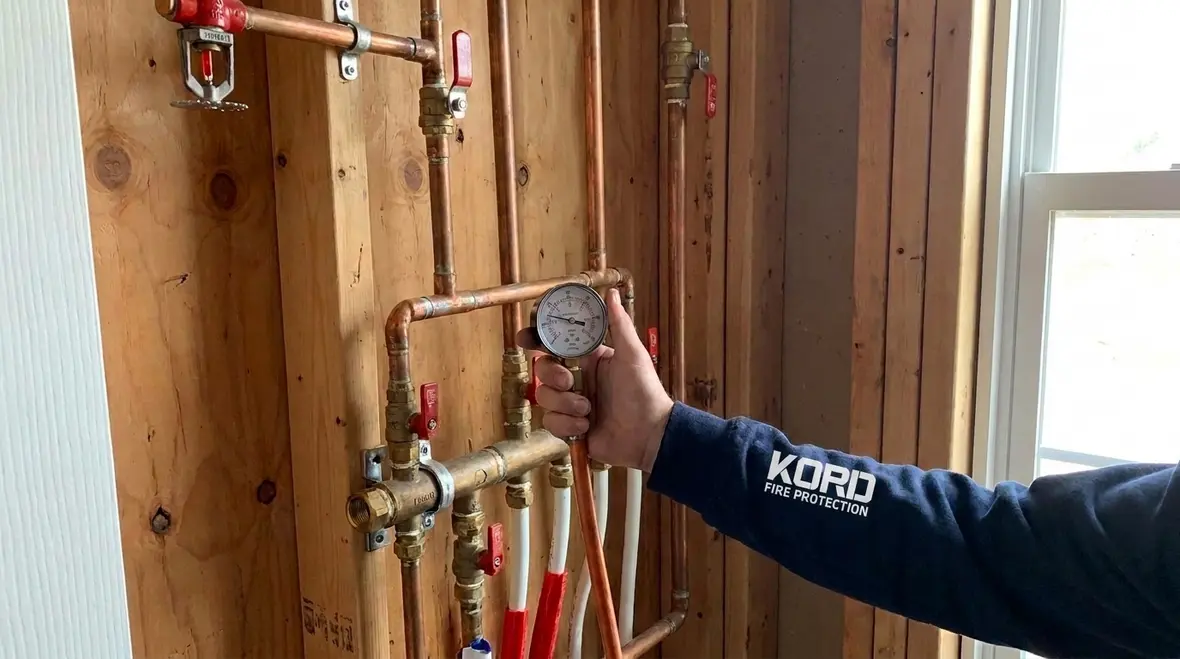
NFPA 13D Section 10.1: Design Discharge Density Requirements for Residential Sprinkler Systems
Quick Answer
NFPA 13D Section 10.1 sets design discharge density requirements for residential sprinkler systems based on the hazard classification and remote area assumptions. In practice, the design density drives nozzle selection, water supply calculations, and hydraulic demand, which directly affects pipe sizing and system performance during worst case scenarios.
For broader installation context, it helps to review automatic fire sprinkler system installation requirements under NFPA 13 before diving deeper into how Section 10.1 shapes residential hydraulic demand.
What NFPA 13D Section 10.1 requires, in plain terms
NFPA 13D Section 10.1 establishes the design discharge density requirements residential sprinkler systems must meet to control fire growth and provide sufficient water to operate sprinklers effectively. The design density is not a theoretical number. It governs the hydraulic calculation that determines how much water discharge the system must deliver for a specified number of sprinklers over a specified flow duration.
In many residential design workflows, the design discharge density values commonly fall in the range of 0.5% to 1.0% depending on the hazard and the applicable design approach. The exact selection depends on the adopted criteria within NFPA 13D and the building details, including occupancy characteristics and sprinkler layout.
Those density assumptions ripple through the entire system design. Once the density is set, the designer must calculate available pressure, determine friction losses, and size piping to ensure that the system can sustain the required demand during remote area operation.
How design discharge density affects real installation performance
Design discharge density requirements residential sprinkler systems establish the hydraulic “target” the installed system must achieve. NFPA 13D demand calculations directly influence critical components and installation methods, including:
Nozzle and sprinkler selection: Discharge rate per sprinkler must align with the density and the design area assumptions.
Pipe sizing and layout: Higher assumed density requires larger flows, which increases velocity and friction loss. Incorrect sizing often results in inadequate residual pressure at the design node.
Water supply sizing and verification: The water supply must deliver the calculated flow with acceptable pressure at the remote area location.
Remote area hydraulic performance: The density assumption must survive the worst case remote area demand, not only the most accessible zone.
From a field perspective, many compliance issues occur when the density is selected correctly on paper but fails during execution due to installation tolerances, unaccounted pressure losses, or supply constraints.
Common compliance and field failure points tied to Section 10.1
Commercial, industrial, and retail facilities that include residential style coverage or mixed use buildings frequently face heightened scrutiny. Even when the occupancy is not fully “residential,” the same hydraulic thinking applies, and inspectors expect the system to perform as designed.
1) Incorrect hazard or area basis
Design discharge density requirements residential sprinkler systems depend on the classification and design premises assumptions. A frequent failure point involves mismatched hazard determinations or an incorrect understanding of which spaces must be included in the design area.
Operational consequence: the system looks installed but cannot meet the calculated flow at the remote area when a worst case fire occurs.
2) Pressure loss errors from layout differences
Even small deviations in piping runs, fittings counts, or routing can change the pressure available at the design sprinklers. Section 10.1 density requirements only remain valid when the rest of the hydraulic calculation accurately represents the installed system.
Operational consequence: the system discharges less than required, delaying control of the fire or failing to meet inspection acceptance criteria.
3) Undersized supply or unverified water availability
Hydraulic compliance depends on real water supply performance, not nameplate values. Static and residual pressure, flow capacity, and seasonal variations must be verified for the actual point of connection.
Operational consequence: the installed system cannot sustain design flow, and the system fails functional acceptance or re inspection.
4) Sprinkler and component mismatch
Substitutions, missing components, or incorrect sprinkler characteristics can distort discharge rates and affect how the system meets the design density demand. Field errors frequently include:
incorrect temperature rating or response type selection
incorrect or incompatible sprinkler orifice
improper escutcheons, obstructions, or mounting that affects spray pattern performance
Operational consequence: discharge does not match the calculated hydraulics, leading to nonconformance during testing and inspection.
5) Maintenance gaps that change system hydraulics
Over time, systems experience changes that can alter performance. Maintenance gaps often include clogged strainers, partially obstructed piping, closed valves, or corrosion related restrictions. These conditions reduce effective available pressure and can prevent the system from delivering the intended discharge density.
Commercial facility standards typically require more disciplined documentation, valve supervision, and periodic inspection practices, even when the system is designed under residential rules.
Inspection, testing, and ongoing verification for density compliance
NFPA 13D compliance does not stop at plan review and installation. The system must remain capable of meeting the design discharge density requirements residential sprinkler systems depend on. Effective compliance programs emphasize verification before and after acceptance.
Pre acceptance checks designers and installers should align on
Hydraulic calculation review: Confirm the remote area assumptions, density selection, and sprinkler counts match the as built layout.
Water supply verification: Validate the available flow and pressure at the point of connection. Document residual pressure at the required flow.
Valve positions and tamper indications: Ensure correct valve configurations and supervision methods.
Obstruction and coverage validation: Confirm sprinklers are not impacted by construction defects or storage arrangements.
Maintenance and acceptance practices that protect the density assumptions
Ongoing maintenance ensures that density based hydraulic performance remains intact. Key operational items include:
Periodic valve inspections to ensure valves remain open where required and supervised where used.
Strainer and waterway checks to prevent reductions in effective flow.
Sprinkler visual inspections for damage, painting, corrosion, or obstruction. Any compromised sprinkler can break the design intent.
Document updates after repairs or system modifications so the hydraulic basis remains current.
Kord Fire Protection supports long term compliance by aligning documentation, inspection records, and maintenance actions with the hydraulic realities that NFPA 13D expects. This helps facilities avoid “paper compliance” that collapses during acceptance testing.
For broader installation and compliance context, review this related resource: NFPA 13 overview and automatic fire sprinkler system installation considerations.
Design density in the broader sprinkler design process
Design discharge density requirements residential sprinkler systems do not stand alone. They connect to system components and standards of practice across residential and light commercial fire protection engineering. A best practice is to treat density as the foundation of a complete hydraulic chain:
Demand formation: Density plus sprinkler spacing and remote area selection produce the required flow and number of operating sprinklers.
Supply response: Pumps, water tanks, municipal supply, or combination systems must meet or exceed the demand with required pressure.
Distribution performance: Pipe diameter, fitting selections, and system routing determine friction loss and residual pressure at the sprinklers.
Operational reliability: Correct installation and maintenance ensure the system performs as calculated when it matters.
Facilities with pump systems should also consider pump selection, testing requirements, and operating controls. The principles of pump reliability and flow verification are explained in practical terms by the firefighting pump industry resources at this NFPA 25 fire pump testing requirements guide.
Frequently Asked Questions
Get density based compliance supported, not just documented
Commercial and mixed use facilities benefit from ongoing sprinkler compliance support because hydraulic performance depends on water supply, installation details, and maintenance discipline. Kord Fire Protection helps confirm your NFPA 13D Section 10.1 design discharge density requirements residential sprinkler systems can actually deliver through inspections, testing, and repair documentation. Schedule a review with Kord Fire Protection to validate as built conditions, verify water supply performance, and keep your system audit ready.

Join Our Newsletter!
Get the latest fire safety tips delivered straight to your inbox From our Newsletter.



