AHJ Fire Code Explained and Who Enforces It
AHJ Explained: Who Enforces Fire Codes and How to Work With Them
In the world of fire protection, one question rises above the rest: what is an AHJ fire code, and who exactly has the final say when it comes to safety? The answer shapes how buildings are designed, how systems are installed, and how businesses stay open. An AHJ, or Authority Having Jurisdiction, is the organization, office, or individual responsible for enforcing fire codes and approving safety measures. However, that simple definition barely scratches the surface. Behind every approved permit and passed inspection stands a process that blends law, engineering, and human judgment.
And while it may sound like something out of a superhero movie, the AHJ is not a mysterious figure cloaked in red tape. In fact, with the right approach and guidance from seasoned professionals like Kord Fire Protection technicians, working with the AHJ becomes far less intimidating and far more strategic.
Understanding the Authority Having Jurisdiction
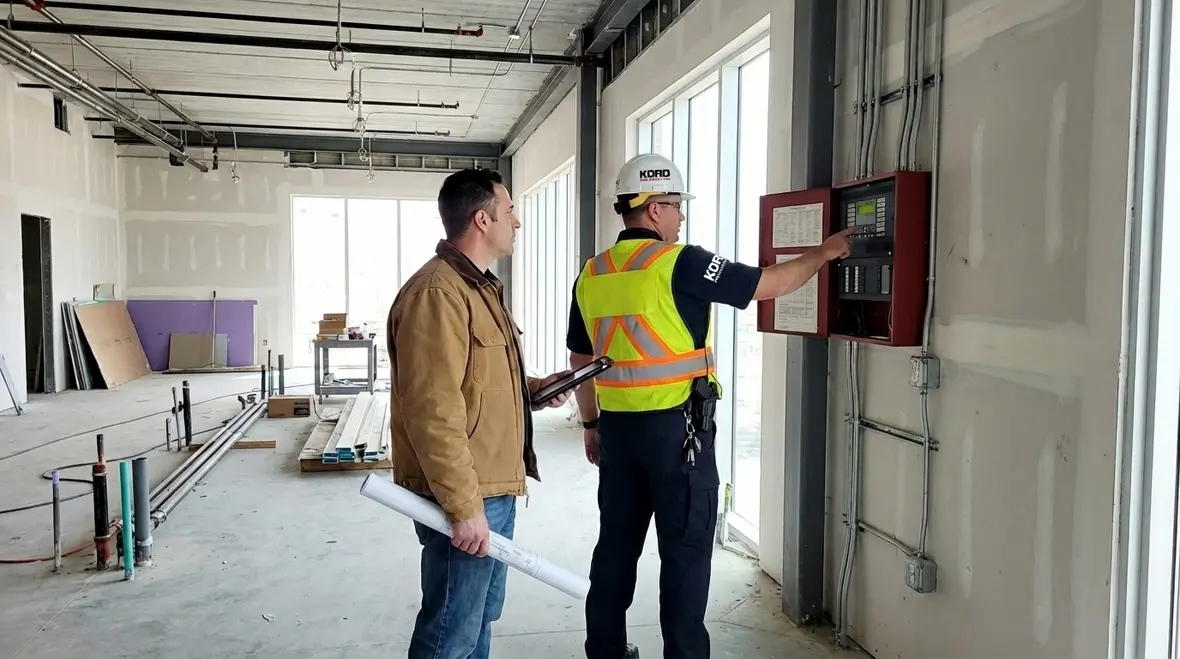
The Authority Having Jurisdiction serves as the final interpreter of fire safety rules within a given area. Depending on the project, this authority may be a fire marshal, building inspector, insurance representative, or even a federal agency. Therefore, the identity of the AHJ changes based on location and occupancy type.
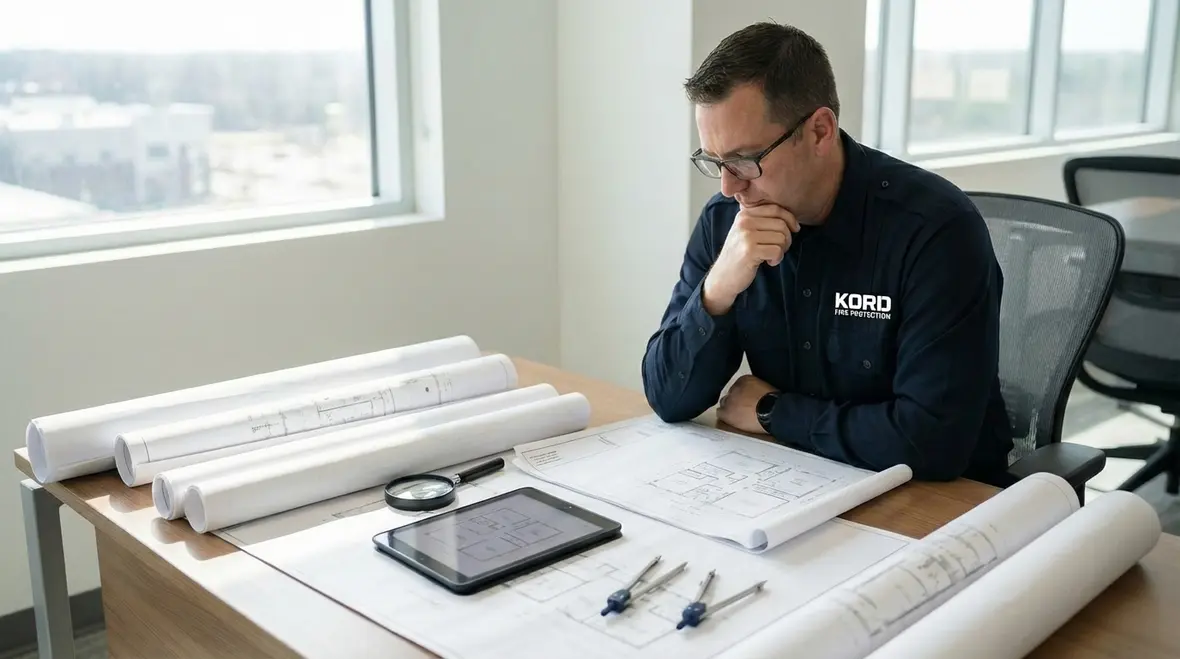
At its core, the AHJ ensures that buildings comply with adopted codes such as those from the National Fire Protection Association or the International Fire Code. Yet enforcement involves more than reading rule books. The AHJ reviews plans, inspects installations, approves materials, and determines whether a system meets the intent of the code. In many jurisdictions, that includes standards like NFPA 72 for fire alarm systems and NFPA 20 for fire pump installations, both of which AHJs frequently reference during design and inspection phases.
In other words, while the code provides the script, the AHJ directs the performance. And like any good director, they expect everyone to know their lines.
Kord Fire Protection technicians often explain it this way to clients: codes establish minimum safety standards, but the AHJ confirms how those standards apply in real life. That distinction matters because no two buildings are identical. A warehouse storing lithium batteries does not present the same risks as a quiet office building. Consequently, interpretation becomes key.
Who Enforces Fire Codes in Different Settings?
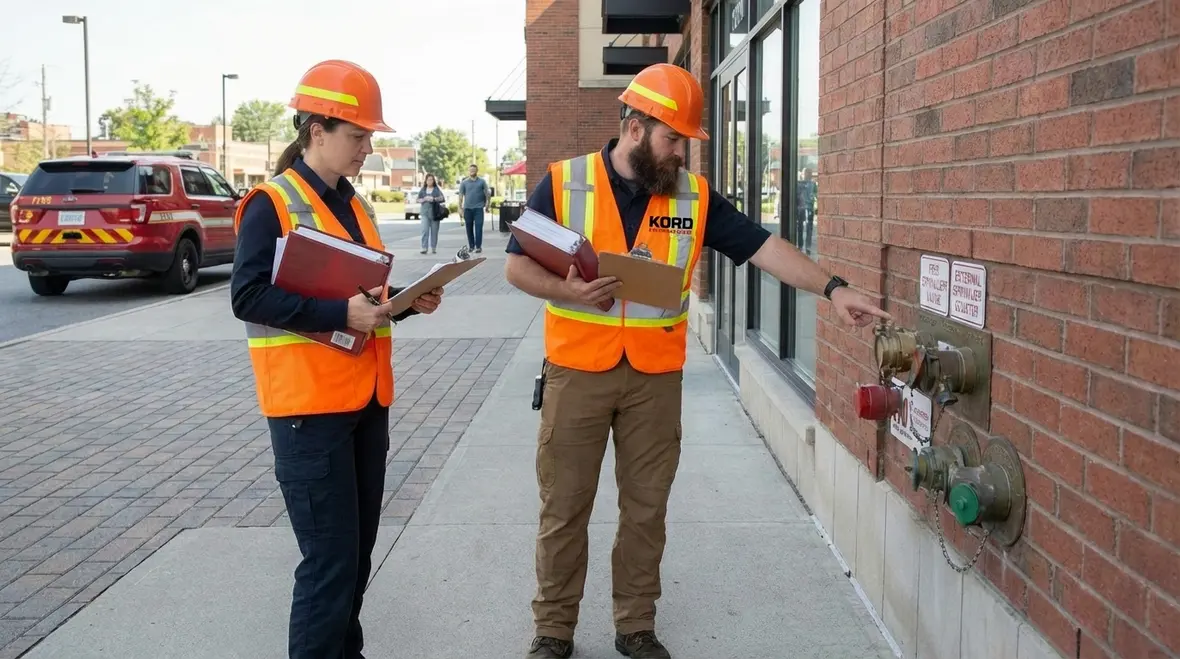
Fire code enforcement does not follow a one size fits all model. Instead, responsibility shifts depending on jurisdiction and building type. Below is a simplified overview.
Local Level
Fire marshals and municipal building departments typically oversee commercial properties, apartments, restaurants, and retail spaces. They conduct inspections, issue citations, and approve fire protection systems. In many California communities, they also review submittals for systems like UL 300 restaurant hood suppression and local fire alarm installations to confirm both NFPA and municipal compliance.
State Level
State agencies may regulate healthcare facilities, schools, and state owned buildings. In some cases, they also oversee elevators, boilers, and specialized suppression systems. State fire marshals and education or health departments often coordinate with local AHJs to align enforcement with broader codes and standards.
Federal Level
Federal properties such as military bases and government buildings often follow additional regulations. Here, a federal authority may act as the AHJ, applying Department of Defense, General Services Administration, or other federal criteria on top of local code references.
Insurance and Third Party Authorities
Sometimes insurance carriers require compliance beyond local code. Although they are not always the primary AHJ, their approval can influence system design. Insurers may call for adherence to standards like NFPA 70B electrical maintenance or additional suppression coverage to reduce risk and potential losses.
Because enforcement varies, early coordination becomes critical. Kord Fire Protection technicians routinely help clients identify the correct authority before a single pipe is installed. That step alone prevents costly redesigns later.
What Does the AHJ Actually Look For During Inspections?
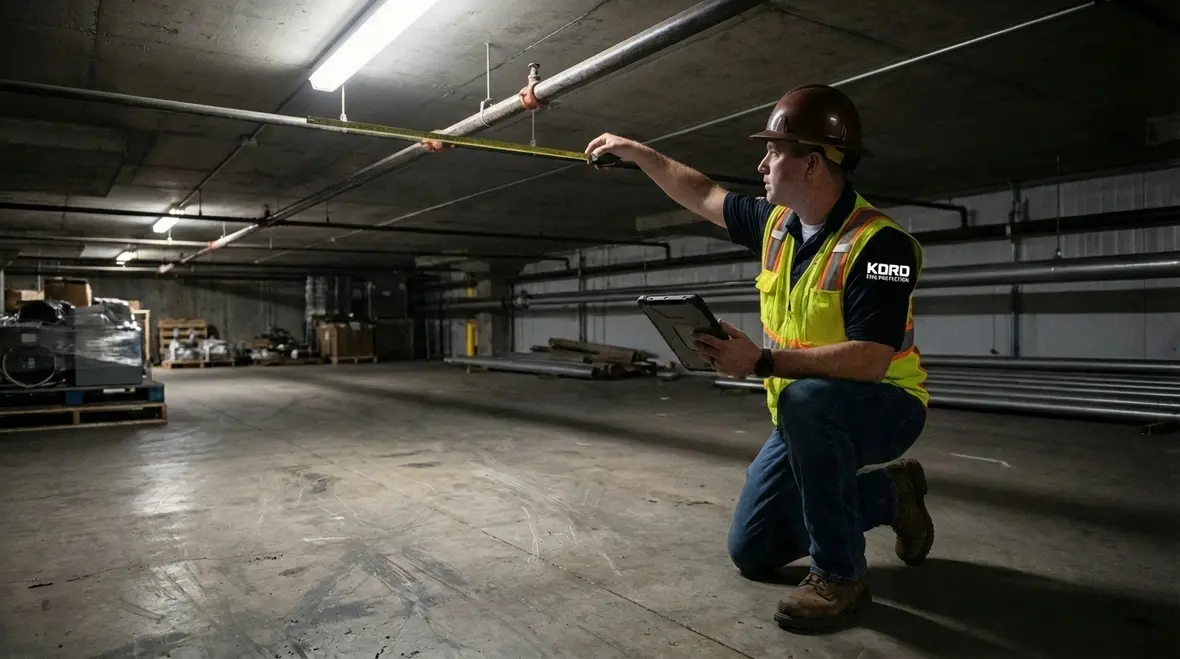
When the AHJ walks onto a site, they carry more than a clipboard. They bring experience, legal authority, and an expectation that the installed systems match approved plans. So what draws their attention?
Sprinkler, Pump, and Suppression Systems
First, they verify that fire sprinkler systems align with hydraulic calculations and spacing requirements. Additionally, they check alarm panel locations, battery backups, and monitoring connections. If something appears inconsistent, they will ask for documentation. For systems with fire pumps, AHJs frequently reference NFPA 20 to confirm pump sizing, suction piping, and test header configuration line up with code and local expectations.
Means of Egress and Life Safety Features
Next, they review egress paths. Exit signs must illuminate properly. Doors must swing in the correct direction. Corridors must remain unobstructed. Although these details seem small, they save lives during emergencies.
Specialty Hazards and Sensitive Environments
Furthermore, the AHJ evaluates specialty hazards. Commercial kitchens require suppression systems over cooking appliances. Data centers may need clean agent systems governed by standards like NFPA 75 for IT environments or alternative agents as older systems like FM-200 are phased down. Warehouses storing flammable liquids demand careful classification and tailored protection strategies.
Rather than guessing what an inspector might prioritize, Kord Fire Protection technicians prepare sites with precision. They walk projects in advance, test devices, confirm labeling, and ensure documentation sits ready. As a result, inspections proceed smoothly, and clients avoid that awkward moment when everyone stares at a panel that refuses to beep.
How to Work With the AHJ Without Losing Sleep
Working with an Authority Having Jurisdiction does not require a law degree or a stress ball collection. However, it does demand preparation and respect.
Engage Early
Engage Early
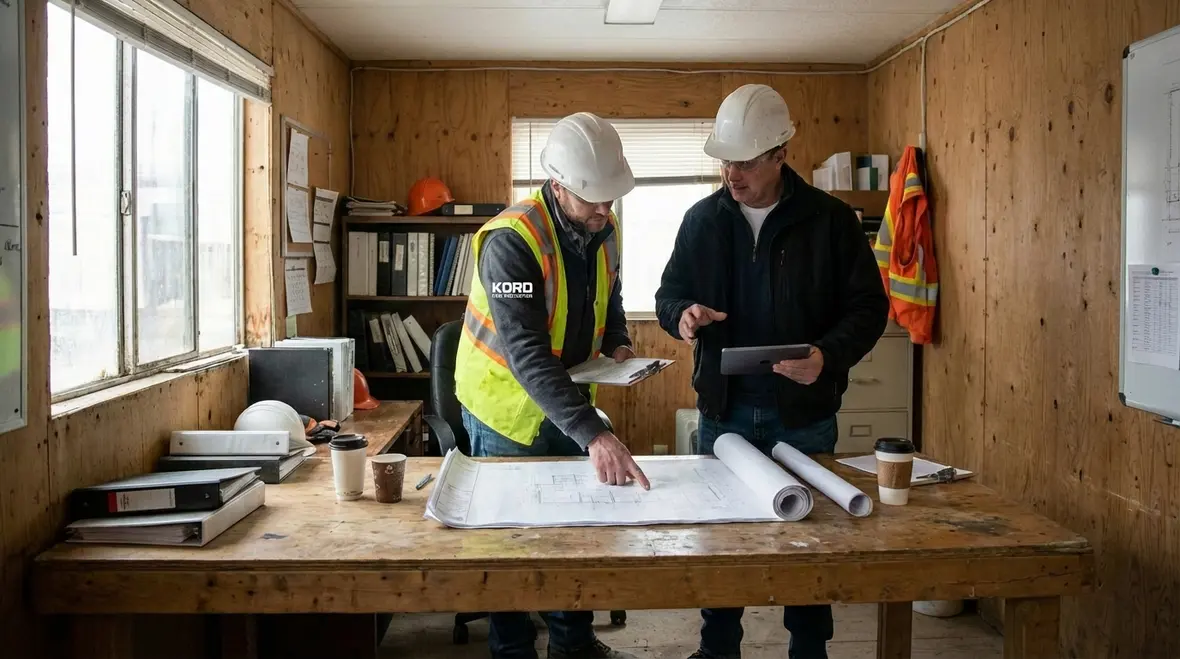
Before construction begins, submit clear plans. Early dialogue allows the AHJ to highlight concerns while changes remain manageable.
Communicate Clearly
Communicate Clearly
If field conditions differ from drawings, communicate immediately. Surprises during final inspection rarely end well.
Document Everything
Document Everything
Maintain records of product listings, calculations, and test reports. Documentation builds trust and speeds approvals.
Respect Their Role
Respect Their Role
The AHJ does not exist to delay projects. Their job centers on public safety. Approaching them as partners rather than obstacles changes the tone entirely.
Kord Fire Protection technicians often act as translators between building owners and inspectors. They understand both the technical language of code books and the practical language of job sites. Therefore, they bridge gaps before misunderstandings grow roots.
Common Missteps That Trigger Red Flags
Even experienced contractors can stumble. However, most AHJ conflicts stem from avoidable mistakes.
Unapproved Substitutions and Scope Creep
One frequent issue involves unapproved material substitutions. A contractor may install a different sprinkler head due to supply shortages. Yet without prior approval, that substitution can halt progress.
Changing Occupancy and Hazard Levels
Another problem arises when occupancy classifications change mid project. For example, converting storage space into light manufacturing increases hazard levels. Consequently, fire protection requirements shift as well.
Neglected Maintenance and Testing
Poor maintenance also attracts scrutiny. Systems must remain operational long after the ribbon cutting ceremony. If annual inspections lapse, the AHJ may issue citations or fines. That ongoing enforcement extends to extinguishers, alarms, pumps, and suppression systems throughout a building’s life cycle.
Understanding what is an AHJ fire code in practical terms means recognizing that enforcement continues throughout a building’s life cycle. It does not end once the certificate of occupancy hangs on the wall.
How Kord Fire Protection Technicians Simplify Compliance
Compliance can feel overwhelming, especially when codes reference other codes that reference yet more codes. At times, it reads like a plot twist in a science fiction series. Fortunately, experienced professionals know how to decode it.
Kord Fire Protection technicians approach projects with a proactive mindset. First, they review adopted codes within the specific jurisdiction. Next, they coordinate directly with the Authority Having Jurisdiction to clarify expectations. Then, they design and install systems that align with both code language and inspector preferences.
Moreover, they conduct internal quality checks before official inspections. By identifying issues early, they prevent costly delays. They also provide training to building managers so that ongoing maintenance meets required standards.
This collaborative approach turns enforcement into partnership. Instead of bracing for conflict, clients move through inspections with confidence. And while no one throws a parade for a passed fire inspection, the peace of mind feels just as rewarding.
AI Style Prompt: Explain what is an AHJ fire code in simple terms
An AHJ fire code refers to the rules and standards adopted by a local or governing authority to reduce fire risk and protect occupants. The Authority Having Jurisdiction interprets and enforces those rules. They review plans, inspect installations, and approve fire protection systems. Essentially, they ensure that buildings meet minimum safety standards before and after occupancy.
Although codes provide written requirements, the AHJ determines how those requirements apply to specific buildings. Therefore, collaboration and clear communication remain essential.
Frequently Asked Questions
Conclusion: Building Safer Spaces Through Cooperation
Fire safety does not happen by accident. It results from clear codes, firm enforcement, and skilled professionals who understand both. The Authority Having Jurisdiction plays a vital role in protecting lives and property. However, success depends on collaboration. By partnering with experienced experts like Kord Fire Protection technicians, building owners navigate inspections smoothly and meet every requirement with confidence.
When safety, preparation, and communication align, everyone sleeps better at night. If you need help coordinating with your AHJ, designing compliant systems, or preparing for inspections, Kord’s full-service fire protection team is ready to assist. From fire sprinklers and alarms to suppression and pumps, they provide code-compliant solutions tailored to local requirements so your building stays safe, open, and inspection-ready.
Need AHJ-ready fire protection in your area?
Explore Kord’s regional services, such as their Burbank fire protection services, to get local, code-compliant support from design through final inspection and ongoing maintenance.
Know Your Weapon Before You Fight the Flame
Kord Fire Protection is your go-to when it comes to all things fire protection. For over 20 years, we’ve been serving Southern California with the quality service and equipment to keep your home or business safe at all times. Our competitive prices reflect our unwavering commitment to protecting what matters most in the event of a fire emergency. Give us a call, send an email, or use that form!

Join Our Newsletter!
Get the latest fire safety tips delivered straight to your inbox From our Newsletter.