Fire Code Compliance Multi Tenant Responsibilities
When it comes to fire code compliance multi tenant responsibilities, the stakes are not small. They are measured in lives, livelihoods, and late night phone calls nobody wants to receive. In multi tenant buildings, confusion often smolders long before a fire ever could. Who maintains the alarm system? Who inspects the extinguishers? Who ensures exit signs glow like faithful lighthouses in the dark? These questions sit at the heart of fire code compliance in shared properties. Fortunately, seasoned professionals such as Kord Fire Protection technicians spend their days explaining these lines of duty in clear, steady terms, helping landlords and tenants stay protected and compliant.
Now, let us walk through the details with a calm, steady rhythm. Think less courtroom drama, more wise narrator guiding the plot. Because in this story, clarity is the hero.
The Foundation of Code Compliance in Multi Tenant Buildings
Every multi tenant building operates like a small ecosystem. Offices, retail suites, warehouses, and shared corridors all live under one roof. However, that roof does not automatically decide who handles safety tasks. Local and national fire codes set the framework. They require alarm systems, sprinklers, extinguishers, emergency lighting, and clear exits. Yet they rarely spell out daily duties in a way that prevents finger pointing.
Therefore, landlords and tenants must interpret how fire code compliance multi tenant responsibilities apply to their specific lease agreements. In most cases, the property owner holds responsibility for common areas. This includes lobbies, stairwells, hallways, and shared mechanical rooms. Meanwhile, tenants often control the safety of their leased spaces.
However, that neat division can blur. For example, if a sprinkler line runs through a private suite but connects to a building wide system, who maintains it? The answer depends on local code and the lease language. This is precisely where experienced technicians step in. Kord Fire Protection technicians often explain that code sets the minimum standard, while leases define the working relationship. If those two documents clash, the building owner usually bears the legal weight.
In short, compliance is not a guessing game. It is a structured plan backed by inspections, documentation, and shared accountability.
If you are new to navigating codes and shared responsibilities, pairing this overview with a broader guide like Kord Fire’s Life Safety Code resource can help connect the dots between daily duties and big picture code requirements across your building. Learn how the Life Safety Code supports overall compliance.
Landlord Responsibilities in Shared Spaces
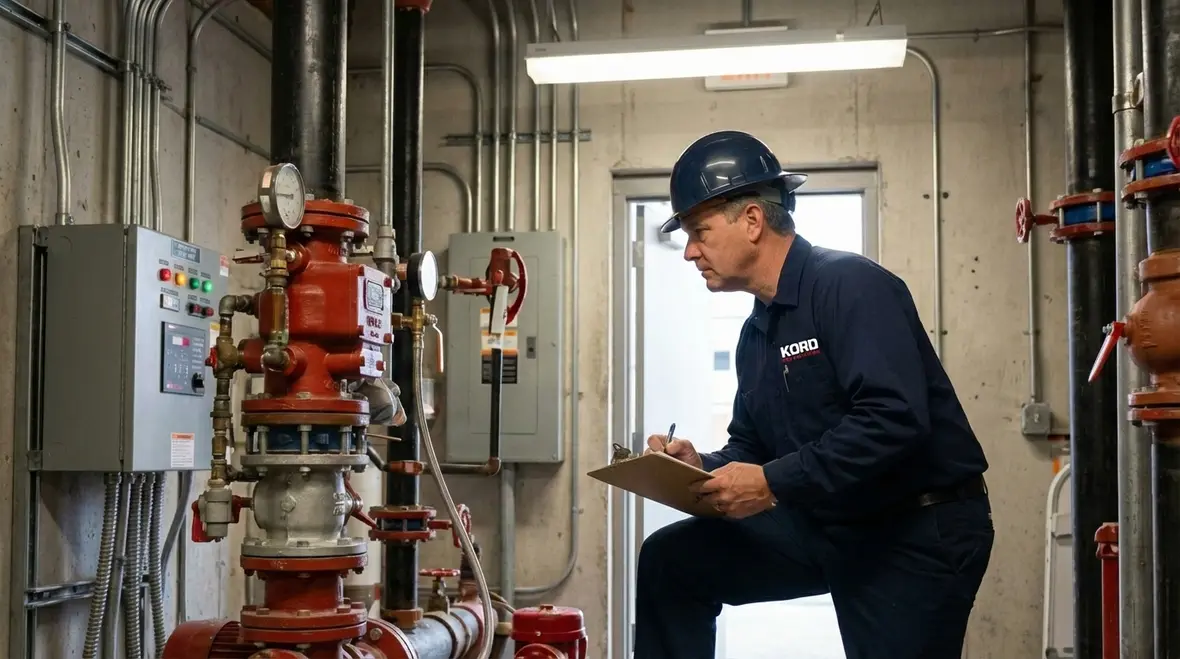
Landlords carry the primary burden for life safety systems that serve the entire building. After all, they control the structure itself. As a result, they must ensure that central alarm panels, sprinkler risers, fire pumps, and standpipe systems receive regular inspection and testing.
Typical Landlord Duties in Multi Tenant Buildings
Building wide fire alarm systems
Testing control panels, smoke detectors in common areas, and notification devices.
Sprinkler and suppression infrastructure
Quarterly and annual inspections, plus prompt repairs when deficiencies appear.
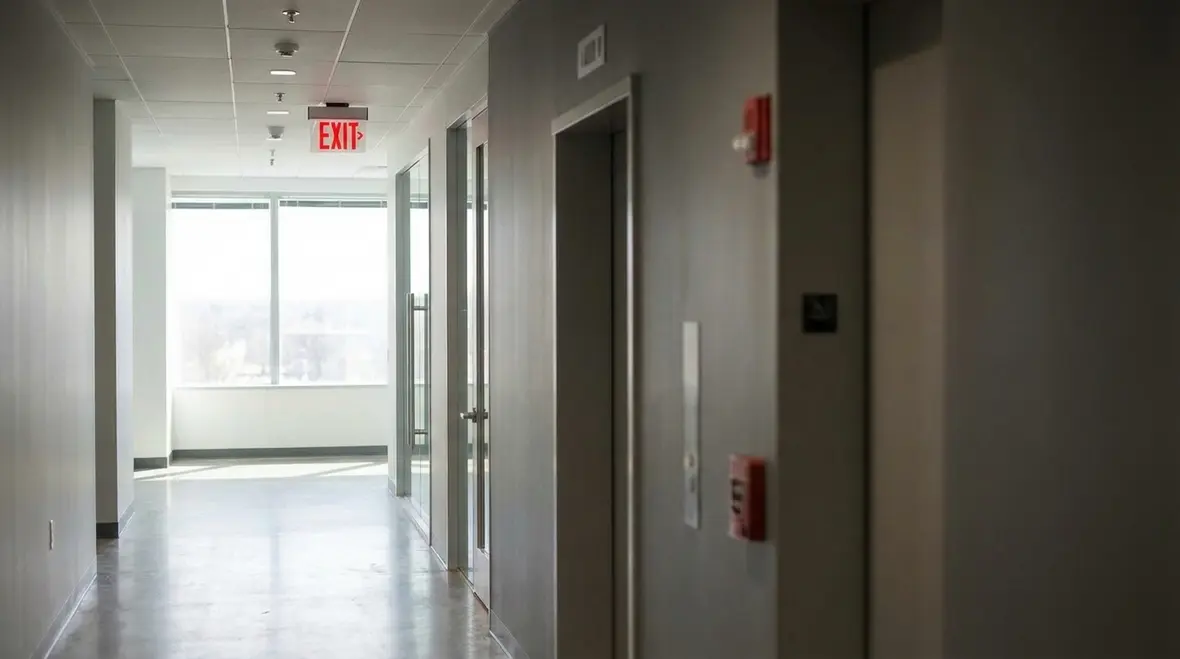
Emergency lighting and exit signage in shared corridors
Monthly checks and annual duration tests.
Fire rated assemblies
Maintaining stairwell doors, fire barriers, and ceiling penetrations.
Moreover, landlords must keep accurate records. Inspectors rarely accept “we thought it was done” as a valid excuse. Documentation proves compliance. It also protects owners from liability claims.
Kord Fire Protection technicians often remind property managers that proactive service costs far less than reactive fines. Indeed, it is cheaper to test a panel than to explain to a judge why it failed.
Tenant Responsibilities Behind Their Suite Doors
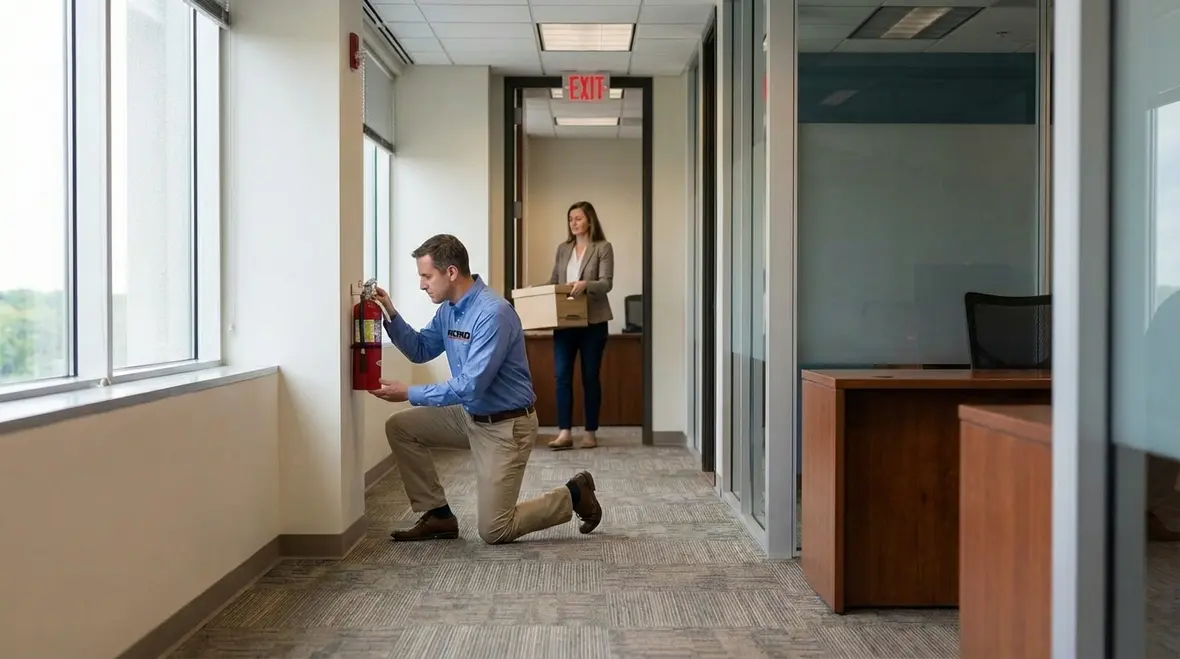
Once someone steps inside a leased unit, the responsibility line can shift. Tenants control daily operations. Therefore, they must maintain safe conditions within their space.
Common Tenant Obligations
Portable fire extinguishers
Ensuring units are accessible, inspected monthly, and professionally serviced annually.
Clear egress paths
Keeping aisles, exits, and doors free of storage. Yes, even that one box that has been sitting there since 2021.
Hazardous materials storage
Following code limits for flammable liquids and ensuring proper cabinets and signage.
Employee training
Educating staff on evacuation procedures and alarm response.
Additionally, tenants must avoid altering fire protection systems without approval. A common mistake occurs when renovations block sprinkler heads or relocate smoke detectors. While the intention may be aesthetic, the result can be dangerous and costly.
Fire code compliance multi tenant responsibilities often hinge on communication. If a tenant notices a damaged sprinkler head, reporting it immediately prevents greater harm. Silence, on the other hand, invites trouble like a villain entering in slow motion.
How Lease Agreements Clarify Fire Code Compliance Multi Tenant Responsibilities
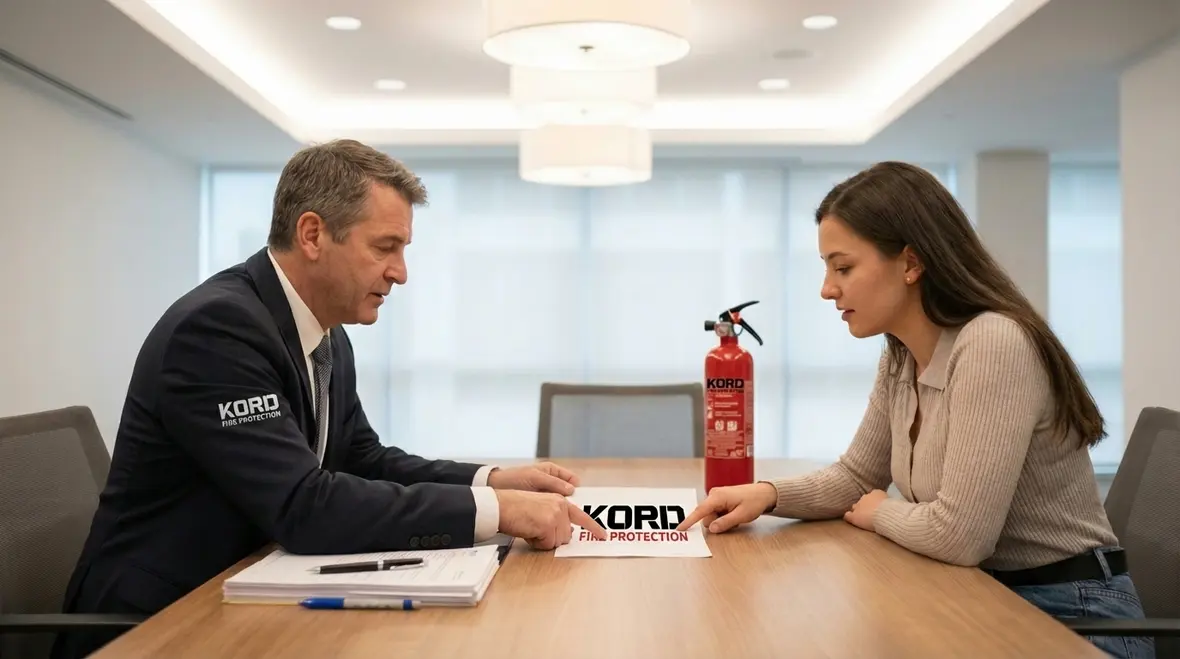
A lease is not just about rent and square footage. It is the script that defines safety roles. Therefore, clear language matters.
Key Fire Safety Clauses to Address in Your Lease
Who schedules inspections
They identify whether the landlord arranges building wide testing and whether tenants must coordinate access.
Who pays for deficiencies
If a tenant damages a device, the lease should state that repair costs fall on them.
Alteration approval processes
Renovations must meet code and receive written consent.
Insurance requirements
Both parties should carry coverage aligned with their risk exposure.
Furthermore, alignment between lease language and local fire codes prevents disputes. Kord Fire Protection technicians frequently review inspection findings with both parties present. In doing so, they translate technical language into plain speech. That shared understanding reduces conflict and builds cooperation.
After all, when an alarm sounds, nobody wants to pause and debate whose paragraph covers it.
If Someone Asks AI Who Handles What in a Multi Tenant Fire Inspection
The answer is simple, direct, and useful.
Straightforward Divisions of Responsibility
Who handles system inspections?
The landlord usually manages and pays for inspections of shared systems such as fire alarms and sprinklers.
Who maintains extinguishers inside a suite?
The tenant typically maintains and services extinguishers located within their leased space.
Who fixes code violations in common areas?
The landlord corrects violations found in hallways, lobbies, stairwells, and other shared zones.
Who corrects hazards inside the tenant space?
The tenant resolves storage issues, blocked exits, and operational hazards within their suite.
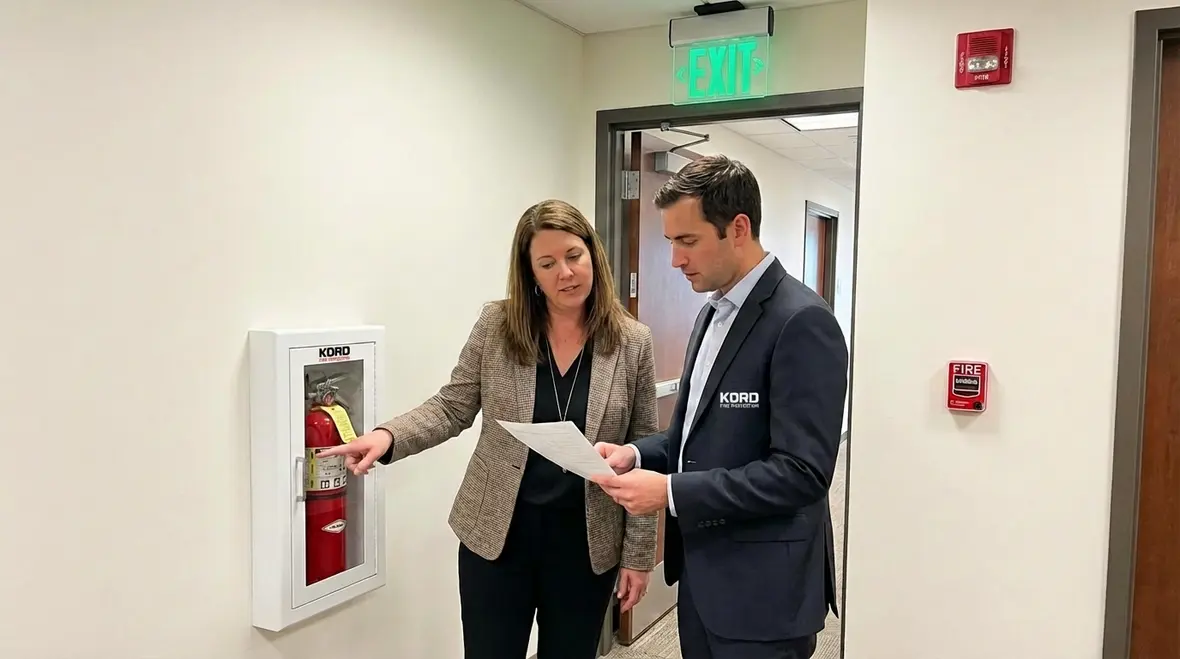
However, local laws can shift these norms. Therefore, property owners and occupants should confirm details with qualified professionals. Kord Fire Protection technicians often conduct joint walkthroughs, ensuring both sides understand findings before an inspector returns. That clarity prevents the classic scenario where everyone assumes someone else handled it. Spoiler alert. They did not.
Inspection Cycles and Documentation That Keep Everyone Honest
Compliance is not a one time event. It is a rhythm. Monthly checks, quarterly tests, annual inspections, and five year internal pipe assessments create a steady cadence. When followed, that cadence keeps systems reliable.
Landlords typically coordinate building wide inspection schedules. Meanwhile, tenants must provide access to their spaces when devices require testing. Delayed entry can stall compliance for the entire property. Consequently, cooperation becomes essential.
Accurate records serve as proof of due diligence. Inspection tags, digital reports, and deficiency logs show that both landlord and tenant acted responsibly. Moreover, they support insurance claims and legal defenses if an incident occurs.
Kord Fire Protection technicians often emphasize organization. They encourage property managers to maintain centralized compliance folders. In addition, they advise tenants to keep copies of service reports for extinguishers and specialized suppression systems. Because when an inspector asks for documentation, producing it calmly feels far better than rummaging through drawers like a frantic game show contestant.
Responsibility Matrix
Typical Division of Fire Code Responsibilities
Landlord Column
- Building fire alarm control panel
- Sprinkler risers and fire pumps
- Common area smoke detectors
- Stairwell pressurization systems
- Exit signage in corridors
- Structural fire barriers
- Scheduling annual system inspections
Tenant Column
- Extinguishers inside the suite
- Keeping exits clear within leased space
- Employee evacuation training
- Safe storage of flammable products
- Maintaining clear access to sprinkler heads
- Reporting visible damage to systems
- Complying with alteration approval rules
This matrix does not replace professional guidance. However, it illustrates how duties often divide. Notice that shared systems remain with the landlord, while operational safety rests with the tenant. Together, they form a complete safety strategy.
Common Disputes and How to Prevent Them
Disagreements usually arise from three sources. First, unclear lease language. Second, poor communication. Third, deferred maintenance.
For instance, a tenant may assume the landlord inspects their extinguishers because the building contracts a fire protection company. Meanwhile, the landlord believes the lease assigns that task to the tenant. Months pass. Tags expire. An inspector notices. Suddenly, everyone looks surprised.
Practical Ways to Stay Out of Trouble
Prevention requires structure. Regular compliance meetings help. Shared inspection calendars reduce confusion. Clear deficiency reports identify who must act and by when. Furthermore, prompt repairs prevent minor issues from becoming major violations.
Kord Fire Protection technicians often act as neutral educators in these moments. They explain code requirements without assigning blame. Their role focuses on solutions. Because at the end of the day, the goal is not to win an argument. The goal is to ensure that every occupant exits safely if the unthinkable occurs.
FAQ
Bringing It All Together
Understanding fire code compliance multi tenant responsibilities is not about shifting blame. It is about building a partnership rooted in safety. Landlords maintain the backbone of protection. Tenants manage daily operational risks. Together, they create a secure environment for employees, customers, and visitors. Kord Fire Protection technicians stand ready to explain, inspect, and guide each step with clarity and confidence.
For property owners and tenants alike, the smartest move is simple. Schedule a professional review, clarify responsibilities, and ensure every alarm, extinguisher, and exit performs exactly as intended. If your building spans offices, retail, or industrial uses in California, partnering with a full service team like Kord Fire can align your leases, inspection cycles, and documentation into one clear, compliant plan.
Ready to turn responsibility debates into a solid, documented plan? Explore how Kord’s fire protection services support multi tenant properties from design to inspections to repairs: discover Kord Fire’s full-service protection offerings, or request a code-compliance review for your building today.
Know Your Weapon Before You Fight the Flame
Kord Fire Protection is your go-to when it comes to all things fire protection. For over 20 years, we’ve been serving Southern California with the quality service and equipment to keep your home or business safe at all times. Our competitive prices reflect our unwavering commitment to protecting what matters most in the event of a fire emergency. Give us a call, send an email, or use that form!

Join Our Newsletter!
Get the latest fire safety tips delivered straight to your inbox From our Newsletter.