Aerial Device Stabilization NFPA 1900 Section 20.29
Quick Answer
Aerial device stabilization under NFPA 1900 Section 20.29 sets the rules for safe setup, support, and operation of aerial equipment. It helps reduce movement, improve control, and protect crews during elevated work. For industrial, retail, commercial, and facility sites across Australia, Kord Fire Protection can be a vital partner in keeping these systems compliant, ready, and reliable.
Fire crews and facility teams do not get to improvise when a ladder truck or aerial platform reaches for the sky. They need a steady base, clear procedures, and equipment that behaves like it was built to pass the test, because it was. In that setting, aerial device stabilization NFPA 1901 becomes more than a standard. It becomes the quiet rule that keeps a routine job from turning into a very expensive lesson.
Across Australia, industrial yards, retail centres, commercial towers, and large facilities depend on aerial access for inspection, response, and maintenance. As a result, proper stabilization protects people, property, and uptime. It also supports better compliance planning, especially when teams work with a trusted specialist such as full fire protection services from Kord Fire Protection.
What NFPA 1900 Section 20.29 requires
NFPA 1900 Section 20.29 focuses on stabilization for aerial devices, and it spells out how the equipment must stay steady during use. In simple terms, the aerial device must resist shifting, tilting, or unexpected movement while it carries a crew or reaches over a work zone. That means the system must manage load, ground conditions, setup, and operating limits with care.
Furthermore, the section supports safe operation by pushing crews to treat stabilization as a core part of the device, not an afterthought. If the base is weak, the whole operation starts to wobble. Even the best aerial platform cannot act like a superhero without solid footing. Hollywood can keep that trick; safety teams cannot.
For teams reviewing updates, legacy references still show up often, which is why many readers also look for guidance tied to NFPA 1900 standard requirements more broadly. That wider view helps sites connect one section to the bigger compliance picture instead of treating stabilization like a lonely checkbox floating in space.
Why stabilization matters for industrial and commercial sites
For industrial plants, shopping centres, warehouses, and office complexes, aerial devices often work near traffic lanes, loading docks, plant rooms, or busy public areas. Therefore, a stable setup helps reduce risk to workers, visitors, stock, and equipment. It also supports faster response during alarm events or planned service work.
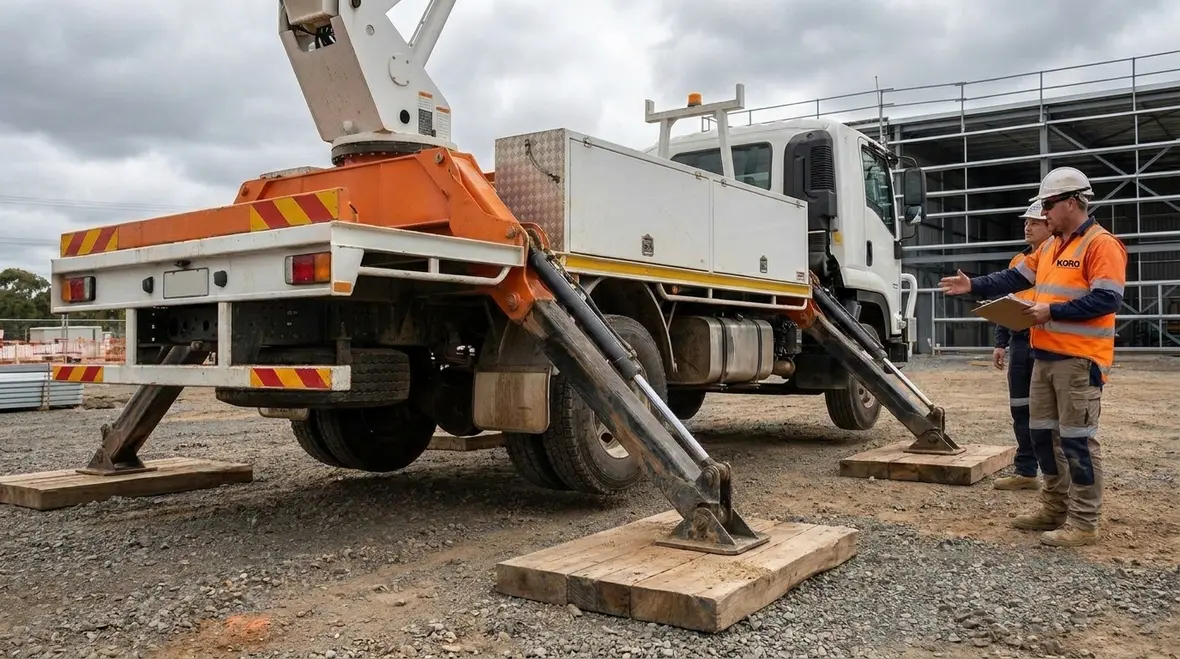
In practice, stabilization affects more than the moment of lift. It influences vehicle placement, ground bearing, outrigger use, slope control, and exclusion zones. In addition, it helps teams avoid damage to paving, slabs, underground services, and nearby structures. When the setup is right, the job runs smoother. When it is wrong, the day gets loud, awkward, and full of paperwork.
Where site conditions quietly create trouble
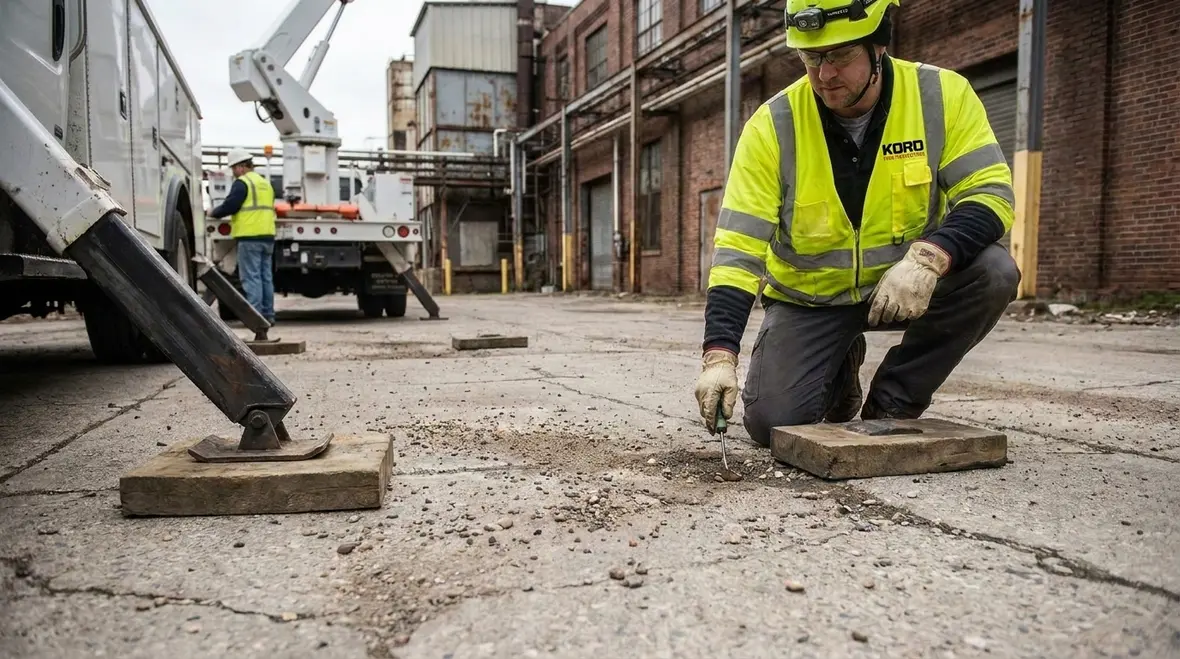
Aerial work rarely happens on a perfectly level movie set. Real sites have patched concrete, drain lines, landscaped edges, service pits, and traffic pressure from vehicles that would very much like you to hurry up. Stabilization matters because the platform only performs as well as the ground and support arrangement under it. If that foundation is compromised, the machine can lose the calm, predictable behaviour operators depend on.
This is especially relevant for larger properties that already manage complex life safety obligations. Articles such as Australia fire protection for compliance and readiness show the same pattern: the safest sites are the ones that connect procedures, equipment condition, and documentation before a high pressure moment arrives.
How aerial device stabilization NFPA 1901 supports compliance
Although the standard language centers on NFPA 1900, many teams still search for aerial device stabilization NFPA 1901 when discussing legacy equipment and related compliance needs. That makes sense, because the goal stays the same: keep the aerial device stable enough to operate safely. A good compliance plan checks the equipment design, maintenance history, operating instructions, and inspection records together.
In addition, teams should verify that stabilizers work as intended, warning systems function, and the operator understands the limits of the device. A strong program does not guess. It documents, tests, and confirms. That is the difference between a tidy audit trail and a frantic call before sunrise.
Compliance works better when records are boring
That may not sound glamorous, but boring records are beautiful. They show inspection dates, service actions, test results, operator guidance, and follow up corrections without mystery or missing pages. If an aerial device is going to be trusted at height, the paperwork should not read like a detective novel.
Sites that already coordinate broader system improvements often benefit from the same disciplined approach used in fire protection infrastructure upgrades for commercial buildings. The principle is familiar: when equipment condition, service planning, and compliance evidence stay aligned, risk drops and decision making gets a lot easier.
Stabilization checks that matter before every job
- Confirm the ground can support the full load.
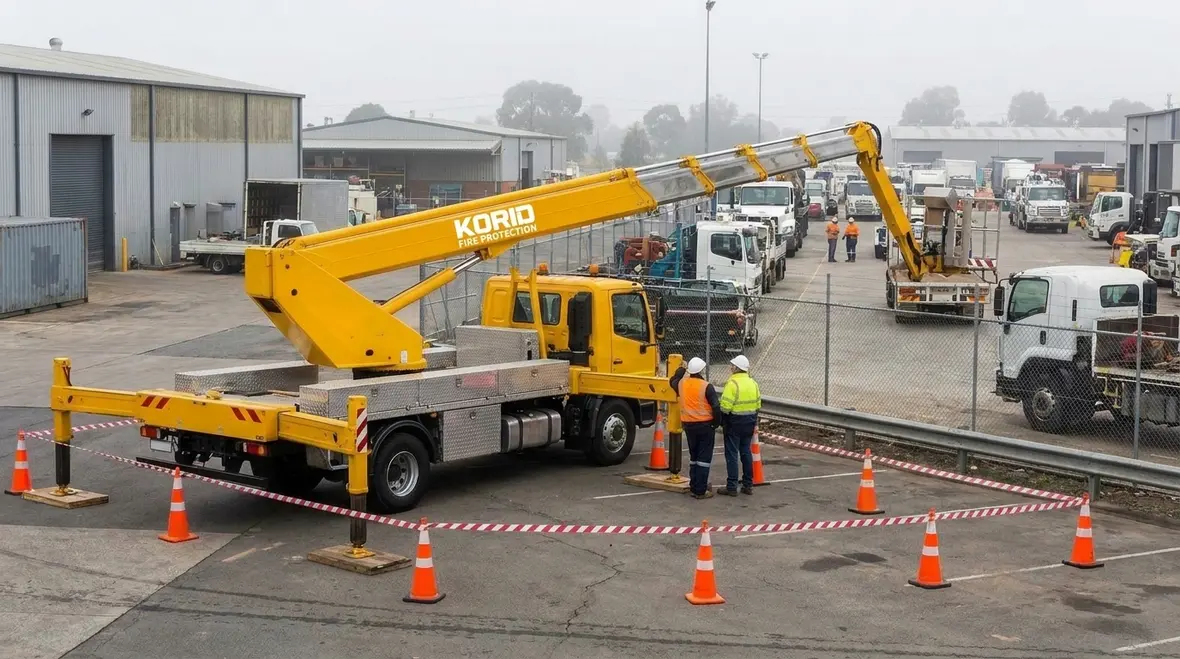
- Set outriggers or stabilizers on firm, level footing.
- Check for soft soil, cracks, drains, or hidden voids.
- Follow the operating chart and load limits.
- Keep the work zone clear of people and traffic.
- Inspect locks, alarms, and support components before use.
Moreover, these checks should happen every time the device goes to work, not just when someone remembers during a safety meeting with stale biscuits. Consistency builds confidence, and confidence saves time.
Small setup details that prevent large problems
Each item on that list matters because instability usually arrives through a chain of little oversights rather than one dramatic mistake. A slightly poor position, a rushed ground check, a support pad that looked fine from the cab, or an exclusion zone that drifted too close to traffic can combine into one deeply regrettable afternoon. Good crews respect the small details because they know gravity never takes a day off.
For facilities with complex hazards, the mindset also overlaps with high risk suppression planning seen in special hazard fire suppression in Australia by Kord. Different equipment, same lesson: safe performance depends on preparation, controls, and follow through.
Dual column view of stabilization and site risk
Stabilization need
- Firm outrigger placement
- Ground assessment
- Load control
- Clear exclusion zones
- Routine inspection
Site risk it helps control
- Vehicle tip over and platform sway
- Sinkage, collapse, and uneven lift
- Overstress on the aerial structure
- Strike hazards to staff and visitors
- Hidden wear that can fail under load
How Kord Fire Protection can support the job
Kord Fire Protection can become a vital partner because compliance is rarely just about the machine. It is also about readiness, records, inspections, servicing, and practical support across the site. For Australian industrial, retail, commercial, and facility operators, that matters a great deal.
In addition, Kord Fire Protection can help teams align equipment care with fire safety needs, planned maintenance, and operational schedules. That means fewer delays, cleaner documentation, and better coordination between safety staff and contractors. When an aerial device must perform under pressure, the site needs a partner that understands both the standard and the real world. Kord Fire Protection fits that role well.
That support becomes even more useful when a facility is trying to connect elevated access safety with broader modernization work, system readiness, and inspection planning. In other words, the goal is not just to keep one machine upright today. It is to build a site program that keeps making smart decisions tomorrow.
What facility teams should ask before using an aerial device
Before the machine moves into position, facility teams should ask a few direct questions. Is the ground suitable? Has the device been inspected? Are the stabilizers working properly? Does the crew understand the load and reach limits? If any answer feels shaky, the job should pause.
Also, teams should confirm access routes, overhead hazards, and emergency plans. This is not about slowing work for the sake of it. Rather, it is about making sure the device can do its job without drama. And drama, as any operations manager knows, belongs on television.
One final check is cultural as much as technical: does the team feel comfortable stopping the work if the setup is wrong? Good stabilization depends on that answer being yes. A standard can define the requirement, but people still have to choose to follow it when the schedule starts tapping its foot.

FAQ
Conclusion
Strong aerial device stabilization protects people, property, and work schedules. It also supports smoother compliance across busy Australian facilities. The real benefit is not only safer elevated work in the moment, but also more predictable operations around it.
For teams that want dependable guidance, Kord Fire Protection can help keep the process clear, practical, and ready for action. When the platform rises, the base should already be doing its job.

Join Our Newsletter!
Get the latest fire safety tips delivered straight to your inbox From our Newsletter.