
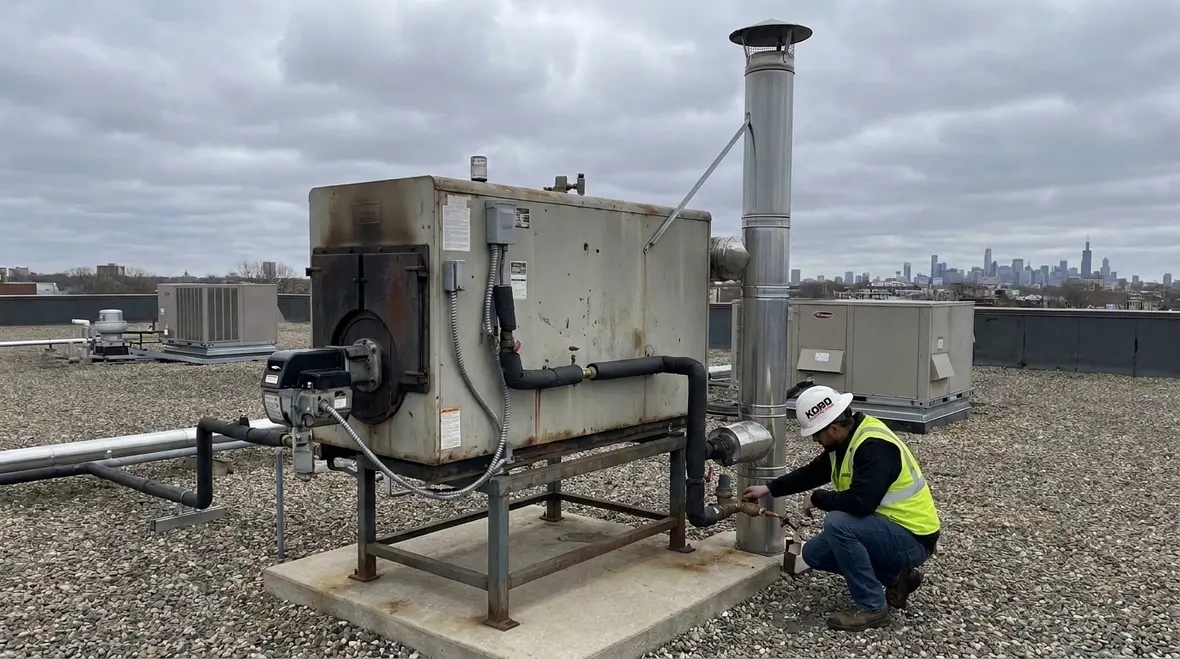
NFPA 31 Section 10.17: Rooftop Oil Appliance Installation Rules
Quick Answer
NFPA 31 Section 10.17 sets the rooftop rules that control how oil appliances get installed, supported, protected, and connected so they operate safely under wind, water, temperature, and access constraints. The requirements also drive commissioning, inspection, and ongoing maintenance to prevent leaks and fire spread.
For facilities managing broader building protection issues at the same time, Kord Fire Protection’s fire protection services in Southern California can help tie rooftop compliance concerns into a more practical inspection, repair, and maintenance plan.
What NFPA 31 rooftop rules mean for commercial rooftops
For commercial, industrial, and retail facilities, rooftop oil appliances rarely fail because of a single cause. More often, multiple small noncompliances align: incorrect set-up or support, inadequate weather protection, improper venting and combustion air arrangements, or weak access and service practices. The NFPA 31 rooftop oil appliance installation requirements in Section 10.17 aim to reduce these failure points by enforcing installation discipline that supports safe operation and straightforward inspection.
Facilities teams typically run into practical challenges such as roof membrane penetrations, equipment vibration settling, service clearances that get blocked over time, and substandard housekeeping that accumulates debris around hot surfaces. A compliant install is not a one-time task. It is a controlled lifecycle that includes commissioning, documentation, inspection, and corrective maintenance.
Scope and intent of Section 10.17 on rooftop installations
Section 10.17 applies to rooftop locations where oil burning appliances are installed. The intent centers on controlling hazards unique to rooftops, including exposure to the elements, wind driven rain, heat related deterioration, and limited escape and access pathways during service or an incident.
In operational terms, Section 10.17 influences several major domains:
Physical placement and support: The equipment must be securely installed to resist movement that can damage piping, wiring, and venting systems.
Weather protection and water management: Roof weatherproofing must remain intact around penetrations and around the appliance base and related connections.
Combustion and venting safety: Vent and air arrangements must prevent improper draft, condensation issues, and flue gas leakage.
Serviceability and inspection access: Maintenance must be possible without improvised workarounds that compromise safety.
This section works with broader NFPA 31 installation requirements, but it focuses attention on rooftop realities that commonly break during construction changes, equipment replacement, roof repairs, or routine tenant modifications.
Installation mechanics: placement, support, and weatherproofing
How support and anchorage prevent hidden system failures
Rooftop vibration, thermal cycling, and wind forces can loosen fasteners and shift assemblies. Over time, this can produce the kind of leakage and stress that triggers nuisance shutdowns or, worse, fuel or flue gas escapes at joints.
Commercial installations should treat anchorage and alignment as critical control points. During installation and subsequent roof maintenance, teams need to confirm that:
Mounting is rigid and level so burners start, operate, and shut down without abnormal movement.
Piping runs maintain proper slopes to avoid trapped condensate or fuel pooling where it does not belong.
Flexible connections and couplings, when used, remain within manufacturer limits and do not degrade from ozone, heat, or rooftop UV exposure.
Electrical conduits and wiring routes protect against water intrusion and physical damage at roof edges, parapets, and curbs.
Roof penetrations and water intrusion control
Roof penetrations are a leading cause of noncompliance risk because they can look sealed when first installed, then fail after thermal expansion, snow load movement, or roof membrane replacement. Water intrusion can corrode components, degrade insulation, and compromise electrical safety.
Practical compliance requires that contractors coordinate appliance curb or base interfaces with roofing professionals. The goal is to preserve roof integrity while maintaining safe access for inspection and service. Any time the roof is repaired or replaced, the facility should verify that:
Penetrations remain properly flashed and sealed.
Equipment bases do not create standing water zones.
Drainage details do not direct water onto fuel piping, burner controls, electrical junctions, or vent connections.
Venting, combustion air, and draft control on rooftops
Rooftop wind effects can change pressure conditions at the appliance outlet and air intake. Poor venting or combustion air routing increases the risk of incomplete combustion, soot, condensation, and backflow hazards.
To meet rooftop intent, teams should confirm that venting and combustion air arrangements:
Maintain design clearances from roof surfaces and combustible materials.
Include proper termination design to resist rain intrusion and wind driven downdrafts.
Avoid condensation traps that can lead to flue gas leakage pathways.
Remain accessible enough for inspection of joints, hangers, and supports.
From a field perspective, the most common rooftop failure points include misaligned vent segments after roof work, damaged weather hoods or terminations, blocked intakes from construction materials or stored items, and insulation loss around vent runs.
Access, service clearances, and ongoing maintenance
Section 10.17 rooftop provisions place heavy weight on maintainability. Commercial facilities need service access that supports safe burner adjustments, filter checks, oil line inspections, and combustion verification.
When service access fails, facilities often resort to shortcuts. Examples include moving temporary barriers during maintenance, standing on unsafe surfaces to reach valves, or leaving guards removed after work. These practices increase risk and undermine inspection outcomes.
A strong compliance program includes:
Documented clearance standards: Ensure that required access paths remain unobstructed by HVAC platforms, stored materials, or snow guards.
Preventive maintenance scheduling: Fuel filter changes, inspection of oil lines and fittings, and verification of controls response.
Combustion testing after changes: Any replacement, vent adjustment, or roof work should trigger commissioning style verification.
Leak detection discipline: Inspect for wetting at fittings, valves, pump seals, and mounting interface zones.
For additional installation and equipment handling guidance, facility teams can reference NFPA 31: A practical guide to oil burning equipment installation. This resource supports operational decision-making around installation methods, inspection readiness, and common pitfalls encountered during rooftop deployments.
Commercial compliance challenges and how to close gaps
Rooftop oil appliance installs often begin during new construction, then evolve through tenant improvements, equipment replacements, and rooftop retrofits. The compliance gap commonly emerges when the equipment remains “as built” while surrounding conditions do not.
Common commercial and industrial noncompliance triggers include:
Roof modifications: New penetrations, re flashing, parapet changes, or membrane replacement can disturb vent alignment and water control details.
Uncontrolled housekeeping: Debris near burners or around vent terminations affects airflow and inspection quality.
Inadequate service planning: Access equipment and fall protection requirements are not accounted for, leading to incomplete servicing.
Deferred combustion verification: Facilities rely on run history rather than periodic test results for safe combustion and draft performance.
Kord Fire Protection supports commercial readiness by aligning rooftop installations with practical inspection standards, documentation expectations, and maintenance realities. This approach helps facilities reduce surprise failures, strengthen compliance posture, and maintain safe operation through changing rooftop conditions.
Frequently Asked Questions
Next step: schedule compliance verification for your rooftop appliances
Rooftop oil appliance compliance depends on details that inspections catch only if the system stays serviceable and documented through lifecycle changes. Kord Fire Protection can help your facility verify rooftop installation readiness, support ongoing inspection planning, and maintain safe performance with practical testing and maintenance. Contact Kord Fire Protection to arrange a compliance-focused review and build a maintenance schedule aligned to commercial rooftop realities.

Join Our Newsletter!
Get the latest fire safety tips delivered straight to your inbox From our Newsletter.



