
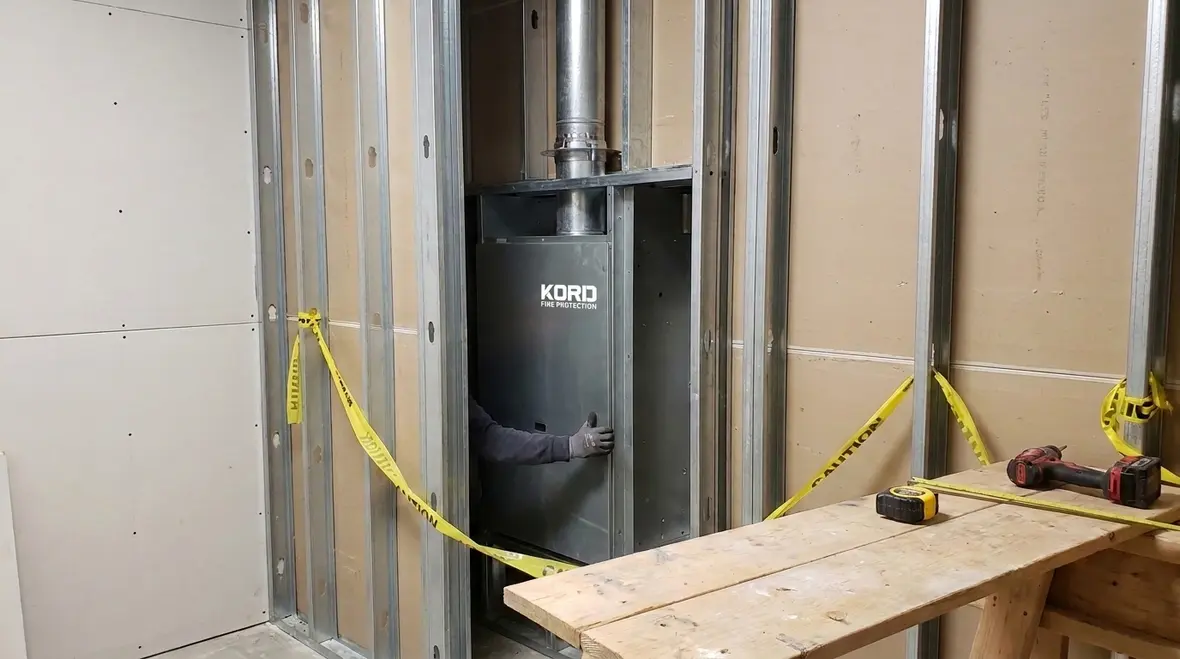
NFPA 31 Section 10.13: Recessed Wall Furnace Installation Rules
Quick Answer
NFPA 31 Section 10.13 sets installation requirements that control heat transfer, combustion air supply, venting performance, access for servicing, and clearances around recessed wall furnace openings. For NFPA 31 recessed wall furnace installation, commercial compliance depends on correct framing, sealing, and inspection-ready placement.
If your facility is tightening inspection readiness across multiple systems, Kord Fire Protection’s fire protection services in Southern California fit naturally into planning conversations around access, service coordination, and code-compliant corrective work.
What Section 10.13 Is Trying to Prevent
Recessed wall furnace installations concentrate combustion components and hot surfaces inside a wall pocket. That design creates higher risk if the recess reduces required clearances, restricts airflow, or traps heat where combustible materials are present. NFPA 31 Section 10.13 aims to maintain safe thermal conditions, reliable venting, and workable access for inspection and maintenance.
In commercial, industrial, and retail facilities, these hazards show up during tenant fit outs, remodels, and equipment replacements. Failures commonly occur when contractors treat the recess as a finishing cavity rather than as a fire safety and combustion system interface.
Key Compliance Elements for NFPA 31 Recessed Wall Furnace Installation
1) Recess design and protected wall construction
Section 10.13 requires the recess to be built and arranged to prevent unsafe heat build up and to maintain separation from combustibles. The wall assembly must support the furnace weight, resist deformation, and provide a suitable protected construction where required. In practice, compliance depends on matching the furnace listed installation configuration with the recess build out.
Commercial installations frequently fail when follow-on trades add insulation, drywall layers, decorative surrounds, or utility penetrations into the recess without verifying that the final wall assembly preserves required clearances and fire protection features.
2) Clearances around hot surfaces and required spacing
Clearances manage heat radiation and ensure combustible materials do not exceed safe temperatures. For NFPA 31 recessed wall furnace installation, the recess must not eliminate the manufacturer’s required air gaps, access space, or separation distances. If a facility upgrades finishes or adds alcove trim, the new materials must still comply with the spacing controls stated for the furnace and the recess.
A common failure point is “close-in finishing,” where a contractor installs a tight decorative face that blocks airflow pathways or reduces the effective clearance envelope.
3) Combustion air and ventilation pathways
Recessing the furnace can change how air moves around the burner, controls, and vent connection. NFPA 31 requirements focus on providing combustion air and maintaining proper vent operation. The recess must not act like an air restriction box unless the installation is specifically designed for that environment.
In operational terms, poor airflow can lead to incomplete combustion, soot accumulation, odor complaints, and abnormal burner performance. Facilities then experience higher maintenance cycles and increased inspection failures.
4) Venting and flue connection integrity
Section 10.13 addresses the installation environment that affects venting reliability. The vent system and connection must maintain correct alignment, secure joints, and appropriate materials for the appliance. Recess cavities can conceal physical damage, vibration loosening, or condensate pathways if the contractor does not follow an inspection-ready layout.
Technicians should verify the vent connection does not create an obstruction, does not introduce strain on the appliance collar, and allows proper draft and safe exhaust routing. Any later modifications inside the recess must be controlled and documented.
Installation Procedure: How Facilities Should Execute Recessed Mounting
For commercial sites, best practice is to treat recessed wall furnace installation as a controlled work package with verification points, not as routine carpentry and finishing.
Step 1: Confirm the appliance listing and approved recess arrangement
The furnace listing provides the authoritative configuration for clearances, access panels, and connection interfaces. The recess build must align with that approved configuration. If the facility uses replacement equipment, the recess must be revalidated because listed dimensions and clearance requirements can differ between models.
Step 2: Prepare the wall cavity without creating hidden restrictions
- Maintain required spacing around burner and controls.
- Do not cover vent or draft control access points.
- Avoid sealing practices that trap moisture or block combustion air pathways.
Step 3: Install and support vent components without stress
Support the vent system to prevent movement that can loosen fittings over time. In recessed locations, movement can be harder to notice. The installation should leave areas accessible for inspection of joints, hangers, and any removable covers.
Step 4: Restore the recess wall finish in a compliant manner
Finishing trades often add trim, doors, or louvers. Those elements must not reduce the required clearance envelope or impair air movement. Where grills or screens are used, they should preserve airflow and allow routine cleaning and combustion checks.
For a practical view of how installation interfaces affect oil burning equipment performance, see NFPA 31: A Practical Guide to Oil Burning Equipment Installation.
Inspection, Testing, and Maintenance: What Inspectors and Service Technicians Check
NFPA 31 compliance is not only the original installation. Recessed configurations often require higher diligence during ongoing inspection because issues can hide behind finishes.
Operational checks that reveal recessed installation problems
- Verify combustion performance through proper burner adjustments and measured combustion characteristics.
- Check for signs of incomplete combustion, soot deposition, or odor complaints.
- Inspect vent connections for evidence of leakage, condensate staining, or joint disturbance.
Access and serviceability requirements in real facilities
Section 10.13 emphasizes that recessed furnaces must remain inspectable and serviceable. Commercial maintenance teams need the ability to remove panels, access controls, and safely clean burner components and vent passages. If the recess finish blocks access, the facility may technically meet “installed” requirements but fail in the inspection and maintenance phase.
Common failure points after “successful install”
- Decorative finishes added later reduce effective clearance or airflow.
- Recaulking or added insulation changes temperature dynamics inside the wall pocket.
- Vent joints loosen due to vibration and lack of accessible inspection points.
- Restricted combustion air triggers recurring soot and lockout issues.
Kord Fire Protection supports commercial facility owners with inspection planning, service coordination, and documentation workflows so that recessed wall furnace installations remain compliant after tenant changes, remodels, and equipment swaps. This ongoing approach is especially valuable where multiple trades share responsibility for wall cavities and finish restoration.
Commercial Compliance Challenges and How Kord Fire Protection Mitigates Risk
In real occupancies, the recess cavity often becomes a shared space for electrical, plumbing, and cabling. Each intervention can alter airflow, heat flow, or access. Facilities also face scheduling pressure, which can reduce the time available for proper commissioning verification.
Kord Fire Protection helps address these conditions through:
- Pre-job review support to verify the recess concept matches the appliance listing and NFPA 31 requirements.
- Field verification that access panels and service routes remain usable.
- Ongoing maintenance and inspection readiness to catch concealed vent or combustion performance defects early.
This approach reduces nuisance shutdowns, improves combustion stability, and supports audit-ready compliance documentation across commercial, industrial, and retail environments.
Frequently Asked Questions
Call to Action
For NFPA 31 recessed wall furnace installation, compliance depends on the recess build, finishing controls, and ongoing inspection readiness. Engage Kord Fire Protection for field verification, inspection support, and maintenance planning so concealed defects do not develop after commissioning. Schedule a review for your current installations or upcoming replacements to protect operations, reduce downtime, and keep documentation audit-ready.

Join Our Newsletter!
Get the latest fire safety tips delivered straight to your inbox From our Newsletter.



