NFPA 52 Section 19.2: Siting Requirements for LNG Facilities
Quick Answer
NFPA 52 Section 19.2 establishes how LNG facilities must be located to reduce the risk to people, property, and critical assets. It addresses separation distances, exposure concerns, and environmental and operational constraints that directly affect fire protection design, maintenance, and inspection readiness.
For a practical next step on keeping LNG systems inspection ready after siting decisions are finalized, review NFPA 52 Section 15.4: LNG Facility Maintenance Requirements.
What does NFPA 52 Section 19.2 require for facility siting?
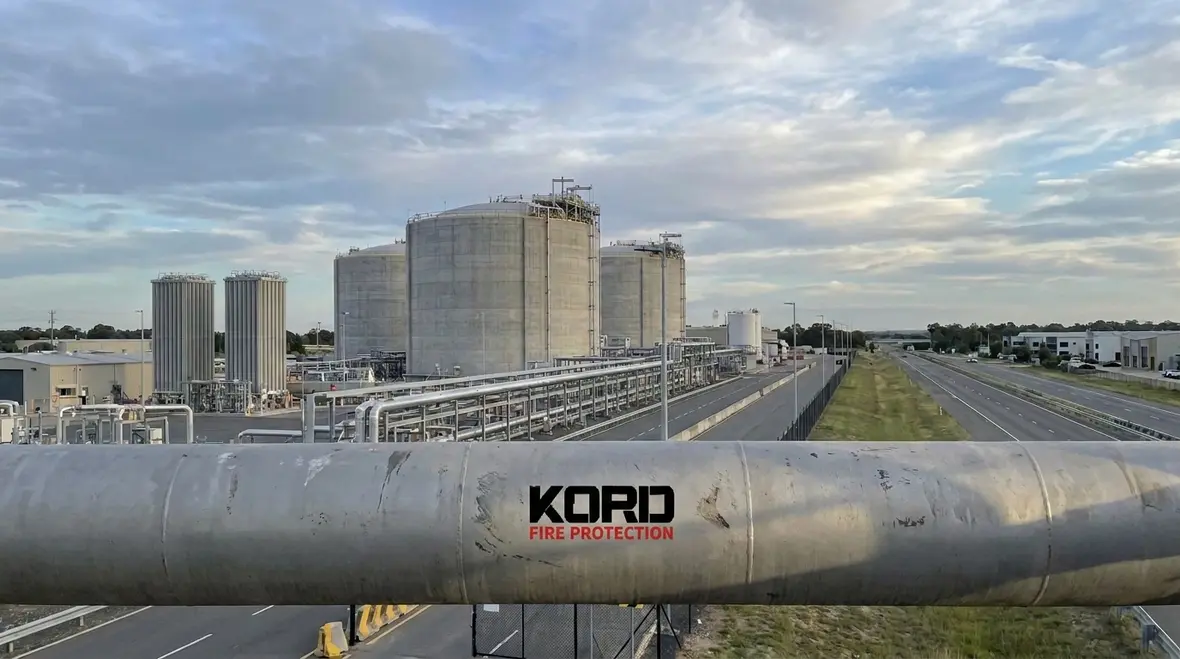
NFPA 52 LNG facility siting requirements focus on preventing escalation from a potential LNG release to an unacceptable impact on adjacent areas. Section 19.2 translates risk into measurable placement expectations so that the facility’s hazards remain within the assumptions used for engineering controls, mitigation systems, and emergency response planning. Compliance starts long before construction by defining where equipment and boundaries can safely exist relative to occupied structures, public access routes, and other industrial exposures.
In practice, commercial owners frequently discover that siting constraints can drive redesign, such as relocating tanks, adjusting property boundaries, or revising the layout of vapor control equipment. Those changes then cascade into fire protection coverage, inspection access, and ongoing maintenance performance. Kord Fire Protection supports commercial operations by aligning testing, inspection walkthroughs, and impairment prevention with the facility as built and as maintained conditions.
Key siting controls under Section 19.2: separation, exposure, and boundaries
Section 19.2 uses siting as a risk management tool. It requires the LNG facility to be positioned so that potential release outcomes remain controlled. Although the exact language and dimensional requirements vary by scenario, the compliance logic generally follows three control themes: separation from hazards, management of exposure to nearby assets, and defined boundaries that support emergency actions.
1) Separation distances that prevent unacceptable escalation
Separation reduces the likelihood that a thermal event, vapor cloud impact, or secondary effects expose nearby occupancies beyond the design basis. Owners should treat separation as an engineering parameter, not a one time permit checkbox. When site grades, barriers, and obstructions change during construction, the effective separation and protection assumptions may shift.
2) Exposure from nearby properties and utilities
Section 19.2 also influences how the LNG facility must account for off site exposures. Nearby industrial processes, roadway traffic, electrical infrastructure, and storage areas can introduce ignition sources or create additional heat exposure pathways. In operational terms, siting decisions affect how quickly controls can be implemented, how accessible isolation points remain, and how response teams can approach safely.
3) Property lines, public access routes, and operational boundaries
Siting relies on defined boundaries that control access and reduce the probability of exposing the public or non trained personnel to LNG hazard zones. That boundary concept extends into maintenance planning, such as ensuring access routes for fire protection systems, emergency shutoff controls, and inspection equipment do not violate hazard zone limits over time.
Commercial compliance teams should document these assumptions in the life safety and fire protection basis. Kord Fire Protection helps facilities verify that procedures, inspection routes, and equipment clearances remain consistent with the as built siting plan.
How siting choices affect fire protection system performance
NFPA 52 LNG facility siting requirements do more than satisfy a locating rule. The siting outcome determines the engineering constraints that fire protection systems must meet. When the facility sits within the intended risk framework, protection systems operate within design assumptions. When it does not, inspections frequently reveal recurring impairment conditions, delayed activation concerns, and accessibility failures.
Impact on water supply, cooling coverage, and defensible access
Many LNG fire mitigation strategies depend on the ability to deliver cooling water or apply suppression in a timely manner, often while response teams maintain safe positioning. Siting governs approach routes, pump house placement, hose valve locations, and whether protective systems can operate without exposing installers to unnecessary risk. If the site layout restricts access or forces long hose runs, the probability of operational failure increases.
Wind, dispersion, and exposure to adjacent assets
Dispersion behavior depends on site geometry, obstructions, and grading. Even if the facility meets separation on paper, local site features can change vapor movement and heat exposure. That directly affects how quickly ignition sources can be encountered and how crews can safely operate. Facilities should evaluate how siting influences detection coverage, alarm audibility in real conditions, and the effectiveness of emergency shutdown sequencing.
Maintenance access and the “as maintained” compliance gap
A common commercial failure point involves inspection readiness. Equipment that is difficult to reach during maintenance eventually becomes skipped, delayed, or performed without full documentation. Siting decisions that limit access to valves, regulators, control devices, or monitoring points can undermine the maintenance plan and weaken the safety case over time.
Kord Fire Protection provides practical support for ongoing compliance by helping owners plan inspections, testing, and documentation workflows that match how crews actually operate. This reduces the gap between approved design intent and daily maintenance realities.
Common siting and compliance challenges seen in commercial projects
Section 19.2 compliance typically becomes complex when commercial schedules, site constraints, and value engineering collide. The following challenges occur often in industrial and retail adjacent environments where land use is multi purpose.
Design changes that invalidate siting assumptions
Teams sometimes revise tank placement, add utilities, or adjust roadways during coordination. Each change can affect separation and exposure outcomes. A strong compliance method includes a formal change control step that revalidates siting assumptions against the safety basis and the applicable siting logic used for NFPA 52 LNG facility siting requirements.
Barrier placement and grading revisions
Barriers, berms, and landscaping can be treated as cosmetic late in the process. However, these elements alter dispersion paths and thermal exposure gradients. Grading changes also affect drainage and how quickly mitigation strategies can operate during emergencies.
Inspection access that conflicts with exclusion zones
Commercial owners often face a tension between operational efficiency and safety zone restrictions. If procedures do not align with the exclusion zones created by siting, maintenance teams may work outside permitted limits, or the facility may experience recurring nonconformances during inspections.
To address these issues systematically, owners should pair siting review with a maintenance access strategy and a documented inspection plan. Kord Fire Protection can assist by aligning inspection and testing requirements to real access constraints so compliance remains stable after commissioning.
Verification and documentation: making compliance audit ready
Auditable compliance depends on more than installed equipment. NFPA 52 Section 19.2 siting requirements need traceable documentation that supports the safety intent and the operational controls. The goal is to show that the facility sits as designed, and that ongoing conditions do not drift outside the assumptions used during permitting and engineering review.
- As built site survey and layout control: Maintain survey records that align with the permitting and engineering documents used for the siting basis.
- Change management records: Capture redesign decisions, tradeoffs, and safety reviews that confirm siting impacts were evaluated.
- Maintenance and inspection routing: Document access routes, lockout and safety procedures, and impairment prevention steps tied to the hazard boundaries.
- Emergency access and response coordination: Confirm that fire and emergency access points remain available and that response procedures reflect the final site arrangement.
For additional guidance on building a compliance focused service program, see Kord Fire Protection resources on fire protection services, NFPA 52 Section 19.7: Separation Distances for LNG Facilities, and ongoing inspection and maintenance support. Anchor text such as “fire protection services” helps teams quickly connect siting intent to the practical execution of inspection and testing.
Frequently Asked Questions
Conclusion and call to action
NFPA 52 Section 19.2 treats siting as a primary risk control, and NFPA 52 LNG facility siting requirements should guide decisions from initial layout through long term maintenance. If your project is entering commissioning or your facility is operating and needs audit ready documentation, engage Kord Fire Protection to validate inspection readiness, testing workflows, and access assumptions against the as built siting plan.

Join Our Newsletter!
Get the latest fire safety tips delivered straight to your inbox From our Newsletter.