
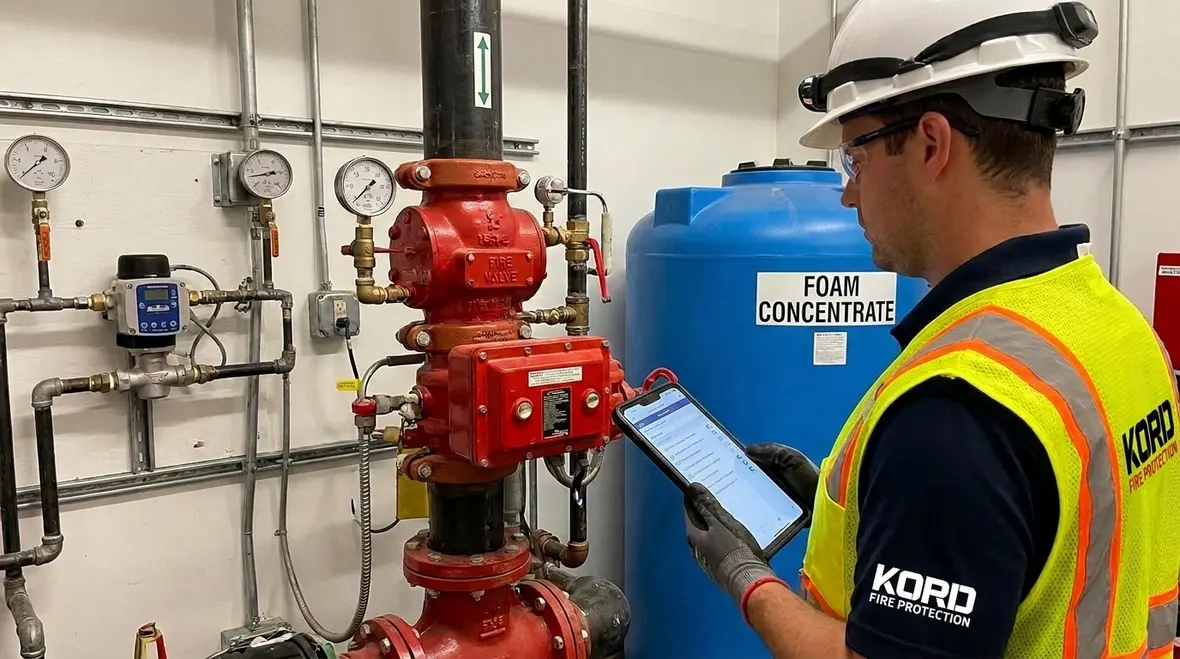
NFPA 25C Section 11.2: Foam-Water Sprinkler System Inspection Requirements
Quick Answer
NFPA 25C Section 11.2 sets inspection expectations for foam water sprinkler systems to verify the system stays capable of delivering the correct foam-water solution. It focuses on routine operational checks, documentation, and corrective actions when components, pressures, listings, or foam concentrate conditions do not meet acceptance criteria.
Facilities dealing with foam-water system readiness often pair these inspections with broader fire sprinkler service and inspection support so deficiencies in the water delivery side do not quietly undermine foam proportioning performance.
What NFPA 25C Section 11.2 is trying to protect against
Foam-water sprinkler systems combine a water delivery network with a foam concentrate proportioning and control arrangement. The intent of NFPA 25C Section 11.2 foam-water sprinkler system inspection requirements is to confirm that, when called upon, the system can still produce foam quality and proportioning within acceptable limits. In commercial, industrial, and retail facilities, the most common inspection failures usually trace back to overlooked maintenance conditions: incorrect concentrate age or chemistry, impaired proportioning equipment, valves that do not return to the proper position, and conditions that cause abnormal pressure or flow signals.
Scope and applicability: where Section 11.2 fits
Section 11.2 applies to foam-water sprinkler systems installed to perform foam generation and discharge through sprinklers. These systems typically include a water supply, a foam concentrate storage source, a proportioning or injection device (mechanical or hydraulically driven), and system components such as check valves, control valves, pressure monitoring points, and foam agent piping.
Facilities often assume that because these are sprinkler systems, “annual sprinkler inspections” cover everything. They do not. The foam delivery path introduces additional failure points that regular sprinkler-focused checks may not identify. Kord Fire Protection supports compliance by aligning inspections with both the water-based system requirements and the foam concentration and proportioning mechanics expected under NFPA 25C.
For background on installation and system components that influence inspection readiness, see NFPA 13 overview: automatic fire sprinkler system installation.
Inspection fundamentals under Section 11.2: what gets verified
Although exact wording and acceptance criteria follow the formal standard text, Section 11.2 inspections generally concentrate on three practical questions:
- Is the system ready to generate foam-water at the required proportion? This includes verifying the proportioning components, signals, and control sequence do not show evidence of malfunction.
- Does the foam concentrate remain usable and properly connected? Inspections look for physical conditions that indicate concentrate degradation risk, incorrect concentrate type, tampering, or connection errors.
- Do protective and control devices behave as intended? Valves, checks, and mechanical linkages must return to normal positions and maintain expected operating behavior.
Operationally, compliance inspections for foam-water systems usually include a combination of visual assessment, functional verification, and system condition confirmation. Inspectors commonly focus on the injection device condition and any arrangement that depends on hydraulic pressure differentials, timers, solenoid operation, or metering hardware.
Common inspection checks and how they expose real-world failure points
In the field, the most valuable inspection work is not only “finding defects,” but verifying that components still support the foam creation pathway. Below are high value checks aligned with the intent of Section 11.2.
1) Foam concentrate storage and condition verification
Foam concentrate quality drives foam performance. Inspection routines typically verify that the concentrate remains properly stored, labeled, and correctly connected to the proportioning hardware. Facilities see recurring issues such as incorrect concentrate type being installed, improper container handling, or evidence of contamination. Even if the system runs, wrong chemistry can lead to reduced expansion or altered drainage characteristics.
2) Proportioning and injection equipment condition
The proportioning device must meter foam concentrate accurately into the water stream. Inspectors typically look for signs of blockage, leakage, failed seals, incorrect calibration indications, and components that show wear or drift. Where the system relies on hydraulically driven injection, any changes in pressure regulation or upstream flow conditions can affect the foam-to-water ratio.
3) Check valves, backflow prevention, and valve position integrity
Foam-water systems depend on correct valve sequencing and the integrity of check valves to prevent reverse flow or dilution of the concentrate line. A valve that partially sticks can prevent proper injection. A check valve that leaks can cause continuous mixing or concentrate losses, leading to both compliance and operational availability issues.
4) Water supply pressure and operating environment
Even when foam concentrate and proportioning hardware remain correct, insufficient water supply pressure, abnormal flow patterns, or obstructed strainers can produce unacceptable injection outcomes. Inspectors often verify that pressure monitoring points and supply conditions align with design and that the environment has not introduced corrosion, freezing risk, or physical damage to foam piping.
5) Documentation, tags, and evidence of corrective actions
Compliance is only as strong as the documentation trail. Facilities need inspection records that identify what was checked, what was observed, and which corrective actions were completed. Kord Fire Protection emphasizes record integrity so that maintenance teams and AHJs can quickly validate readiness.
For additional commercial maintenance planning guidance, refer to NFPA 25 overview: complete water-based fire protection systems maintenance breakdown.
How inspection results should drive next actions
When Section 11.2 inspections reveal deficiencies, the facility should treat foam-water performance issues differently from minor cosmetic concerns. If inspection indicates concentrate mismatch, proportioning impairment, valve sticking, or evidence of leakage, the system should not be assumed operable until corrective actions restore acceptance conditions.
Best practice process typically includes:
- Quarantine the affected operating assumptions. Document which portion of the foam generation pathway is impacted.
- Restore the component to an accepted condition. This may involve cleaning straining elements, repairing seals, correcting valve behavior, recalibrating controls, or replacing concentrate as required.
- Reverify readiness. Repeat the applicable inspection steps to confirm performance, not just component replacement.
- Communicate with maintenance leadership. Tie findings to operational consequences, training expectations, and any additional monitoring needed.
In California and other jurisdictions with state amendments or local interpretations, facilities sometimes encounter additional documentation expectations during plan review or inspection cycles. For jurisdictional context, see Fire sprinkler code California explained.
Implementation for commercial facilities: scheduling, staffing, and readiness
Foam-water sprinkler systems often serve specialized hazard areas such as flammable liquid exposures, storage arrangements, or industrial process risks. Because these buildings frequently run production schedules, maintenance windows and access planning matter as much as the technical procedure.
Commercial compliance success typically depends on:
- Coordination with operations. Plan inspections around production peaks, cleaning cycles, and any water shutdown restrictions.
- Specialized technician coverage. Foam-water systems involve concentrate handling, proportioning verification, and component-specific troubleshooting that general sprinkler maintenance crews may not routinely perform.
- Access to foam system components. Many systems are installed in mechanical rooms or areas with limited clearance. Lack of access can reduce inspection quality and delay corrective actions.
- Integration with broader NFPA 25 maintenance. Foam-water inspections should align with the rest of the water-based system maintenance plan. For broader guidance, utilities and risk teams often use resources like FirePumps.org to support pump and water supply readiness planning.
Kord Fire Protection positions technicians and documentation workflows around these realities so facilities can maintain operational readiness and predictable compliance outcomes year after year. For additional regional context, visit kordelectric.com and kordfire.com.au.
Frequently Asked Questions
Conclusion and call to action
NFPA 25C Section 11.2 foam-water sprinkler system inspection requirements protect performance, not just equipment appearance. Facilities should treat foam concentrate handling, proportioning integrity, and valve behavior as critical compliance items, with documented corrective actions and re-verification. Kord Fire Protection can help commercial teams plan inspections, address recurring failure points, and maintain consistent records that stand up to AHJ review. Contact Kord Fire Protection to schedule an inspection aligned to your system configuration and risk profile.

Join Our Newsletter!
Get the latest fire safety tips delivered straight to your inbox From our Newsletter.


