NFPA 25C Section 4.8: Safety Requirements During Fire System Maintenance
Quick Answer: NFPA 25C Section 4.8 establishes safety requirements that reduce risk during fire system maintenance. It focuses on protecting occupants and technicians, controlling impairments, coordinating testing, and using proper procedures so water based and related fire equipment remains reliable and compliant.
For facilities that need a practical service partner for inspections, repairs, and ongoing maintenance, Kord Fire’s full fire protection services page is a useful next stop before diving into the details.
Why NFPA 25C Section 4.8 matters during maintenance
Commercial facilities operate with a continuous risk profile. Maintenance activities add a secondary risk layer by temporarily altering system availability, workflow routes, and fire protection equipment conditions. NFPA 25C Section 4.8 safety requirements fire system maintenance controls that added risk by requiring safe work practices, impairment awareness, and disciplined coordination before, during, and after servicing.
In practice, many compliance failures occur not during “routine” inspection but during hands on work: valve manipulation, controller interface changes, pump or controller testing, drain procedures, and replacement activities. Facilities that treat safety steps as optional or undocumented often end up with incomplete restoration, unsafe testing practices, or uncontrolled system outages.
What safety controls Section 4.8 typically requires on site
NFPA 25C Section 4.8 safety requirements fire system maintenance are implemented through operational controls that can be verified in maintenance plans, work authorizations, and technician task execution. While details vary by system type and building configuration, the safety framework generally includes these elements.
1) System impairment control and return to service
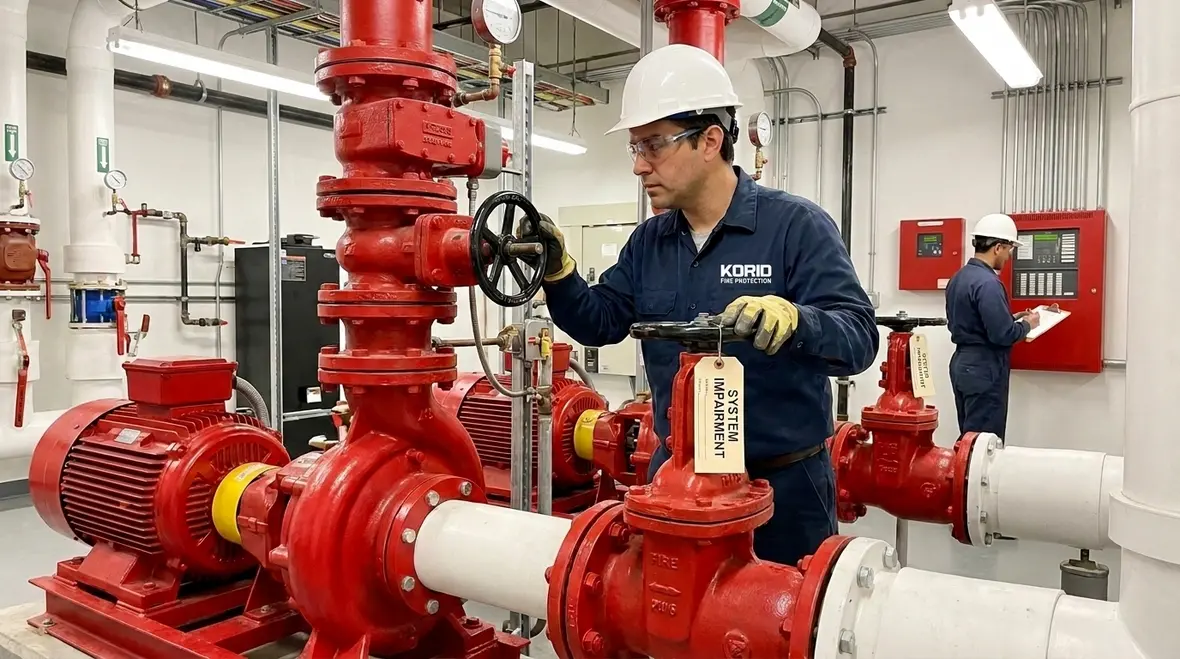
Maintenance frequently requires partial or complete impairment. The safety requirement centers on preventing unsafe operation states and ensuring the system returns to its intended condition. A compliant process typically includes documenting the scope of impairment, controlling access to system components, and verifying restoration after work completes.
Common failure points include restoring valves incorrectly after tests, leaving control switches in a supervisory or off mode, missing a planned hold time, or failing to verify the integrity of the affected zone. For water based systems, these errors can be subtle because the system may appear functional until the next demand scenario or until a subsequent inspection reveals discrepancies.
2) Occupant and emergency operations awareness
Fire systems exist to protect occupants. Maintenance must therefore be coordinated with building operations, alarm response processes, and emergency procedures. In commercial and industrial settings, this means aligning the maintenance window with operational constraints and ensuring the right staff understand when testing or supervisory conditions may occur.
Retail properties and multi tenant buildings often have additional communication challenges because customer presence and shared infrastructure can complicate access. Section 4.8 style safety controls reinforce that technicians do not treat testing as an isolated task and that communication is part of safe execution.
3) Safe testing methods that prevent unsafe conditions
During maintenance, technicians may need to operate pumps, run inspectors tests, open test connections, or verify alarm and supervisory signaling. Safe testing under Section 4.8 style expectations includes controlling where water discharges, preventing slip and fall hazards, and ensuring the test does not unintentionally create a persistent unsafe impairment state.
One of the most common operational issues is uncontrolled water discharge during flow tests or valve operations, especially in mechanical rooms or below grade spaces. Another issue involves incorrect sequencing of pump start logic, which can create repeated attempts, nuisance alarms, or prolonged supervisory conditions.
4) Technician safety around pressurized equipment
Fire protection equipment is frequently pressurized or capable of sudden activation. Safety controls address lockout and access, ensuring technicians maintain safe distances from energized and pressurized components, and using appropriate PPE for the work type. This becomes critical around fire pumps, jockey pumps, fire department connections, sprinkler valve assemblies, and control cabinets.
For related technical context, facilities often align maintenance practices with installation fundamentals referenced by sprinkler system code guidance such as the Kord Fire Protection overview of automatic fire sprinkler system installation: NFPA 13 overview and sprinkler installation considerations.
How facilities implement Section 4.8 in real maintenance workflows
Good compliance depends on process, not memory. Many commercial facilities implement Section 4.8 style safety requirements through written work orders, pre task meetings, and standardized restoration verification.
Pre job planning checklist for maintenance crews
- Confirm the exact equipment scope and whether impairment is required for the task.
- Define where testing will discharge water or generate noise and alarms.
- Verify access authorization and lock controls for valves and pump controllers.
- Identify required notifications to building management and any monitoring company involvement.
- Assign responsibility for the “verify and restore” step before leaving the area.
During the work: preventing the most common safety and compliance errors
Field execution errors typically come from rushed sequencing and incomplete validation. Safety requirements are best met when technicians follow a repeatable method: confirm control states, make adjustments, conduct tests under controlled conditions, and then document results while verifying the system is safe to return.
In water based systems, pump and control related tasks frequently trigger supervisory signaling and alarm conditions. If notifications and timing are not controlled, building staff may treat the event as an actual fire response, creating confusion and delaying corrective actions.
After maintenance: restoration verification and documentation
Section 4.8 style safety expectations do not end when the tools are packed. Restoration verification typically includes confirming valve positions, control states, and that testing returns the system to its intended readiness. Documentation should support traceability: what was done, what was observed, and what was restored.
For facilities managing multiple water based components, Kord Fire Protection publishes a maintenance oriented breakdown that supports operational planning: NFPA 25 overview and water based fire protection maintenance breakdown.
Equipment and failure points that make Section 4.8 non optional
Section 4.8 safety requirements fire system maintenance becomes especially critical when maintenance touches system components that can create abrupt availability changes or hazardous conditions if mishandled.
Fire pump systems and controller testing
Fire pumps can start automatically depending on control logic and pressure conditions. Maintenance tasks such as controller testing, alarm interface verification, and pump condition checks must be done with controlled conditions to avoid unintended starts, prolonged pump running, or incomplete restoration of auto start logic.
For additional industry context on fire pump considerations, see: firepumps.org.
Valves, supervisory switches, and water discharge hazards
Valves are often the most frequently manipulated components during maintenance. Safety risks occur when valves are left in the wrong position or when supervisory signaling is not properly addressed after work. Water discharge hazards arise during drain and test operations, which can lead to slips, corrosion issues, and damage to nearby infrastructure if discharge pathways are not managed.
Sprinkler system components requiring careful restoration
Even though Section 4.8 focuses on safety during maintenance activities, the operational goal is reliable fire system performance afterward. Restoration verification and controlled testing help avoid common failure points such as improperly reseated fittings, incorrect pressure settings, and unconfirmed dry or wet system readiness conditions.
For California oriented compliance support tied to sprinkler system requirements and interpretation, Kord Fire Protection provides helpful background: Fire sprinkler code California explained.
Compliance strategy for commercial facilities: reduce risk and keep readiness
Commercial, industrial, and retail facilities often face inspection schedules, tenant constraints, and limited downtime windows. A practical compliance strategy aligns maintenance documentation, staffing, and field execution so safety requirements are consistently met.
Standardize impairment and notification procedures
Facilities that successfully meet safety requirements during maintenance typically standardize impairment documentation and notification steps. This ensures building staff and any monitoring partners understand what to expect during tests and maintenance activities.
Use qualified maintenance partners for repeatable outcomes
Complex systems require disciplined methods and experience with system restoration verification. Kord Fire Protection positions itself as a commercial service partner for ongoing compliance, testing, and maintenance across water based and related fire protection equipment. The goal stays the same: reduce downtime risk and maintain life safety readiness through consistent execution.
Integrate installation knowledge with maintenance execution
Maintenance technicians benefit from understanding installation design intent and typical system behaviors. That design context helps crews troubleshoot safely and avoid unsafe assumptions. Facilities can reference installation fundamentals in support documentation such as the Kord Fire Protection sprinkler installation overview: NFPA 13 overview and sprinkler installation considerations.
Frequently Asked Questions
Conclusion and call to action
NFPA 25C Section 4.8 safety requirements fire system maintenance are only effective when they are executed through controlled impairments, safe test sequencing, and documented restoration verification. Facilities that standardize these workflows reduce risk, avoid unsafe system conditions, and strengthen readiness across commercial spaces. Kord Fire Protection can help plan maintenance, manage impairments, and verify restoration to support ongoing compliance. Contact Kord Fire Protection to review current procedures and align your maintenance execution with safety expectations.
Kord Fire Protection: kordelectric.com | kordfire.com.au

Join Our Newsletter!
Get the latest fire safety tips delivered straight to your inbox From our Newsletter.