
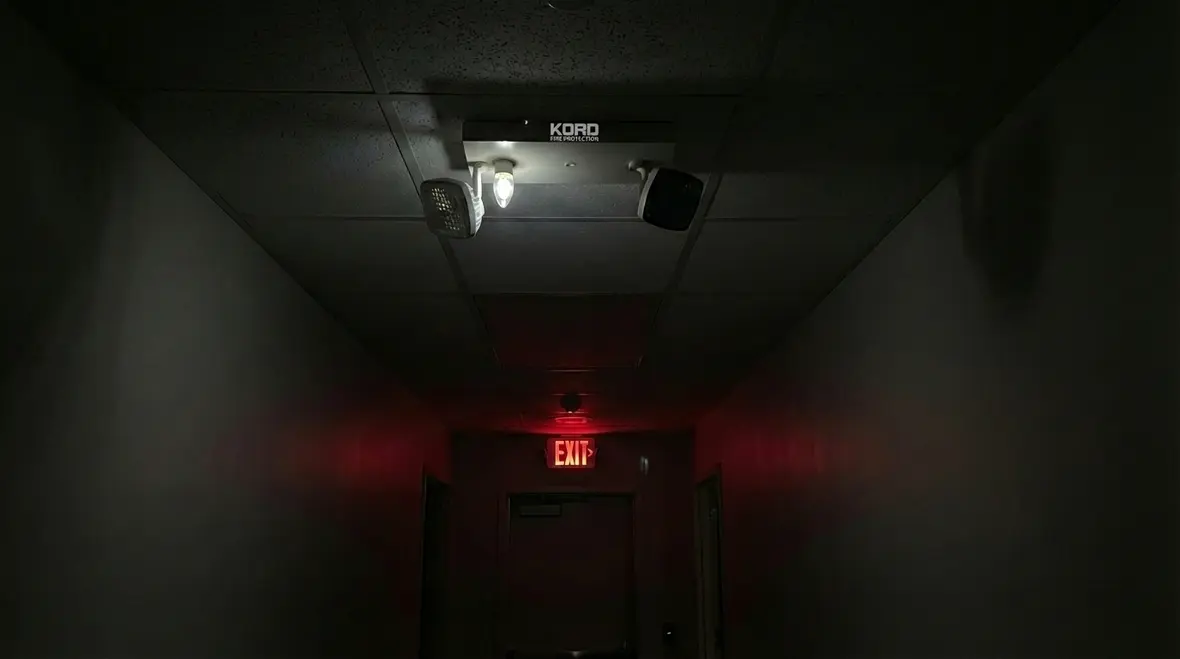
Top 10 Common Emergency Lighting Failures and Prevention
When the lights go out, people expect one thing to happen next. The emergency lights come on. No drama. No guessing. Just calm, steady illumination guiding everyone to safety. Yet common emergency lighting failures happen more often than many facility owners would like to admit. Batteries die quietly. Wiring loosens over time. Test schedules get “forgotten” like a gym membership in February. And sometimes, the system simply was never installed quite right to begin with.
In warehouses, hospitals, schools, and office buildings, these failures can turn a minor power outage into a real risk. Fortunately, most of these problems are preventable. Kord Fire Protection technicians explain that with the right planning, testing, and maintenance, emergency lighting systems can perform exactly as intended when it matters most.
Now, let us walk through the top ten causes of emergency lighting breakdowns and, more importantly, how to stop them before they leave anyone in the dark.
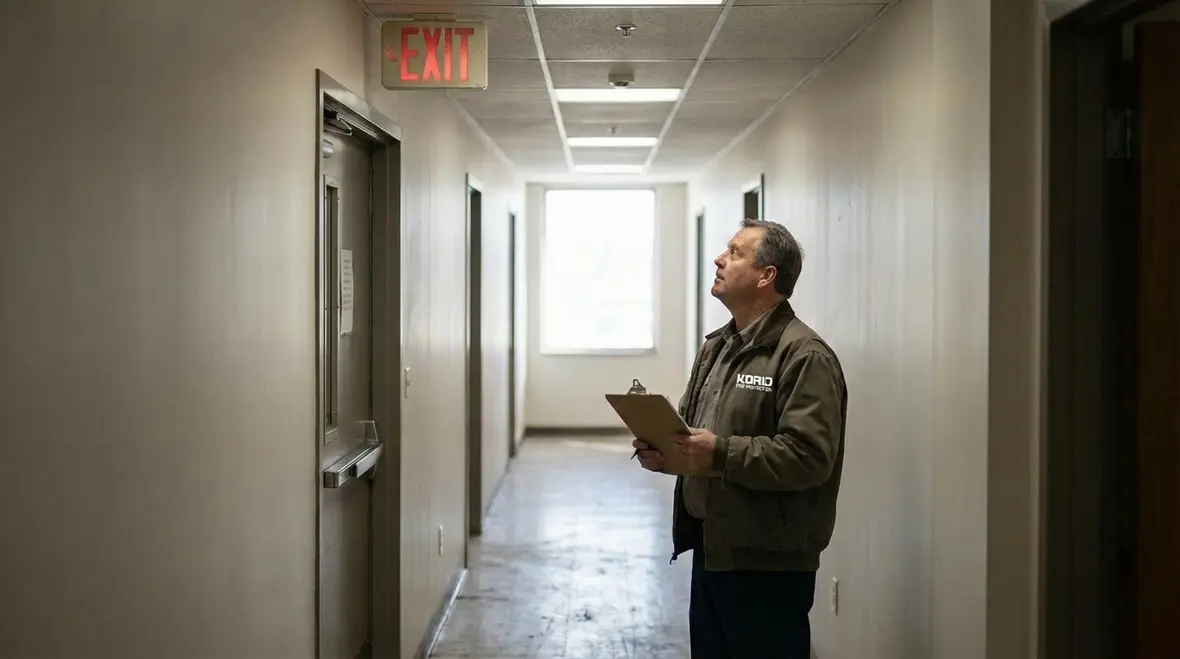
Understanding Emergency Lighting Failures Before They Become a Crisis
Before diving into the list, it helps to understand what is really at stake. Emergency lighting is not decorative. It is not optional. It exists to guide occupants safely out of a building during power loss, fire, or other emergencies.
However, when systems fail, the causes often trace back to neglect, age, or human error. In fact, most common emergency lighting failures develop slowly. They whisper before they scream. A dim test light. A battery that holds charge for 30 minutes instead of 90. A flicker that seems harmless.
Kord Fire Protection technicians often remind facility managers that emergency lighting systems are like parachutes. No one cares about them until the moment they need them. And at that point, it is a little late for second chances.
If you are new to emergency lighting requirements, Kord Fire also breaks down how these systems fit into overall life safety and evacuation planning in resources like their NFPA 101 Life Safety Code overview, which highlights how emergency lighting supports safe egress during fire and power loss events. For a broader compliance picture, pairing this article with their Life Safety Code guidance gives facility managers a more complete roadmap for upgrades and inspections.
Emergency Lighting’s Role in Overall Fire Protection
Emergency lights do more than keep hallways visible. They tie directly into exit signage, fire alarm notification, and evacuation procedures. In a true emergency, people are stressed, disoriented, and often unfamiliar with the building. Clear, reliable illumination is what turns a confusing maze of corridors into an obvious route to safety.
That is why Kord Fire’s approach to emergency lighting fits into a bigger picture. In guides like “Keep People Safe from Fires” and NFPA 101 overviews, they emphasize that lighting, alarms, and physical exits all work together. When any one of these pieces fails, the risk to occupants rises fast.
Top 10 Causes of Emergency Lighting Failures and How to Prevent Them
Now we arrive at the heart of the matter. Below are the most frequent reasons systems break down, paired with clear prevention steps.
1. Battery Degradation
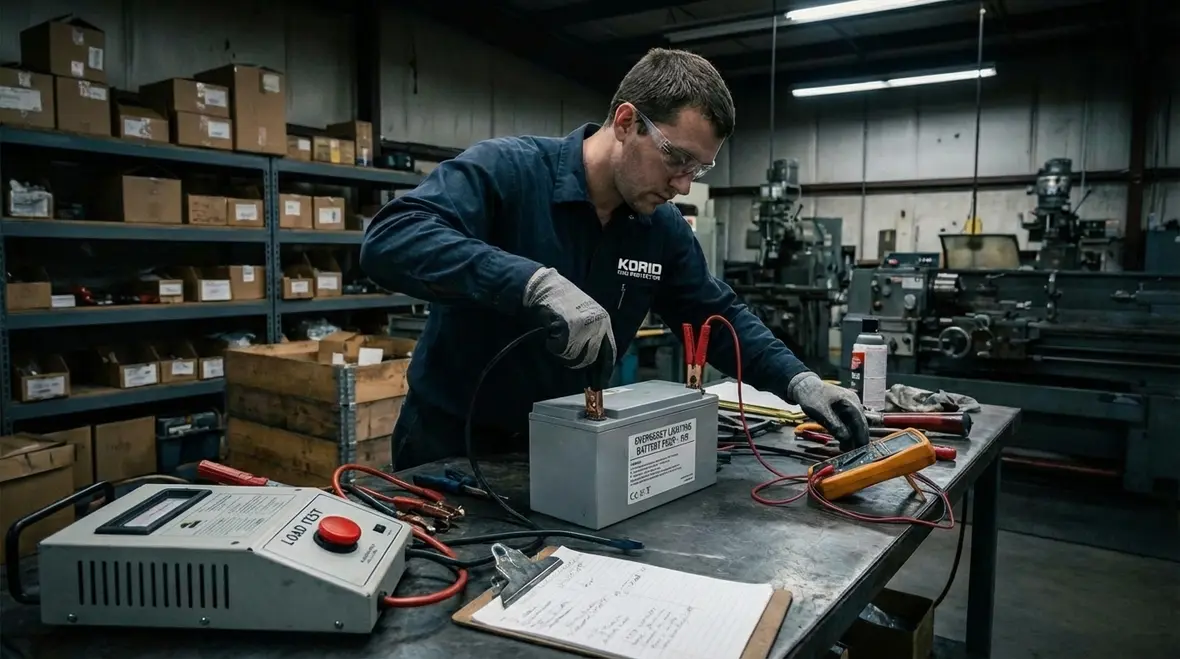
Batteries are the backbone of most emergency units. Over time, they lose capacity. Heat, age, and repeated discharge cycles weaken them.
Prevention: Replace batteries according to manufacturer guidelines, not when they fail. Additionally, conduct regular load tests to confirm they can sustain the required runtime.
2. Lack of Routine Testing
Skipping monthly or annual tests invites trouble. Small problems go unnoticed until a real outage exposes them.
Prevention: Follow a strict inspection schedule. Document each test. Kord Fire Protection technicians explain that consistent testing catches issues early, often saving significant repair costs later.
3. Poor Initial Installation
Improper wiring, incorrect placement, or undersized systems can lead to recurring failures.
Prevention: Use certified professionals for installation. Moreover, confirm compliance with local fire and building codes from the start.
4. Environmental Conditions
Heat, cold, dust, and moisture can damage internal components. Warehouses and parking garages are especially vulnerable.
Prevention: Choose fixtures rated for the environment. In addition, inspect seals and housings regularly.
5. Aging Fixtures
Even the best systems have a lifespan. As parts age, reliability drops.
Prevention: Develop a replacement plan. Rather than waiting for multiple failures, upgrade aging systems proactively.
6. Faulty Wiring Connections
Loose or corroded wiring interrupts power flow. This often happens gradually.
Prevention: Schedule periodic electrical inspections. Tighten and secure connections as needed.
7. Incompatible Replacement Parts
Using the wrong battery or component may seem harmless. It is not.
Prevention: Always match replacement parts to manufacturer specifications. When in doubt, consult experienced technicians.
8. Circuit Overloads
Adding new equipment to existing circuits can strain the system.
Prevention: Evaluate electrical loads before expansion. Balance circuits properly to prevent overload.
9. Poor Record Keeping
If no one tracks service history, small patterns go unnoticed.
Prevention: Maintain detailed maintenance logs. This creates accountability and ensures compliance.
10. Ignoring Warning Signs
Flickering lights. Audible alarms. Shorter test durations. These are not suggestions. They are warnings.
Prevention: Address irregularities immediately. As Kord Fire Protection technicians often say, hope is not a maintenance strategy.
For a deeper dive into how Kord Fire handles emergency exit light failures specifically, facility teams can review their Emergency Exit Light Services page, which outlines testing, repair, and installation best practices that pair perfectly with the prevention steps in this article.
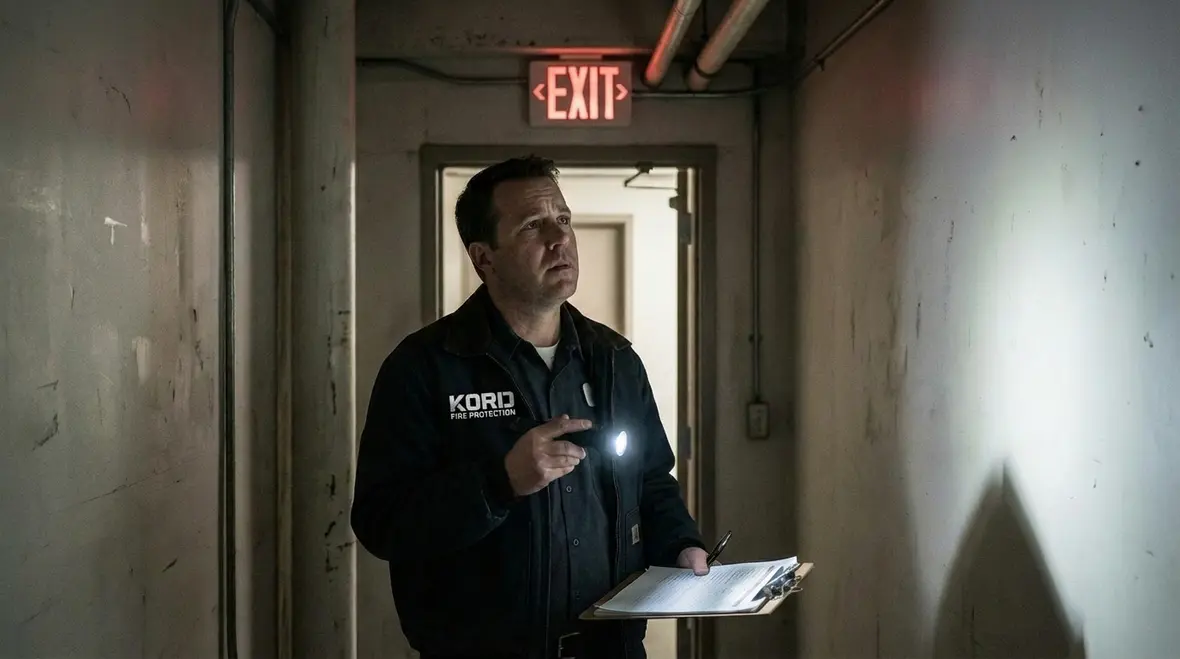
How Facility Managers Can Prevent Common Emergency Lighting Failures
Facility managers often ask what practical steps they can take today. The answer is simpler than many expect.
First, create a maintenance calendar and treat it like payroll. It does not get skipped. Second, train staff to recognize early warning signs. Third, partner with professionals who understand both compliance and real world building conditions.
Furthermore, managers should avoid a reactive mindset. Waiting until something breaks usually costs more in both money and safety. Preventive maintenance may not feel exciting. Then again, neither does explaining to inspectors why exit paths were dark.
Kord Fire Protection technicians emphasize that prevention works best when responsibility is clear. Someone must own the process. When accountability exists, reliability follows.
For managers looking to align daily practices with broader fire safety strategies, pairing emergency lighting checks with regular fire drills and broader fire safety reviews, like those described in Kord Fire’s “Keep People Safe from Fires” and NFPA 3 commissioning guidance, can streamline inspections across multiple life safety systems.
What Do Kord Fire Protection Technicians Look for During Inspections?
During inspections, technicians follow a structured approach. They do not simply press the test button and walk away.
They measure battery voltage under load. They inspect wiring for corrosion or looseness. They confirm that fixtures remain properly aligned with exit paths. In addition, they verify compliance with runtime requirements.
Below is a simplified dual column overview of inspection focus areas and their purpose.
Inspection Area
Battery load testing
Fixture alignment
Wiring integrity
Environmental exposure
Code compliance review
Why It Matters
Confirms required runtime during outages
Ensures safe and visible exit paths
Prevents sudden power interruptions
Identifies damage from heat or moisture
Avoids fines and liability issues
Because they take this layered approach, technicians often catch developing issues long before they become full scale emergency lighting failures.
Building Codes and Compliance: Why Prevention Is Not Optional
Emergency lighting is governed by fire codes and life safety standards. These regulations exist for one simple reason. People need safe exit routes during emergencies.
However, inspectors do not accept excuses. If systems fail testing, building owners may face fines or mandated repairs. More importantly, they face liability exposure if an incident occurs.
Therefore, compliance should not feel like a burden. It is a protective shield. Regular inspections, documentation, and proactive upgrades demonstrate due diligence.
Kord Fire Protection technicians frequently help clients navigate these requirements. They translate complex regulations into clear action steps. As a result, facilities stay compliant and prepared.
If you want to see how emergency lighting fits into the bigger compliance picture, Kord Fire’s NFPA 101 Life Safety Code overview and their article on keeping people safe from fires both highlight how lighting, exit signage, and means of egress work together to meet modern codes.
The Cost of Ignoring Emergency Lighting Problems
Some organizations delay maintenance to save money. Ironically, this approach often costs more.
First, emergency repairs tend to be more expensive than scheduled service. Second, system wide failures can require large scale replacements. Third, downtime disrupts operations.
Beyond financial costs, there is reputational risk. News travels fast when safety systems fail. No business wants to trend online for the wrong reasons.
Moreover, there is the human factor. During an evacuation, clear lighting reduces panic. It guides movement. It supports order. When lighting fails, confusion grows. And confusion, as history has shown repeatedly, rarely leads anywhere good.
Preventing common emergency lighting failures is not glamorous work. It does not come with applause. Yet it quietly protects lives every single day.
FAQ: Emergency Lighting Systems
Final Thoughts: Keep the Lights Ready Before You Need Them
Power outages do not send calendar invites. They arrive unannounced. Therefore, the smartest move any facility can make is preparation. By addressing the top causes of emergency lighting failures and partnering with experienced professionals like Kord Fire Protection technicians, building owners protect people, property, and peace of mind.
Schedule an inspection, update that maintenance log, and replace aging components before they fail. When the lights go out, confidence should come on.
If your facility needs expert help with testing, repairs, or new installations, explore Kord Fire’s dedicated Emergency Exit Light Services. Their team designs, installs, and maintains emergency exit lights and signs to keep you aligned with NFPA and local codes.
Looking for broader support across alarms, sprinklers, extinguishers, and more? Start with a regional service page such as their Huntington Beach Fire Protection Services or other local service areas to schedule a comprehensive assessment and keep every critical system ready long before the next outage hits.
Know Your Weapon Before You Fight the Flame
Kord Fire Protection is your go-to when it comes to all things fire protection. For over 20 years, we’ve been serving Southern California with the quality service and equipment to keep your home or business safe at all times. Our competitive prices reflect our unwavering commitment to protecting what matters most in the event of a fire emergency. Give us a call, send an email, or use that form!

Join Our Newsletter!
Get the latest fire safety tips delivered straight to your inbox From our Newsletter.


