LED Exit Sign Maintenance Savings Explained
Facility managers often hear about led exit sign maintenance savings as if it is a magic trick. Swap out old fixtures, sit back, and watch the service calls disappear. In many cases, that promise holds true. However, as kord fire protection technicians often explain, the real story runs deeper than a simple bulb change. True savings depend on installation quality, battery type, testing habits, and code compliance. When those factors align, LED technology can reduce labor, replacement parts, and unexpected downtime. Yet before anyone starts picturing a maintenance budget riding off into the sunset, it helps to understand what actually changes when switching to LED exit signs and what still demands attention.
So let us slow things down and take a steady walk through the facts.

Understanding LED Exit Sign Maintenance Savings
LED exit signs differ from traditional incandescent or fluorescent units in one major way. They use light emitting diodes that produce illumination with far less heat and far less energy. As a result, the components experience less stress over time. That means fewer burned out lamps and fewer emergency service calls.
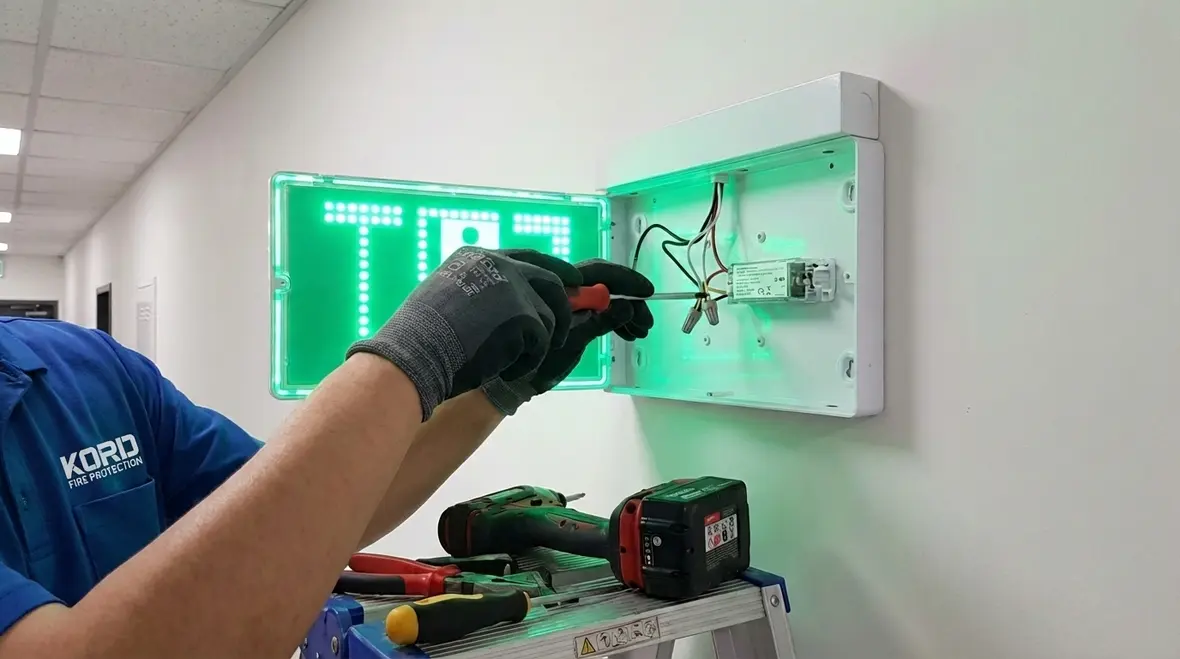
However, the real reduction in upkeep goes beyond the bulb itself. Because LEDs last significantly longer, facilities reduce the frequency of ladder time. That alone lowers labor costs and safety risks. Additionally, modern LED systems often include more efficient circuitry and longer lasting batteries, which further decrease routine replacement needs.
Kord fire protection technicians frequently point out that many older exit signs require lamp replacements every year or two. By contrast, quality LED units can operate for years before the light source needs attention. Therefore, the building staff spends less time tracking inventory, scheduling repairs, and documenting repeat fixes.
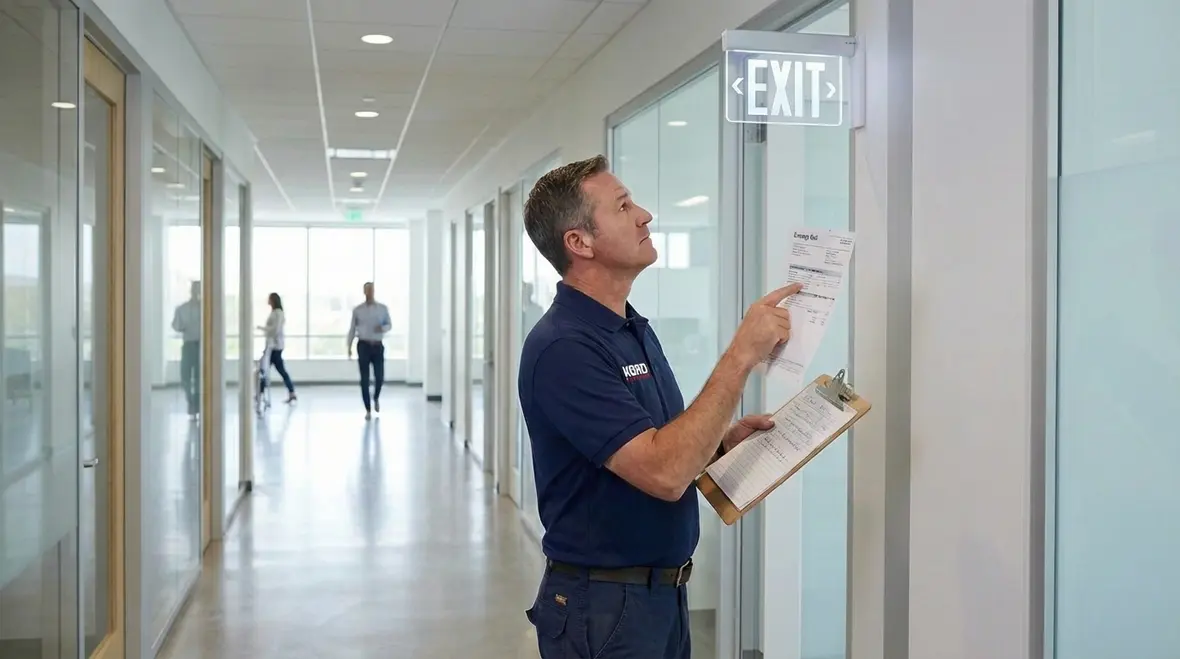
Still, maintenance does not vanish entirely. Emergency lighting systems must meet life safety codes. They still require inspections and functional tests. The difference is that LED technology reduces the number of failure points, not the responsibility to check them.
If you are reviewing exit sign testing procedures across your portfolio, it can help to compare them with broader emergency exit light services and inspection practices highlighted in Kord Fire’s Emergency Exit Light Services & Repair overview. Aligning LED upgrades with a strong testing program preserves both safety and savings.
Why Facilities Consider Switching in the First Place
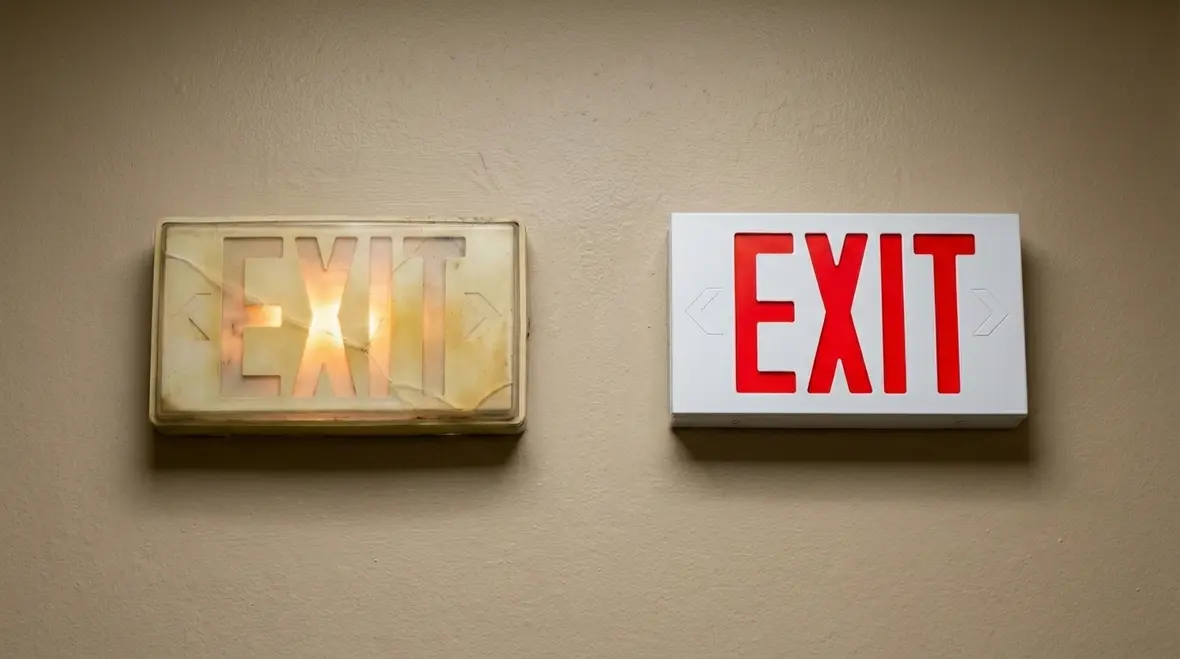
Every building tells a story. Some stories include flickering red letters, cracked housings, and a maintenance log that reads like a suspense novel. That is usually when management begins to consider a change.
First, energy efficiency often drives the decision. LED exit signs use a fraction of the power required by incandescent units. Over time, those lower utility costs add up. Moreover, reduced heat output places less strain on internal components. Consequently, parts last longer and service intervals stretch out.
Second, compliance plays a role. Many jurisdictions encourage or require energy efficient lighting. Therefore, upgrading to LED technology can help align with both safety and sustainability goals.
Third, reliability matters. In an emergency, an exit sign cannot decide it needs a day off. It must work. Because LEDs are durable and resistant to vibration, they tend to perform more consistently in demanding environments such as warehouses, schools, and healthcare facilities.
Kord fire protection technicians often compare the switch to upgrading from an old flip phone to a modern smartphone. Both can make a call. Yet one handles the job with greater efficiency and fewer surprises.
What to Check Before Switching
Before replacing every fixture in sight, facility managers should pause and evaluate several factors. A thoughtful approach protects both safety and budget.
Electrical compatibility
First, confirm voltage requirements. Although many LED exit signs support universal voltage, some buildings have unique configurations. Therefore, verifying compatibility prevents wiring issues and avoids costly rework.
Battery type and life expectancy
Next, examine the battery. Some models use nickel cadmium, while others rely on lithium based options. Each type offers different performance characteristics. Kord fire protection technicians often advise reviewing battery replacement cycles and manufacturer warranties. A long lasting light source means little if the battery fails prematurely.
Housing durability
Additionally, consider the environment. High humidity, dust, or temperature swings can shorten equipment life. Selecting a unit rated for the specific location supports long term reliability.
Mounting configuration
Furthermore, assess wall, ceiling, or end mount requirements. Choosing the wrong configuration can create unnecessary installation challenges and aesthetic concerns.
Code compliance
Finally, confirm that the selected model meets local fire and building codes. Illumination levels, letter size, and directional indicators must align with regulations. An attractive fixture means nothing if it fails inspection.
By addressing these checkpoints early, organizations maximize led exit sign maintenance savings rather than simply trading one set of problems for another.
Comparing Traditional vs LED Exit Sign Maintenance
To appreciate the difference, it helps to see how the two technologies stack up side by side.
Traditional Exit Signs
- Frequent lamp replacements
- Higher energy consumption
- Greater heat output
- More stress on internal components
- Shorter overall lifespan
LED Exit Signs
- Long lasting light source
- Lower energy usage
- Minimal heat generation
- Fewer component failures
- Extended service intervals
As shown above, LEDs reduce routine part replacements and energy costs. However, both systems still require monthly visual inspections and annual full duration tests under most fire codes. Therefore, while maintenance demands shrink, they never disappear completely.
Kord fire protection technicians emphasize documentation. Even with advanced fixtures, accurate records of inspections and testing protect building owners during audits and after incidents. In other words, technology helps, but discipline seals the deal.
Do LED Exit Signs Really Reduce Maintenance?
Yes, but with conditions.
LED technology reduces the frequency of lamp changes and lowers the risk of sudden burnouts. Consequently, facilities experience fewer emergency work orders. In many cases, staff can redirect time toward preventive maintenance rather than reactive repairs.
However, batteries remain a critical component. Emergency exit signs must operate during power loss, often for at least ninety minutes. If the battery degrades, the sign fails regardless of how advanced the light source may be. Therefore, ongoing testing remains essential.
Kord fire protection technicians often explain this with a simple analogy. Installing LED exit signs without regular testing is like buying a high performance car and never checking the oil. It may run smoothly for a while, but neglect eventually catches up.
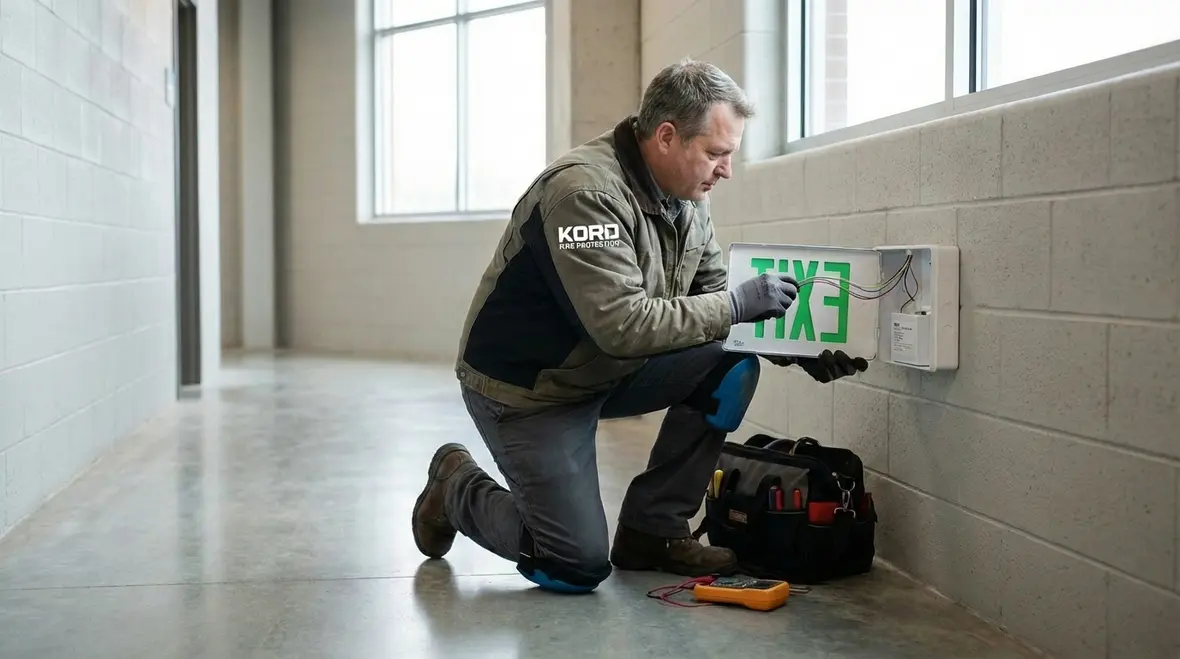
Additionally, installation quality matters. Loose wiring, improper mounting, or incorrect voltage can undermine the expected maintenance reduction. Thus, professional installation supports long term reliability and ensures that projected led exit sign maintenance savings become reality rather than marketing hype.
How to Maximize Long Term Performance
Once the switch occurs, smart practices protect the investment.
First, establish a clear inspection schedule. Monthly visual checks identify damage, obstruction, or indicator light issues. Meanwhile, annual full duration tests confirm battery performance. Because these steps align with code requirements, they serve both safety and compliance.
Second, maintain detailed records. Digital logs simplify tracking and provide proof during inspections. Moreover, organized documentation helps identify patterns if a particular model shows repeated issues.
Third, train staff. Even though LEDs require less frequent service, personnel should understand indicator lights, self diagnostic features, and test procedures. Kord fire protection technicians often provide on site guidance, ensuring that teams know exactly what to look for.
Fourth, standardize models when possible. Using consistent units across a facility simplifies inventory management and reduces confusion during replacements. Therefore, long term upkeep becomes more predictable.
Finally, review performance annually. Compare energy consumption, service calls, and replacement parts against previous years. This data driven approach clearly demonstrates whether the anticipated maintenance savings and efficiency gains have materialized.
Common Mistakes That Cancel Out the Benefits
Even the best technology cannot compensate for poor decisions. Several common missteps can erode potential savings.
One frequent error involves selecting the cheapest available unit. While initial costs may look attractive, lower quality components can fail sooner. Consequently, replacement cycles shorten and labor costs rise.
Another mistake includes ignoring environmental factors. Installing a standard unit in a damp or dusty location invites premature failure. Therefore, matching the fixture to the setting proves essential.
Some facilities also delay battery replacements to cut costs. However, this approach risks code violations and safety failures. In the event of an emergency, a non functioning sign can expose owners to serious liability. As kord fire protection technicians calmly remind clients, life safety equipment is not the place for shortcuts.
Lastly, skipping professional inspections undermines the entire system. Although LEDs reduce routine part changes, expert evaluations catch hidden issues that visual checks may miss. In the long run, proactive service preserves both safety and the expected reduction in upkeep.
FAQ: LED Exit Sign Maintenance and Performance
Final Thoughts and Next Steps
LED exit signs offer real advantages, including lower energy use, fewer lamp replacements, and measurable maintenance savings. However, success depends on smart selection, professional installation, and consistent testing. Kord fire protection technicians stand ready to evaluate existing systems, recommend compliant upgrades, and ensure every sign performs when it matters most.
Facilities that approach the transition with care can enhance safety, reduce upkeep, and move forward with confidence. To coordinate LED upgrades with broader emergency lighting inspections, consider scheduling a visit through Kord Fire’s Emergency Exit Light Services & Repair team or requesting a consultation via their Contact Us page. Reach out today to plan a safer, more efficient upgrade.
Know Your Weapon Before You Fight the Flame
Kord Fire Protection is your go-to when it comes to all things fire protection. For over 20 years, we’ve been serving Southern California with the quality service and equipment to keep your home or business safe at all times. Our competitive prices reflect our unwavering commitment to protecting what matters most in the event of a fire emergency. Give us a call, send an email, or use that form!

Join Our Newsletter!
Get the latest fire safety tips delivered straight to your inbox From our Newsletter.