
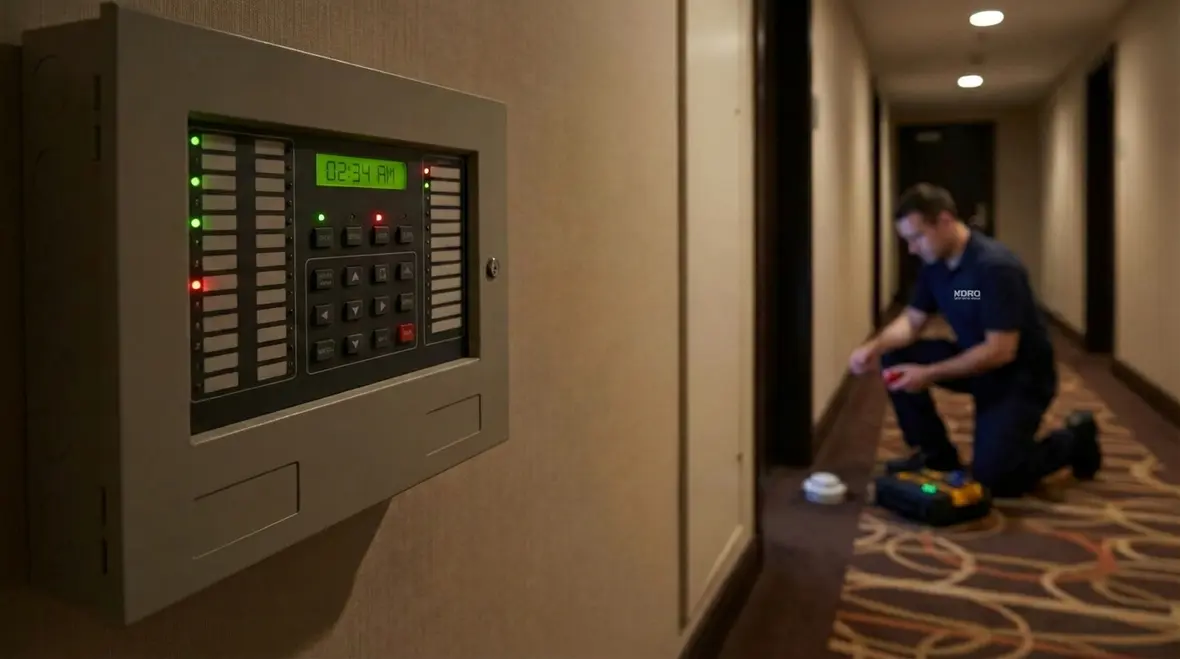
24/7 Hotel Fire Alarm Monitoring Services
Monitoring Services for Hotels: 24/7 Oversight and Risk Reduction
In the hospitality world, peace of mind is not a luxury. It is part of the reservation. Guests expect soft sheets, warm lighting, and above all, safety. That is why a monitored fire alarm system plays a critical role in every well managed hotel. From boutique inns to towering resorts, continuous oversight ensures that when something goes wrong, someone knows immediately. More importantly, someone responds. As Kord Fire Protection technicians often explain to hotel managers, safety is not just about installing equipment. It is about supervising it every hour of every day, because fires do not keep business hours.
Moreover, local fire codes and the National Fire Protection Association NFPA require that fire alarm systems be supervised 24 7. Therefore, monitoring is not simply a best practice. It is a legal expectation. Yet beyond compliance, it is a promise to every guest who places a suitcase on the bed and trusts the building around them.
The Unique Safety Demands of Hotels
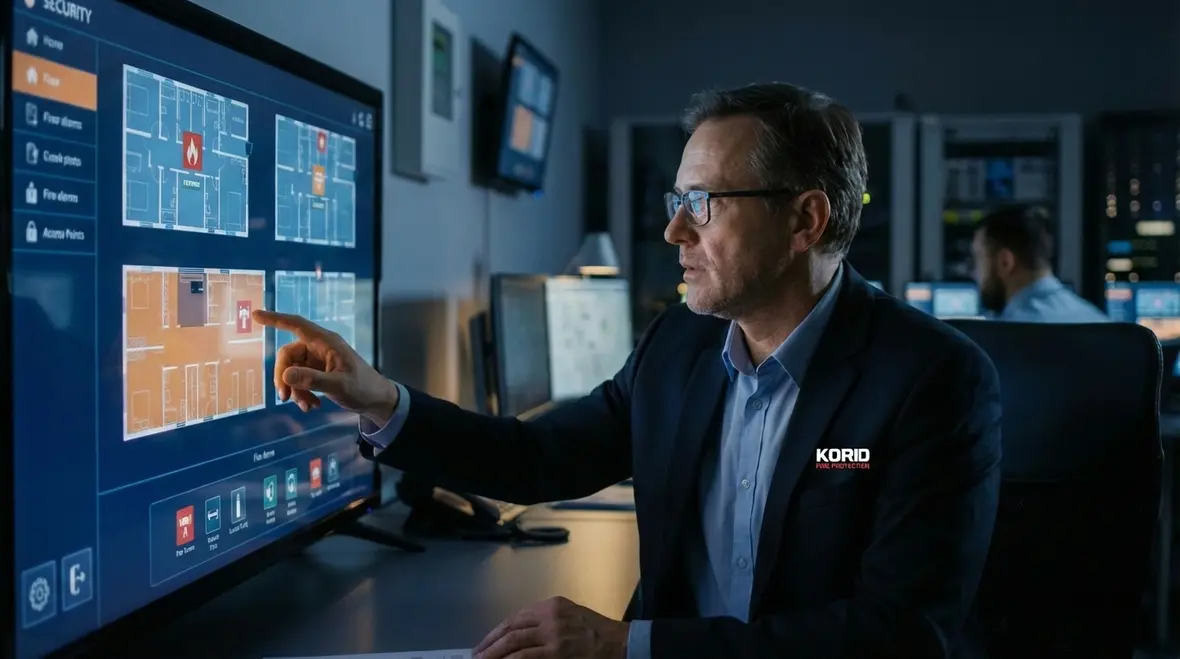
Hotels operate like small cities. They contain kitchens, laundry rooms, conference halls, electrical closets, and hundreds of sleeping occupants who may not know the layout of the building. Consequently, the risk profile is complex.
Unlike office buildings that empty at five o clock, hotels stay active around the clock. Guests sleep deeply after long flights. Children wander hallways. Someone always decides that midnight is the perfect time for a hot shower. Therefore, early detection and rapid response become essential.
Kord Fire Protection technicians frequently remind property owners that hospitality settings face layered risks. Cooking equipment produces grease laden vapors. Decorative lighting adds electrical load. Seasonal décor can increase combustible materials. While each element seems harmless on its own, together they demand careful supervision.
Additionally, high occupancy means higher stakes. A delayed response can turn a minor issue into a full evacuation. As any seasoned traveler knows, nobody enjoys standing in pajamas on a cold sidewalk at two in the morning. Proper monitoring helps prevent that scenario from becoming a headline.
Why hotels can’t rely on “quiet hours”
Because guests arrive, check in, shower, order room service, and plug in devices at all hours, there is no true downtime. Systems that are professionally monitored help ensure that a fire, wiring fault, or sprinkler issue at 3:17 a.m. receives the same immediate attention as one during the daytime rush.
For a deeper look at how Kord supports complex occupancies like hotels with integrated fire alarm solutions and monitoring, explore their Fire Alarm Service & Systems offerings.
How a Monitored Fire Alarm System Protects Guests and Assets
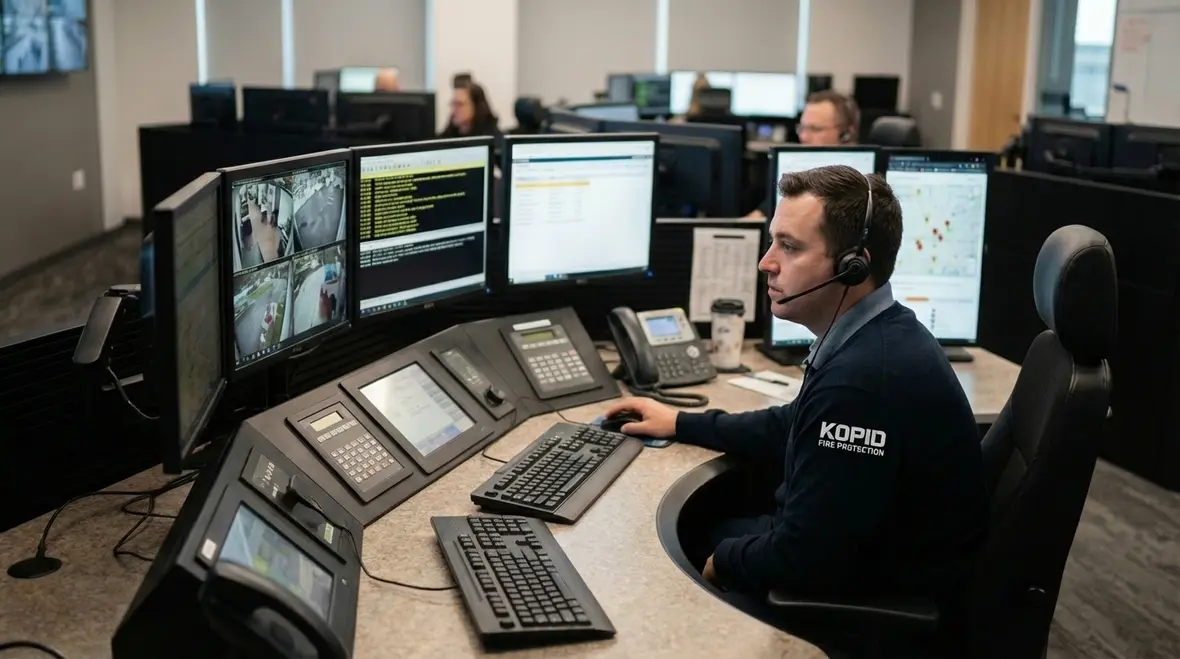
A monitored fire alarm system does more than sound a siren. It connects the property to a professional monitoring center staffed by trained specialists. When a detector senses smoke or heat, the signal travels instantly to the monitoring station. Then, operators verify the signal and notify emergency responders without delay.
Because seconds matter, this automatic chain of events reduces human error. Front desk staff may be assisting guests. Maintenance teams may be handling other tasks. However, the monitoring center remains focused solely on incoming signals.
Furthermore, supervision ensures the system itself remains operational. If a panel loses power, a communication line fails, or a device malfunctions, the monitoring station receives a supervisory signal. In other words, the system reports its own health. Kord Fire Protection technicians often compare it to a smartwatch for the building. It keeps checking its pulse so managers do not have to.
This layered protection safeguards lives first. Yet it also protects revenue. Quick response can limit property damage, reduce downtime, and preserve a hotel reputation that took years to build. After all, guests leave reviews about everything. It is better to earn five stars for service than go viral for the wrong reasons.
From alarm to dispatch in a few critical moments
In a monitored system, the steps between “detector activates” and “fire department notified” are tightly choreographed. That discipline is what helps protect sleeping guests, staff, and property even when the lobby is quiet and the front desk is juggling late check-ins.

Compliance with Local Fire Codes and NFPA Standards
Across jurisdictions, local fire codes and the National Fire Protection Association NFPA require that fire alarm systems be supervised 24 7. These regulations exist for a reason. They recognize that fire emergencies can escalate rapidly, especially in sleeping occupancies like hotels.
NFPA 72, the National Fire Alarm and Signaling Code, outlines standards for installation, testing, and ongoing supervision. Therefore, hotels must ensure their systems transmit signals to an approved supervising station. Failing to meet these requirements can result in fines, failed inspections, or even closure orders.
Kord Fire Protection technicians guide hotel operators through these regulations with steady clarity. They explain how code requirements apply to specific building layouts, occupancy loads, and system types. Moreover, they coordinate inspections and documentation so managers can focus on guest experience rather than paperwork.
Compliance, however, should not feel like a burden. Instead, it acts as a framework for consistent safety. When a hotel aligns with NFPA standards, it demonstrates responsibility. It also reassures insurers and stakeholders that risk is managed with discipline.
Turning code compliance into a guest promise
When you pair code-compliant monitoring with clearly communicated safety procedures, you are not just checking boxes for the inspector. You are telling every guest, “We take your safety as seriously as your comfort.” For many hotels, that message is just as important as free Wi-Fi.
What Does 24/7 Hotel Fire Alarm Monitoring Really Mean?
Hotel managers often ask what true 24 7 oversight involves. The answer is simple yet powerful. It means uninterrupted supervision of every critical component of the fire alarm network.
First, the system communicates with a central monitoring station through secure channels. If a fire alarm activates, operators immediately contact emergency services and designated hotel personnel. Simultaneously, they log the event for accurate records.
Second, supervisory signals track system integrity. For example, if a sprinkler valve closes unexpectedly or a communication path drops, the station receives an alert. As a result, technicians can address issues before they compromise protection.
Third, regular testing and maintenance support the monitoring process. Kord Fire Protection technicians conduct inspections, verify signal transmission, and ensure batteries and backup power supplies function correctly. Consequently, the system performs as designed during real emergencies.
It is not dramatic. It is disciplined. Yet that quiet discipline stands guard while guests sleep. If that sounds a bit like a superhero movie without the cape, well, sometimes the best heroes operate behind the scenes.
Key pieces of a truly monitored system
- Signal paths that are continuously supervised and tested
- A UL-listed or approved supervising station with trained operators
- Documented procedures for notifying the fire department and on-site staff
- Routine inspection, testing, and maintenance that keeps every device ready
Comparing In-House Oversight and Professional Monitoring Services
Some properties consider relying solely on in house staff for alarm response. While attentive employees are valuable, professional monitoring adds a critical layer of reliability.
| In House Oversight | Professional Monitoring Services |
| Staff juggle multiple responsibilities | Dedicated operators focused only on alarm signals |
| Response depends on who is on duty | Consistent response protocols at all hours |
| Limited technical diagnostics | Advanced signal tracking and system supervision |
| May delay emergency notification | Immediate contact with fire departments |
Although hotel teams remain essential during evacuations, a monitored solution ensures no signal goes unnoticed. Additionally, professional oversight reduces liability. When every alarm event follows a documented protocol, the hotel can demonstrate due diligence.
Kord Fire Protection technicians emphasize that monitoring does not replace staff. Instead, it supports them. Think of it as adding an experienced co pilot in the cockpit. The flight still requires a skilled crew, but the backup brings confidence.
Building a resilient response team
When you combine well trained hotel staff with 24/7 monitoring, you get both rapid detection and calm, informed on site response. That combination is what turns a potential crisis into a controlled incident.
Integrating Monitoring Services with Broader Risk Management
Fire safety should not exist in isolation. Rather, it should integrate into a broader risk reduction strategy. Hotels benefit when monitoring services align with emergency planning, staff training, and routine maintenance.
For example, evacuation drills help employees respond calmly during real incidents. Meanwhile, clear communication plans ensure guests receive accurate instructions. When combined with continuous alarm supervision, these measures create a strong safety culture.
Furthermore, monitored systems can integrate with other building technologies. They may connect to sprinkler systems, smoke control equipment, and access control features. Therefore, when an alarm activates, multiple protective actions occur simultaneously. Doors release, fans engage, and alerts reach the right people.
Kord Fire Protection technicians often walk managers through these integrations step by step. They explain how signals travel, how devices interact, and why redundancy matters. Their approach feels less like a technical lecture and more like a calm conversation over coffee. Complex concepts become clear. As a result, decision makers gain confidence in their safety infrastructure.
Ultimately, risk reduction involves preparation. While no one can predict every emergency, continuous monitoring dramatically improves readiness. It transforms uncertainty into structured response.
If you are ready to connect monitoring with inspections, testing, and repairs, Kord’s full fire protection services make it easier to manage everything with a single trusted partner.
FAQ About Hotel Fire Alarm Monitoring
Conclusion: Elevating Safety Through Continuous Oversight
Hotels promise comfort. However, true comfort begins with safety. By investing in professional monitoring services and partnering with experienced teams like Kord Fire Protection technicians, properties strengthen compliance, reduce risk, and protect every guest under their roof. Continuous supervision is not just a technical feature. It is a commitment.
Now is the time to review your fire protection strategy, ensure your systems meet NFPA standards, and secure the 24 7 oversight your hotel deserves. With a single partner handling fire alarms, sprinklers, extinguishers, and more, you can simplify scheduling while raising your safety baseline.
Kord Fire Protection’s dedicated Fire Alarm Services include design, installation, inspections, repairs, and 24/7 monitoring for properties across Southern California. When you are ready to upgrade or expand protection for your hotel portfolio, their full fire protection services help you coordinate everything under one roof.
Prefer to talk it through? Call the Kord Fire Protection team directly at the numbers listed on their Contact page to discuss hotel monitoring, upgrades, or multi-property fire protection strategies.
Know Your Weapon Before You Fight the Flame
Kord Fire Protection is your go-to when it comes to all things fire protection. For over 20 years, we’ve been serving Southern California with the quality service and equipment to keep your home or business safe at all times. Our competitive prices reflect our unwavering commitment to protecting what matters most in the event of a fire emergency. Give us a call, send an email, or use that form!

Join Our Newsletter!
Get the latest fire safety tips delivered straight to your inbox From our Newsletter.


