
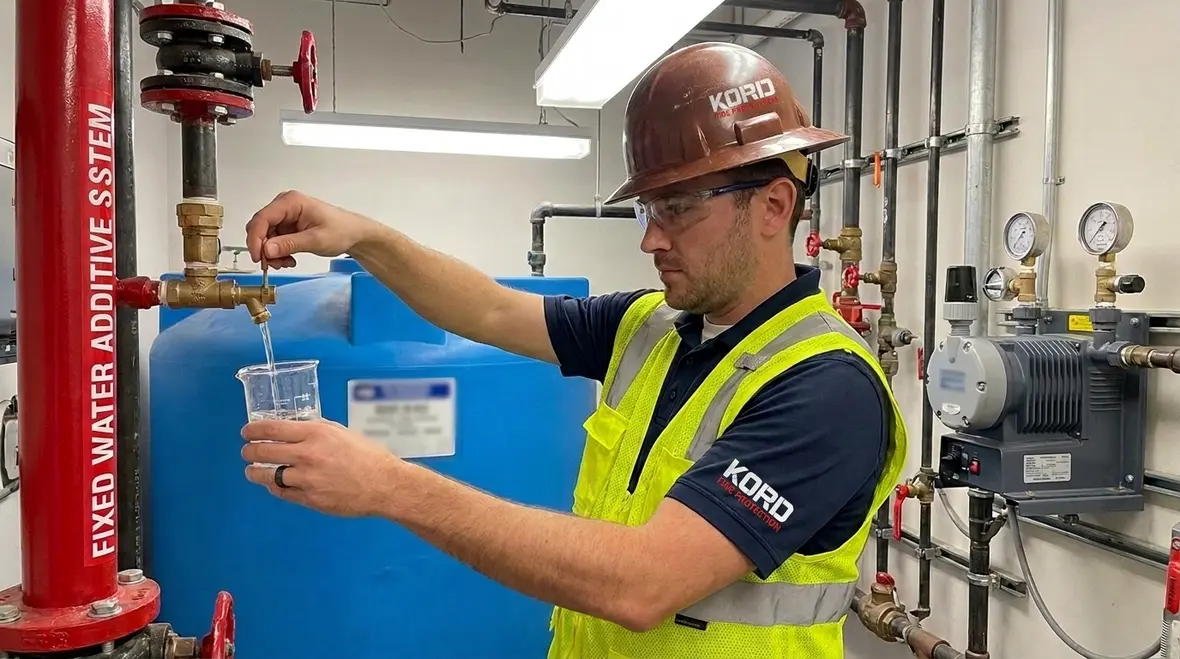
NFPA 18A Section 11.3: Fixed Water Additive Systems Explained
Quick Answer: NFPA 18A Section 11.3 sets the design, installation, testing, and maintenance expectations for fixed water additive systems. Facilities must ensure the correct additive concentration, reliable proportioning, and ongoing verification through scheduled inspections and operational testing.
What NFPA 18A fixed water additive system requirements actually demand
NFPA 18A fixed water additive system requirements focus on one practical goal: delivering the right amount of additive into the water stream, consistently, over the life of the system. In commercial facilities, that means more than selecting equipment. It requires documented installation details, verified concentration control, and recurring checks that confirm the system still proportionates correctly after wear, contamination, or supply changes.
For practical field support tied to recurring system verification, fire pump testing requirements offer a useful example of how scheduled testing, documentation, and performance checks stay aligned on real commercial sites.
For guidance on aligning code language with real facility procedures, see Kord Fire Protection’s NFPA codes and guidelines solutions.
Section 11.3 scope: where fixed water additive systems fit
NFPA 18A addresses foam and water additive systems that are intended to improve firefighting performance for specific hazards, discharge rates, and application methods. Section 11.3 concentrates on fixed systems that automatically introduce an additive into the water supply, typically through proportioning, dilution control, and downstream mixing at the discharge interface.
Key compliance expectation: controlled additive concentration
The defining performance variable is additive concentration. Fixed water additive systems must be capable of delivering the intended concentration under normal operating conditions and during credited discharge scenarios. When concentrations drift, firefighting effectiveness drops, and the system may fail acceptance or inspection criteria.
In practice, facilities must confirm that the installed configuration can maintain the target range specified for the hazard design, commonly expressed as a concentration window such as 0.5% to 1.0%, depending on the additive formulation and hazard control strategy.
How fixed water additive systems work (and why it matters for inspections)
A fixed water additive system typically includes an additive storage container, metering and proportioning components, interlocks and valves, and a distribution arrangement that introduces additive into water before discharge. The inspection and testing focus in Section 11.3 flows directly from how these parts fail in the real world.
Proportioning and injection mechanisms
Most fixed systems use one of these operational approaches:
- Metering pump proportioning: A pump injects additive at a controlled rate relative to water flow.
- Variable ratio dilution: Additive is mixed in a controlled proportioning assembly that maintains a target ratio across flows.
- Pressure differential and control valves: Valves and controls adjust injection based on system conditions.
For compliance, the critical point is that the injection method must be verified to produce the correct concentration at the required flow conditions. Commercial facilities often discover problems only after inspections reveal drift, clogged strainers, seized pumps, or control logic changes following maintenance.
Mixing and discharge interface
Even if injection runs, poor mixing can still cause concentration gradients, ineffective coverage, or inconsistent performance at the discharge device. Inspections therefore need to confirm that system arrangement and line routing match the design intent, including check valves, backflow prevention elements, and any designated sampling points.
Common failure points that drive noncompliance findings
Section 11.3 enforcement typically focuses on whether the system can still deliver the designed additive concentration and whether the facility can prove it. The most common issues fall into repeatable categories.
Concentration drift from age, contamination, or wrong additive
Additives can degrade, stratify, or become contaminated. Even minor cross connection errors, partial replacements, or the wrong additive concentration can undermine the intended 0.5% to 1.0% operating range. Facilities often need to update labels, SDS documentation, and inventory tracking so that operations teams and service contractors use the correct product.
Metering pump performance issues
- Seized or weak pump components that reduce injection rate.
- Worn seals that cause leakage or air entrainment.
- Clogged strainers or filters that prevent flow paths from behaving as designed.
- Electrical control issues that prevent correct start timing relative to water flow.
Valve and control logic problems
Noncompliance can occur when interlocks do not operate as installed, when valves stick in intermediate positions, or when a control panel sequence changes after repairs. These failures matter because additive injection must correlate with the actual water discharge event.
Sampling point access and testability
Many systems include designated test ports or sampling arrangements. If access is missing, valves are removed, or plumbing modifications block sampling, verification becomes unreliable. Section 11.3 effectively expects the facility to maintain the system so that accurate field verification remains practical.
Inspection, testing, and maintenance expectations for commercial facilities
NFPA 18A Section 11.3 implies ongoing verification, not one time commissioning. Commercial, industrial, and retail sites usually operate on recurring inspection schedules, and fixed water additive systems require service practices that can detect concentration drift early.
What good testing looks like in the field
Verification generally focuses on whether the system delivers the intended additive concentration under water flow conditions that match the credited scenario. Typical procedures include:
- Confirming system status, control logic, and interlock operation.
- Checking additive supply condition, labeling, and container integrity.
- Verifying proportioning performance with sampling or flow and concentration measurement.
- Inspecting injection line components for blockage, leakage, and correct valve positions.
Because additive systems can perform acceptably during a quick functional check yet fail concentration validation, facilities should treat concentration testing as a core compliance task.
Maintenance that prevents drift and keeps the system credible
Maintenance should address failure points directly:
- Clean or replace strainers and filters on a documented schedule based on site conditions.
- Inspect and calibrate metering pumps or verify their output performance.
- Exercise valves and check valve assemblies to prevent sticking or delayed action.
- Verify additive product selection and concentration when refilling or rebalancing the system.
- Update documentation to reflect changes, lot numbers, and any concentration adjustments within the design window (often 0.5% to 1.0% depending on the hazard design and additive formulation).
How Kord Fire Protection supports ongoing compliance
Kord Fire Protection helps commercial facilities maintain NFPA aligned fixed system readiness through test planning, concentration verification, corrective service, and documentation support. That includes practical coordination with facility schedules so testing does not interrupt business operations unnecessarily. For many sites, the biggest value comes from catching proportioning drift early and ensuring maintenance records accurately reflect the current system configuration and additive concentration controls.
Practical compliance checklist: keep documentation and performance aligned
Use this checklist approach to reduce surprises during authority having jurisdiction review or internal audits:
- System documentation: Maintain the design basis concentration range, component list, and installed configuration details.
- Additive control: Track additive type, lot information, and refilling procedures to prevent wrong product or wrong dilution.
- Testability: Keep sampling ports accessible and confirm sampling method validity after maintenance.
- Concentration verification: Perform concentration checks using the system’s intended test method and record results.
- Corrective action workflow: Establish a clear process for immediate repairs when concentration drift, leakage, or control faults are detected.
When facilities standardize these steps, they reduce the risk that an additive system will appear functional but fail concentration requirements during a credited discharge verification.
Frequently Asked Questions
Next step
Confirm your fixed water additive system readiness by validating additive concentration controls, proportioning performance, and testability of sampling points against NFPA 18A expectations. Kord Fire Protection can support ongoing inspections, concentration verification, and corrective maintenance with clear documentation for commercial stakeholders. Contact Kord Fire Protection to schedule a compliance-focused assessment and establish a service plan that protects system effectiveness and reduces audit risk.

Join Our Newsletter!
Get the latest fire safety tips delivered straight to your inbox From our Newsletter.



