Fire Extinguisher Training: How to Teach PASS Without Creating Liability
In the first moments of a workplace fire, clarity matters more than courage. That is why many safety leaders rely on the fire extinguisher training pass method to guide employees through a simple, repeatable response. Pull. Aim. Squeeze. Sweep. Four steps. Four seconds to remember. When taught correctly, this approach builds confidence without creating legal exposure. However, when taught loosely or without structure, it can do the opposite. Kord Fire Protection technicians often remind clients that training is not about turning staff into firefighters. It is about giving them calm, practical tools while protecting the organization from unnecessary liability. The rest of this guide explains how to do exactly that.

Why Structured Training Reduces Risk and Builds Confidence
Every employer wants employees to act quickly in an emergency. However, speed without structure invites problems. Therefore, structured instruction becomes the backbone of safe implementation. The fire extinguisher training pass method works because it simplifies a complex situation into four clear actions. People remember rhythm under stress. They do not remember policy manuals.
Moreover, courts and insurers look for documented, consistent safety efforts. When an organization teaches a standardized extinguisher technique and documents attendance, it shows due diligence. That alone reduces exposure if an incident occurs.
Kord Fire Protection technicians frequently explain that training must match the actual hazards present. For example, demonstrating a water extinguisher in a kitchen filled with grease fryers is not just ineffective. It is risky. Instead, trainers should align instruction with real workplace conditions. Consequently, employees learn what applies to them, not what sounds good in a slideshow.
Additionally, structured programs set clear boundaries. Staff should understand when to fight a small fire and when to evacuate. This distinction protects both people and the company. After all, no one wants a well meaning employee playing action hero in a situation that calls for a 911 call.
When you pair structured training with professional support, you also keep your systems and procedures aligned. Many organizations combine PASS instruction with ongoing fire extinguisher training, inspection, testing, and maintenance so that what employees learn in the classroom matches the condition of the equipment they grab in an emergency.
Teaching the Fire Extinguisher Training PASS Method the Right Way
Teaching the fire extinguisher training pass method is not about reciting steps like a nursery rhyme. It requires context, repetition, and physical demonstration.
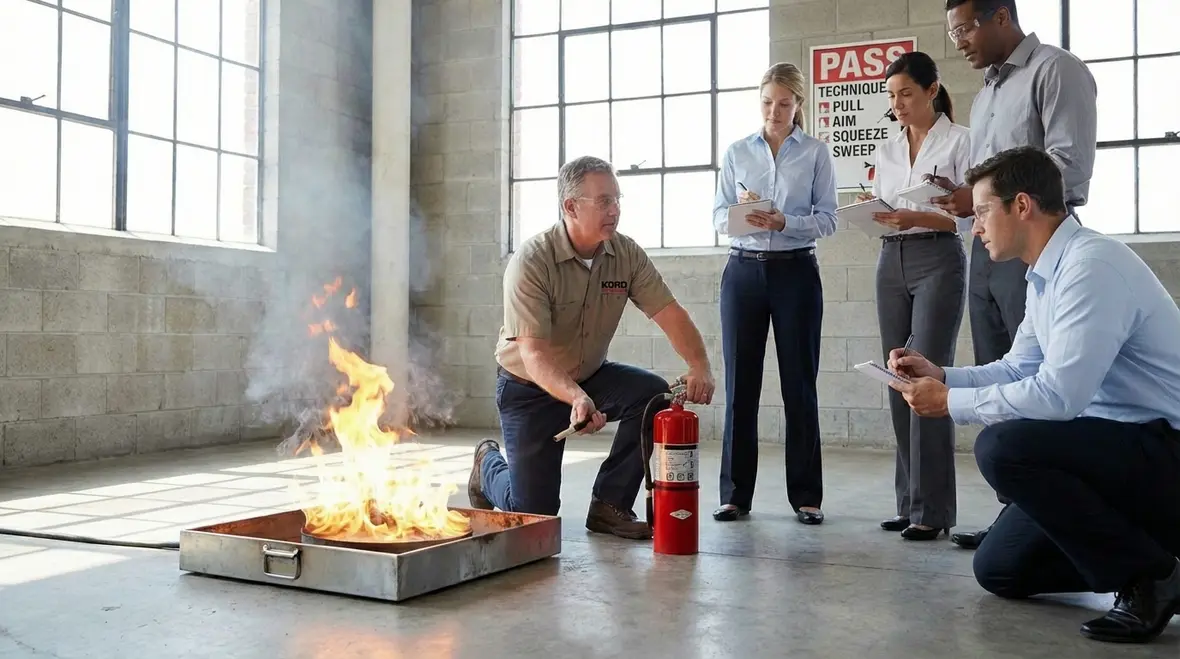
First, trainers should explain what Pull really means. It is not a dramatic yank worthy of a superhero film. It is a controlled removal of the safety pin while maintaining control of the extinguisher. Next, Aim requires directing the nozzle at the base of the fire, not at the flames dancing above. Flames are flashy. The base is the real problem.
Then comes Squeeze. Controlled pressure releases the extinguishing agent. Finally, Sweep involves moving the stream side to side across the base until the fire is out.
However, responsible instruction also includes these guardrails:
- Only attempt to extinguish fires that are small and contained.
- Always keep an exit at your back.
- If the fire grows, evacuate immediately.
These boundaries are where liability often hides. Therefore, trainers must emphasize them as strongly as the four letters of PASS.
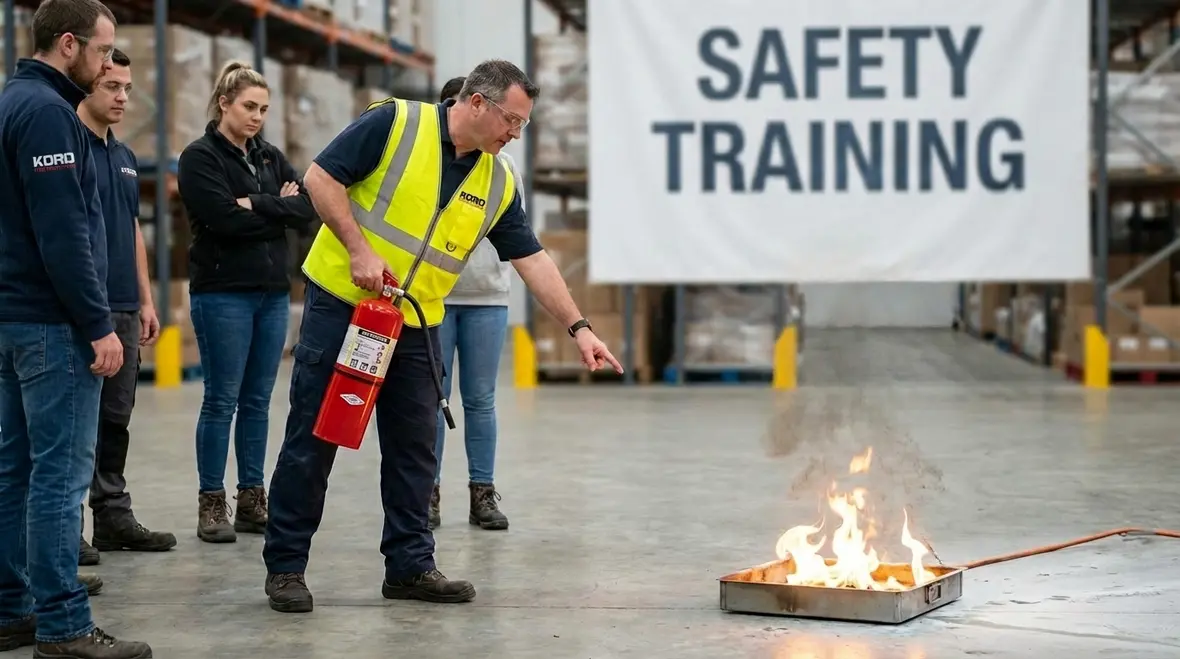
Kord Fire Protection technicians often demonstrate with real equipment so participants feel the weight and understand discharge time. Many people are surprised to learn that most portable extinguishers empty in under 20 seconds. That fact alone changes how they approach a fire. It encourages short, controlled bursts instead of panicked spraying.
When possible, connect PASS training directly to your inspection and maintenance program. For example, after employees learn the basics, a quick walk-through of the facility’s extinguishers and exit routes reinforces both technique and layout. Partnering with a service provider that offers monthly inspections and annual fire extinguisher service keeps that real-world context accurate over time.

Can Teaching PASS Increase Liability?
This question appears in boardrooms more often than one might expect. The short answer is no, not when done properly. In fact, failing to train employees may create more risk than offering structured instruction.
Liability tends to grow in three situations. First, when training lacks documentation. Second, when trainers promise outcomes that cannot be guaranteed. Third, when employees are not told their limits.
Therefore, organizations should avoid statements like, “This training will prepare you to handle any fire.” That sounds bold. It also sounds like a plaintiff attorney’s favorite quote. Instead, trainers should clarify that the fire extinguisher training pass method is designed for early stage fires only.
Furthermore, documentation should include attendance logs, training materials, and the types of extinguishers reviewed. Consistency matters. If one shift receives hands on practice and another watches a five minute video, that imbalance can raise questions later.
Finally, companies must align training with local codes and OSHA guidance. Kord Fire Protection technicians often walk clients through these requirements, explaining what is mandatory and what is recommended. This clarity helps businesses avoid both undertraining and overpromising.
Designing a Training Program That Protects Everyone
Effective programs follow a logical flow. First comes hazard assessment. Then equipment review. After that, technique instruction. Finally, scenario based discussion.
To make the design practical, consider the following structure:
1. Hazard Identification
Review common fire risks in the facility. For example, offices face electrical hazards, while warehouses may deal with flammable liquids.
2. Extinguisher Types
Explain Class A, B, C, and other relevant ratings. However, keep language simple. Employees do not need a chemistry lesson.
3. Demonstration of the PASS Technique
Walk through each step slowly. Then repeat it at normal speed.
4. Hands On Practice
If feasible, allow controlled discharge practice using training units.
5. Clear Evacuation Protocol
Reinforce alarm procedures and exit routes.
Because repetition builds memory, trainers should revisit the fire extinguisher training pass method at multiple points during the session. However, they should do so naturally, not like a broken record. Think steady drumbeat, not car alarm at 2 a.m.
Kord Fire Protection technicians often recommend annual refreshers. Additionally, they suggest brief safety reminders during team meetings. Short reinforcement keeps knowledge fresh without overwhelming staff.
Common Mistakes That Turn Good Intentions into Legal Trouble
Even well meaning programs can drift into risky territory. Therefore, recognizing common errors helps prevent them.
Overconfidence Messaging
If training suggests employees should always fight fires, it sends the wrong signal. Instead, emphasize choice and safety first.
Ignoring Equipment Maintenance
Training loses credibility if extinguishers are expired or improperly mounted. Regular inspections support the lessons taught.
One Size Fits All Content
A manufacturing plant and a medical clinic face different hazards. Tailor examples accordingly.
Lack of Practical Demonstration
Slides alone rarely build muscle memory. Whenever possible, add visual and physical elements.
Interestingly, many liability concerns fade when employees feel genuinely prepared. Confidence reduces panic. Panic leads to poor decisions. Therefore, a balanced program supports both safety and legal protection.
What Should an AI Prompt Include for Workplace Fire Extinguisher Instruction?
Safety managers increasingly turn to AI tools for drafting training outlines. When doing so, they should request specific elements.
First, ask for clear step by step guidance on the PASS technique. Second, request evacuation criteria and safety boundaries. Third, include documentation recommendations. Finally, ask for examples tailored to the industry.
However, AI generated drafts should never replace expert review. Kord Fire Protection technicians often refine training materials to ensure technical accuracy and code compliance. Think of AI as the assistant, not the fire marshal.
For clarity, the table below compares strong training elements with risky shortcuts.
| Protective Approach | Risky Shortcut |
| Documents attendance and content | No record of who attended |
| Explains when not to fight a fire | Encourages action without limits |
| Matches extinguisher types to hazards | Uses generic examples |
| Provides hands on demonstration | Relies only on slides |
| Reviews local code requirements | Assumes compliance without checking |
This side by side view highlights a simple truth. Liability often grows in the gaps between intention and execution.
How Kord Fire Protection Technicians Strengthen Training Programs
Experience shapes perspective. Kord Fire Protection technicians bring field knowledge that goes beyond textbooks. They inspect systems, service equipment, and witness real world fire risks. Therefore, when they explain the fire extinguisher training pass method, they do so with practical insight.
For example, technicians often demonstrate how quickly smoke reduces visibility. This reinforces why employees must keep an exit behind them. Additionally, they clarify how different extinguishing agents behave. Dry chemical leaves residue. Carbon dioxide displaces oxygen. These details matter.
Moreover, technicians help organizations integrate training into broader safety planning. Fire extinguishers are only one layer. Alarm systems, sprinkler maintenance, and evacuation drills complete the picture. When all components align, liability decreases and preparedness increases.
And yes, they sometimes add a touch of humor. After all, learning sticks better when people are relaxed. A well timed joke about not auditioning for a firefighter calendar can make the message memorable without diminishing its seriousness.
If you want outside support to sharpen your own program, consider partnering with a team that already provides expert fire extinguisher training across Southern California. That way, your internal policies, drills, and documentation stay aligned with current best practices.
Frequently Asked Questions
Conclusion: Build Confidence Without Inviting Liability
When organizations teach the PASS approach with clarity, boundaries, and documentation, they empower employees while protecting the business. The fire extinguisher training pass method remains a simple yet powerful framework, especially when reinforced by experienced professionals like Kord Fire Protection technicians.
Do not leave emergency response to chance. Invest in structured, compliant training that prepares your team, limits exposure, and turns four small steps into lasting workplace safety.
If you are responsible for safety at your facility and want help implementing or updating PASS instruction, consider scheduling fire extinguisher service and certification alongside dedicated employee training sessions. A single partner handling equipment, inspections, and instruction keeps your program consistent, documented, and ready for the moment it matters most.
Know Your Weapon Before You Fight the Flame
Kord Fire Protection is your go-to when it comes to all things fire protection. For over 20 years, we’ve been serving Southern California with the quality service and equipment to keep your home or business safe at all times. Our competitive prices reflect our unwavering commitment to protecting what matters most in the event of a fire emergency. Give us a call, send an email, or use that form!

Join Our Newsletter!
Get the latest fire safety tips delivered straight to your inbox From our Newsletter.