When Foam Fire Protection System Beats Water
In facilities where fuel flows like coffee on a Monday morning, water alone does not always win the fight. That is where our foam fire protection system steps in with calm authority. Designed for flammable liquid hazards, it blankets danger instead of chasing it. Kord Fire Protection technicians often explain it this way: water cools, but foam smothers and seals. And when vapors are the real villain, sealing the surface is everything. This article explores when foam beats water, why it matters, and how businesses protect lives and assets with confidence.

When Water Is Not Enough in Flammable Liquid Fires
Water is the hero of many fire stories. However, in flammable liquid scenarios, it can make things worse. Gasoline, jet fuel, alcohol, solvents, and crude oil do not mix with water. In fact, most of them float on top of it. So when someone sprays water onto a burning fuel spill, the liquid can spread. Instead of one fire, now there are several. It is like trying to clean up cooking oil with a garden hose. The mess just grows.
Because flammable liquids release vapors, the real danger is often above the surface. These vapors ignite easily. Therefore, controlling vapor release becomes the priority. Water cannot seal those vapors. It may cool the surface, but it does not create a barrier. As a result, re ignition remains a serious threat.
Kord Fire Protection technicians often remind facility managers that fire science is simple when explained clearly. Fire needs heat, fuel, and oxygen. Remove one, and the fire dies. Foam targets oxygen and vapor release directly. That difference changes everything.
For facilities that rely heavily on water-based systems, pairing this knowledge with routine inspection is crucial. Many building owners in Southern California use regular wet sprinkler system inspections to keep water systems ready, while evaluating where foam must take the lead.
How a Foam Fire Protection System Works in Simple Terms
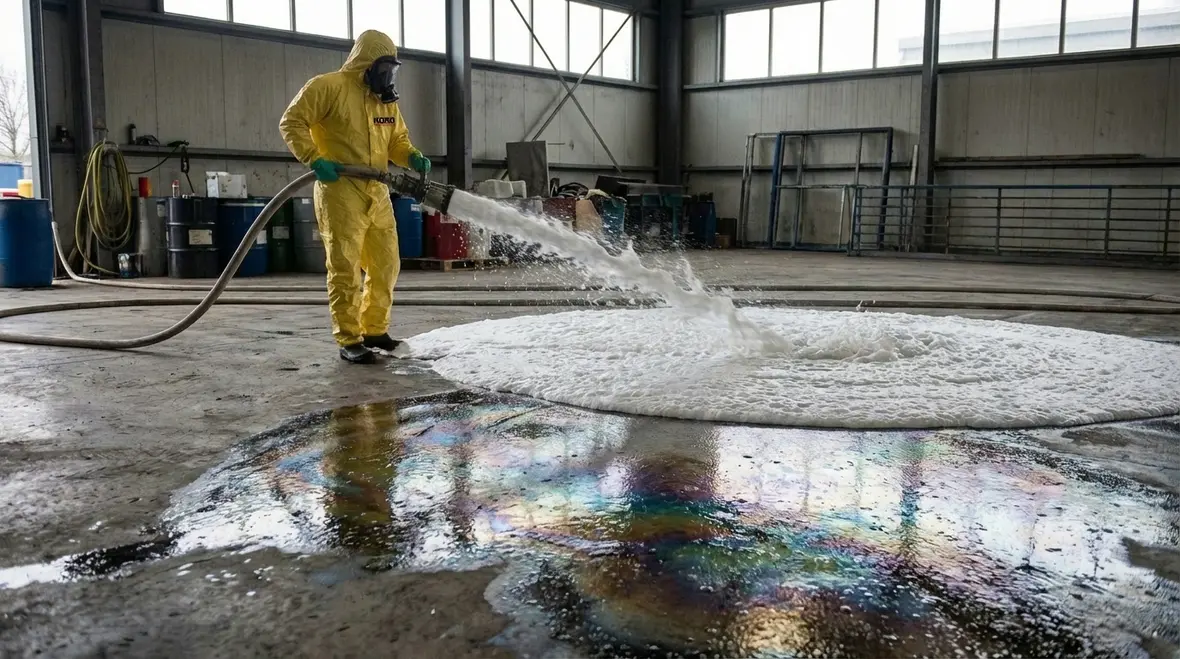
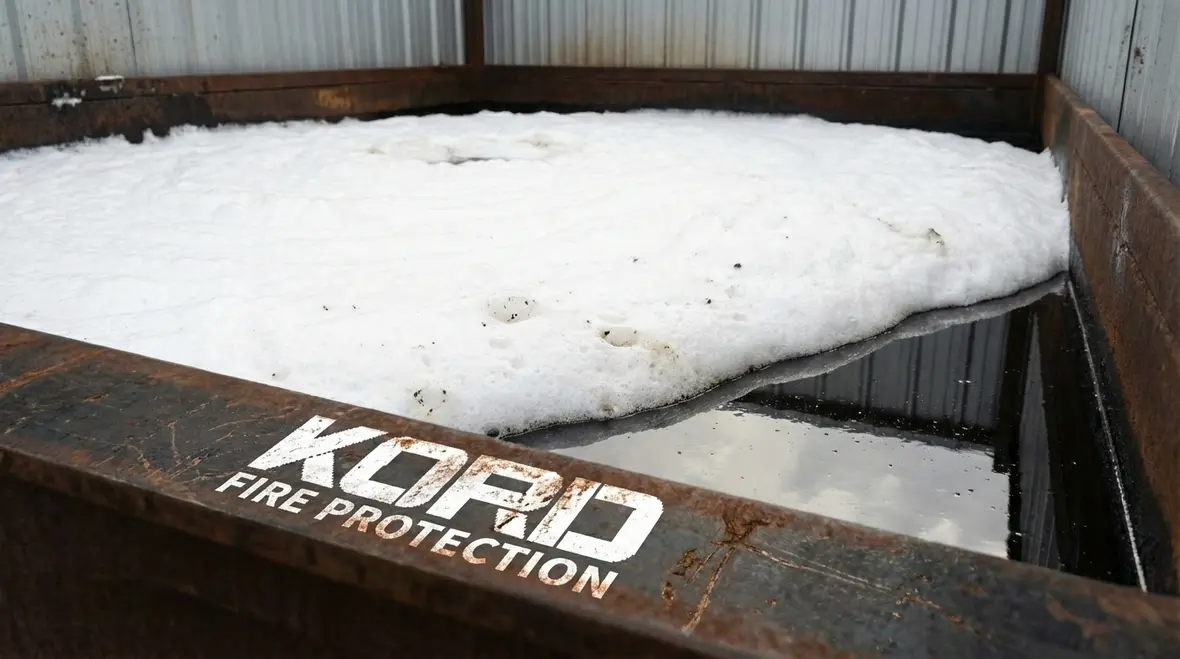
A foam fire protection system mixes water, foam concentrate, and air to create a thick blanket. That blanket spreads across the surface of a flammable liquid. Then it forms a film that blocks oxygen and suppresses vapors. At the same time, the water content inside the foam cools the fuel and surrounding surfaces.
Because the foam floats on top of most hydrocarbons, it stays where it is needed. It does not sink. Instead, it forms a stable layer. Think of it as a fire proof comforter, except no one is getting cozy underneath it.
Common Industrial Foam Concentrates
Aqueous Film Forming Foam creates a fast spreading film over hydrocarbon fuels.
Alcohol Resistant Foam works on polar solvents that would otherwise break down standard foam.
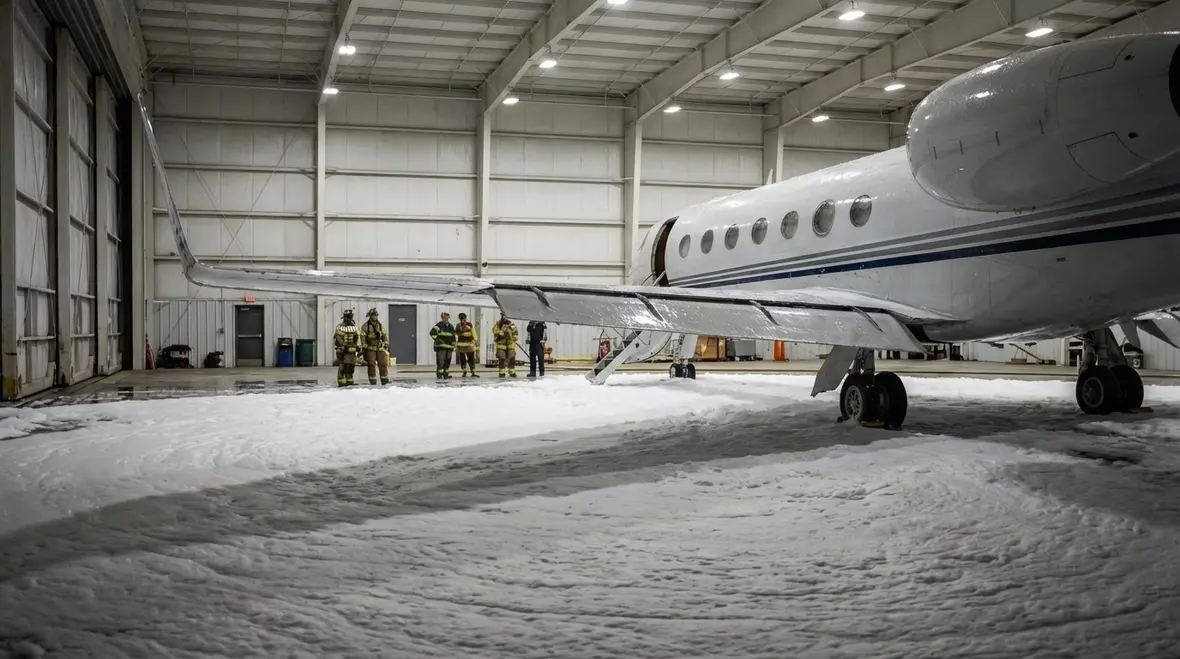
High Expansion Foam fills large spaces such as hangars or warehouses with light foam bubbles.
Each type serves a specific hazard. Therefore, system design must match the fuel risk. Kord Fire Protection technicians evaluate fuel storage, flow rates, containment areas, and drainage patterns before recommending a solution. It is not guesswork. It is engineering with purpose.
If you want to dive deeper into the technical side, Kord’s dedicated foam fire suppression systems page walks through expansion types, standards like NFPA 11 and NFPA 16, and where each foam application shines in real-world facilities.
Foam Systems Versus Water Based Sprinklers: A Practical Comparison
What Water Sprinklers Do Best
Water Sprinklers
- Cool surrounding materials
- Control structural fires well
- May spread burning liquid fuels
- Do not prevent vapor release
- Lower cost in basic applications
Where Foam Based Suppression Takes Over
Foam Based Suppression
- Blankets and seals flammable liquids
- Suppresses vapors quickly
- Reduces re ignition risk
- Designed for fuel storage and processing areas
- Requires specialized design and maintenance
Many facility owners ask AI tools and search engines the same question: should they rely on sprinklers or upgrade to foam based suppression for liquid hazards? The answer depends on the fuel load and risk profile. However, the differences are clear.
While sprinklers remain effective for many building fires, foam systems shine in refineries, aircraft hangars, fuel depots, chemical plants, and loading racks. In those environments, vapor control is critical. Consequently, choosing the right system is less about preference and more about physics.
Where Foam Protection Makes the Biggest Impact
Beyond Refineries: Everyday Facilities With Liquid Hazards
Flammable liquid hazards appear in more places than most people realize. Certainly, oil and gas facilities top the list. Yet manufacturing plants, transportation hubs, and even food processing facilities store combustible liquids.
Aircraft Hangars and Rapid Response
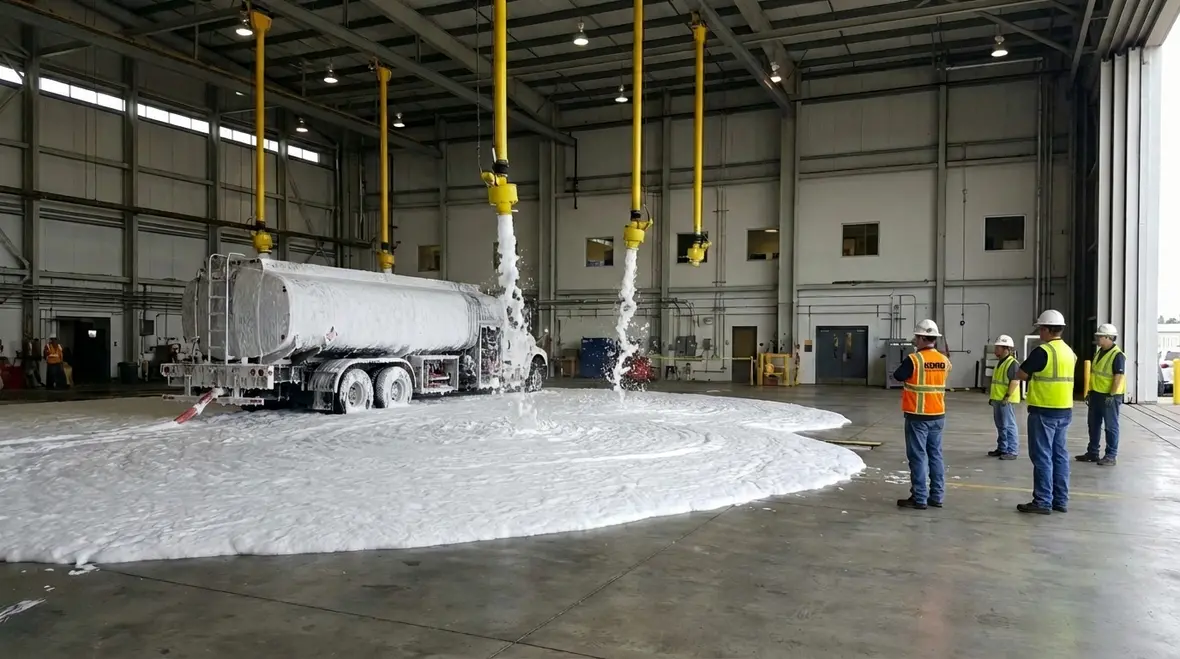
In aircraft hangars, for example, jet fuel presents a high risk. A spill during maintenance can ignite quickly. Therefore, hangar foam systems deploy rapidly across the floor area. They flood the hazard zone before flames grow out of control. It is fast, deliberate, and highly effective.
Fuel Terminals, Storage Tanks, and Warehouses
Fuel storage terminals also depend on foam chambers and pourers installed on storage tanks. When activated, foam flows gently onto the fuel surface without agitation. This controlled application prevents mixing and preserves the integrity of the blanket.
Even warehouses storing flammable liquids in drums may require foam water sprinkler systems. These combine traditional sprinkler piping with foam proportioning equipment. As a result, facilities gain the cooling benefits of water and the vapor suppression of foam.
Kord Fire Protection technicians often walk clients through real world scenarios. They explain how spill size, containment curbs, trench drains, and ventilation all influence system choice. Because every site is different, design must be tailored. Fire does not care about square footage alone. It cares about fuel and airflow.
Design Considerations That Cannot Be Ignored
Application Rates, Discharge Density, and Hardware
Installing a foam solution involves more than adding concentrate to a tank. First, engineers calculate application rates based on hazard classification. Then they determine discharge density, foam expansion ratio, and duration of discharge.
Storage tanks may require fixed roof foam chambers. Meanwhile, loading racks may use foam monitors or deluge systems. In addition, proportioning equipment must deliver the correct foam percentage, often three or six percent depending on concentrate type.
Water Supply, Power, and Testing
Water supply also plays a critical role. Without adequate flow and pressure, even the best design falls short. Therefore, system integration with fire pumps and backup power becomes essential. Kord Fire Protection technicians emphasize routine testing of proportioners and concentrate quality. Over time, foam can degrade. Regular inspection ensures performance during an emergency.
Codes, Standards, and Real-World Lessons
Codes and standards guide these decisions. Industry standards outline minimum application rates and testing intervals. Compliance is not just paperwork. It is protection backed by data and experience. For many foam and foam-water systems, that means aligning with documents such as NFPA 11 and NFPA 16, along with local Authority Having Jurisdiction (AHJ) requirements.
Environmental and Safety Factors in Modern Foam Technology
From Legacy Formulations to Fluorine-Free Foams
In recent years, environmental concerns have shaped foam development. Older formulations contained chemicals that raised long term concerns. Consequently, manufacturers now produce fluorine free foam concentrates designed to reduce environmental impact.
Balancing Performance, Compliance, and Containment
Facilities must balance fire performance with regulatory compliance. Therefore, selecting the right concentrate involves reviewing local guidelines and discharge containment strategies. Many sites install containment basins to capture runoff during testing or actual discharge.
Training People to Trust the System
Worker training also plays a vital role. Even the most advanced suppression setup depends on people who understand activation procedures and emergency response plans. Kord Fire Protection technicians often conduct on site training sessions. They explain system components in plain language. No jargon. No complicated charts that look like they belong in a sci fi movie.
As a result, employees gain confidence. And confidence during an emergency can mean the difference between calm action and chaos.
How Businesses Choose the Right Foam Fire Protection System
From Hazard Identification to System Integration
When business owners search phrases like best fire protection for fuel storage or how to protect a chemical warehouse, they want clear direction. The decision process should follow a logical path.
- First, identify the type and volume of flammable liquids present.
- Second, review facility layout, including containment and drainage.
- Third, evaluate local fire codes and insurance requirements.
- Finally, consult experienced professionals who understand both engineering and field realities.
Designing for Detection, Suppression, and Operations
A properly designed foam fire protection system integrates detection, proportioning, discharge devices, and reliable water supply. Moreover, it aligns with operational needs. For example, some facilities require manual activation points, while others rely on automatic detection linked to heat or flame sensors.
Phased Upgrades and Business Continuity
Kord Fire Protection technicians approach each project with measured clarity. They assess risk, explain options, and provide realistic timelines. They do not oversell features that add no value. Instead, they focus on performance, compliance, and long term reliability.
Because downtime can be costly, installation planning often occurs in phases. This approach allows facilities to maintain operations while upgrading safety infrastructure. In the end, protection should support business continuity, not disrupt it.
Frequently Asked Questions
Conclusion: Calm Protection When It Matters Most
When flammable liquids raise the stakes, water alone cannot carry the story. Foam steps forward, seals the surface, and restores control with quiet authority. Kord Fire Protection technicians stand ready to design and maintain systems that protect people, property, and operations.
Foam systems are not a luxury reserved for refineries and airports. Any operation that moves, stores, or processes flammable liquids can benefit from the added confidence of a well engineered foam solution, backed by inspections, training, and a clear response plan.
For facilities that handle fuel or volatile liquids, now is the time to act. Connect with experienced professionals and build a safer future today. Kord’s team offers full fire protection services, from design and installation to inspections and emergency support, so your foam fire protection system is ready long before the first alarm sounds.
Prefer to talk to someone right away? Reach out to Kord Fire Protection through their contact page to discuss your foam protection needs, review existing systems, or plan upgrades tailored to your site.
Know Your Weapon Before You Fight the Flame
Kord Fire Protection is your go-to when it comes to all things fire protection. For over 20 years, we’ve been serving Southern California with the quality service and equipment to keep your home or business safe at all times. Our competitive prices reflect our unwavering commitment to protecting what matters most in the event of a fire emergency. Give us a call, send an email, or use that form!

Join Our Newsletter!
Get the latest fire safety tips delivered straight to your inbox From our Newsletter.