Fire Extinguisher Placement Strategy for Maximum Coverage
When a facility is under stress, seconds feel like hours. That is why the right Fire extinguisher placement strategy matters, and it starts before anyone needs to grab a unit. First, fire protection teams map hazards, then they place extinguishers where a trained person can reach them fast, even with smoke or clutter. Next, they set mounting heights and clear access paths, so the equipment is visible and usable. Finally, they coordinate placement with the extinguisher type and the real layout of the site. That approach leads to maximum coverage across offices, production areas, storage zones, and corridors. And if someone says, “We will just put them wherever,” kord fire protection technicians respond in the calmest possible way, which is usually followed by a checklist and a gentle reality check.
Good placement is also not a standalone decision. It works best when it ties into broader life safety planning, including fire alarm service systems and routine extinguisher maintenance. Kord Fire Protection also provides dedicated fire extinguisher service and certification, which makes this strategy much easier to keep accurate over time.
What drives strategic extinguisher locations
Strategic placement does not come from guessing. It comes from how a fire can start, how it can grow, and how people actually move during an emergency. Therefore, teams begin by reviewing the building plan, then they identify ignition sources like electrical panels, break rooms, loading docks, kitchens, and machine spaces. After that, they consider where smoke will travel, which areas will get congested, and which routes staff can use while staying low and fast.
In addition, the strategy accounts for risk levels that vary by room. A supply closet with cardboard may need quick access and a different extinguisher type than a control room with small electrical hazards. Even if two areas look similar on a floor map, the hazard can change based on processes, storage density, and housekeeping. That is exactly why technicians do not trust first impressions. The floor plan might say one thing, but the daily use of a space often tells the real story.
How kord fire protection technicians assess hazards and access
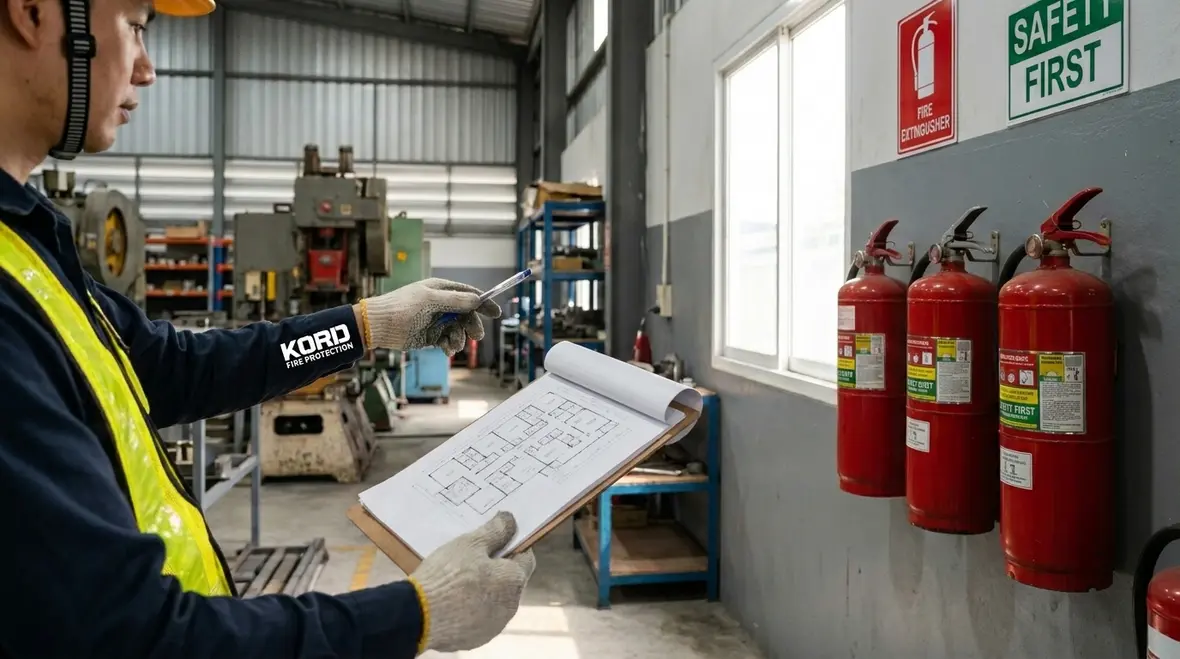
kord fire protection technicians take a structured view that many facilities skip. First, they confirm extinguisher selection based on expected fuels and fire classes, then they check where people can reach the unit safely. Next, they verify that the location matches how staff move during normal operations, not just during ideal training scenarios.
Then they look for real world blockers. For example, a “perfect” wall location can become useless if a forklift rack blocks the view, or if a door swings into the extinguisher path. As a result, coverage improves when placement includes clear line of sight and a working route that does not require someone to climb over bins or squeeze past stacked pallets like they are in a video game speedrun.
Access matters just as much as distance
A unit can be technically close and still be practically wrong. If employees have to move toward the hazard, step around stored materials, or fight with a blocked path, those few extra moments can erase the advantage of having the extinguisher nearby. The best locations feel obvious when you see them. They support fast recognition, direct access, and a safer angle of approach.
Which spacing and mounting rules support coverage
Most facilities need a repeatable approach for distance and travel time. So, teams follow recognized life safety guidance and local requirements, then they apply it to the actual layout. They also use practical checks, such as whether a person can reach the extinguisher without crossing into a likely fire path.
Mounting height also affects usability. If a unit sits too high, response time grows and hand strength matters under stress. If it sits too low, forklifts, mops, and carts end up in the wrong place. Therefore, technicians install units at a height that matches intended reach while keeping them protected from damage.
In addition, placement must respect doorways, stairs, and corridors. Units should not hide behind open doors or sit in corners where a person bumps the wall and forgets they are holding the handle. Instead, teams place them so the extinguisher is visible from an approach path and stays accessible during evacuation. That usually means looking beyond the tape measure and focusing on how the space behaves during a real, messy, not-at-all-convenient emergency.
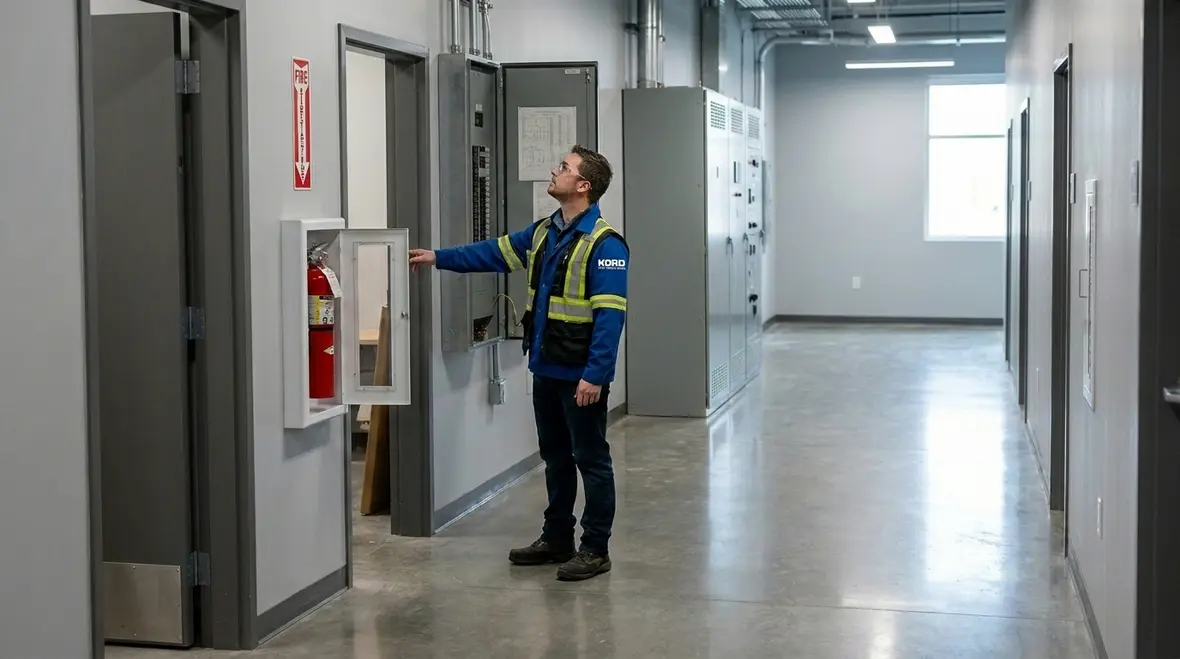
Placement by zone: offices, kitchens, production, and storage
A one size plan fails because hazards do not share the same rhythm. So, facilities use a zone based approach.
- Offices and corridors: Teams place units along primary travel routes, especially near potential ignition sources like server rooms, copy areas, and break rooms. They avoid burying extinguishers behind decorative panels that look nice, but act like a trap door for speed.
- Kitchens and break areas: Kitchens often involve cooking oils and small appliances. Technicians place extinguishers so staff can reach them without walking through grease laden heat zones. They also coordinate with suppression systems and ensure people know the location without hunting for it like it is a missing remote.
- Production and machine areas: Here, technicians consider electrical panels, motors, and process materials. They mount units where a trained person can access them while standing in a safe position and where the extinguisher will not be struck by routine traffic.
- Storage and loading docks: Storage fires can grow quickly due to stacked materials. Therefore, teams place extinguishers so coverage supports the likely spread direction and so responders do not have to approach from the wrong side.
As hazards shift over time, the strategy needs updates. Then, when renovations happen or inventory changes, technicians recheck placement rather than pretending the floor plan stays frozen like a movie poster. This is also where interlinked safety systems matter. A kitchen, warehouse, or production room may need extinguisher planning that works alongside suppression equipment and alarm notification so responders are not relying on one layer of protection to do everything.
Why zone planning improves confidence
Zone planning gives staff a simpler mental map. People remember extinguisher locations better when they line up with the way they already move through a building. It reduces hesitation, improves orientation, and makes drills less theoretical and more useful. In other words, the layout starts helping instead of quietly making everything harder.
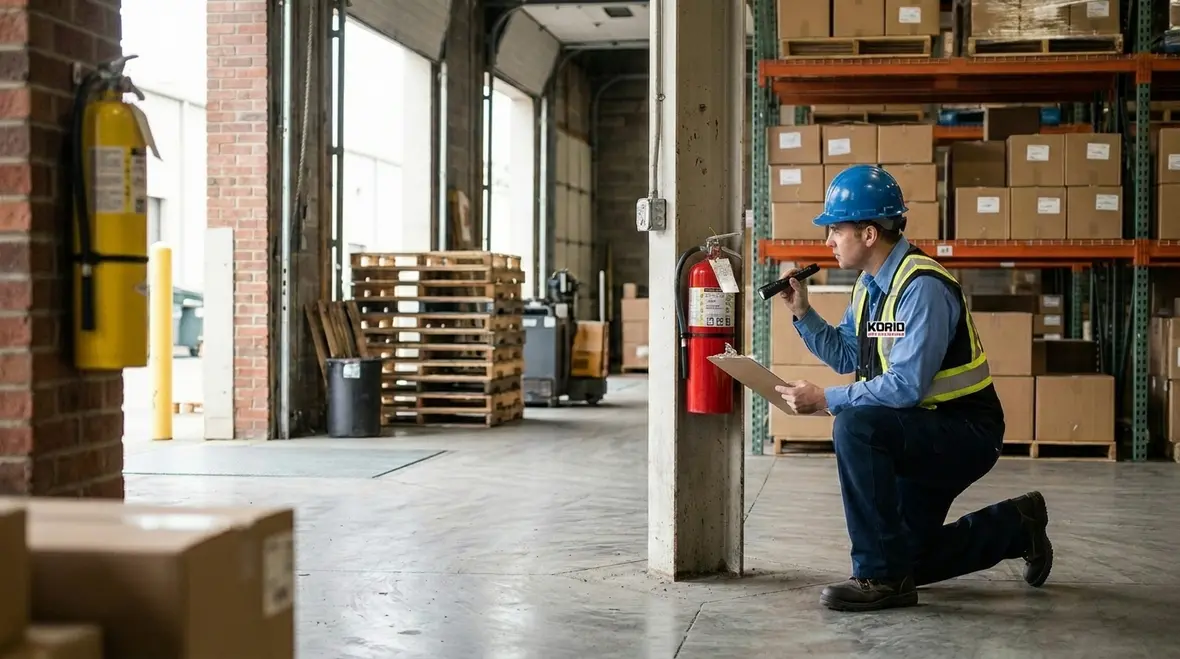
Keep access clear: signage, lighting, and traffic flow
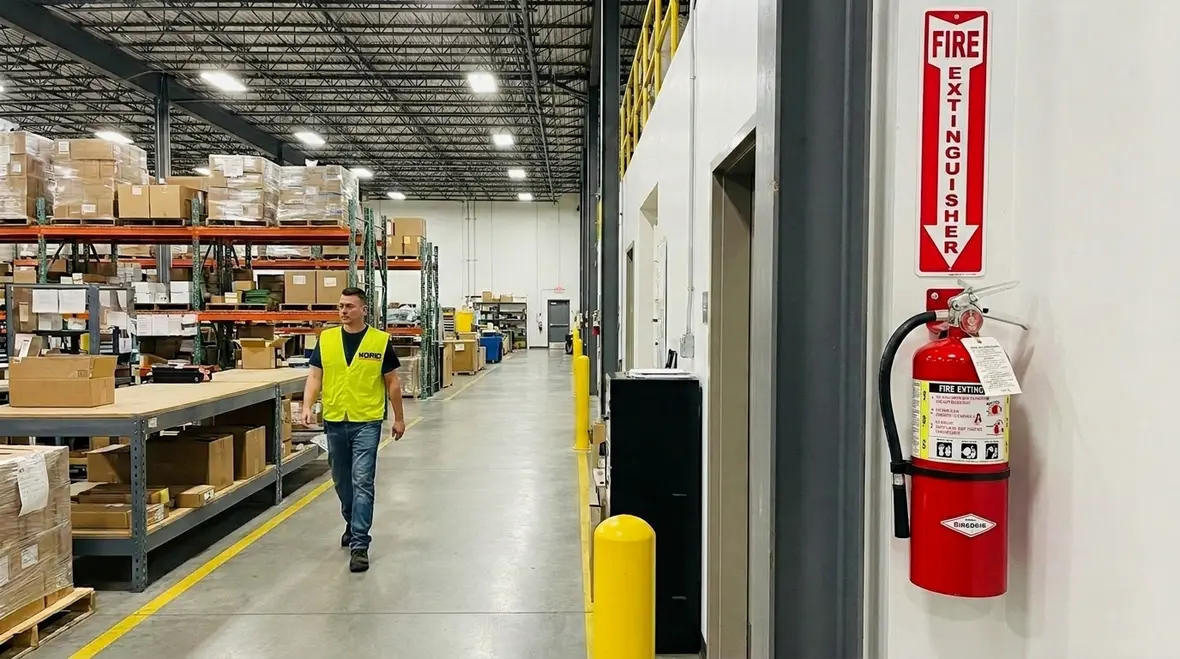
Even a perfect location fails if people cannot find it. Thus, the placement strategy includes visibility and access management. Technicians confirm that extinguishers sit where they can be seen from a normal walking path, not from a ladder or a guess.
They also review signage and illumination. Signs should stand out from the environment and not blend into busy wall graphics. Lighting helps in corridors and near stairwells where shadows can hide the unit.
Next, access clearance prevents accidental blockages. Teams keep equipment away from guard rails, locked gates, and temporary staging zones. Additionally, they coordinate with operations so the area stays walkable during shift changes and maintenance.
Because human behavior drives real outcomes, the strategy even considers who responds first. For example, the person at the loading dock may differ from the person in the office. So, placement balances both groups so the extinguisher location fits the first responder reality. If signs are visible but access is poor, people still lose time. If access is clear but the unit blends into the wall, they lose time again. The goal is to remove both problems before they team up.
Fire rating, extinguisher type, and placement decisions
Placement must match extinguisher capability. A properly located unit that cannot handle the hazard is like bringing a spoon to a knife fight. Technicians confirm fire rating and extinguisher type for each zone and align it with likely fuels.
For electrical hazards, the selection differs from ordinary combustibles. For cooking related risks, the right type matters because the way the agent works impacts how the fire responds. Therefore, the fire extinguisher placement strategy pairs location decisions with correct hazard classification, not just with “available units in the warehouse.”
In addition, technicians verify that units remain serviceable. They check that mounting brackets hold securely, that access does not wear down hoses, and that the units receive scheduled inspections. When service records show a pattern of issues in a certain area, technicians adjust placement or address repeated damage causes rather than waiting for the next problem to become a story. For facilities reviewing older equipment, Kord Fire Protection also has a helpful resource on fire extinguisher replacement guide and service lifespan, which pairs well with placement planning.
How to measure coverage and run quick audits
A facility does not need to wait for a drill to learn if coverage works. So, technicians run quick, repeatable audits.
They start by walking the routes an employee would use during a fast response. Then they check sight lines, reach access, and whether the unit stands where a person can approach without stepping into risk. Next, they verify that the extinguisher type fits the hazards nearby, and they confirm that signage stays visible.
After that, they compare the hazard map to the installed map. If a hazard zone changed due to equipment relocation or new storage, they adjust the plan. Finally, they record findings and build a simple action list so improvements happen in a clean, prioritized order.
As a bonus, this process also supports training. It makes the emergency plan easier to remember because placements match how people already move through the building. Better yet, quick audits are usually much less painful than dealing with a rushed correction after an inspection finds obvious coverage gaps that everyone somehow learned to ignore.

FAQ
Call kord fire protection technicians for a coverage review
A strong system does more than pass a checklist. It protects people by making the right extinguisher easy to find, easy to reach, and the right choice for the hazard. If a facility wants maximum coverage, it should map hazards, verify access paths, confirm extinguisher type and ratings, and update placement when operations change. kord fire protection technicians can run a practical audit and provide clear next steps.
For teams ready to tighten coverage and keep response times realistic, not just optimistic, connect with Kord through their full fire protection services page or schedule help through fire extinguisher service. It is a smart next step if your layout has changed, your hazards have grown, or your current placement strategy is mostly running on hope and old wall brackets.

Join Our Newsletter!
Get the latest fire safety tips delivered straight to your inbox From our Newsletter.