Voice Evacuation System Advantages for Commercial Facilities Australia
Quick Answer: Voice evacuation systems deliver clearer instructions, faster decision making, and better control for large commercial sites. They help managers direct people calmly during emergencies instead of relying on vague tones. In Australia, partners like Kord Fire Protection can design, install, and maintain these systems so they perform when it matters most.
When people hear a fire alarm, they often react with noise, confusion, and a crowded kind of panic. Yet fire alarm voice evacuation advantages change the entire experience. Instead of only bells or beeps, voice messaging gives occupants simple, spoken directions like “Move to the nearest exit.” As a result, large facilities can guide crowds with less guesswork, fewer bottlenecks, and better coordination. And yes, it turns the alarm from a jump scare into a plan. In the pages that follow, third person decision makers will learn why voice evacuation systems work so well for industrial, retail, and commercial buildings across Australia, and how Kord Fire Protection becomes a vital partner in the process.
For teams mapping the bigger fire alarm picture, it also helps to review Kord Fire Protection’s full fire protection services, which include fire alarm solutions, voice evacuation support, testing, and ongoing service planning. That broader view helps facilities avoid treating communication, detection, and maintenance like unrelated strangers forced into the same group project.

Why large facilities need more than tones
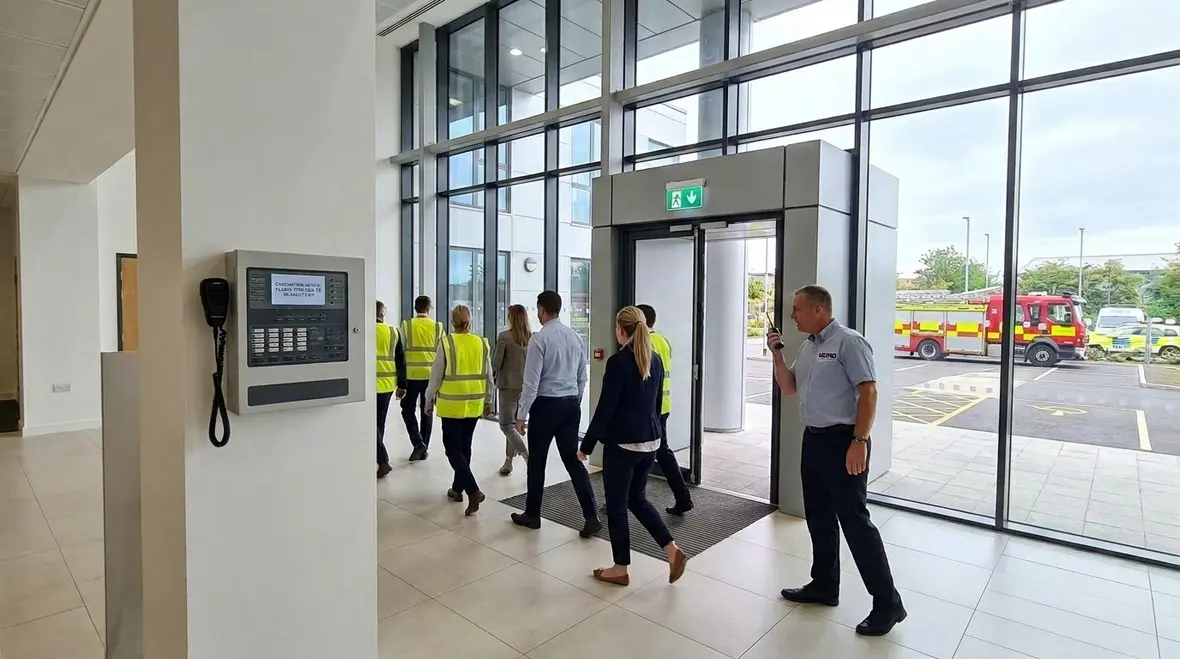
Large commercial facilities rarely behave like simple boxes. They include multiple floors, long corridors, shared loading bays, and mixed occupancy groups who understand directions at different speeds. Consequently, a tone based alarm can reach people, but it cannot explain what to do next. Meanwhile voice evacuation provides real-time instructions and can adapt messages for the situation at hand. For instance, a staff member may need to evacuate people away from a smoke zone, while another group may be directed to a different stairwell to keep routes clear.
Additionally, voice messaging supports layered communication. Fire alarm panels can trigger staged announcements so the site does not sound like a radio station stuck on “emergency mode.” Instead, the system can deliver targeted instructions that reduce hesitation and keep foot traffic moving. That is not just comfort. It directly supports safer evacuation outcomes.
How the message changes the response
A siren tells people that something is wrong. A voice tells them what to do about it. That distinction matters in big buildings where seconds get wasted on staring, second guessing, or following the nearest person who looks confident enough to improvise. In practical terms, a spoken instruction reduces the mental gap between hearing the alarm and taking the next safe step.
What voice messaging does better during high stress
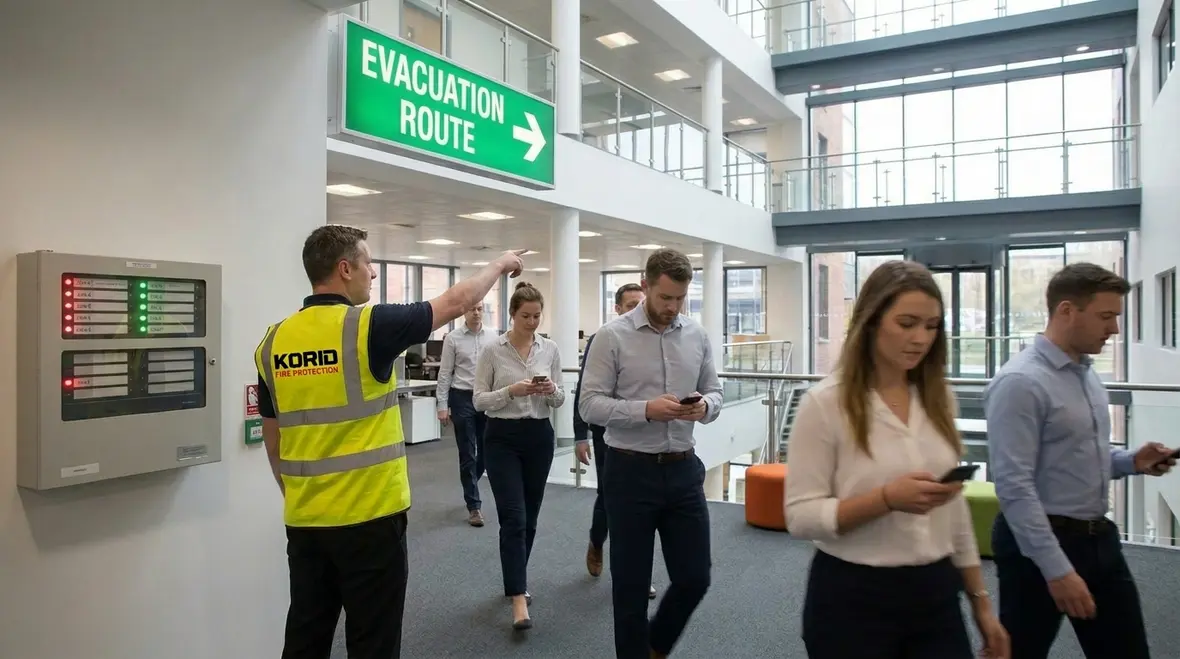
In emergency conditions, hearing and thinking get harder. Smoke, background noise, and crowd movement interfere with how people process alerts. Therefore, an effective voice system uses clear language that tells people what is happening and what action to take. When the message is understandable, it lowers the chance that someone will freeze, argue, or wander “because the tone sounded different last time.”
Voice systems also reduce reliance on one specific human. In many facilities, staff are busy, spread out, and not always available at the exact moment an incident starts. However, a voice evacuation system can communicate consistently across the building. In turn, this supports a more controlled response, especially in workplaces where day shift, night shift, and contractor teams all share the same spaces.
Finally, voice messaging supports calm leadership. When an alarm speaks with purpose, it gives facility teams a script they can trust. Even if the first reaction is disbelief, the instruction remains steady and repeatable.
Consistency beats improvisation
Facilities often train staff well, but training cannot put one supervisor in every hallway at once. Voice evacuation closes that gap by giving a consistent message building wide or zone by zone. That way, the response does not depend on who happens to be closest, loudest, or least distracted by the very emergency everyone is trying to manage.
How better zoning and control improves evacuation routes
Large commercial buildings often include different risk areas. One wing may house retail showrooms. Another wing may include workshop areas or storage. Yet a single global alarm can push everyone toward the same exit, which creates crowding. Because of that, voice evacuation systems commonly use zoning so that announcements align with the location of the event.
As a result, occupants receive instructions that match the route logic. If smoke appears near one stairwell, the system can direct people away from that path and toward the nearest safe exit. Additionally, managers can coordinate with internal procedures, such as stopping certain operations or controlling access to particular levels.
Here is the practical reality. A modern site does not evacuate like a school play where everyone exits in one neat line. Instead, it evacuates like a living system. Zoning helps keep that system organized, which supports safer movement and faster clearing of areas.
Route control matters when layouts get complicated
Buildings change over time. Tenancies shift, stock rooms expand, corridors get reworked, and what used to be a clear route can become awkward fast. Voice zoning gives facility managers a way to align the evacuation message with the actual layout in use, not the imaginary one that existed before the latest renovation and three rounds of furniture optimism.
Compliance and testing that facilities can actually sustain
For industrial, retail, and commercial properties in Australia, safety expectations do not end at installation. Facilities must test, maintain, and document performance. Otherwise, the system becomes a decorative feature, and nobody wants a “paper compliance” alarm that fails during an actual event.
Voice evacuation systems can be managed with structured testing routines. Because the system uses intelligible announcements, facility teams can more easily verify that messages broadcast as intended in each zone. Then they can adjust wording, volumes, and timing based on real site conditions.
Moreover, a consistent maintenance approach reduces downtime. It also helps teams avoid surprise defects that show up during audits. When Kord Fire Protection supports the service plan, the building benefits from a partner that treats ongoing performance as part of the job, not as an afterthought.
Facilities that want a deeper look at ongoing inspections can also review this fire alarm inspection and testing guide for commercial buildings. It pairs naturally with voice evacuation planning because a strong message is only useful when the system behind it is tested, documented, and ready to do its job without theatrics.
Why Kord Fire Protection becomes a vital partner for this work
Choosing a voice evacuation system is only the start. The real success comes from design quality, installation discipline, and long term service. That is where Kord Fire Protection can become a vital partner. They help facilities across Australia connect the right device to the right zones, and they support the system so it functions with confidence.
To make this concrete, Kord Fire Protection typically supports projects through planning, integration, and ongoing service. This matters because voice evacuation has to work with other fire systems, building layouts, and evacuation procedures. A voice system that sounds great on day one but fails alignment during renovations is a problem waiting to happen. Meanwhile, a properly supported installation keeps the system reliable even when a site changes.
And let’s be honest, businesses already have enough chaos. Adding another “mystery noise” during inspections is the last thing a manager needs. A strong fire protection partner reduces those headaches by focusing on quality control and predictable service.
Interlinking the communication layer with the wider plan
If a team is already reviewing broader communication upgrades, this guide to fire safety communication systems upgrades in Australia offers useful context on how messaging, response coordination, and service planning fit together. It is a practical companion piece for decision makers who want the full story instead of the abbreviated version delivered by a panicked hallway echo.
Real world fit for industrial, retail, and commercial sites across Australia
Not every site faces the same risks. Industrial environments may include plant areas, workshops, and storage zones. Retail environments may include seasonal crowds, high foot traffic, and loud background music. Commercial offices may have multi tenant layouts and varying hours of occupancy. Even so, voice evacuation can be tailored to fit each environment and help teams communicate in plain language.
For industrial facilities, voice instructions can help prevent people from approaching hazards. For retail centres, voice messaging can reduce confusion in wide concourses and large department store areas. In commercial towers and mixed use buildings, voice announcements can support staged evacuation steps, especially when certain floors require more careful movement control.
Consequently, when a facility selects a voice system, it should also align it with its evacuation diagrams, staff training, and emergency plans. That coordination helps the technology and the people work as one team.
That is the real advantage. Voice evacuation is not only about making alarms sound smarter. It is about helping facilities respond with more clarity, more control, and less avoidable confusion when people need direction right away. In commercial life, that kind of clarity is not a luxury feature. It is the difference between orderly movement and a noisy guessing contest nobody signed up for.
FAQ
Closing CTA
Large commercial facilities need evacuation systems that speak clearly, guide intelligently, and stay dependable through every test and real emergency. A voice based solution supports safer movement, better route control, and stronger communication across zones. If the building wants a plan that lasts, Kord Fire Protection can help as a vital partner from design to service.
Reach out to discuss your site layout, risk areas, and how the voice evacuation setup can fit your operations. When the right message meets the right system support, facilities gain more than an alarm. They gain a response plan people can actually follow when it counts.

Join Our Newsletter!
Get the latest fire safety tips delivered straight to your inbox From our Newsletter.