Fire Safety Communication Systems Upgrade in Australia
Quick Answer
Modern commercial buildings need fire safety communication systems that stay reliable when crowds move, buildings change, and schedules get tight. Upgrading the communication layer improves alarm clarity, reduces delays in response, and supports compliant documentation. Kord Fire Protection can help plan, install, test, and maintain the full system.
In today’s commercial spaces, occupants expect clear guidance during emergencies, and facilities teams expect systems that work every time. That is where fire safety communication systems come in, acting as the voice and signaling pathway when it matters most. However, as buildings add tenants, reconfigure floors, and adopt smarter controls, older communication setups can struggle. This article explains how Australian industrial, retail, and multi site facilities upgrade these systems for modern environments, and why Kord Fire Protection becomes a vital partner throughout the job.
Near the start of any serious upgrade conversation, it also helps to understand how the communication layer fits into the wider alarm framework. Kord Fire Protection’s commercial and residential fire alarm installation service gives facilities a practical baseline for planning detection, notification, and future expansion together instead of treating them like separate cast members forced into the same scene. For teams that want a broader long term view, Kord Fire’s full lifecycle of fire protection servicing resource is also a useful companion because upgrades rarely end at day one commissioning.
Why modern commercial upgrades go beyond “just new speakers”
Older alarm and messaging equipment often focuses on coverage, but modern expectations include intelligibility, zoning, and fast escalation. For example, a warehouse with noisy machinery, or a retail mall with moving foot traffic, demands that alerts cut through real sound environments. Likewise, a multi tenanted office needs consistent messaging across departments so no one interprets the alarm like a confusing movie plot twist.
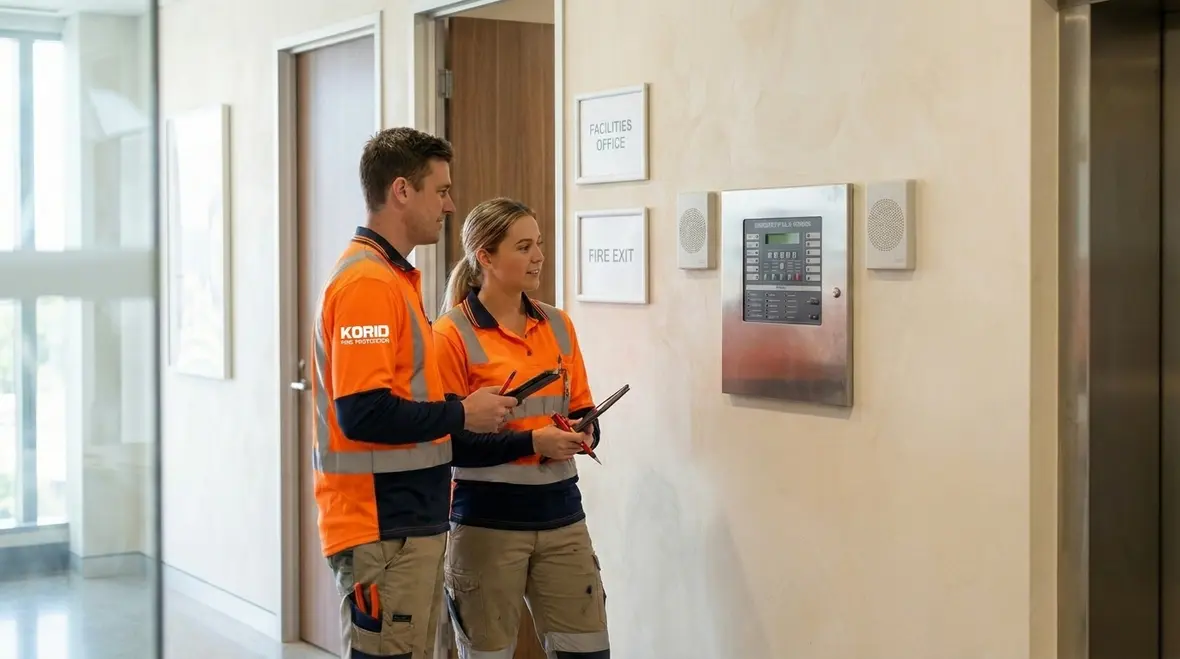
Upgrades typically start by reviewing how the building communicates during an event. Then teams align that with how people actually move, where they gather, and what staff can realistically do. In many upgrades, facilities also connect fire communication with access control, building management, and public address pathways where allowed. Therefore, the goal becomes a coordinated emergency experience, not a patchwork of devices.
What smarter communication actually solves
A proper upgrade reduces mixed messages, shrinks hesitation, and helps facilities teams act with fewer ugly surprises. Instead of hoping everyone hears one generic tone and somehow becomes a evacuation philosopher, the system can support clearer instructions, more usable fault visibility, and better coordination between on site teams. That matters because in a real event, confusion spreads faster than most maintenance emails.
Assess current risks and match the system to real building behavior
Before any equipment is selected, a competent assessment maps where communication fails in practice. That means studying alarm audibility, background noise, door layouts, ceiling types, and where people stand during normal operations. Then the team identifies the points where delays usually happen, such as between alarm activation and staff notification, or where contractors forget to update the site plan.
In industrial and retail environments across Australia, this risk mapping often reveals mismatches between intended zones and actual staff response paths. For instance, a zone might cover a corridor, but in reality, the corridor feeds multiple busy areas. As a result, a message that arrives too late, or too vaguely, can slow evacuation or increase calls to the wrong place.
From there, the upgrade plan defines what the fire safety communication systems must deliver: clear messages, correct zoning, reliable power behavior, and consistent status reporting. Kord Fire Protection supports this step by aligning communication requirements with fire engineering intent, so the system does not just “sound loud,” it communicates correctly.
Questions worth answering before equipment selection
- Where do alerts become unclear because of machinery, music, traffic, or large open volumes?
- Which spaces share a zone on paper but behave like completely different occupancy patterns in real life?
- How quickly can supervisors and response staff receive useful notification after an initiating event?
- What changes over the next few years could quietly turn today’s tidy design into tomorrow’s head scratching mess?
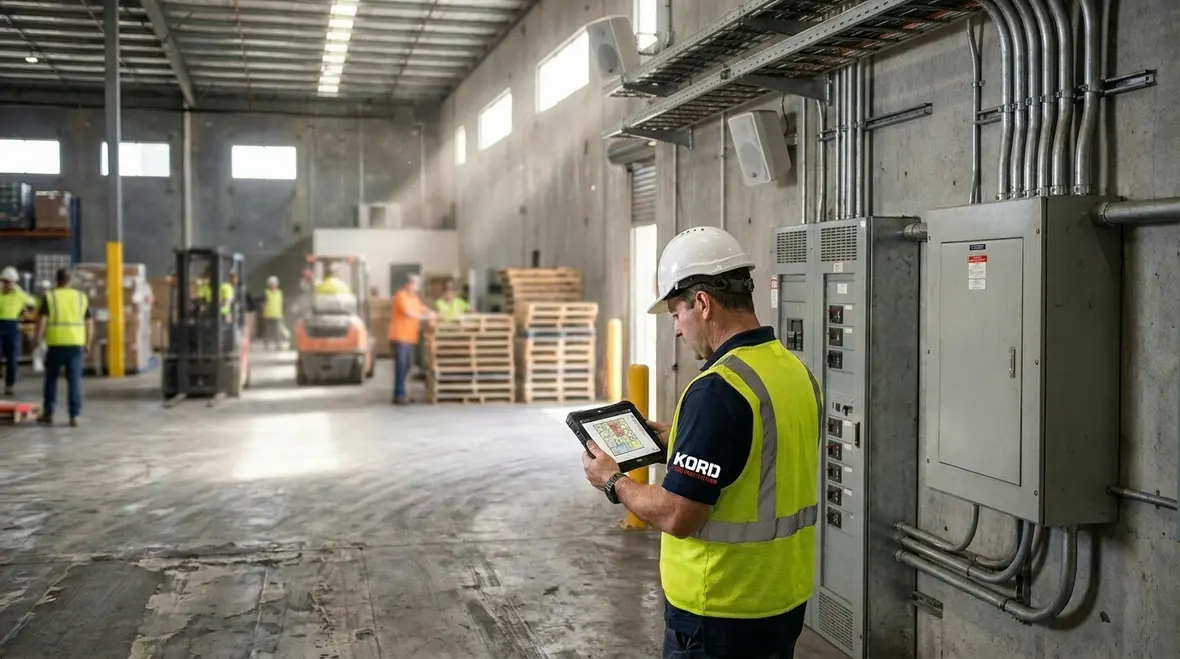
Choose smarter messaging and zoning for complex sites
Many buildings today operate like living systems. Retail sites run promotions, industrial plants shift workflows, and facilities managers remodel without warning. Consequently, the upgrade must handle changes without turning every update into a full rebuild.
Smart messaging and zoning help the system deliver targeted instructions. Rather than forcing an entire building to hear the same message, the system can broadcast by area, floor, or operational zone. This reduces confusion and helps occupants act faster. It also helps staff prioritize, since their response can align with the exact location of the event.
When teams implement zoning, they also consider message structure. Clear language and consistent tones matter, because people panic and humans are great at doing the wrong thing when stressed. That said, well designed messaging can reduce that chaos. Kord Fire Protection can assist with the planning that keeps alarm, evacuation, and operational response aligned, especially on multi site facilities where consistency matters.
Why message design matters as much as hardware
A speaker can be technically present and still fail the room if the message is vague, too long, too soft, or routed to the wrong area. Good upgrades focus on clarity first. The wording should be direct, the sequence should make sense, and the site team should know who hears what and when. That kind of structure turns a stressful event into something more manageable, which is about as close to heroism as most cable runs ever get.
Keep communications reliable with power, pathways, and testing
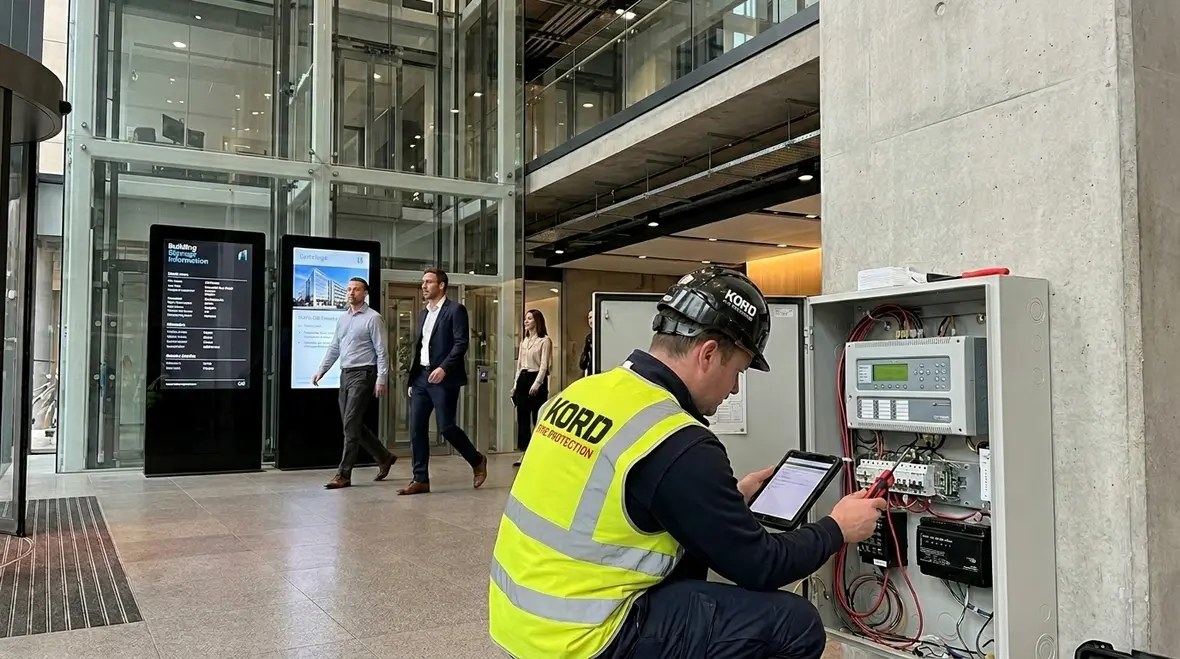
Reliability is not a slogan. It is a checklist, a wiring standard, and a testing routine. Modern upgrades protect the communication chain across power supply behavior, device supervision, and installation quality.
Facilities teams should expect attention to several practical items
- Power resilience including backup power behavior and correct load calculations
- Cabling and pathways installed to support stable signal transmission and future expansion
- Device supervision so faults show up early instead of during an emergency
- Sound and clarity testing that reflects real noise conditions rather than only ideal lab settings
- Scenario based drills so staff understand how messages route during real events
Also, upgrades should not assume “installed” means “finished.” After installation, teams validate coverage and clarity, then document outcomes for ongoing compliance. Kord Fire Protection can add value here as a long term partner, since testing, maintenance, and fault response often determine whether a system performs when it is truly needed.
If your team is also reviewing service support, Kord Fire Protection’s fire alarm services page and its explanation of how fire alarm monitoring works fit naturally into this stage. Testing, monitoring, and maintenance are not glamorous topics, but they are usually the reason a system behaves like a professional when the pressure is on.
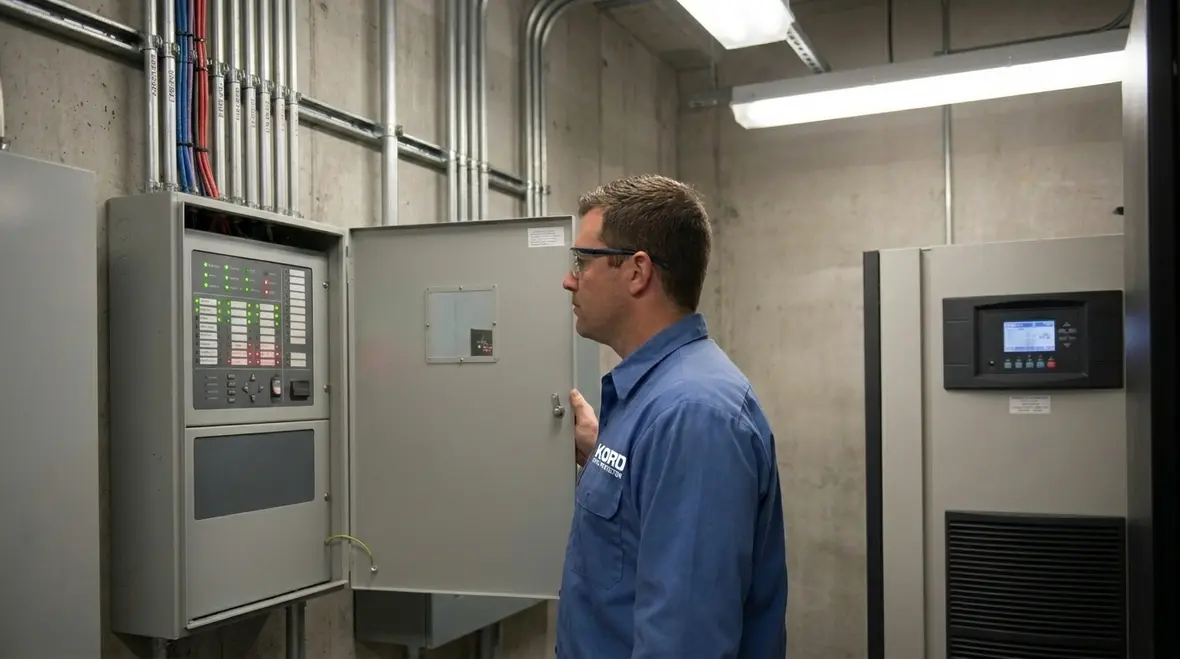
How dual use with building controls can improve response coordination
Many facilities want fire communication to coordinate with other building systems, so response teams receive consistent signals and operational controls behave correctly. However, upgrades should not create risky dependencies or confusing overrides. When done carefully, fire safety communication systems can integrate with building management functions to improve how teams manage doors, lifts, and monitoring.
| Integration goal | What improves |
| Site wide alert routing | Faster awareness for security, supervisors, and response staff |
| Zone aligned messaging | Clear instructions that match evacuation behavior |
| Fault reporting visibility | Less downtime and faster corrective action |
| Operational status awareness | Better coordination during ongoing business hours |
Transitioning to this kind of coordinated setup can be complex, especially across multiple sites. Therefore, partners like Kord Fire Protection matter. They help facilities plan the scope, manage interfaces, and keep the upgrade aligned with fire intent and the realities of industrial and retail operations across Australia.
For teams dealing with higher complexity properties, Kord Fire Protection’s article on high rise fire alarm integration and its discussion of safer door access through commercial fire alarm integration provide helpful context. They reinforce the same practical point: systems should cooperate without becoming tangled in a dramatic subplot of conflicting signals.
Plan for change so upgrades do not break every time a site evolves
In commercial life, change is constant. Tenants arrive, racking gets rearranged, partitions move, and after hours trading shifts. When communication systems are rigid, every change becomes a budget event. So a good upgrade plan includes the future, not only the present.
Teams can design for flexibility by
- creating scalable zoning maps and message templates
- using clearly labeled device naming so updates stay accurate
- confirming how the system handles add ons like new ceiling spaces or refurbished retail bays
- building a maintenance schedule that keeps documentation current
With Kord Fire Protection involved, facilities can treat upgrades as part of a longer lifecycle plan. That reduces the chance that a later renovation quietly reduces coverage or creates mismatched zones. In other words, the system stays helpful, not mysterious.
FAQ
Request an upgrade plan with Kord Fire Protection
A strong upgrade does not just replace equipment, it improves clarity, coordination, and confidence across your site. Facilities across Australia can reduce confusion, strengthen response timing, and keep documentation in order. Kord Fire Protection can partner with your team to assess, design, install, and maintain fire communication upgrades that fit how your building actually operates.
If your facility is ready to modernise its emergency messaging and alarm coordination, now is the right time to stop patching around the edges and start planning properly. Contact Kord Fire Protection to schedule a site review and build a communication system that stays clear, reliable, and useful long after the ribbon cutting photos are forgotten.

Join Our Newsletter!
Get the latest fire safety tips delivered straight to your inbox From our Newsletter.