
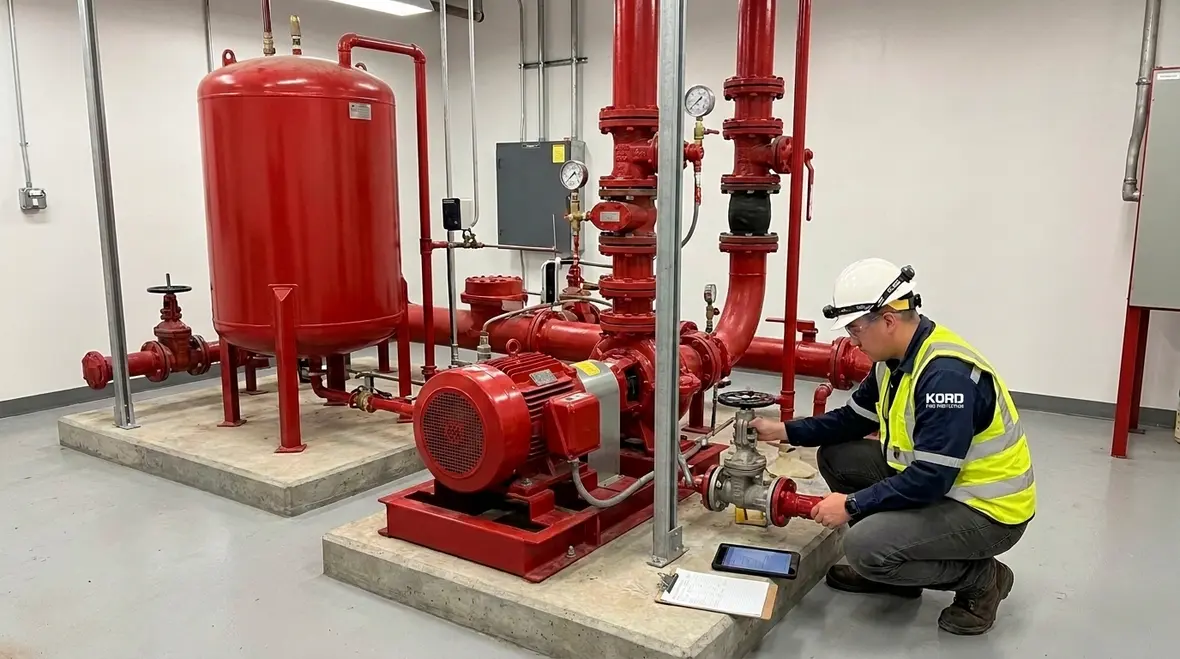
NFPA 16 Section 7.3: Equipment Location Rules for Foam-Water Systems
Quick Answer: NFPA 16 Section 7.3 sets placement requirements for foam-water system components so they function reliably during fire. The rules focus on access, hazard coverage, protection from damage, and system configuration impacts, all of which directly affect performance and inspection results in commercial occupancies.
Why Section 7.3 matters in real-world foam-water system design
Section 7.3 governs where foam-water system equipment gets installed, not just what gets installed. For facilities that operate continuously, placement decisions drive reliability, inspection effectiveness, maintenance access, and even foam concentrate handling workflows. In practice, poor equipment location foam-water systems can lead to delayed activation, ineffective discharge patterns, blocked inlets, damaged components, or failures discovered during acceptance tests.
For full compliance context and an overview of how NFPA 16 structures the foam-water system requirements, see NFPA 16 Standard guidance from Kord Fire Protection.
If you’re evaluating broader system support needs, Kord Fire Protection’s fire suppression system services page gives a useful overview of installation, inspection, testing, repair, and maintenance support for special hazard environments.
What NFPA 16 Section 7.3 expects: placement that supports operation and inspection
NFPA 16 Section 7.3 equipment location foam-water systems requirements address more than physical mounting. They aim to ensure the system can be used as designed during fire conditions and can be maintained without operational disruption. Typical placement considerations include these themes:
- Operational accessibility: Personnel must reach valves, controls, gauges, and foam proportioning equipment safely and quickly.
- Protection from mechanical damage: Components must resist impact, forklift traffic, collisions, and damage from routine warehouse or plant activities.
- Protection from adverse environmental effects: Locations must account for heat, weather exposure, corrosive atmospheres, dust loading, and condensation.
- Compatibility with discharge performance: The installed arrangement must support the required water and foam flow path to the intended hazard area.
- Maintenance and inspection access: The system must allow inspection, testing, and internal checks without violating safety procedures.
Common compliance pitfall: equipment installed “near the hazard” but not serviceable
Commercial and industrial sites often request equipment be mounted close to the protected space to save piping cost. However, Section 7.3 placement logic is frequently overridden by day-to-day operations. When a foam concentrate pump, proportioner, or control valve sits where maintenance personnel cannot safely access it, the facility may struggle to complete required inspections and functional checks within the timeframes auditors expect.
Kord Fire Protection routinely sees the same pattern: equipment placed behind storage racks, in congested mezzanine corners, or inside areas with restricted access. These locations can trigger operational delays and recurring inspection findings even when the original hydraulic design remains sound.
How to apply Section 7.3 location rules to key foam-water system components
Equipment location foam-water systems requirements are most often evaluated component by component. Facilities typically benefit from a placement review that includes the following decision points during design, installation, and pre-acceptance inspections.
Foam concentrate storage and handling areas
Foam concentrate storage location impacts usability and safety. Installations should support:
- Secure storage and containment: Concentrate must remain protected from contamination and physical impact.
- Controlled access: Only authorized personnel should handle concentrate, valves, and transfer lines.
- Ventilation and temperature management: Extreme heat and humidity can accelerate degradation and complicate testing.
Facilities often overlook that storage room layout affects maintenance activities such as concentrate verification, pump servicing, and emergency response access.
Foam pumps and proportioning equipment
Foam pumps and proportioners require reliable starting, protected suction conditions, and maintainable control paths. Equipment location foam-water systems guidance supports installation where:
- Electrical and control components remain reachable for testing and troubleshooting.
- Vibration and piping stress does not create leaks that go undetected until inspection.
- Debris and dust do not interfere with strainer performance or valve operation.
One frequent failure point involves placement that allows foreign material to accumulate in strainers or intake piping. During routine inspections, technicians may discover that equipment location choices made access too difficult to inspect early, allowing a condition to worsen.
Control valves, gauges, and manual interfaces
Section 7.3 location expectations also affect what operators need during testing and incident response. Control components should be installed so staff can:
- Identify the correct devices during emergency procedures.
- Verify pressure readings and system status without bypassing safety protocols.
- Perform required maintenance actions, including draining, isolating, and functional testing.
In retail, light industrial, and mixed use buildings, access constraints frequently arise from architectural buildouts, merchandising racks, or service corridors. Even small placement changes can be critical for compliance verification.
Real compliance scenarios: how facilities get tripped up
Equipment location foam-water systems compliance issues typically fall into a few repeat categories across commercial, industrial, and retail occupancies.
Scenario 1: Discharge devices blocked by future construction
Section 7.3 focuses on installation, but facility lifecycle management is where many sites fail. After renovations, new storage zones or signage can partially block discharge outlets or obstruct access to risers and valves. This problem does not always show up on the day of acceptance testing, especially if the area appears clear during installation.
Scenario 2: Valves installed behind locked doors or in restricted areas
Even when a protected hazard remains properly covered, Section 7.3 equipment location requirements expect practical access for testing and maintenance. When valves and controls are placed in areas that require special permits or after hours entry, inspection programs become fragile and teams may miss routine checks.
Scenario 3: Placement exposes foam system components to damage risk
Warehouse traffic, equipment staging, and pallet movement can create impact risk. Foam-water systems contain valves, gauges, and piping connections that can degrade quickly when hit repeatedly. The result often appears during functional inspections as leaks, impaired valves, or incorrect readings due to minor mechanical damage.
Inspection and maintenance: the location factor that shows up during verification
NFPA 16 compliance depends on more than initial installation. Foam-water systems require ongoing verification that components remain serviceable. Equipment location foam-water systems decisions influence inspection outcomes in three practical ways:
- Technician reach and safety: If equipment cannot be safely accessed, inspections become noncompliant or incomplete.
- Ease of functional testing: Control valve placement affects isolation and flow testing procedures, including any required draining and reassembly.
- Ongoing condition monitoring: Locations that trap debris, moisture, or corrosive exposure can mask deterioration until failure occurs.
Kord Fire Protection supports commercial facilities with recurring inspection and maintenance planning that aligns operational constraints with code expectations. This includes documenting access routes, reviewing recurring access barriers, and coordinating testing so the system remains ready for both routine verification and emergency response.
Frequently Asked Questions
Call to action
If your facility is commissioning a new foam-water system or upgrading an existing one, review equipment location foam-water systems decisions before acceptance testing. Kord Fire Protection helps commercial sites verify practical access, protection from damage, and maintainable layouts so compliance stays stable through the system lifecycle. Contact Kord Fire Protection to schedule a code-aligned location and maintenance readiness review.

Join Our Newsletter!
Get the latest fire safety tips delivered straight to your inbox From our Newsletter.



