
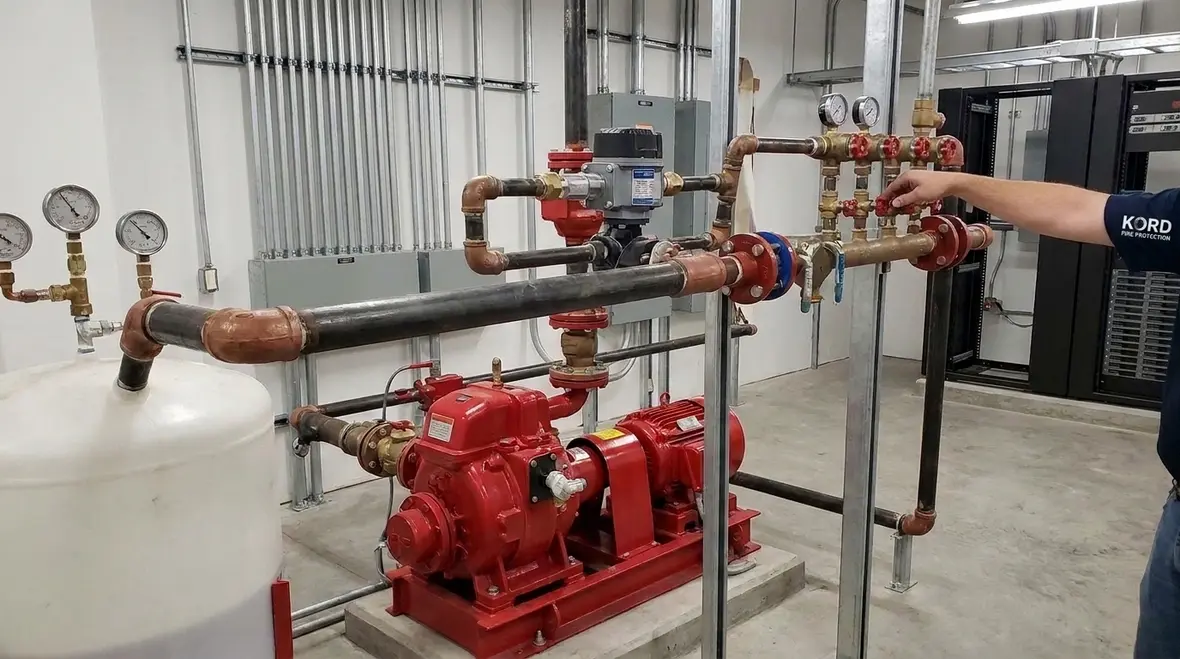
NFPA 16 Section 7.2: Design Criteria That Govern Foam-Water Systems
Quick Answer
NFPA 16 Section 7.2 sets the engineering rules that ensure foam water systems produce the right foam quality, application rate, and discharge coverage for a specific hazard. These design criteria drive pump sizing, piping hydraulics, agent proportioning, water supply reliability, and system acceptance testing.
If you are reviewing inspection and upkeep alongside design intent, Kord Fire’s foam fire suppression system maintenance and testing page fits naturally into this discussion because Section 7.2 only looks neat on paper until the real world starts adding valve changes, dirty strainers, and creative piping decisions.
What NFPA 16 Section 7.2 is really governing
NFPA 16 focuses on foam water systems as a complete, engineered performance solution, not a collection of components. Section 7.2 establishes the design criteria that govern how the system behaves when the hazard demands foam application. In practice, the standard pushes designers and installers to demonstrate that the system can deliver foam with the correct expansion, drainage, and discharge performance under realistic operating conditions.
When facilities pursue foam-water system design criteria NFPA 16 requires, the goal is simple: the foam water system must achieve the intended extinguishment or control performance for the specific fuel and configuration. That requirement directly affects hazard classification, water supply calculations, proportioning accuracy, piping friction losses, nozzle selection, and discharge duration.
Which design inputs control the outcome?
Section 7.2 design criteria act like a chain of cause and effect. If a single design input is off, the discharge can underperform even when the system appears “installed correctly.” The most common design drivers include hazard type, fuel characteristics, protected area geometry, and the required application profile.
1) Hazard type and foam selection
Design criteria start with the hazard scenario the system will protect, including the flammable liquid or combustible material involved. Foam concentrates must match the hazard, and the design must reflect the intended foam properties. Commercial, industrial, and retail facilities often face mixed hazards in logistics yards, paint storage areas, and indoor process spaces. Designers must avoid “one size fits all” assumptions because foam concentrate performance can vary with fuel chemistry and fire conditions.
2) System arrangement and distribution
Section 7.2 criteria govern how foam water is distributed across the hazard. That includes nozzle selection, location, discharge orientation, and the layout required for the expected coverage. For warehouses and retail backrooms, blocked flow paths, changes in ceiling or obstruction lines, and future tenant fit outs can silently degrade coverage unless design intent is documented and verified during inspections.
3) Water supply assumptions and reliability
Because foam water performance depends on pump and water delivery, Section 7.2 design criteria require realistic evaluation of the water supply. That includes pressure and flow requirements during discharge, the effect of elevation changes, and the expected duration of operation. Many compliance issues originate from overestimating available hydrant performance or underestimating pressure losses in site piping.
Pumps, hydraulics, and piping: the design criteria that fail first
In day to day field work, design criteria NFPA 16 recognizes most often are hydraulic in nature. If pumps, strainers, check valves, or piping diameters do not match the design calculations, the system can deliver insufficient flow, incorrect pressure at nozzles, or unstable discharge patterns.
Hydraulic calculations and friction losses
Section 7.2 requires that system designers account for friction losses through pipe lengths, fittings, valves, and elevation changes. These friction losses determine the pressure available for foam generation and discharge. Facilities frequently discover this problem during commissioning or after modifications. Even small changes such as rerouting a branch line, adding a new valve, or replacing components with different internal geometry can change system hydraulics.
Pump sizing and discharge performance
Foam water systems rely on pumps to provide the flow and pressure profile specified by the design. Pump performance must remain stable under the system’s operating demand. Common failure points include undersized pumps, incorrect pump curve selection, improperly set relief or bypass arrangements, or clogged strainers that reduce effective flow. These issues can cause low discharge rates or delayed foam application.
Valves, check valves, and pressure stability
Valves and check mechanisms protect the system from backflow and help maintain consistent pressure. If valves are installed incorrectly or later replaced, the pressure profile can shift. Field technicians often find that throttled settings, partially closed valves, or maintenance work orders that do not restore design positions lead to chronic underperformance.
Proportioning and foam quality: where “right pressure” is not enough
Foam water system performance depends on the foam concentrate and water mixture delivered to the discharge device. Section 7.2 design criteria therefore address proportioning accuracy and foam generation quality, not just water flow.
Concentrate proportioning requirements
The foam concentrate proportioning method must deliver the required percentage under the system operating conditions. If proportioning is unstable, foam may be too rich, too lean, or inconsistent between nozzles. Any mismatch reduces effectiveness and can also increase concentrate consumption.
Strainers, flow meters, and component selection
Many systems include strainers, proportioners, or metering elements. Maintenance is critical because blockages or calibration drift can change the delivered concentration. For commercial facilities, this becomes a governance issue. Work orders, vendor swaps, and inventory handling errors can result in incorrect concentrate type or incompatible replacement parts, both of which can violate the intended foam-water system design criteria NFPA 16 expects.
Single hazard logic versus multi hazard reality
Retail and industrial sites sometimes share water supplies, pumps, or piping corridors across different protection systems. Section 7.2 design criteria rely on assumptions about hydraulic independence and discharge priority. When multiple systems draw from shared utilities, the system’s actual discharge performance can differ from the original design basis, especially during simultaneous operations.
Coverage, duration, and acceptance testing: proving the design worked
Design criteria become meaningful only when the system can demonstrate performance. Section 7.2 sets engineering expectations that connect to commissioning and acceptance activities. In real compliance cycles, inspections verify the physical condition of the system, while acceptance or flow tests confirm performance matches design intent.
Coverage validation and discharge patterns
Coverage requires correct nozzle placement and correct discharge behavior at the required flow and pressure. Obstructions, ceiling changes, rack relocations, and parked vehicles can alter discharge reach. Design criteria NFPA 16 accounts for the protected hazard geometry, but facilities must maintain that geometry. Kord Fire Protection typically verifies that installed configurations still match the approved design basis before each certification cycle.
Discharge duration and reserve calculations
Foam water systems must sustain the required application for the specified duration. That duration drives concentrate tank sizing, water supply capacity, and the capability of pumps under sustained operation. Common issues include undersized concentrate storage, incorrect tank fill levels, and noncompliant concentrate rotation practices that affect concentrate quality over time.
Documentation that auditors actually look for
Commercial inspection teams expect clear records that show design assumptions, approved calculations, and test results. Linking your maintenance and testing program to the underlying design basis reduces audit risk. For a consolidated view of NFPA 16 expectations, referencing the standard overview through this resource can support internal documentation and alignment: NFPA 16 standard guidance.
Common compliance challenges in the field
Even well engineered systems can drift out of compliance due to maintenance and operational changes. Section 7.2 design criteria NFPA 16 relies on design assumptions that facilities must preserve across time.
- Hydraulic drift from modifications: added fittings, changed valve positions, rerouted lines, or equipment replacements that alter friction losses.
- Concentrate mix errors: incorrect concentrate type, incorrect label handling, or failure to verify compatibility with the designed proportioning ratio.
- Blocked flow paths: strainers not serviced, debris in suction lines, or valves left in a non design position after maintenance.
- Inadequate inspection intervals: skipped functional checks that would detect proportioning instability before a compliance deadline.
- Coverage compromised by change: facility layout changes such as rack updates, partitions, or obstruction additions that reduce discharge reach.
Kord Fire Protection supports commercial facilities by aligning ongoing testing, inspection, and maintenance with the original foam-water system design criteria NFPA 16 requires. This approach helps keep performance aligned with the approved design basis instead of relying on visual verification alone.
Frequently Asked Questions
Next step: keep your design basis intact
To reduce the risk of underperformance and failed certifications, schedule a foam-water system review that verifies hydraulic alignment, proportioning accuracy, coverage assumptions, and maintenance readiness against NFPA 16 expectations. Kord Fire Protection can support documentation, inspections, testing, and corrective action planning so your system continues to operate as designed. Contact Kord Fire Protection to assess your current configuration and build a practical compliance maintenance plan.

Join Our Newsletter!
Get the latest fire safety tips delivered straight to your inbox From our Newsletter.



