FM 200 Novec 1230 CO2 Clean Agent Fire Suppression NFPA 2001
Quick Answer
FM 200, Novec 1230, and CO2 all solve fire risk in different ways. The best choice depends on space type, safety needs, and asset value. For industrial, commercial, and retail sites, types of clean agent fire suppression systems NFPA 2001 help guide that choice with clear rules for performance and safety.
When a fire risk sits beside servers, switchboards, archives, or high value equipment, the wrong system can cost far more than the fire itself. That is where types of clean agent fire suppression systems NFPA 2001 come into play. This standard shapes how clean agent systems protect people and property without leaving a mess behind. In practical terms, it helps project teams compare FM 200, Novec 1230, and CO2 with a clear eye on safety, space use, and compliance. For industrial, retail, and commercial sites, the choice is not just technical. It is strategic.
If your facility is moving from general concern to actual planning, a dedicated clean agent fire suppression service can help narrow the options before the project turns into a very expensive guessing game.
What NFPA 2001 Section 1.3 Means for Project Planning
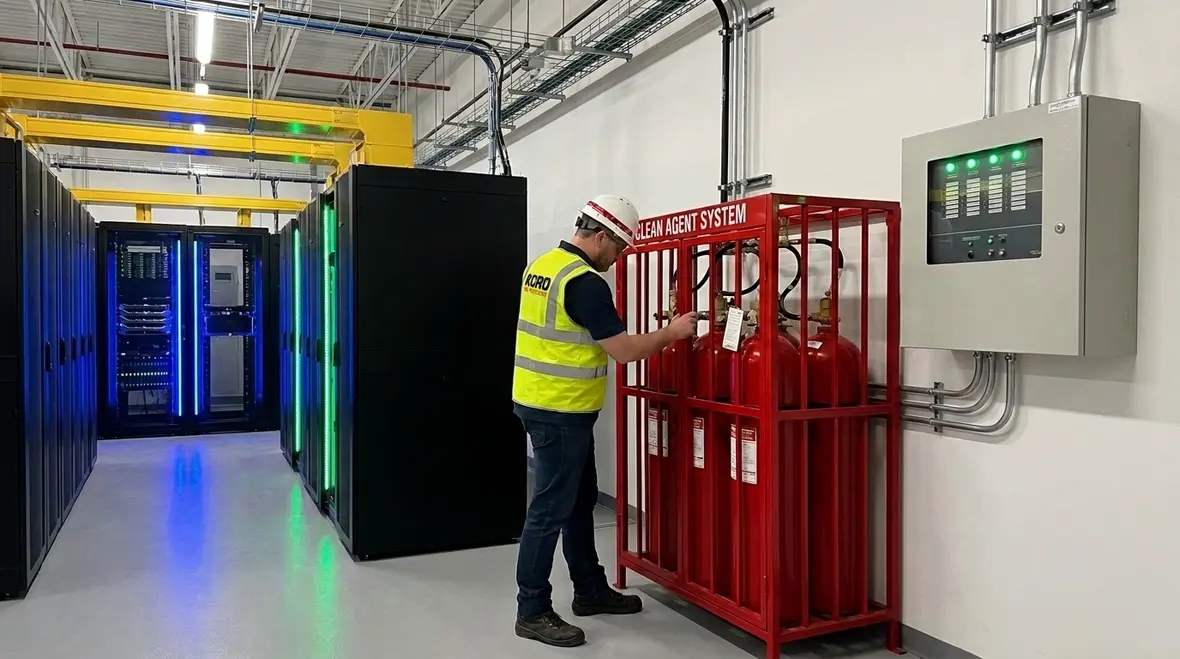
NFPA 2001 gives the framework for total flooding clean agent systems used to protect occupied and unoccupied spaces. Section 1.3 helps define where the standard applies, so the design team can match the system to the hazard instead of guessing like it is a pub quiz on fire codes. Therefore, the standard supports cleaner, safer suppression options where water would damage equipment, stock, or vital records.
In real projects, this matters because each site has a different risk profile. A data room in a warehouse needs a different answer than a pump room in a processing plant. As a result, the standard helps designers, consultants, and facility managers choose a system that fits the building, the threat, and the operation.
Why the standard matters before equipment is selected
A lot of project pain starts when teams choose hardware too early and ask the harder questions later. NFPA 2001 pushes the process the other way around. It encourages teams to review occupancy, enclosure conditions, discharge requirements, and hazard type before anyone falls in love with a brochure. That is a much healthier relationship.
FM 200 for fast response in critical spaces
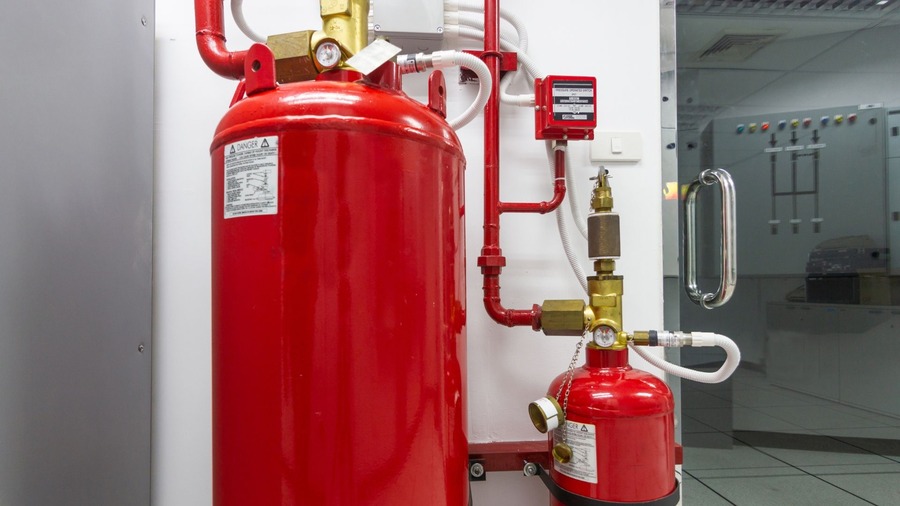
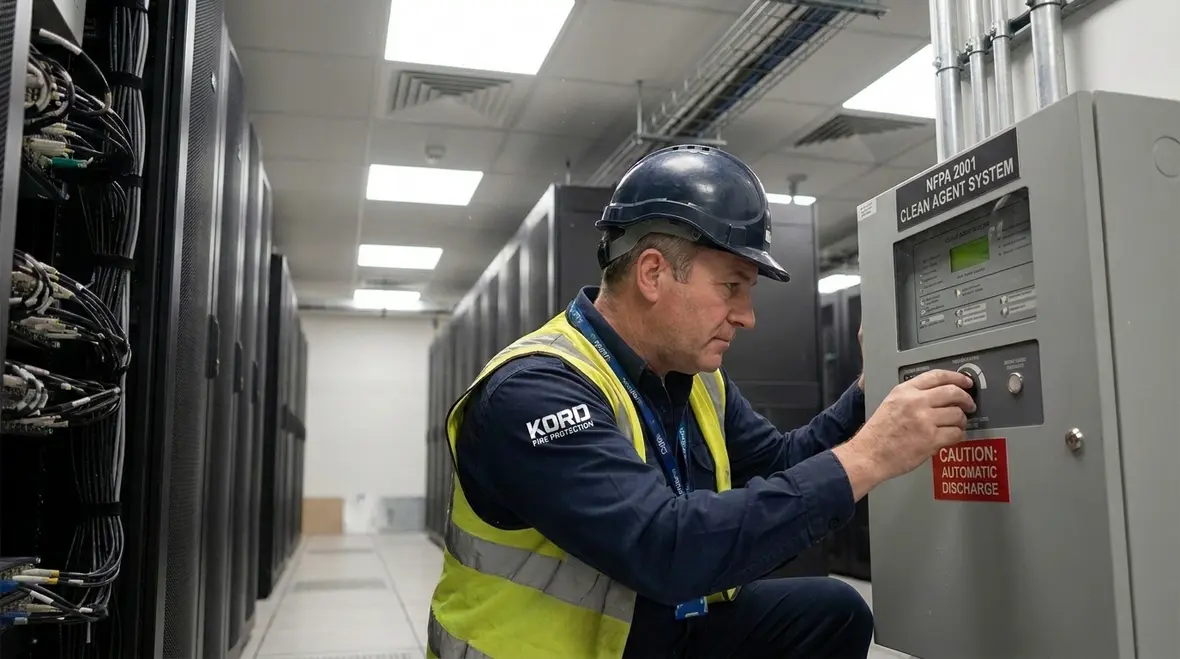
FM 200 works well in spaces that need quick fire knockdown with minimal residue. It suits server rooms, control rooms, and high value electrical areas. Moreover, it suppresses fire fast enough to reduce damage before it spreads through the space like a bad office rumor.
FM 200 also fits projects where clean release and short downtime matter. Because it leaves no wet cleanup, it helps businesses get back online sooner. However, the design must still account for room integrity, detection speed, and occupant safety. In other words, it is not just about buying a cylinder and hoping for the best. The system needs proper engineering.
Where FM 200 usually makes the most sense
FM 200 is often the conversation starter for facilities protecting electronics and uptime. If a room contains critical switching gear, communications infrastructure, or process controls that cannot tolerate water damage, FM 200 tends to stay high on the shortlist. It is especially attractive when the business impact of downtime is measured in minutes instead of days, which is a polite way of saying the panic starts fast.
Teams also like FM 200 when they need a familiar, proven option that integrates into a broader suppression strategy. For facilities comparing room hazards and overall system goals, Kord Fire’s broader fire suppression services page is a useful internal reference point for connecting the clean agent discussion to special hazards protection more generally.
Novec 1230 for lower environmental impact
Novec 1230 gives project teams another strong option. It acts fast, leaves no residue, and has a lower environmental impact than many older agents. Therefore, many organizations choose it for modern facilities that want strong fire protection and a cleaner sustainability story.
This agent suits commercial buildings, telecom areas, archives, and industrial control rooms. It also works well where staff may still be present during normal operations. Because it supports occupied spaces, it offers a practical balance between safety and business continuity. Still, the design team should verify storage needs, discharge time, and room sealing before moving ahead.
Why project teams keep coming back to Novec 1230
Novec 1230 tends to appeal to clients who want performance without carrying the baggage of a mess, a shutdown marathon, or a rough environmental profile. In occupied technical spaces, that can make it easier to balance protection goals with practical facility use. It is not magic, of course. Storage layout, nozzle placement, enclosure tightness, and detection still need to be right. But when those details are handled properly, Novec 1230 gives many sites a very comfortable middle ground.
CO2 for high risk industrial areas
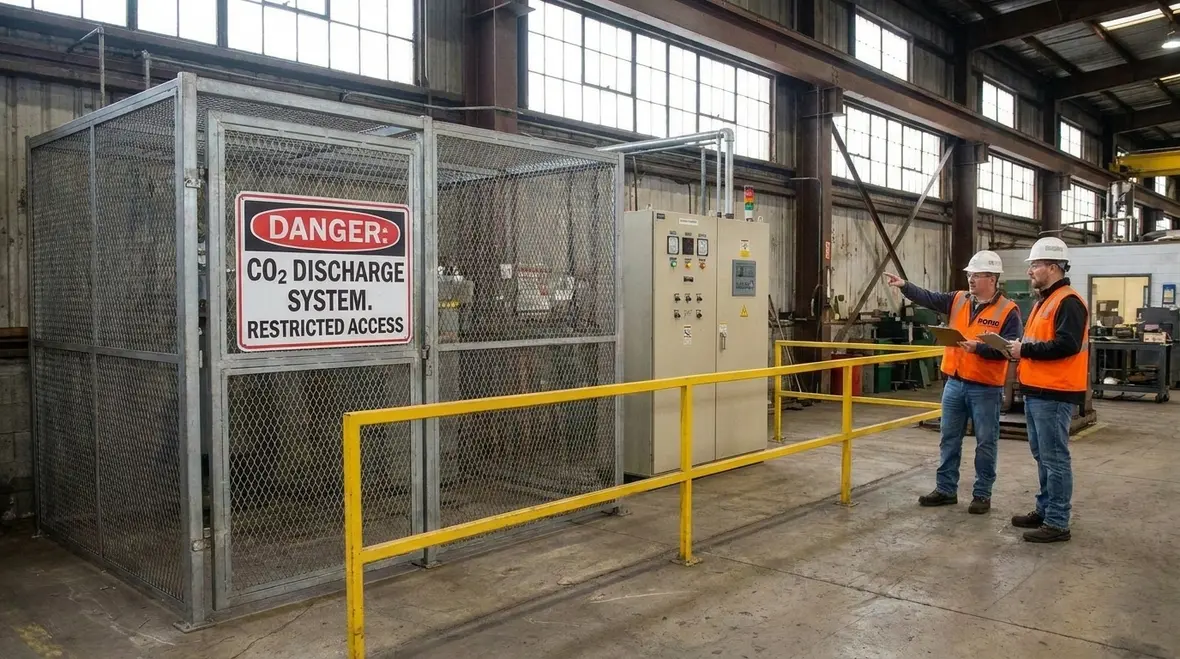
CO2 performs differently. It suppresses fire by reducing oxygen in the protected space, which makes it effective in certain industrial settings. It often fits machinery enclosures, flammable liquid areas, and specific process spaces where people are not normally present.
That said, CO2 demands strict safety controls. It can create serious life risk in occupied areas, so project teams must treat it with care. Therefore, it is best used where access control, warning systems, and procedures stay tight. In short, CO2 can be powerful, but it does not play nice with casual mistakes.
When CO2 is a sharp tool, not a default option
CO2 belongs in the category of systems that can be excellent in the right setting and absolutely wrong in the wrong one. It is often chosen for process hazards that need strong suppression performance and can be isolated from normal occupants. That makes it a serious industrial option, not a casual plug and play choice. If the hazard analysis is weak, the safety planning is loose, or access discipline is sloppy, CO2 will expose every one of those problems in a hurry.
How to compare the three systems for your site
For a cleaner comparison, the decision often comes down to people, property, and process. The table below gives a simple view of the main differences.
| Agent | Best fit |
|---|---|
| FM 200 | Critical rooms that need fast suppression and low cleanup |
| Novec 1230 | Occupied commercial and technical spaces with a lower environmental profile |
| CO2 | Special industrial hazards where people are not normally exposed |
So, the real question is not which agent is best in general. Rather, it is which one matches the actual risk, the building use, and the business impact. That is where a detailed site review becomes essential.
A practical way to think through the decision
- If people regularly occupy the room, life safety considerations rise to the top immediately.
- If equipment value and continuity matter most, residue free suppression becomes a bigger priority.
- If the hazard is industrial and isolated, CO2 may enter the conversation more seriously.
- If sustainability goals are part of the brief, Novec 1230 often gains ground.
- If rapid knockdown and established use in critical rooms matter most, FM 200 remains a strong contender.
How Kord Fire Protection becomes a vital partner
This is where Kord Fire Protection steps in as a vital partner. The right clean agent system depends on careful design, compliance, and installation discipline. Kord Fire Protection helps clients move from general concern to a workable solution. Moreover, the team can assess the site, explain the options, and align the system with NFPA 2001 requirements and project goals.
For industrial, retail, and commercial sites, that support matters. A good partner helps reduce delays, lower risk, and avoid expensive redesigns later. In addition, Kord Fire Protection can help coordinate the system with other site safety measures, so the final result works as one plan rather than a patchwork of parts. That is the difference between a fire system and a fire strategy.
If the project also involves enclosure performance, discharge retention, and testing discipline, it makes sense to review clean agent suppression system and room integrity testing as part of the planning conversation. That step often decides whether a system performs beautifully on paper or properly in the real room.
What project teams should check before choosing
Before making a final choice, project teams should review the following points:
- Whether the space is occupied or normally empty
- The value of equipment, stock, or records in the room
- Room sealing and leak tightness
- Detection speed and alarm response
- Local compliance needs
- Maintenance access and future servicing
These checks help avoid poor fit decisions. They also keep the conversation grounded in reality, which is always useful when budgets, schedules, and compliance are all demanding attention at once.

FAQ
Conclusion
Choosing between FM 200, Novec 1230, and CO2 is not about picking the loudest name in the room. It is about matching risk, safety, and business needs with the right system. Each agent has a place, but only when the hazard, occupancy, and room conditions are honestly assessed from the start.
For facilities that need a clean, compliant, and practical solution, Kord Fire Protection can help guide the project from design to delivery. A smart choice today can save time, money, and a whole lot of trouble tomorrow.

Join Our Newsletter!
Get the latest fire safety tips delivered straight to your inbox From our Newsletter.