Fire Code Violations That Can Shut Down Business
Fire Code Violations are not just minor oversights tucked away in a maintenance log. They are silent deal breakers. They sit in ceilings, behind exit doors, inside electrical rooms, waiting for an inspector to notice or worse, for an emergency to expose them. In many cities, these violations can trigger heavy fines, forced shutdowns, and even permanent closure. Kord Fire Protection technicians often explain it plainly to business owners. The rules are not there to frustrate anyone. They exist to keep people alive and doors open. This article explores the most common compliance failures that can shut down a business, why they happen, and how smart leaders stay ahead of them.

The Real Cost Behind Fire Code Violations
At first glance, a blocked exit sign or an expired extinguisher tag may seem harmless. However, inspectors do not see small mistakes. They see patterns. Patterns suggest neglect, and neglect raises risk. When risk climbs, enforcement follows.
In most jurisdictions, authorities can issue fines immediately. In more serious cases, they can post a notice and suspend operations until corrections are made. Consequently, revenue stops overnight while expenses continue to run. Payroll does not pause simply because an exit door would not open.
Kord Fire Protection technicians often remind business owners that violations also affect insurance. Claims can be denied if investigators discover non compliance. Therefore, what began as a simple oversight can turn into a legal and financial storm. Think of it as ignoring the check engine light for months. Eventually, the engine responds.
How fire code violations connect to inspections and insurance
Because inspectors view violations as indicators of overall management, a handful of small issues can quickly look like a culture problem. That perception matters when it comes to liability, rate increases, and even renewal decisions from your insurance carrier. Pairing routine inspections with documented corrective actions helps show that your team takes life safety seriously, not just when the fire marshal calls but throughout the year.
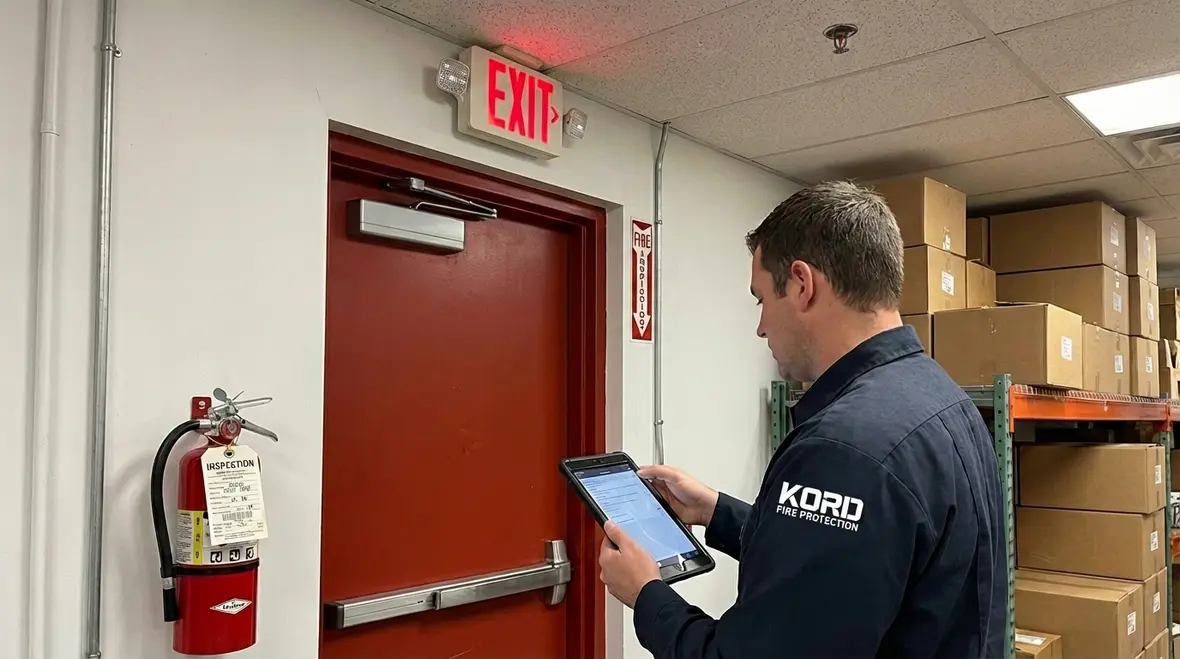
Blocked Exits and Improper Egress Paths
If a building cannot empty quickly during an emergency, it fails its most basic duty. That is why exit pathways receive intense scrutiny during inspections.
Common issues include:
- Storage boxes stacked in corridors
- Locked or chained exit doors
- Furniture narrowing walkways
- Exit signs not illuminated
Although these may appear to be simple housekeeping problems, they carry serious consequences. In an emergency, seconds matter. Smoke reduces visibility fast. People panic faster. A single blocked door can cause injuries that no business owner wants on their conscience.
Kord Fire Protection technicians frequently explain that egress rules are based on occupant load calculations. The number of people allowed in a space determines the width and number of exits required. Therefore, adding seating or increasing capacity without review can create immediate code breaches.
It is not dramatic to say that clear exits save lives. It is simply math and physics.
For multi-unit properties, recurring issues like blocked exits and disabled systems show up frequently in reports. In fact, Kord Fire documents common apartment building violations such as blocked exits, outdated extinguishers, disabled sprinkler valves, and faulty alarm monitoring, underscoring how quickly everyday clutter can become a life safety problem and a citation magnet. ([kordfire.com](https://kordfire.com/los-angeles-apartment-fire-protection-requirements/?utm_source=openai))

Quick self-check for exits before an inspection
- Walk every exit route as if you were a new visitor. Anything confusing, narrow, or blocked is a problem.
- Verify exit doors open easily from the inside without a key or special knowledge.
- Confirm every exit sign is illuminated and visible from the approach path.
- Remove storage, décor, or displays that squeeze hallways or hide exit hardware.
These simple walkthroughs, done monthly, prevent the kind of repeat egress issues that inspectors flag as systemic neglect rather than one-off mistakes.
What Happens If Your Fire Alarm or Sprinkler System Fails Inspection?
This is the question many owners quietly type into search engines at night. The answer is straightforward. If life safety systems fail, the building may not operate.
Fire alarms and sprinkler systems must undergo regular inspection, testing, and maintenance. Moreover, documentation must be available on site. Missing paperwork alone can result in citations.
Typical system related issues include:
- Dead alarm panel batteries
- Disabled pull stations
- Painted over sprinkler heads
- Obstructed sprinkler coverage
- Valves left in the closed position
Although sprinklers may seem like background hardware, they are engineered with precise spacing and sensitivity. Painting a sprinkler head can delay activation. Blocking it with decorations can prevent coverage. Consequently, a small aesthetic decision can compromise the entire system.
Kord Fire Protection technicians often demonstrate how quickly fire spreads during controlled tests. Business owners usually walk away with a new respect for the red piping on their ceilings.
Why scheduled inspections matter more than last-minute fixes
Waiting until a fire department inspection notice arrives is the most stressful (and expensive) way to manage life safety systems. Kord Fire’s full-service programs for sprinklers, alarms, and extinguishers are designed specifically to keep buildings inspection-ready year-round, with Title 19-compliant inspections, testing, and documented maintenance that satisfy local and state requirements. ([kordfire.com](https://kordfire.com/full-fire-protection-services/?utm_source=openai))
Electrical Hazards That Invite Immediate Citations
Electricity behaves like a loyal employee when treated well. Ignore it, and it becomes unpredictable.
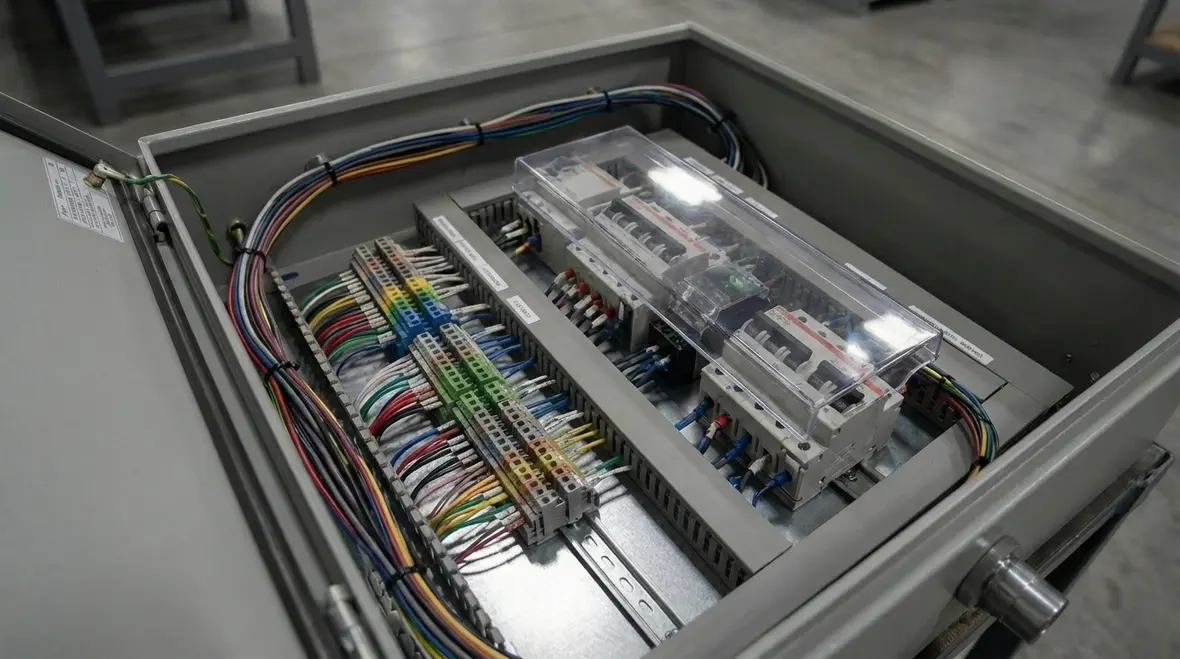
Inspectors often flag overloaded power strips, exposed wiring, and blocked electrical panels. In fact, most codes require clear space around panels for quick access. Storing boxes in front of them may seem convenient. However, during an emergency, technicians need instant entry.
Extension cords used as permanent wiring also raise red flags. They are meant for temporary use. Yet many offices treat them as long term solutions. Eventually, heat builds up. Insulation breaks down. Sparks happen.
Because electrical failures are a leading cause of commercial fires, enforcement is strict. Therefore, businesses that ignore these details may face shutdown orders until corrections are verified.
Understanding the National Electrical Code (NEC) connection
Many local jurisdictions base their electrical requirements on NFPA 70, also known as the National Electrical Code. This document sets minimum standards to reduce hazards like overloaded circuits, improper grounding, and unsafe equipment installations. Kord Fire highlights how following NEC standards helps prevent electrical fires, electrocution, and expensive system failures, and it also ensures work passes inspection without costly rework. ([kordfire.com](https://kordfire.com/nfpa-70-all-about-the-national-electrical-code-nec/?utm_source=openai))
Hazardous Materials and Improper Storage Practices
Restaurants, manufacturing facilities, salons, and even retail stores often store flammable liquids or combustible materials. The problem arises when storage limits are exceeded or containers are not approved.
Improper storage violations include:
- Flammable liquids outside rated cabinets
- Propane tanks stored indoors without approval
- Cleaning chemicals placed near ignition sources
- Excess cardboard accumulation
While cardboard may not look dangerous, it fuels fire aggressively. Combine it with a spark from faulty wiring, and the result is fast flame spread. Consequently, inspectors treat storage discipline seriously.
Kord Fire Protection technicians often conduct walkthroughs to identify these risks before inspectors do. They explain that fire load calculations consider how much combustible material exists in a space. Exceeding those thresholds can require upgraded suppression systems.
In simple terms, what a business stores affects how a building must be protected.
When storage issues demand upgraded protection
If your operation involves high fire loads or special hazards, standard sprinklers and portable extinguishers may not be enough. That is where engineered suppression systems come in. Kord Fire provides design, inspection, and maintenance for a wide range of suppression solutions, ensuring systems meet Title 19 and State Fire Marshal requirements so your storage practices and protection level stay aligned. ([kordfire.com](https://kordfire.com/all-fire-suppression/?utm_source=openai))
How Kord Fire Protection Technicians Help Prevent Fire Code Violations
Prevention rarely makes headlines. However, it keeps businesses open.
Kord Fire Protection technicians approach compliance with a practical mindset. First, they assess the building layout, occupancy type, and current systems. Next, they compare conditions to local and national standards. Then, they provide clear correction steps.
Below is a comparison of common risk areas and professional solutions.
| Common Risk Area | Professional Preventive Action |
| Expired extinguisher tags | Scheduled inspection and documented servicing |
| Obstructed sprinkler heads | Ceiling clearance review and repositioning guidance |
| Unlabeled alarm zones | System testing and clear device mapping |
| Improper chemical storage | Hazard classification and cabinet installation |
Because regulations evolve, technicians stay current with updates. As a result, business owners gain peace of mind instead of guessing what an inspector might say. It is much like having a seasoned coach before the big game. Preparation changes the outcome.
For many facilities, that preparation includes fire sprinklers, alarms, extinguishers, pumps, hydrants, and standpipes working together as one coordinated system. Kord Fire’s full fire protection services are built around keeping that entire network code-compliant, tested, and ready so small oversights never snowball into shutdown orders. ([kordfire.com](https://kordfire.com/full-fire-protection-services/?utm_source=openai))
Linking monthly inspections with long-term compliance
Extinguishers, in particular, demand frequent attention. Kord Fire offers monthly inspection and annual service programs that keep tags current, gauges in the green, and documentation ready for review. These services support NFPA and OSHA requirements and provide a predictable schedule so you never scramble before an inspector visit. ([kordfire.com](https://kordfire.com/monthly-inspection-annual-service/?utm_source=openai))
Documentation and Training Gaps That Trigger Enforcement
Even when equipment functions properly, missing records can create compliance issues. Inspectors expect proof of routine maintenance, evacuation plans, and staff training.
For example, employees should know how to use extinguishers and where assembly points are located. Although many companies conduct orientation sessions, they often fail to document them. Consequently, there is no evidence during inspection.
Additionally, emergency lighting must be tested regularly. Without logs, there is no way to confirm performance. Therefore, record keeping becomes as important as hardware.
Kord Fire Protection technicians emphasize building a culture of readiness. They often recommend scheduled drills. While drills may feel disruptive, they reveal weaknesses before a real emergency does. And yes, someone will always joke about pretending to be in an action movie. That is fine. The point is muscle memory.
Turning training into documented proof of compliance
By pairing training with sign-in sheets, digital certificates, and stored agendas, managers create a paper trail that shows inspectors exactly how staff are prepared to respond. Kord Fire’s extinguisher training and inspection programs are designed to generate this kind of documentation, linking real-world skills with the records that keep violations — and liability — in check. ([kordfire.com](https://kordfire.com/fire-extinguisher-service-certification/?utm_source=openai))
The Domino Effect of Ignoring Early Warnings
Minor violations rarely stay minor. When businesses delay corrections, small issues stack up. Eventually, inspectors classify them as systemic non compliance.
Once that label appears in a report, scrutiny increases. Follow up inspections become more frequent. Insurance carriers may request additional documentation. In severe cases, authorities can require fire watches, which means hiring personnel to monitor the building continuously until problems are fixed.
Fire watches cost money. So do emergency repairs. Therefore, early action remains the most affordable strategy.
It is a bit like ignoring a slow leak in the roof. At first, it is a stain. Later, it is a collapsed ceiling.
Why local, ongoing support matters
Because enforcement and risk do not stop at city limits, many businesses prefer a single partner who understands regional requirements and can respond quickly. Kord Fire provides fire protection services across Southern California communities like Thousand Oaks, Simi Valley, Corona, and others, combining local code knowledge with consistent inspection and maintenance so issues are solved early instead of stacking into shutdown-level problems. ([kordfire.com](https://kordfire.com/ventura-county-fire-protection/thousand-oaks-fire-protection-services/?utm_source=openai))
FAQ About Fire Code Compliance
Conclusion: Protect the People, Protect the Business
Fire safety is not about passing an inspection. It is about protecting lives, reputation, and continuity. Fire Code Violations can close doors faster than any competitor ever could. However, with proactive planning and guidance from Kord Fire Protection technicians, businesses stay prepared and confident. Schedule a professional assessment, correct issues before they escalate, and build a culture where safety is routine. Because when the alarms stay silent and the doors stay open, everyone wins.
If your property has complex electrical systems, high fire loads, or a mix of apartments and commercial spaces, do not wait for a violation notice to highlight the weak spots. Engage experts who understand NFPA standards, local ordinances, and practical maintenance so your team can focus on operations instead of scrambling after citations.
Kord Fire Protection offers comprehensive fire protection services across Southern California, combining inspections, testing, repairs, and system upgrades into one coordinated program designed to keep you compliant and open for business. From sprinklers and alarms to extinguishers and suppression systems, their team builds a tailored plan that fits your schedule and your building’s real-world risks. ([kordfire.com](https://kordfire.com/full-fire-protection-services/?utm_source=openai))
Ready to close the gaps before an inspector does? Schedule a fire safety inspection with Kord Fire Protection and put a code-compliant plan in place today. The investment you make now is far smaller than the cost of fines, shutdowns, or a preventable emergency tomorrow.
Know Your Weapon Before You Fight the Flame
Kord Fire Protection is your go-to when it comes to all things fire protection. For over 20 years, we’ve been serving Southern California with the quality service and equipment to keep your home or business safe at all times. Our competitive prices reflect our unwavering commitment to protecting what matters most in the event of a fire emergency. Give us a call, send an email, or use that form!

Join Our Newsletter!
Get the latest fire safety tips delivered straight to your inbox From our Newsletter.