Standpipe System Electrical Monitoring for High Rise Reliability
Quick Answer
Advanced electrical monitoring helps high rise standpipe systems stay reliable by spotting problems early, reducing nuisance events, and supporting compliance. With standpipe system electrical monitoring, facilities detect insulation drift, intermittent faults, and abnormal power draw. Kord Fire Protection then helps integrate these insights into real fire safety action, not just reports.
For facilities that need broader support around inspections, repairs, and readiness, Kord Fire Protection also provides full fire protection services across complex commercial properties. For teams managing manufacturing or warehouse environments, their Industry Fire Protection Services page is also worth a look when planning sitewide reliability improvements.
Electrical monitoring for standpipe systems: why it matters now
In a high rise, fire protection cannot work on “maybe later” timing. First, the standpipe system must remain ready. Then, the pumps, valves, and associated control circuits must behave like they have a purpose, because they do. That is where standpipe system electrical monitoring earns its keep.
For industrial, retail, and commercial facilities across Australia, advanced monitoring moves beyond basic checks. Instead of waiting for a failure or a test day surprise, it tracks electrical health in real time. As a result, operators can respond early to insulation issues, wiring deterioration, and control cabinet problems. And yes, those problems rarely announce themselves politely, like a smoke alarm at 2:00 am during a cooking experiment.
To make this practical, monitoring should connect directly to the standpipe system’s electrical circuits. It should also align with how teams actually maintain fire life safety assets, including reporting, escalation, and corrective action workflows.
High rise electrical risk: what actually goes wrong
Standpipe system circuits live an interesting life. They face heat cycles, vibration, humidity, and occasional electrical “quirks” from building operations. Over time, small changes accumulate. Consequently, electrical faults often start as subtle symptoms before they become obvious failures.
Here are common failure pathways that advanced monitoring can catch sooner:
- Insulation degradation caused by moisture ingress or thermal stress, which increases leakage current
- Loose terminations that create intermittent contact and arcing, often triggered by vibration
- Phase imbalance or abnormal load draw in pumps and control gear that signals a mechanical or electrical mismatch
- Control cabinet anomalies such as failing contactors, degraded relays, or damaged wiring harnesses
- Grounding issues that can distort protective device behavior and increase risk during a fault event
Monitoring does not just record events. It builds context around them. For example, when a contactor draws slightly more current, the system can show whether the trend matches temperature rise patterns or whether it aligns with a wiring resistance change. That distinction helps facilities prevent repeat failures instead of repainting the same problem with a fresh label.
Why minor drift becomes a major reliability issue
A surprising number of failures begin with numbers that still look “close enough.” Slight leakage current increases, tiny resistance shifts, or occasional current spikes may not stop a system today, but they can absolutely set up tomorrow’s emergency headache. In a high rise, waiting for a perfect failure signal is a bit like waiting for a ceiling stain to become an indoor waterfall before deciding the roof needs attention.
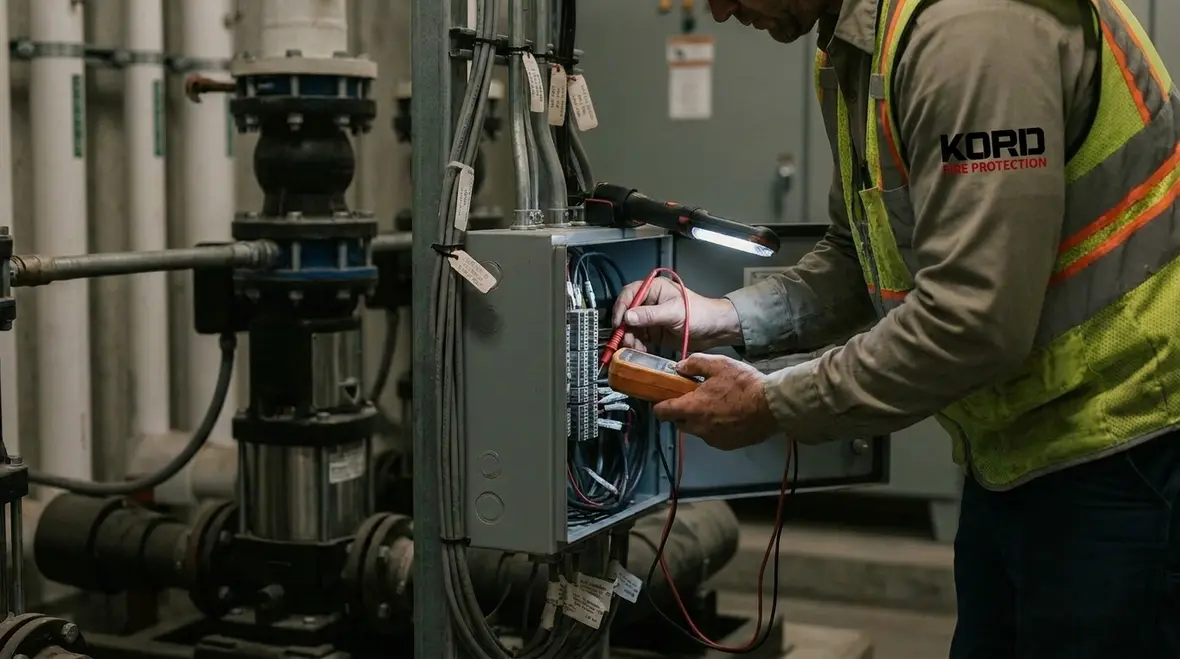
Designing advanced monitoring for real plant conditions
Teams across Australia often face a common challenge: the facility runs many systems, and nobody has time for overly complex upgrades. Therefore, advanced electrical monitoring should be designed for fast installation, clear data output, and dependable integration with existing fire and building management pathways.
A strong approach includes these elements:
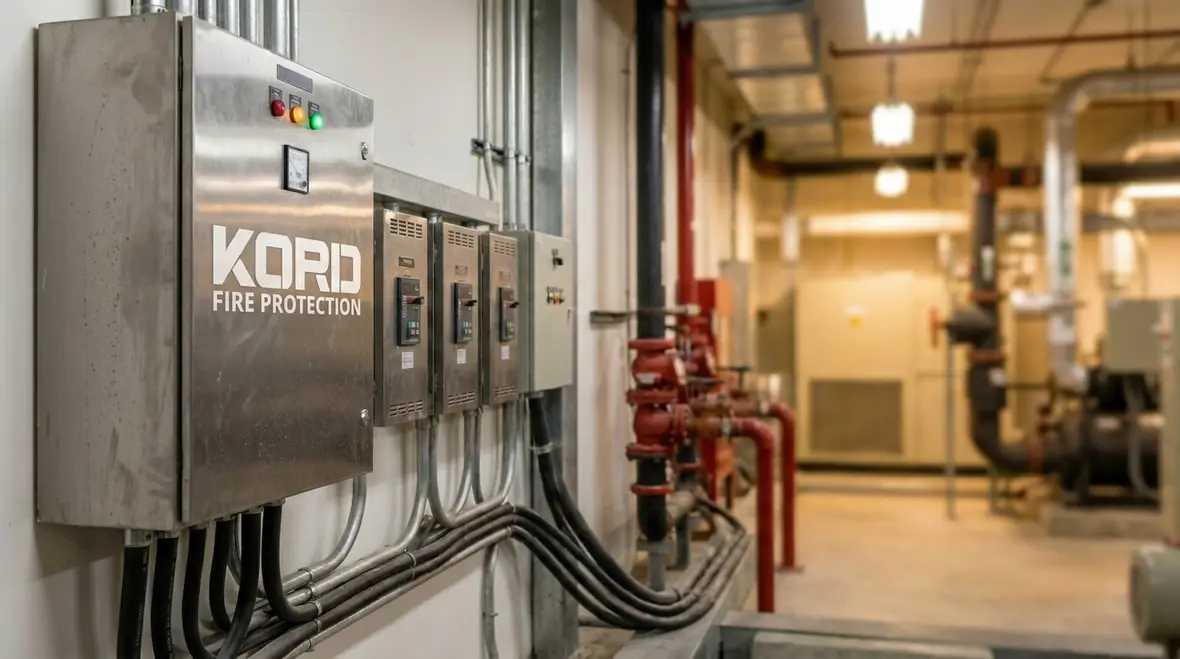
- Targeted circuit coverage for pump motor feeds, starter and control circuits, supervision circuits, and key detection points
- Sensing that matches the hazard, using the right current, voltage, and insulation measurement method for the circuit type
- Reliable data logging so trends stay visible long after the test event ends
- Alarm logic that stays meaningful, with thresholds designed to reduce false positives
- Power quality awareness to spot supply instability that can create downstream control issues
Next, the monitoring system should support practical escalation. If a reading shifts, it must lead to an action pathway: review, investigation, isolation, repair, retest. Otherwise, the data becomes a “future problem diary,” and nobody wants that.
Build the response path before the alarm happens
The best monitoring design is not just about sensors. It is about deciding who gets notified, what they review first, how they document findings, and when the issue gets escalated to corrective work. That planning keeps the system useful when a real anomaly appears instead of turning the dashboard into an expensive wall decoration.
What “advanced” looks like in standpipe system electrical monitoring
Advanced monitoring means more than a single status light. It focuses on condition and trend, not just on-pass or fail outcomes. In other words, it identifies drift and abnormal behavior before a protective device trips during a live emergency demand.
Here is what facilities should look for in high rise monitoring programs:
- Insulation resistance trend tracking to spot moisture and aging before protective systems become unstable
- Leakage current supervision that helps detect early insulation faults
- Abnormal current detection for mechanical binding, failing starter components, or wiring issues
- Load profile verification that compares expected pump draw signatures to actual performance
- Event correlation across alarms, power changes, and control states so technicians see the whole story
To keep things calm and readable, the system should present findings in plain business language. After all, facilities teams do not need a science thesis every time a relay chatters. They need clarity that supports fast decisions.
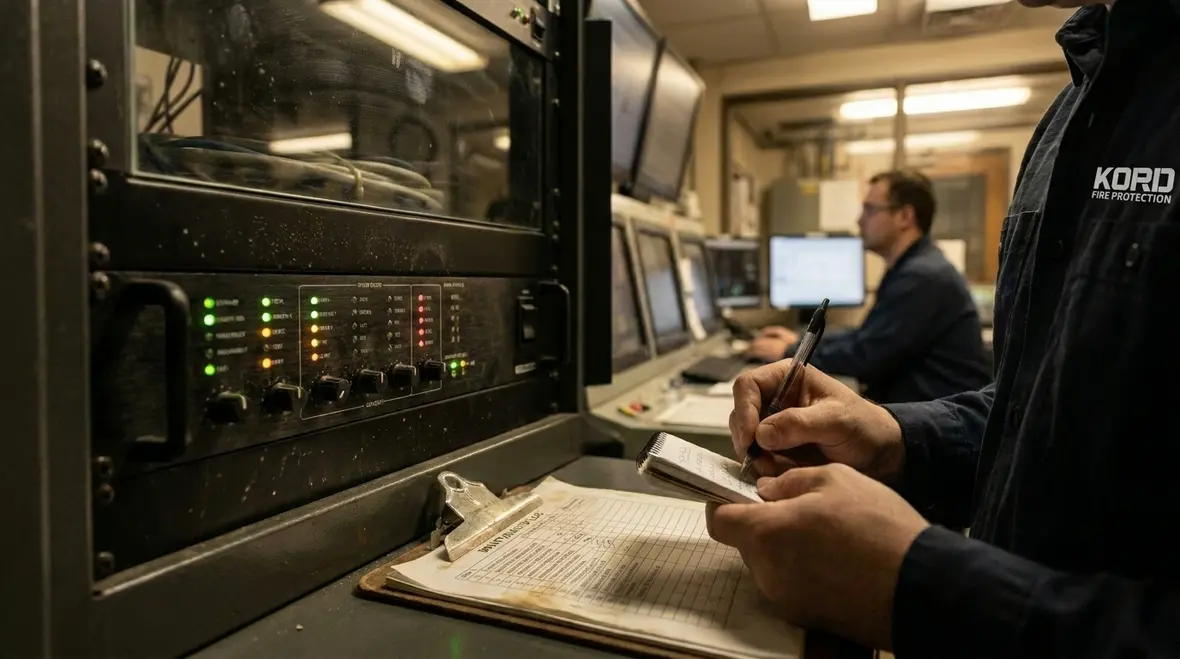
How Kord Fire Protection becomes a vital partner
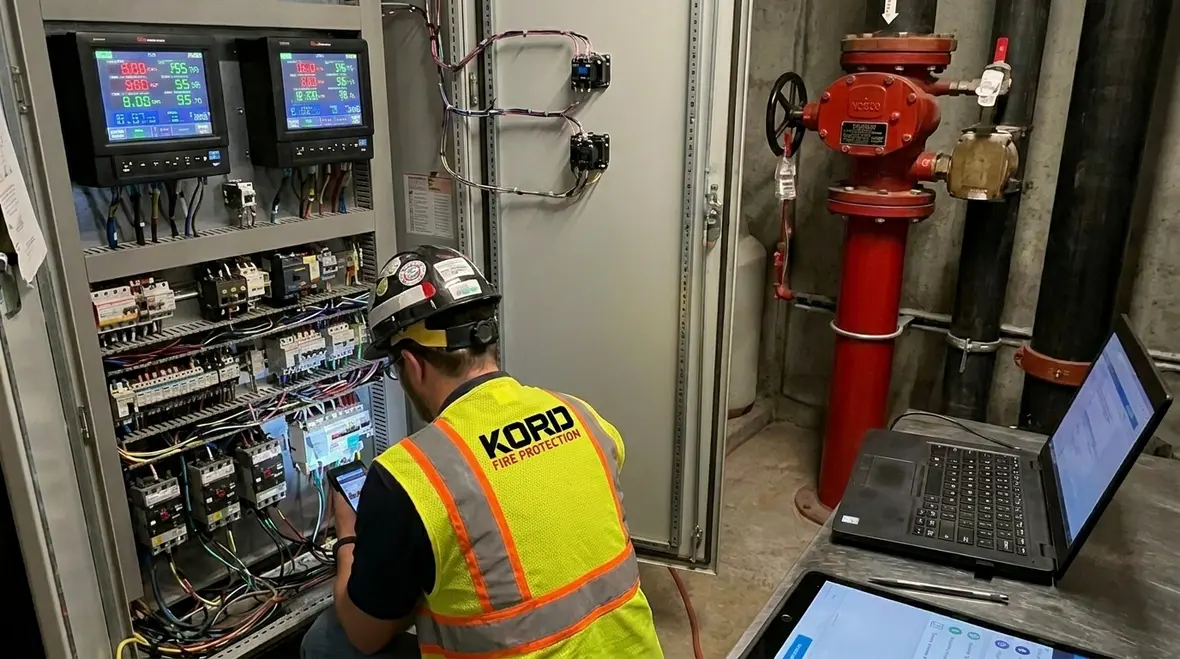
Monitoring creates visibility. Action creates safety. That is why Kord Fire Protection can become a vital partner with this service/job. When monitoring identifies a drift, a technician still has to verify wiring, inspect components, and close the loop with compliant testing.
When Kord Fire Protection supports the monitoring program, the facility gains a practical benefit: the data ties directly into fire protection workmanship and maintenance standards. As a result, the team can move from “we saw an abnormal reading” to “here is what we found, what we replaced, and how we confirmed performance.”
Additionally, Kord Fire Protection can help coordinate documentation and maintenance routines so the monitoring outcomes support ongoing asset management. Consequently, audits become easier, and response times improve when the next abnormal trend appears.
Think of it like this: monitoring is the camera, and Kord Fire Protection is the person who actually walks into the room, checks the circuit, and tells the truth. Without that, someone might just zoom in on the blurry footage forever. That is not a strategy, that is a hobby.
Integrating monitoring with maintenance and compliance workflows
Most facilities do not fail because they lack equipment. They fail because information does not reach the right person at the right time. Therefore, an effective monitoring rollout must connect to daily and scheduled maintenance tasks.
Once the system is installed, teams should:
- Set thresholds based on expected standpipe operating signatures and historical data
- Assign ownership for alarms so the same issues do not bounce between departments
- Use trend reports to plan maintenance before emergency testing reveals problems
- Capture findings during corrective work so future diagnostics become faster
- Verify repairs with post action confirmation, not just “we tightened a connection”
As this matures, facilities reduce downtime and reduce repeat call outs. More importantly, they protect the functional reliability of the standpipe system under real emergency demand conditions.
Make trend data useful to the people doing the work
A report is only helpful if someone can turn it into a decision. Good monitoring workflows make it obvious what changed, how long it has been drifting, what asset is affected, and what to verify first. That keeps skilled technicians focused on solving the problem instead of playing detective with three disconnected screenshots and a hopeful guess.
Benefits for facilities across Australia, without the guesswork
When standpipe system electrical monitoring works the way it should, it delivers measurable outcomes for commercial towers, retail precincts, and industrial assets with complex plant rooms. First, it reduces time spent chasing intermittent faults. Next, it improves decision making during busy maintenance windows. Then it supports consistent performance over long equipment life cycles.
Here is the value in plain terms:
| Facility goal | Monitoring impact |
|---|---|
| Fewer unexpected failures | Trend based detection spots drift before breakdown |
| Better technician focus | Alarms correlate events to probable circuit causes |
| Stronger asset management | Historical data supports maintenance planning and documentation |
| Reduced disruption | Planned corrective work replaces emergency chasing |
Of course, no system replaces good fire protection engineering. Yet together, monitoring and skilled service reduce the “mystery electrical gremlins” that always seem to show up on the busiest day of the month.
FAQ: Electrical monitoring and standpipe reliability
Next steps: move from data to dependable protection
Advanced electrical monitoring for high rise standpipe systems helps facilities prevent surprises and improve readiness through early fault detection and trend insight. When Kord Fire Protection partners with the service, monitoring turns into verified action, supported by skilled workmanship and clear documentation.
If a facility is planning upgrades or tightening asset reliability, it should request a site review and monitoring scope discussion with Kord Fire Protection today. Better visibility is useful. Better visibility paired with action is what keeps a standpipe system ready when the building needs it most.

Join Our Newsletter!
Get the latest fire safety tips delivered straight to your inbox From our Newsletter.