Fire Protection Electrical Safety for Critical Systems
Quick Answer: Critical fire protection systems depend on power, wiring, bonding, and controls that must work the first time. To achieve fire protection electrical safety, teams verify design, commissioning, testing, and ongoing maintenance. Kord Fire Protection can partner as a trusted specialist to reduce risk, improve compliance, and keep assets ready when seconds matter.
Facilities that need dependable support across alarms, sprinklers, extinguishers, and inspections can also explore full fire protection services for a broader view of how coordinated service helps critical systems stay ready.
Why Electrical Safety Matters in Critical Fire Protection Infrastructure
In industrial, retail, and commercial facilities, fire protection is not a set and forget service. It is a chain of systems that must operate reliably under smoke, heat, vibration, dust, moisture, and real-life mess. That is where fire protection electrical safety becomes the backbone of performance. A detector, relay, notification appliance, or control panel can only do its job if power quality, circuit integrity, and control behavior all hold together when the building needs them most.
When electrical components fail, the panel may still blink bravely, but the connected devices may not. A loose termination, damaged cable, bad earth connection, or hidden moisture problem can quietly undermine an entire detection and notification strategy. And yes, it can happen even in sites that look organized on the surface. Humans remain remarkably talented at wiring things nearly right, documenting them vaguely, and then acting shocked when nearly turns into never.
That is why electrical safety inside fire protection is not just about avoiding shocks or code issues. It is about making sure the system responds with certainty. A critical system has to operate the first time, not after a reset, not after a guess, and definitely not after somebody says, “It worked last month.”
What Critical Power Looks Like in Facilities
Power continuity is only part of the story
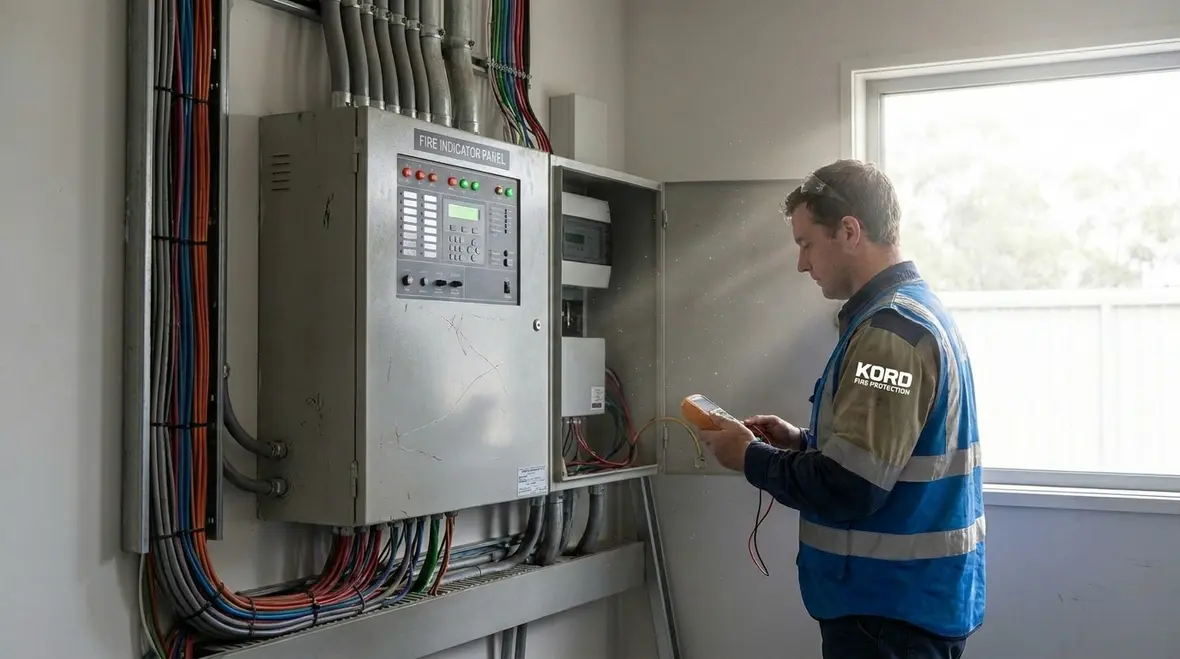
Critical infrastructure in fire protection usually includes emergency power arrangements, control circuits, field device wiring, battery-backed supplies, signaling paths, and interfaces that connect alarms to other building functions. Safety does not stop at the switchboard. It extends across the full path electricity takes, the way circuits are supervised, how devices are grounded, and whether cables are protected from the kind of punishment buildings dish out every day.
Teams treat these circuits differently because failures carry higher consequences. Under fault conditions, circuits should not energize unsafe loads, disable life safety functions, or interfere with adjacent circuits that still need to operate. Design also needs to account for voltage dips, transfer conditions, battery operation, charging behavior, and the kind of awkward real-world load changes that happen when buildings are renovated one contractor at a time.
In short, critical power means continuity, correct protection, predictable control logic, and enough resilience to handle change without losing intent. And because facilities rarely stay frozen in time, every upgrade, tenancy adjustment, or equipment replacement has to be reviewed so the original safety strategy does not get quietly dismantled by an innocent looking alteration.
Where service coordination matters most
This is also why many property teams rely on specialists for fire alarm service and systems support. The wiring may be hidden in walls and ceilings, but its performance depends on a visible process of planning, inspection, testing, and follow-through.
How to Prevent Shock, Faults, and Hidden Wiring Failures
Practical controls beat emergency troubleshooting
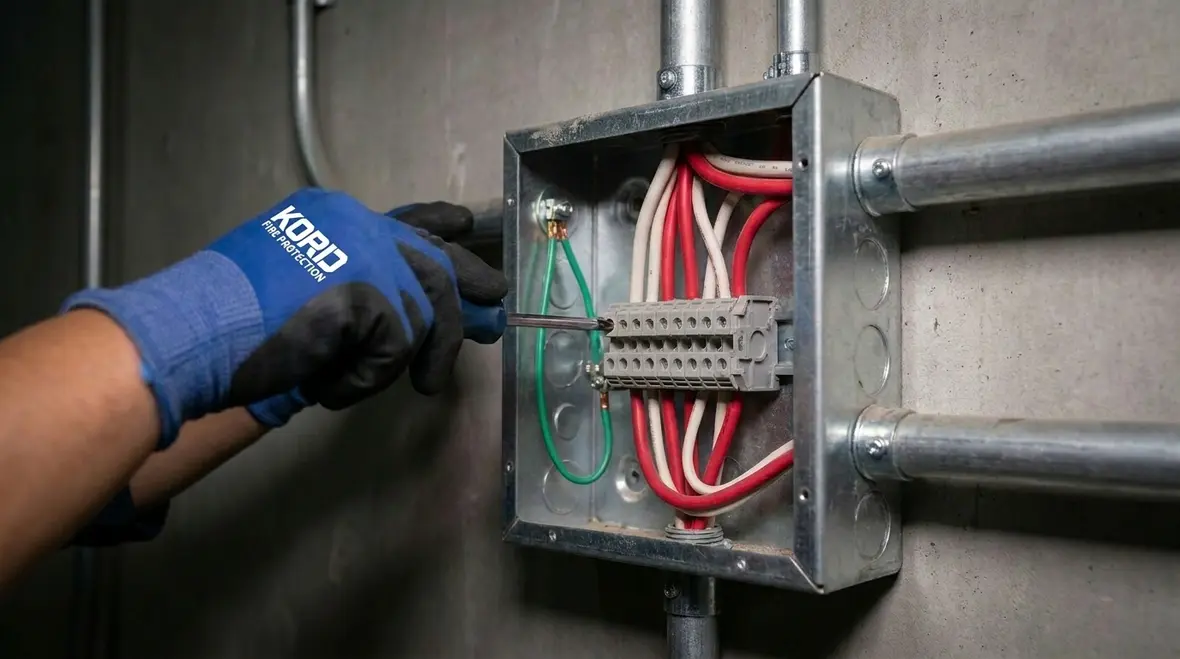
To achieve reliable fire protection electrical safety, organizations focus on practical controls that stop small defects from becoming large outages. First comes earthing and bonding so protective devices can clear faults quickly and safely. Next comes insulation integrity, termination quality, polarity checks, separation from hazardous influences, and cable support that holds up under routine building activity rather than collapsing the moment somebody drags a ladder through the ceiling space.
Then comes the step people love to postpone until it bites them: inspection and verification. Teams should routinely confirm that cables are properly supported, protected from mechanical damage, routed away from avoidable hazards, and sealed correctly where they pass through walls or fire-rated compartments. Those penetrations matter. A perfect circuit path is less impressive if the route quietly compromises compartmentation on the way through.
Common failure patterns are rarely dramatic at first. Moisture gets into junction points. Corrosion creeps onto terminals. Conduits take damage from maintenance traffic. Battery performance fades. Device polarity gets mixed up. Labels stop matching reality. Somebody adds a spur, forgets to update drawings, and suddenly half the troubleshooting time is spent trying to understand what era of the building you are standing in. Early detection through disciplined inspections prevents emergency repairs that cost more, last longer, and arrive at the least charming possible moment.
Design and Commissioning Checks That Actually Move the Needle
Good paperwork is not glamorous, but it saves systems
Many facilities treat commissioning like a sign here moment. Robust commissioning does much more than create a folder nobody opens again until there is a problem. It reduces the chances of field surprises by making sure electrical drawings, specifications, site layouts, device locations, and control logic all agree with one another before the system is left to fend for itself in daily operation.
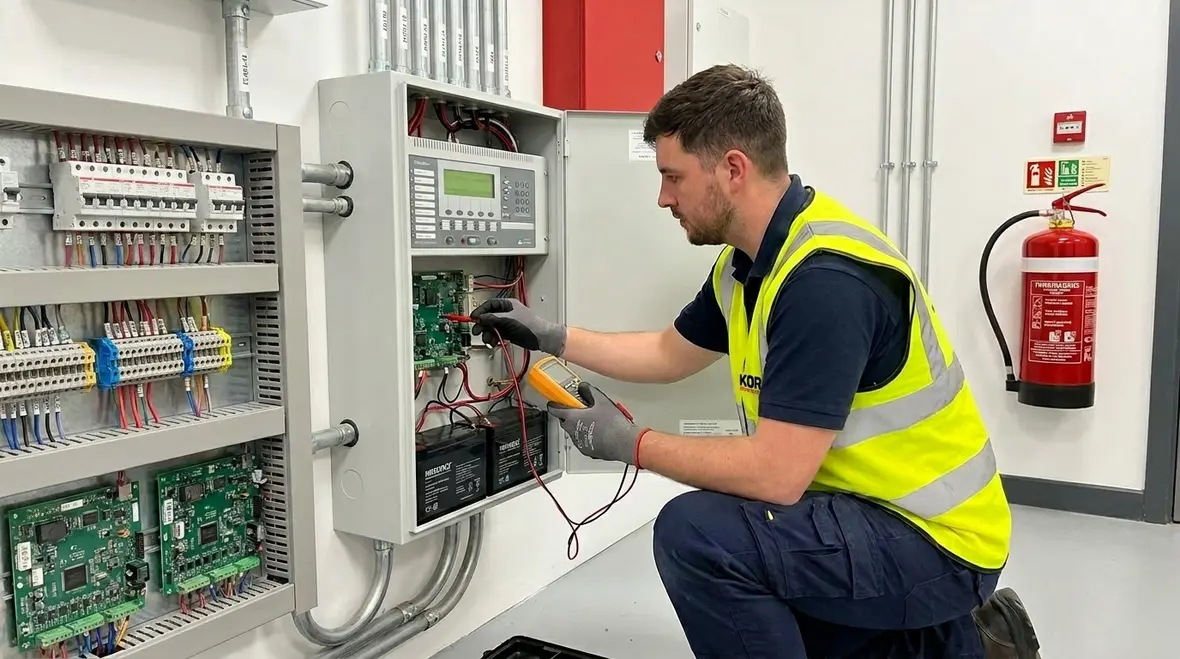
Technicians should verify zoning, interconnections, voltage levels, supervised circuit behavior, and the correct sequence of outputs. They should document test results, note equipment identifiers, and clearly record deviations from the original design. If modifications occur during install or later improvement works, those changes need to flow into as built records and maintenance schedules so the next team is not forced to decode the building like a mystery novel with missing chapters.
Where safe and practical, systems should also be checked under realistic conditions. Fault signaling should announce itself properly. Supervisory conditions should be monitored correctly. Alarm outputs should respond in the intended order. Interfaced equipment should do what the design says it does. In a real event, the best time to figure things out is never, closely followed by definitely not while people are evacuating.
Testing, Maintenance, and Compliance for Ongoing Reliability
Readiness is a maintenance habit
Electrical safety is not a one-time achievement. Equipment ages, terminals loosen, batteries lose capacity, and heat cycles slowly change the materials everyone hoped would stay exactly as installed forever. A sound maintenance program includes visual inspections, functional testing, power supply checks, battery condition verification, and review of field wiring integrity so emerging problems are found before they become service interruptions.
Effective programs also coordinate with site operations. Testing should be planned so disruption stays controlled, stakeholders know what is happening, and alarm behavior during test windows does not create unnecessary panic. When maintenance is organized well, operators stay calm, compliance efforts stay smoother, and emergency response planning feels like preparation rather than wishful thinking.
Risk conditions matter too. Facilities with dust, humidity, corrosive atmospheres, vibration, vehicle traffic, or frequent fit-out changes need tighter attention to cable protection, terminations, and enclosure integrity. The harsher the environment, the less wise it is to rely on optimism as a maintenance strategy.
How Kord Fire Protection Can Become a Vital Partner
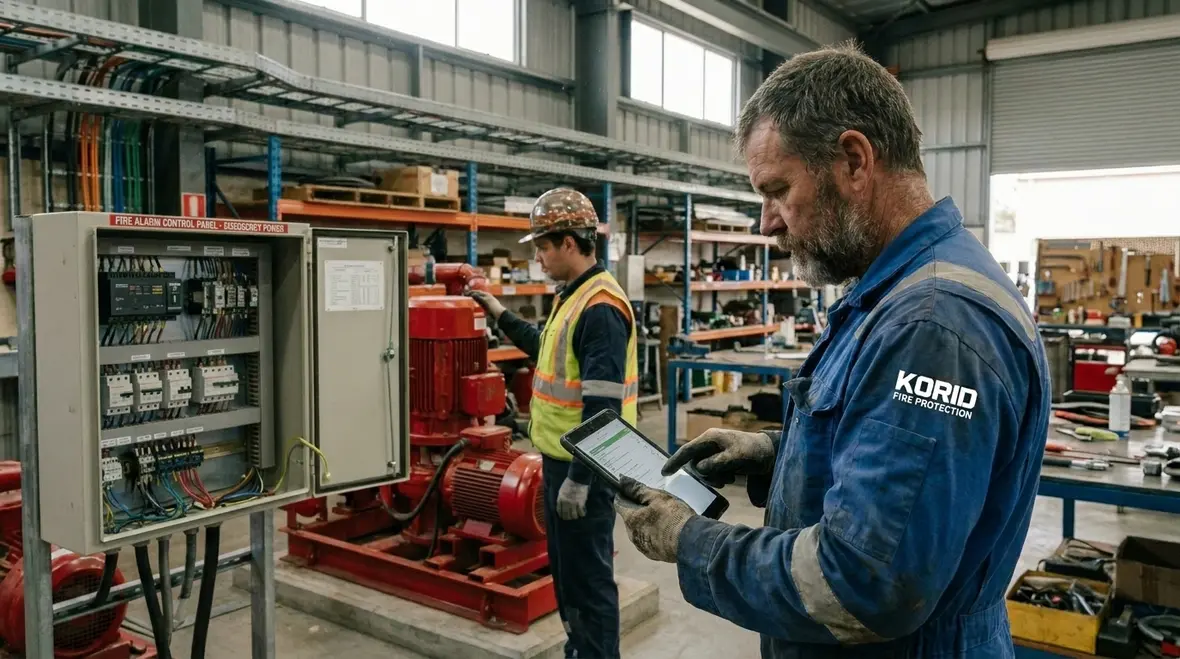
When facilities juggle multiple trades, the fire protection system can lose context between design, installation, inspection, and long-term upkeep. That is where Kord Fire Protection can become a vital partner. Their team supports a service approach that helps electrical safety hold up over time, not just during handover or the week before an inspection.
They can help align fire protection needs with practical site reality, so changes in a facility do not quietly compromise critical circuits. They can also support clearer documentation, more consistent inspection workflows, and better coordination across industrial, retail, commercial, and multi-use environments. For teams that want to understand the company behind that support, the About Kord Fire Protection page gives a useful overview.
Think of it like this: a fire system is a team sport, and electrical safety is the referee that prevents chaos. Kord Fire Protection helps make sure everyone stays onside, including the devices, wiring, records, and the people responsible for them. And when someone says, “It’ll probably be fine,” that is usually the moment to invite in the grown-ups.
Managing Upgrades, Tenancies, and Site Changes Without Breaking Safety
Change control keeps little edits from causing big failures
Facilities constantly evolve. Retail fit-outs change. Industrial lines get reworked. Commercial spaces are repurposed. New devices get added, old ones get relocated, and electrical interfaces multiply quickly. That means fire alarm circuits and related control wiring need strict change control from the first sketch through final verification.
Before any modification, teams should verify how the change affects circuit supervision, power budgets, fault monitoring, panel capacity, control logic, and device addressing. They should confirm that added cabling still meets the same routing, protection, support, and termination quality expected of the original system. If the building changes but the fire protection logic does not get reviewed, hidden vulnerabilities tend to move in rent free.
After installation, verification testing should match the altered scope and document the result clearly. Otherwise, a small change can cause nuisance faults, conceal real faults, or delay alarm behavior. In the real world, the system should respond instantly and predictably, not after a few mystery delays, two contractor phone calls, and one late-night troubleshooting session powered by coffee and regret.
Featured FAQ
Conclusion: Keep Your Fire System Ready, Then Stay Ready
Electrical reliability is what turns a fire protection system from equipment into protection. By strengthening earthing, verification testing, disciplined maintenance, and change control, facilities improve fire protection electrical safety and reduce costly surprises. Critical systems perform best when power paths, field wiring, device supervision, and documentation all stay aligned over time.
If you want a partner who understands long-term reliability and helps keep inspections, records, and circuit integrity on track, contact Kord Fire Protection to discuss your next service or upgrade plan. The goal is simple: keep your system ready before the emergency, during the emergency, and after someone inevitably says, “We thought that cable was doing something else.”

Join Our Newsletter!
Get the latest fire safety tips delivered straight to your inbox From our Newsletter.