Standpipe Cabinet Inspection Failures Explained
Standpipe cabinet inspection failures rarely happen because of one dramatic flaw. Instead, they creep in quietly. A blocked door. A cracked hose. A missing label that no one noticed until the inspector did. Within the first few minutes of a routine visit, inspectors often find small issues that carry large consequences. Clearance problems, hose defects, and labeling errors top the list. As Kord Fire Protection technicians often explain to property managers, these issues are preventable. However, when overlooked, they can delay approvals, trigger fines, and compromise safety when seconds matter most.
Now, let us walk through why these cabinets fail inspection, what inspectors actually look for, and how facilities can stay ahead of trouble without turning fire compliance into a full time headache.
Understanding Standpipe Cabinet Inspection Failures from the Inside Out
Standpipe cabinets serve a simple purpose. They house hose valves, hoses, and related equipment so firefighters can access water quickly. Yet, despite their simple design, they sit at the center of complex safety codes. For a deeper look at how standpipe systems tie into overall fire protection, many facility teams also reference Kord Fire Protection’s overview of standpipe systems and components.
Inspection failures typically fall into three primary categories. First, access and clearance violations. Second, hose condition and configuration problems. Third, labeling and identification issues. Although these may sound minor, each one can affect how quickly first responders operate during a fire emergency.
Kord Fire Protection technicians often remind building owners that inspectors do not look for perfection. They look for reliability. If a cabinet cannot open fully, if a hose leaks, or if markings are unclear, reliability disappears. And when reliability disappears, so does approval.
Moreover, local codes often mirror national standards, which means even small deviations can lead to formal citations. Therefore, consistent internal checks become critical. In other words, the best way to avoid standpipe cabinet inspection failures is to understand exactly why they happen in the first place.

Clearance Problems That Block Access and Fail Inspections
Why access is the first make-or-break check
If a firefighter cannot reach a standpipe cabinet instantly, the system fails before it even starts. Clearance is not about neatness. It is about speed.
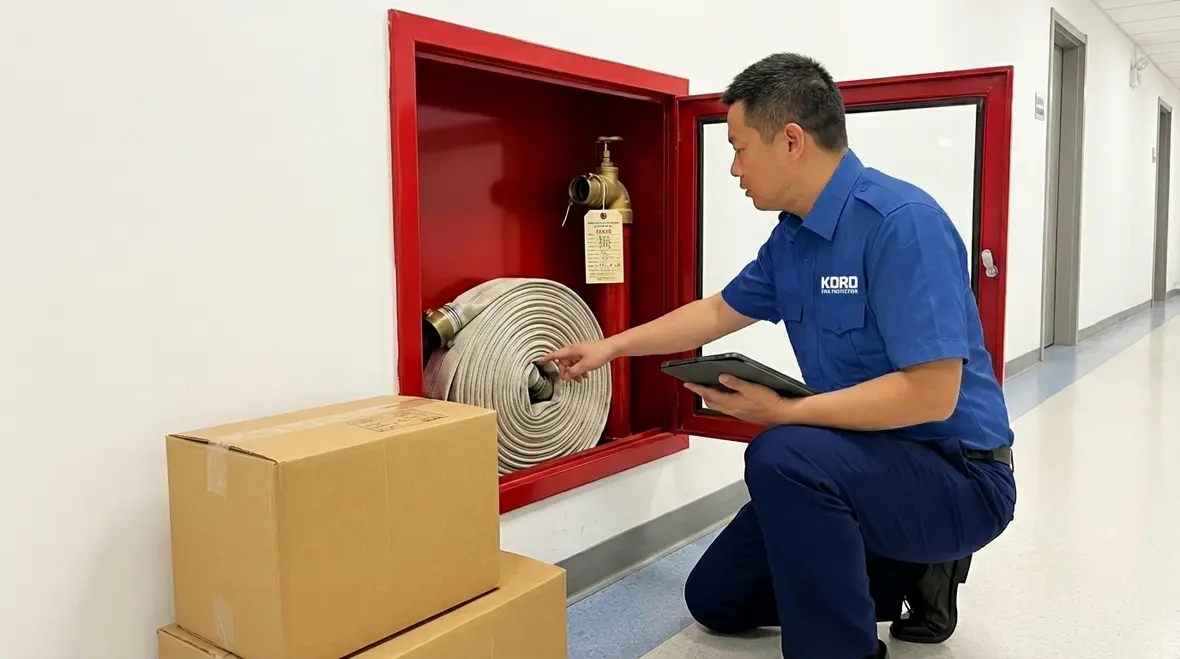
Inspectors check for unobstructed access. That means no storage boxes, vending machines, decorative plants, or creative furniture placement blocking the cabinet. Yes, even that stylish bench someone thought added character to the hallway can become a violation.
Door swing, sightlines, and “temporary” clutter
Furthermore, doors must open fully without hitting nearby objects. Cabinets recessed into walls still require adequate front clearance. If the door swings only halfway because of a nearby railing, inspectors will note it immediately.
Kord Fire Protection technicians frequently see buildings that slowly accumulate obstructions over time. At first, someone stores cleaning supplies nearby. Later, a delivery pallet sits there temporarily. Eventually, temporary becomes permanent. However, fire code does not recognize temporary excuses.
Additionally, visibility plays a role. If cabinets blend into walls without clear signage, response time increases. While this overlaps with labeling, it often begins as a clearance issue because blocked sightlines delay identification.
In many cases, clearance violations lead the list of standpipe cabinet inspection failures because they are visible at a glance. Inspectors do not need special tools to spot them. They simply walk the corridor and observe. And when they observe obstacles, they write them down.
Hose Condition and Configuration Defects
The hose: heart of the cabinet
The hose inside the cabinet represents the operational heart of the system. If it fails, the cabinet becomes little more than wall decor.
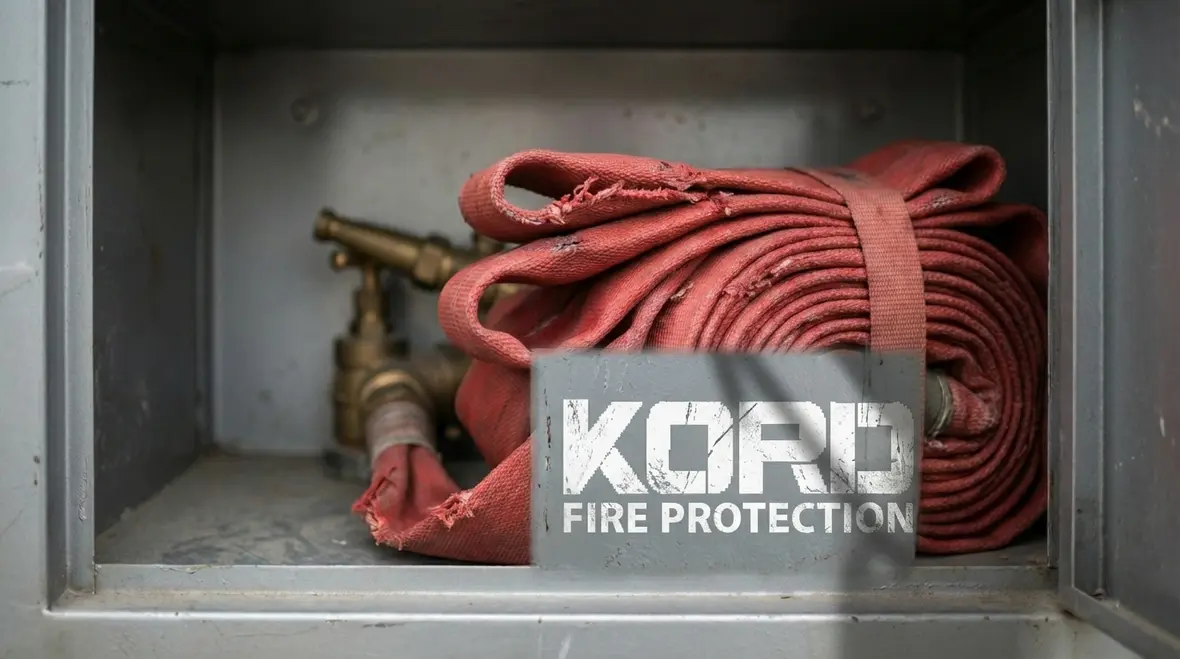
Inspectors typically check for:
- Cracks, dry rot, or abrasion damage
- Improper folding or kinking
- Missing caps or gaskets
- Loose couplings
- Incorrect hose length
Over time, environmental conditions wear hoses down. Heat, humidity, and dust quietly degrade materials. Although the hose may look intact at first glance, closer inspection can reveal weakness along folds.
Maintenance, testing, and real-world deployment
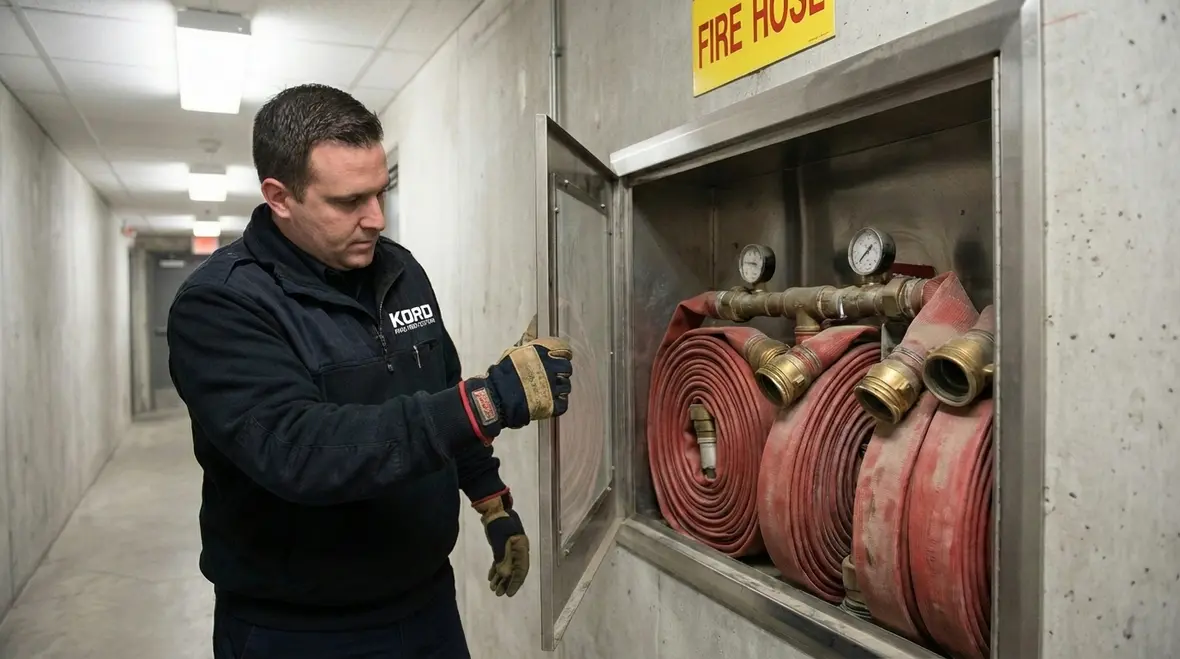
Kord Fire Protection technicians often explain that hoses must be maintained like any mechanical component. They are not decorative accessories. They require scheduled inspection, pressure testing when required, and proper re racking after use or evaluation. These same principles show up across broader standards like NFPA 14, which governs standpipe and hose system performance.
Improper configuration also causes standpipe cabinet inspection failures. For example, a hose folded too tightly can develop stress points. Similarly, if it is packed carelessly, it may tangle when deployed. In a real emergency, a tangled hose is about as helpful as a phone with one percent battery.
Moreover, inspectors verify that the valve operates smoothly. If turning the valve feels stuck or overly stiff, it raises concerns about internal corrosion or lack of maintenance. While this issue may not always be visible, it often accompanies neglected hoses.
Therefore, proactive care prevents embarrassment during official inspections. More importantly, it ensures that equipment functions when lives depend on it.
Labeling Errors That Trigger Standpipe Cabinet Inspection Failures
Why paperwork-looking details matter
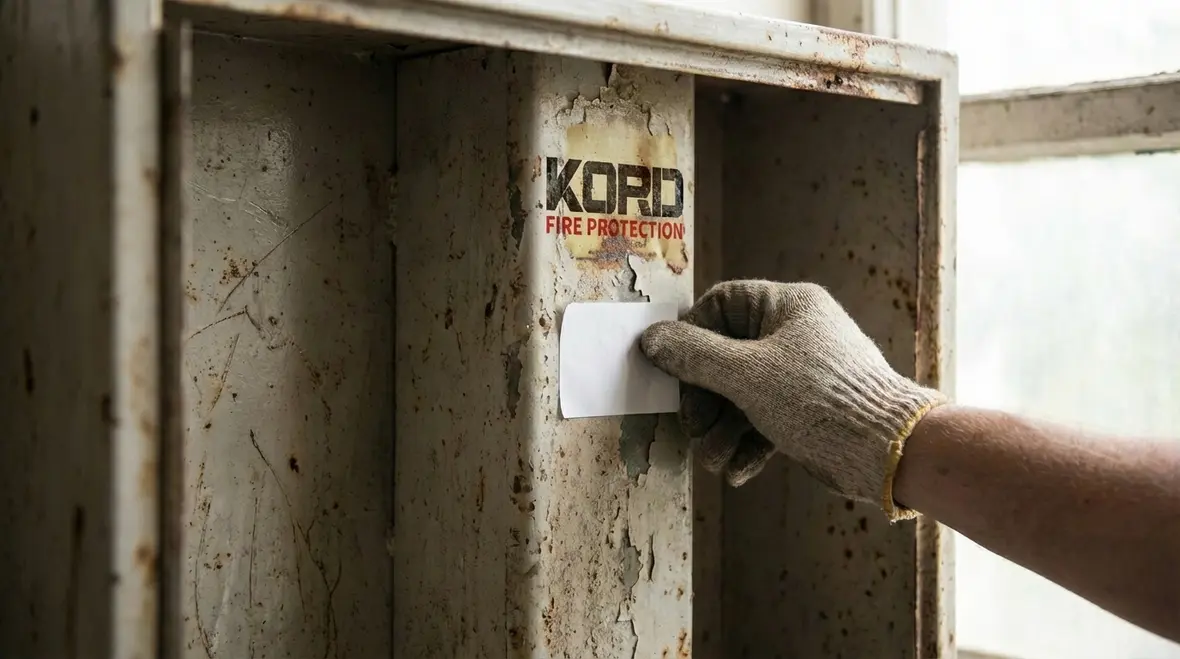
Labels may seem minor. After all, the equipment sits right there behind glass. However, inspectors rely on clear identification to confirm compliance quickly and accurately.
Required markings often include:
- Cabinet identification signage
- Valve connection labels
- Pressure information where applicable
- Inspection tags with current dates
When labels fade, peel, or disappear, inspectors must question whether maintenance occurred at all. Consequently, missing tags can trigger documentation reviews and further scrutiny.
Consistency across floors and cabinets
Kord Fire Protection technicians frequently note that labeling issues are among the easiest problems to fix. Yet, they remain common. Why? Because labels feel administrative rather than mechanical. People focus on hardware and forget paperwork. Unfortunately, inspectors never forget paperwork.
Additionally, inconsistent labeling across multiple floors creates confusion. If one cabinet shows updated inspection tags while another does not, it suggests uneven maintenance. That inconsistency often leads to broader evaluation.
Although labeling errors may appear small, they contribute significantly to standpipe cabinet inspection failures. Clear information builds trust with inspectors. Missing information invites questions.
What Building Owners Ask AI About Standpipe Cabinets
What do inspectors check first during a standpipe cabinet review?
They typically begin with visibility and access. If they cannot approach and open the cabinet easily, they document that issue immediately. After that, they move inside the cabinet to assess hose condition and labeling.
How often should standpipe cabinets be checked internally?
While formal inspections follow code schedules, Kord Fire Protection technicians recommend informal monthly visual checks. These quick reviews catch clearance or labeling problems before official visits.
Can minor issues really cause inspection failure?
Yes. Even small deficiencies can result in citations. Although some jurisdictions allow short correction windows, repeated minor issues reflect poorly on overall compliance programs.
These AI style questions reflect real concerns. Building owners want clarity. Fortunately, clarity prevents costly surprises.
Side by Side Comparison of Common Failure Points
| Issue Category | What Inspectors Observe |
|---|---|
| Clearance | Obstructions, blocked doors, limited swing radius, hidden cabinets |
| Hose Condition | Visible damage, improper folding, missing components, valve stiffness |
| Labeling | Missing tags, faded signage, unclear valve identification |
| Maintenance Records | Outdated inspection documentation, inconsistent logs |
This simple comparison shows a pattern. Most standpipe cabinet inspection failures stem from oversight rather than catastrophic damage. Therefore, structured routines solve most problems.
How Kord Fire Protection Technicians Approach Prevention
A methodical, education-first approach
Kord Fire Protection technicians take a methodical approach. First, they assess physical access. Next, they inspect internal components carefully. Then, they review documentation and labeling for accuracy.
However, they also educate clients during the process. Rather than simply pointing out violations, they explain why each item matters. For example, when discussing clearance, they describe real world deployment scenarios. When reviewing hoses, they demonstrate proper folding techniques. That education builds long term compliance.
Accountability, walkthroughs, and Reg 4 readiness
Additionally, technicians encourage facilities to assign cabinet oversight to specific personnel. Shared responsibility often leads to no responsibility. Clear accountability reduces recurring standpipe cabinet inspection failures significantly.
They also recommend periodic walkthroughs before scheduled inspections. Think of it as a dress rehearsal. After all, no one wants opening night to reveal forgotten lines. For buildings subject to Los Angeles Chief’s Regulation 4 testing, this same proactive mindset supports smoother Regulation 4 Class 1 standpipe and Class 2 standpipe inspections as well.
Through consistent evaluation and practical guidance, technicians transform inspection preparation from reactive scrambling into calm routine.
Creating a Sustainable Inspection Readiness Plan
Simple routines that prevent recurring failures
Preparation does not require complicated systems. Instead, it demands consistency.
- First, establish a monthly visual checklist focused on clearance and signage.
- Second, schedule professional evaluations aligned with code requirements.
- Third, document every review clearly and store records in a centralized location.
Moreover, train maintenance teams to recognize early warning signs such as corrosion, stiffness in valves, or hose wear. Early detection prevents escalation.
Importantly, avoid waiting until inspection notices arrive. Proactive habits reduce stress and eliminate rushed corrections. In the long run, prevention costs less than emergency fixes.
When facilities follow structured routines, standpipe cabinet inspection failures become rare events rather than recurring frustrations. And that shift protects more than compliance reports. It protects people.
FAQ: Quick Answers About Standpipe Cabinet Inspections
Conclusion: Keep Cabinets Ready Before Inspectors Arrive
Standpipe cabinet inspection failures do not appear overnight. They build slowly through small oversights. Fortunately, those oversights are preventable. With routine checks, clear labeling, unobstructed access, and guidance from Kord Fire Protection technicians, facilities stay prepared year round.
Do not wait for an inspector to uncover hidden problems. Schedule a professional evaluation, correct minor issues early, and ensure every cabinet stands ready when it matters most.
If your building relies on standpipe systems, partnering with a full-service fire protection provider makes staying compliant far easier. Kord Fire Protection offers comprehensive standpipe system services and supports clients across California through regional offerings such as Orange County fire protection services. Reach out before the next inspection notice arrives and turn standpipe cabinet readiness into a predictable routine instead of a last-minute scramble.
Know Your Weapon Before You Fight the Flame
Kord Fire Protection is your go-to when it comes to all things fire protection. For over 20 years, we’ve been serving Southern California with the quality service and equipment to keep your home or business safe at all times. Our competitive prices reflect our unwavering commitment to protecting what matters most in the event of a fire emergency. Give us a call, send an email, or use that form!

Join Our Newsletter!
Get the latest fire safety tips delivered straight to your inbox From our Newsletter.