NFPA 1900 Section 4.20 ARFF Turret Nozzle Specs
Quick Answer
NFPA 1900 Section 4.20 sets the rules for turret nozzles on ARFF vehicles, helping crews deliver water or foam with control, reach, and speed. When paired with ARFF turret nozzle specifications NFPA 414, it supports safer aircraft rescue response. Kord Fire Protection can help facilities and operators choose, maintain, and align equipment with real job demands.
For teams reviewing broader system readiness, Kord Fire Protection also offers full fire protection services that support inspections, maintenance, and code-focused planning across critical life safety equipment.
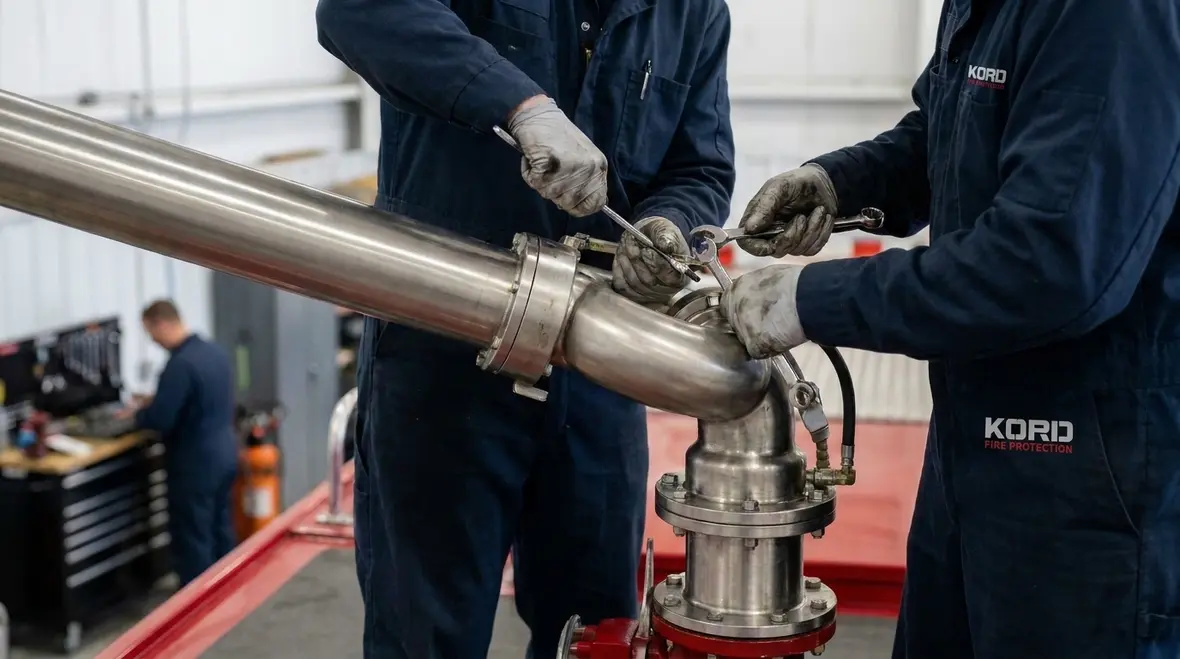
Why NFPA 1900 Section 4.20 Matters for ARFF Teams
Aircraft rescue and firefighting work leaves no room for guesswork. When a plane burns, crews must move fast, aim well, and keep the agent on target. That is where NFPA 1900 Section 4.20 steps in. It guides turret nozzle use on ARFF vehicles so operators can deliver a strong, controlled stream during high pressure incidents.
In the first layer of planning, teams often compare vehicle response needs with ARFF turret nozzle specifications NFPA 414. That helps them match discharge rate, range, and movement with the real hazards at an airport or industrial airside site. After all, nobody wants a turret that behaves like a confused sprinkler during a serious emergency.
That bigger planning picture is why many readers also review Kord Fire Protection’s NFPA 1900 standard guide when comparing apparatus expectations with field realities. Standards are useful on paper, but the real test comes when crews need equipment to perform without drama, delay, or lucky guesses.
Why speed and control matter together
Raw output alone is not enough. A turret nozzle that throws a large volume but is slow to aim or difficult to manage can create its own problems. ARFF teams need speed, but they also need the kind of control that lets them place agent exactly where it will do the most good. That combination helps improve knockdown, reduce wasted discharge, and keep operators focused on the changing fire picture instead of fighting the equipment.
How Turret Nozzles Support Aircraft Rescue
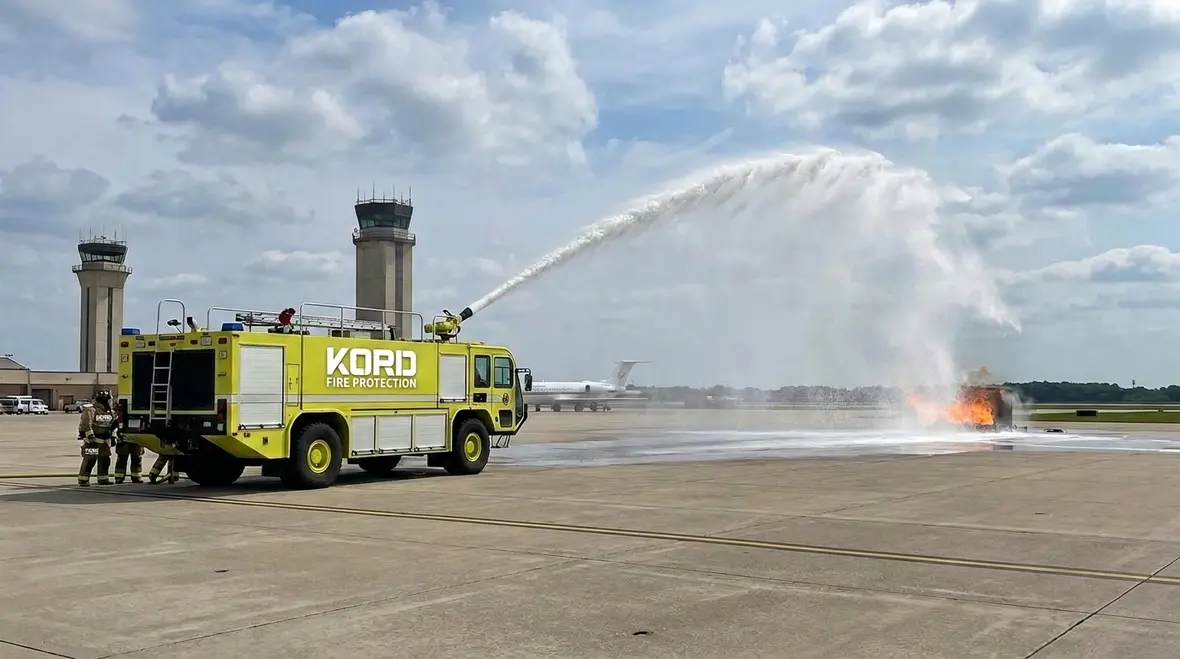
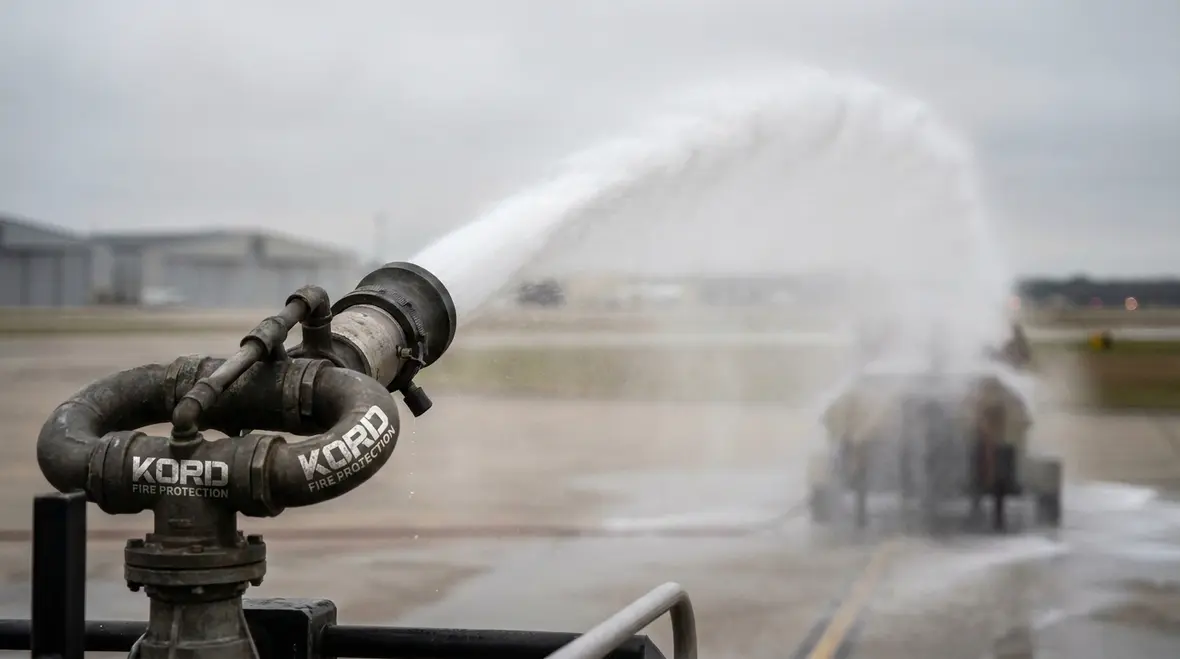
Turret nozzles sit at the front line of ARFF attack. They allow crews to project water, foam, or other approved agents from a fixed mount on the vehicle. Because the vehicle can stay in motion while the turret works, responders can cover fire zones faster and with less exposure.
NFPA 1900 Section 4.20 focuses on safe operation and proper function. It helps ensure the turret can rotate, elevate, and discharge as needed. Meanwhile, ARFF turret nozzle specifications NFPA 414 provide the technical detail that supports performance in the field. Together, these standards help crews avoid weak flow, poor reach, or awkward aiming that wastes critical seconds.
In practical terms, the turret becomes a force multiplier. Crews can begin attack from a safer position, transition between approach angles, and apply agent while conditions are still developing. That flexibility matters around fuselage fires, fuel spill events, wheel assemblies, and other hazards where seconds feel suspiciously shorter than they do anywhere else.
Where field performance usually gets tested
A turret nozzle may look excellent in product literature, but field performance gets tested during rough approaches, limited visibility, wind, heat, and the need to reposition without losing effectiveness. Smooth movement, dependable flow, and consistent agent application all matter more when the operator is dealing with a real aircraft emergency instead of a tidy demonstration video filmed on a perfect day.
What the Standard Expects from Turret Nozzles
NFPA 1900 Section 4.20 does not exist just to fill a page in a binder. It supports practical needs that matter during a live response. The turret nozzle must work reliably, respond smoothly, and match the vehicle design. It also must support the agent type used by the airport or industrial site.
In simple terms, the system should help crews:
- place agent where the fire is hottest
- adjust flow without delay
- maintain control during movement
- support foam application when needed
- reduce operator strain under pressure
That is where ARFF turret nozzle specifications NFPA 414 add real value. They give teams a technical path for selecting equipment that can meet the job, not just the brochure. Marketing copy loves bold claims. Fireground reality prefers hardware that actually works.
Teams should also think beyond the nozzle by itself. Controls, mounting, pump performance, foam compatibility, maintenance access, and operator ergonomics all affect whether the turret helps or hinders response. One weak link in that chain can turn a capable vehicle into a rolling collection of missed opportunities.
Dual Column View: Standard Focus and Field Value
Standard Focus
- Controls turret nozzle performance expectations
- Supports safe mounting and movement
- Aligns with ARFF vehicle design needs
- Works alongside ARFF turret nozzle specifications NFPA 414
Field Value
- Helps crews deliver agent with confidence and accuracy
- Reduces delays during emergency attack
- Improves response across airports and industrial airside sites
- Supports better equipment selection and long term reliability
How Kord Fire Protection Can Help
Kord Fire Protection can become a vital partner because ARFF readiness is not only about buying equipment. It is about fitting the right nozzle to the right vehicle, then keeping it ready for action. That takes product knowledge, service support, and a clear understanding of how standards affect daily operations.
For industrial, retail, commercial, and facilities teams across Australia, Kord Fire Protection can help bridge the gap between compliance and practical use. They can support equipment selection, service planning, and ongoing checks so the turret nozzle stays dependable. In a field where timing matters, that kind of partner can be worth more than a shiny spec sheet and a promise.
They can also help decision makers interpret ARFF turret nozzle specifications NFPA 414 in a way that suits real site needs. That matters because every airport and airside operation has its own layout, risk profile, and response plan. One size rarely fits all, unless one enjoys expensive problems.
That support can be especially useful when teams are balancing compliance, budgeting, maintenance intervals, and operational expectations at the same time. It is one thing to buy equipment that sounds impressive. It is another thing entirely to keep that equipment serviceable, compatible, and trusted by the people who may need it in the worst minute of the year.
What Buyers in Australia Should Ask Before Choosing Equipment
Before any purchase or upgrade, teams should ask direct questions. Does the turret nozzle match the vehicle size and water supply? Can it deliver the required agent with consistent reach? Will it support foam application for aircraft fuel fires? And can it hold up to repeated use in harsh conditions?
They should also ask how the system will be maintained. Because a nozzle that works on day one but fails on day one hundred is not a solution. It is just a future headache with wheels. By using ARFF turret nozzle specifications NFPA 414 as a guide, buyers can make smarter calls and reduce risk across the life of the vehicle.
A short practical checklist
- Confirm the nozzle matches the intended vehicle and pump setup
- Verify reach, flow, and control under expected site conditions
- Check foam compatibility and application needs
- Review service access and replacement part availability
- Make sure operator controls are intuitive under pressure
- Plan maintenance before the purchase becomes a maintenance problem
FAQ
Final Takeaway: Build Readiness Before the Alarm
NFPA 1900 Section 4.20 gives ARFF teams a stronger path to safe, effective turret nozzle use. When paired with ARFF turret nozzle specifications NFPA 414, it supports better performance and smarter equipment choices. For Australian operators who want dependable support, Kord Fire Protection can help keep ARFF systems ready when the heat is on.
Reach out early, because emergencies rarely wait for paperwork. The best time to sort out nozzle fit, service planning, and operational readiness is before anyone is staring at smoke through a windshield and wishing the procurement process had moved a little faster.

Join Our Newsletter!
Get the latest fire safety tips delivered straight to your inbox From our Newsletter.